Apple's AI Glasses: Confirmed by a Supplier Slip-Up
 11/13 2026
 483
Is Meta's formidable rival finally on the horizon?
By VR Top | ZJ
Apple's AI glasses, long the subject of rumor and speculation, have finally received confirmation from the supply chain.
Recently, Kuike Intelligent, a Chinese supplier of precision electronic assembly and semiconductor packaging equipment, revealed at its Q3 2026 earnings briefing that it has joined Apple's AI glasses and new smart earphone projects. These projects are expected to drive demand for related businesses such as precision welding and assembly, as well as machine vision inspection.
Previous reports from various sources suggested that Apple's AI glasses, codenamed N50, could debut as early as WWDC 2027, with shipping targeted before the end of that year. With this latest supply chain leak, Apple is one step closer to formally entering the battle royale of smart glasses.
01
Chinese Suppliers Join the Fold as Apple's AI Glasses Enter a Critical R&D Phase
Kuike Intelligent, the company behind this latest disclosure, is a Chinese firm specializing in precision electronic assembly, intelligent manufacturing, and semiconductor packaging equipment. In February 2025, the company stated on an investor interaction platform that it can provide lamination and AOI visual inspection equipment, along with complete solutions for smart terminals such as AI glasses, and that it has established partnerships with companies including Luxshare Precision, Huaqin Technology, Goertek, and Xiaomi.

According to the company's statement at the earnings briefing, it has already participated in Apple's AI glasses and new smart earphone projects, with the related business tied to precision welding assembly and machine vision inspection.
The timing of this disclosure aligns with previously leaked timelines. In February of this year, Mark Gurman reported that Apple was accelerating development of its AI smart glasses, had provided additional prototypes to its hardware engineering team, and planned to begin production as early as December 2026, with an official launch targeted for 2027. In July, Gurman further revealed that Apple intended to showcase its first smart glasses at WWDC27 and ship them later that year.
Judging by the pace of supply chain involvement, manufacturing equipment companies typically need to participate in advance in customers' product design, process development, and test validation. Kuike Intelligent also mentioned in its semi-annual report that the company adopts a cooperation model of early involvement in the customer's R&D stage. This disclosure at least indicates that related manufacturing equipment companies have joined Apple's AI glasses project. However, Kuike Intelligent has not yet disclosed the specific order scale, the project stage, or the mass production timeline for related products.
On the hardware side, according to Gurman's leaks, Apple initially tried to integrate electronic components into off-the-shelf glasses frames, and early prototypes even required a cable connection to an iPhone and a separate battery. As R&D progressed, Apple began shifting toward designing its own frames and attempted to integrate components such as batteries and cameras inside the frame.
Based on currently disclosed information, Apple's N50 AI glasses are positioned close to Ray-Ban Meta and are expected to lack an optical display system. They will primarily perceive the environment through cameras, handle interactions via microphones, speakers, and Siri, and connect to an iPhone for use.
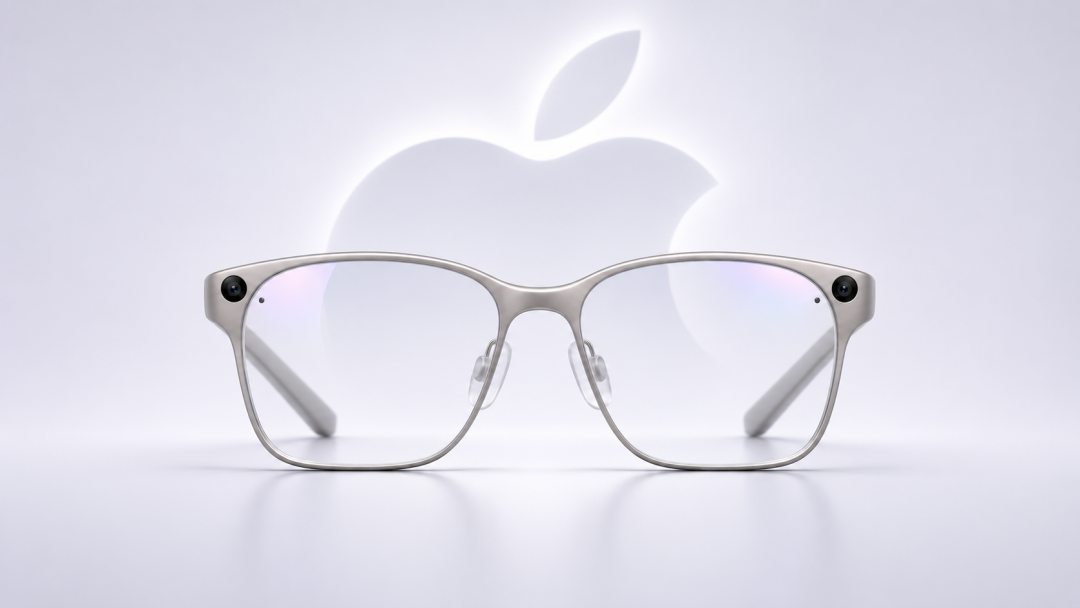
Apple also plans to equip the glasses with two sets of cameras. One set is mainly for high-resolution photo and video capture, while the other handles computer vision, helping the device recognize surrounding objects, understand environmental information, and make a certain degree of spatial distance judgment.
In addition, Apple hopes to differentiate itself from Meta through frame design and camera performance. According to reports, Apple once considered partnering with existing glasses brands but ultimately chose to design the frames in-house and plans to offer different sizes, colors, and styles.
02
If Hardware Isn't Enough, Lean on the Ecosystem
From the current information, Apple's AI glasses don't offer many hardware highlights. But what's truly noteworthy is how Apple plans to integrate its AI glasses with its existing software and hardware ecosystem.
In June of this year, Apple officially announced the new-generation Siri AI at WWDC and began rolling out an English beta alongside system updates such as iOS 27 in September. Compared with past voice assistants that mainly relied on fixed commands, the new Siri boasts enhanced natural language understanding, personal context memory, cross-app operation, and multimodal visual understanding capabilities.
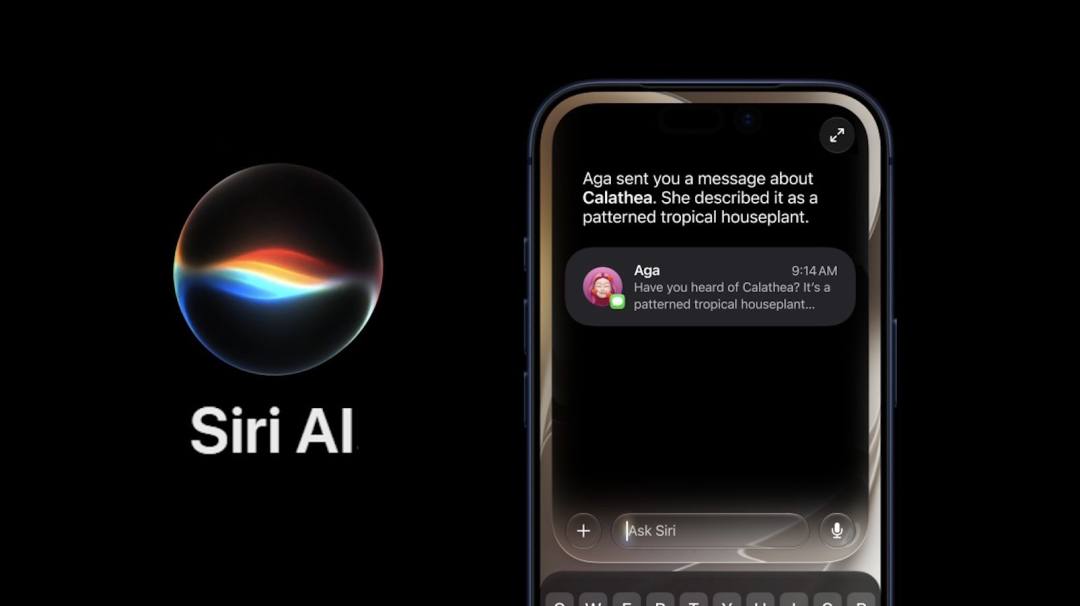
Among these enhancements, Apple added a Siri mode to the iPhone camera, allowing users to point the camera at text or objects in the real world and then ask questions by voice. For example, it can recognize the showtime on a poster and automatically create a corresponding calendar reminder. Vision Pro also already supports recognizing objects in the real environment through Visual Intelligence, and users can simply look at a target and ask Siri questions.
These already-implemented functions provide a ready-made software foundation for Apple's AI glasses. At the same time, Apple is also weighing the privacy implications of cameras.
In July of this year, Bloomberg reported that Apple was testing multiple privacy features for smart glasses and had even considered launching a product solution that uses only cameras for AI environmental perception without supporting photo and video recording.
For a device that needs to be worn for extended periods and can continuously come into contact with the real environment, how to handle shooting permissions, visual data, and user privacy will directly affect whether it can enter more daily scenarios.
In addition, according to Gurman, Apple is also advancing a diversified layout of its wearable health ecosystem and plans to build its AI glasses into a health and fitness companion. However, such advanced features will not appear in the first-generation model and are expected to launch only in subsequent iterations.
03
AI Glasses Take Center Stage as Apple Readjusts Its XR Strategy
Apple's accelerated investment in AI glasses is closely tied to its adjustment of its XR hardware roadmap.
In February 2024, Apple officially launched Vision Pro. This $3,499 spatial computing device was once regarded as Apple's most important new hardware attempt since the Apple Watch. However, its high price, wearing burden, and relatively limited mainstream consumer application scenarios have made it difficult for Vision Pro to enter the mass market.
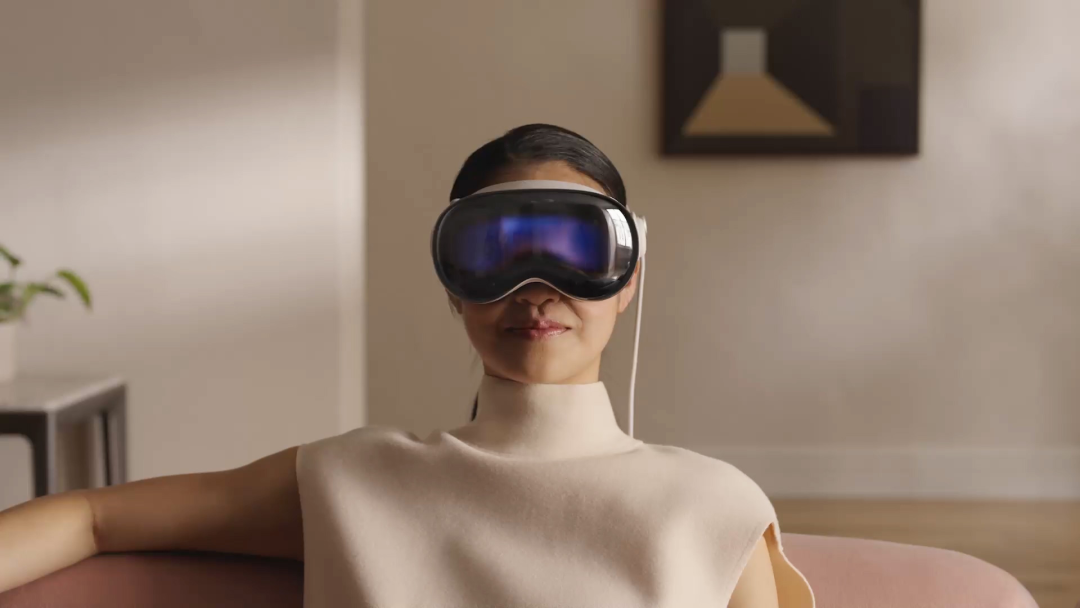
In October 2025, Reuters reported that Apple had suspended its lightweight, low-cost Vision Pro project codenamed N100 and reassigned some R&D staff to AI smart glasses. The project had originally been planned for launch in 2027.
At the same time, Apple has planned at least two smart glasses product routes: first launching AI glasses without a display, then developing AR glasses equipped with a display system.
In June of this year, renowned analyst Ming-Chi Kuo updated Apple's XR product roadmap based on the latest supply chain survey. He expects display-less AI glasses to still ship in 2027, while AR/XR glasses using optical waveguide display technology have been delayed to 2029.
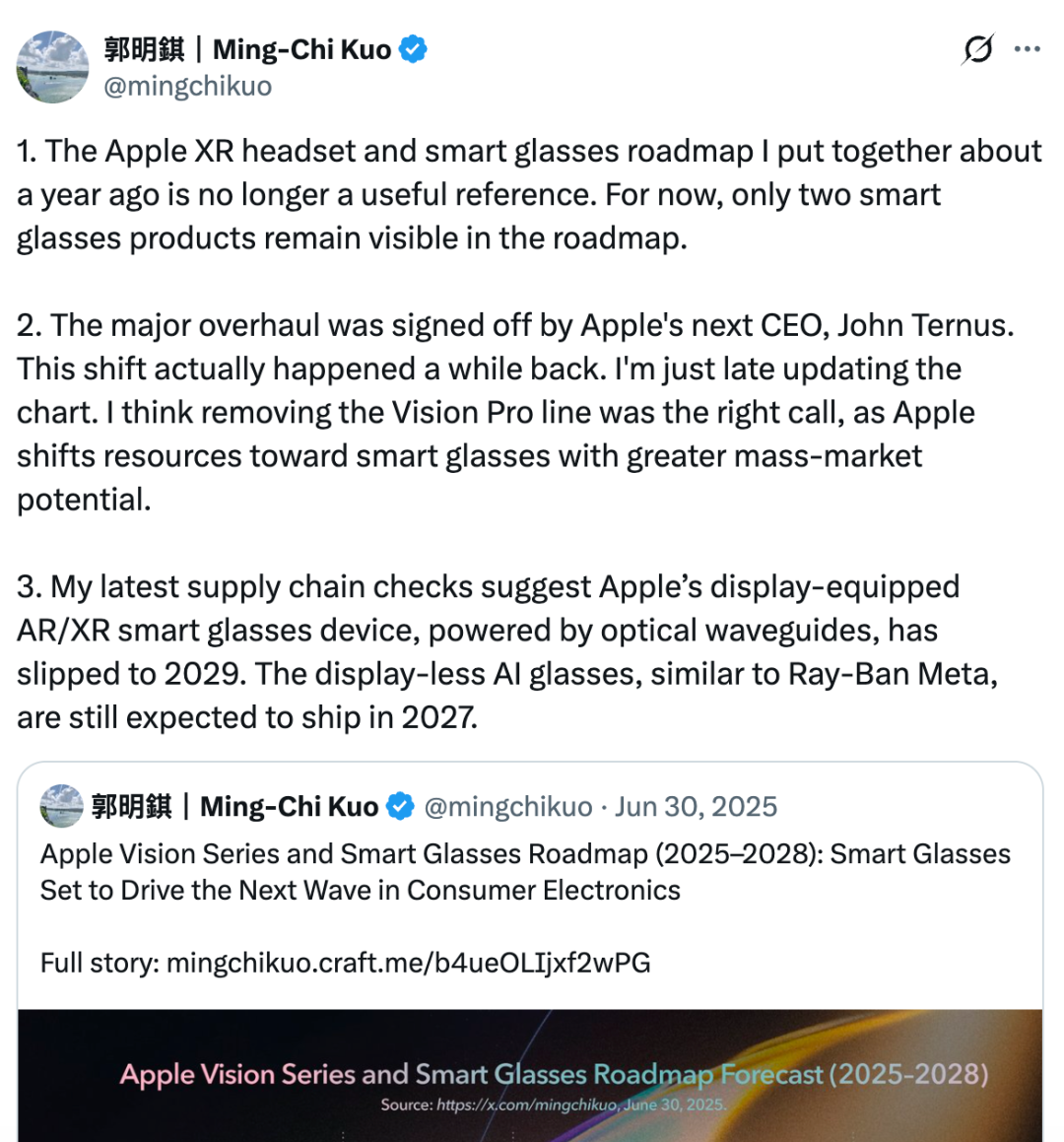
The time gap between the two product lines reflects Apple's current R&D priorities. Compared with smart glasses that truly offer AR display capabilities, display-less AI glasses can first circumvent some optical display challenges and focus R&D on lightweight design, visual perception, AI interaction, and battery life.
Moreover, Apple isn't betting solely on glasses this time. In February of this year, Bloomberg also revealed that Apple was simultaneously developing AirPods with cameras and an AI pendant that can be worn on the chest. All three device types revolve around Siri and obtain some computing and application capabilities through the iPhone.
From these product layouts, Apple hopes to extend AI from the phone screen to the user's side, making wearable devices such as glasses and earphones more direct interaction entry points.
The high-end spatial computing route represented by Vision Pro is still continuing, but judging from the current allocation of R&D resources, lightweight AI devices have gained higher strategic priority.
04
Meta Has Already Taken the Lead—How Many Opportunities Does Apple Still Have?
Behind Apple's decision to accelerate the launch of AI glasses is the rapid growth of the market. According to data from Gyro Research, global AI glasses shipments reached 6.03 million units in the first half of 2026 and are expected to reach 17 million units for the full year.
Data from Counterpoint Research shows that in the first half of 2026, global AI glasses shipments increased by 263% year on year, of which display-less AI glasses accounted for 96% of total shipments. Among them, Meta still holds an absolute advantage. In the first half of 2026, its display-less AI glasses shipments increased by 260% year on year, accounting for 94% of global shipments in that segment.
Apple, entering only in 2027, will face a competitor that has already accumulated several years of market experience and firmly controls market share.
However, Apple still holds a trump card: its own software and hardware ecosystem. Compared with AI glasses manufacturers that need to continuously expand system and application integration capabilities, Apple can directly connect its glasses to its existing phone operating system, personal information services, and application system. The new Siri AI is one example.
In addition, Apple's retail channels, device collaboration, and after-sales service system are also more complete than Meta's. Take the Chinese market as an example: once Apple's AI glasses are launched, they will have the opportunity to quickly reach the country's huge consumer base.
In July of this year, Apple Intelligence completed registration in China for related generative AI services for iPhone. Apple is developing a large language model for the Chinese market with Alibaba's support to adapt to local market service needs. And on November 9, according to information from Shanghai's cyberspace authorities, Apple Intelligence completed registration for related services for tablets and laptops.
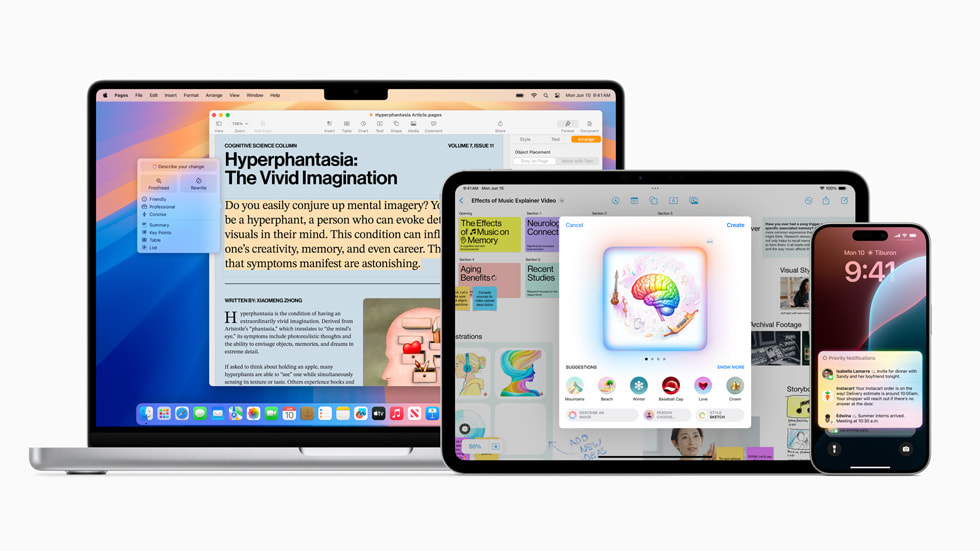
According to Alibaba's previously announced plan, domestic users will gain access to Qwen model capabilities in functions such as Siri, writing tools, and visual intelligence, with rollout planned alongside iOS 27.3 in December of this year.
This progress lays the foundation for Apple to launch AI glasses in China in the future.
However, the current domestic AI glasses market has also formed a competitive landscape different from overseas. Counterpoint data shows that in the first half of 2026, global AR & AI glasses shipments increased by 449% year on year, of which the Chinese market accounted for 45%. A group of manufacturers including Alibaba, RayNeo, Rokid, INMO, and Even Realities are promoting the commercialization of display-equipped AI glasses. At the same time, the domestic optical waveguide, microdisplay, and complete device manufacturing supply chains are gradually maturing.
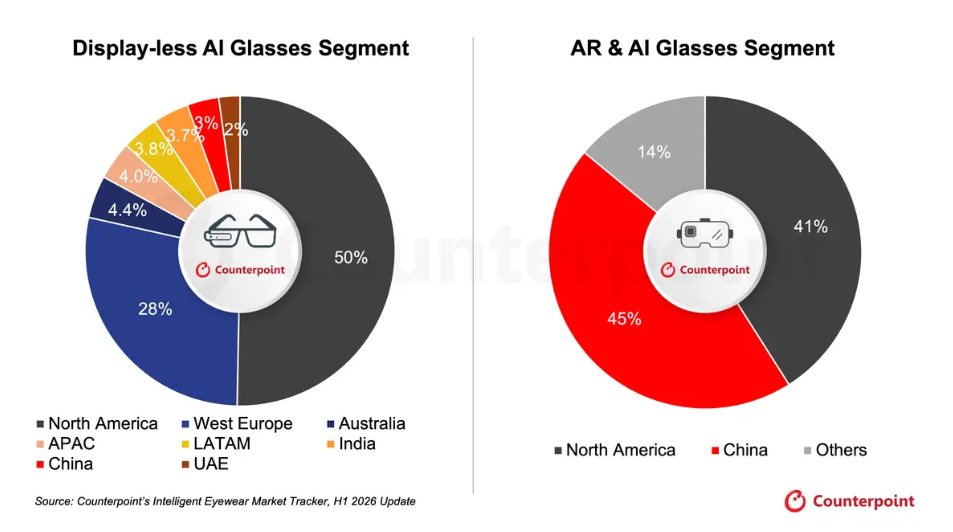
Image source: Counterpoint Research
This leaves Apple facing two different competitive routes in the future: one is the display-less AI glasses market dominated by Meta, and the other is the display-equipped AI glasses market actively being laid out by Chinese manufacturers.
For Apple, launching its first AI glasses in 2027 is only the beginning. Whether it can carve out a position in a market where Meta and Chinese manufacturers have already seized the initiative—through deep integration of AI capabilities with its software and hardware ecosystem—will be the test Apple faces next.
And as this consumer electronics giant enters the fray, will the AI glasses market usher in a new round of reshuffling in 2027? The answer may soon be revealed.
-
![]()
Shenzhen Adds Another 177 Billionaires: Fortunes Above 5 Billion Yuan
-
![]()
Revenue Under Pressure and a Quarterly Loss: Can AI Transformation Help Supcon Technology Turn Things Around?
-
![]()
3.182 Billion Yuan! Changan Lists 10% Avatr Stake for Transfer, Potentially Bringing in a New External Shareholder
-
![]()
Hesai "Crossing the Bridge"
-
Apple Doesn't Want to Keep "Winning by Lying Flat"
-
![]()
Apple's AI Glasses: Confirmed by a Supplier Slip-Up
-
![]()
Does a Higher Megapixel Count Mean Better Photos?
-
![]()
Storage Costs Soar! Even DJI Feels the Pinch: Some Products to See Price Hikes Starting November 18