Does a Higher Megapixel Count Mean Better Photos?
 11/13 2026
 352
You open an e-commerce page and see the camera specs: 200MP main camera, with a line of small text beside it reading "50MP ultra-wide." You
subconsciously assume that 200 million must be more powerful than 50 million. But after buying the phone and taking a night photo, you zoom in and find the noise is a blurry mess, with a ring of ghosting around distant streetlights.
The problem isn't your photography skills, nor is it entirely the phone's fault. It's that pixel count has never been synonymous with image quality—it's just been placed in the most prominent position.
01
Pixels Are About Quantity,
Not Quality
The essence of pixels is how many small squares there are in a photo.
The more squares there are, the higher the photo's resolution and the larger the size it can be printed at. But pixel count does not directly determine how much real information each square contains.
A popular science article from the China Telecom Museum used an analogy: the sensor is a field, and pixels are the crops planted in it.
The field area is fixed. The denser the crops are planted, the less sunlight and nutrients each one gets. Translated into photos, this means more noise and a gray, blurry image.
The first hardware factor determining image quality is sensor size—that is, how big the field is. For the same one-inch sensor, 200MP means the light-sensitive area allocated to each pixel is only about one quarter that of 50MP. The smaller the single-pixel area, the less light it can capture, and the lower the signal-to-noise ratio in low light.
In 2026, both flagship and mid-range phones use 200MP, but flagship sensors are 1/1.12 inch, while mid-range phones may only have 1/1.56 inch. With such a gap in hardware foundation, how could the results be the same?
02
The 200MP You Bought
May Only Output 12.5MP in Daily Use
There is another fact rarely mentioned proactively: most of the time, phones do not output at 200MP.
Manufacturers know very well that small pixels capture weak light and are prone to noise, so daily photography automatically enables pixel binning, combining 4, 9, or even 16 adjacent pixels into one superpixel to increase the light-sensitive area per pixel.
A 200MP phone may output daily photos at only 50MP, 25MP, or even 12.5MP. You paid for 200MP, but what you use daily is just the merged number.
This is not to say 200MP has no value.
Under sufficient light and with algorithms that can keep up, it can provide greater cropping freedom. After taking a photo and recomposing by cropping away half, there are still 50MP left, and the image quality remains usable.
But this is a benefit of high megapixels, not proof that high megapixels equal good image quality.
03
Lens and Algorithm
Can Also Drag Down High Megapixels
The pixel count has gone up, but the lens and chip may not keep up.
The physical size of phone lenses is limited by body thickness, and optical resolving power is inherently limited.
When the lens's resolving power cannot feed the high-density sampling of 200MP, the extra pixels are not recording real details, but the lens's own optical blur and diffraction.
It is like connecting an ultra-high-definition TV to an antenna with an extremely poor signal: no matter how clear the screen is, the picture is still blurry.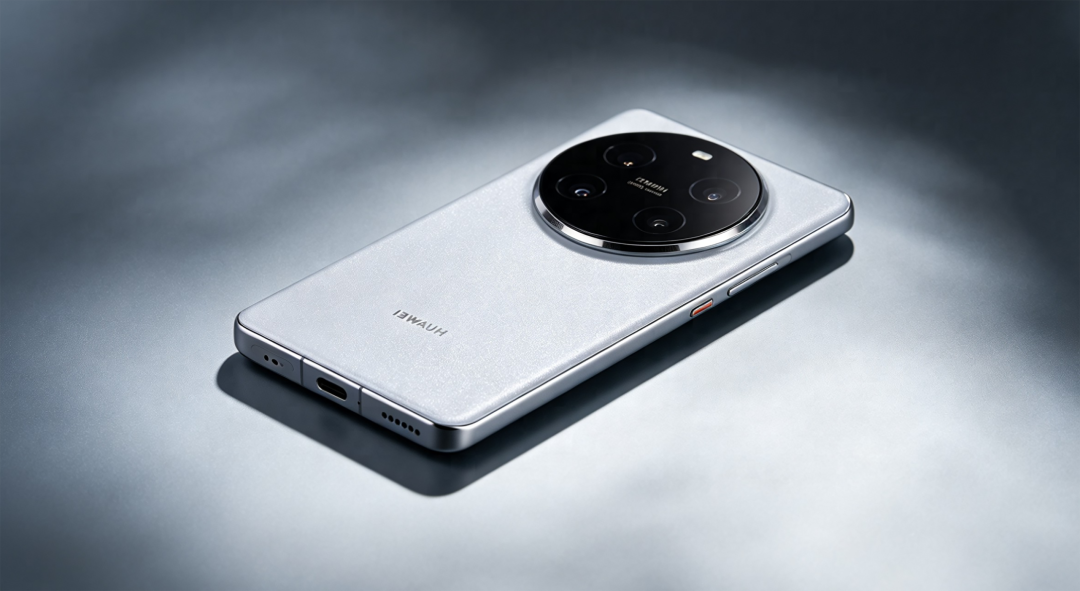 Image source: Internet
The algorithm is also making trade-offs.
The single-pixel signal on a phone is weak, so the image processor must perform strong noise reduction—and noise reduction is essentially guessing.
If it is too light, noise remains in the image; if it is too heavy, real skin texture and grass details are wiped away together, creating that smeared look like an oil painting or plastic when zoomed in.
High megapixels give the algorithm more raw information, but whether the algorithm can use it well is another matter.
04
What to Look at
When Choosing a Phone
You can look at pixel count, but do not treat it as the first priority.
What truly creates gaps in 2026 phone imaging is sensor size (1-inch and 1/1.28-inch large sensors have physical advantages in night shots and dynamic range), optical stabilization (determines the success rate of night and telephoto shots), true optical telephoto (an independent lens, not relying on cropping), and the maturity of computational photography algorithms—things manufacturers do not put in big headlines.
If you want to buy a phone with good photography, you can go to a store, pick one up, and take a photo in a low-light environment, then zoom in to check noise and details in dark areas; then take a backlit photo and see whether highlights are blown out to pure white and whether faces are preserved.
The look of these two photos will tell you better than the 200 million number on the specs page whether this phone's camera is actually any good.
Pixels are a nice-sounding number, but whether a photo looks good is the answer jointly delivered by the sensor, lens, algorithm, and chip. Next time you see a 200MP advertisement, you can understand it as meaning this canvas has many squares—not that the painting is necessarily good-looking.
#PhonePixels
-
![]()
Shenzhen Adds Another 177 Billionaires: Fortunes Above 5 Billion Yuan
-
![]()
Revenue Under Pressure and a Quarterly Loss: Can AI Transformation Help Supcon Technology Turn Things Around?
-
![]()
3.182 Billion Yuan! Changan Lists 10% Avatr Stake for Transfer, Potentially Bringing in a New External Shareholder
-
![]()
Hesai "Crossing the Bridge"
-
Apple Doesn't Want to Keep "Winning by Lying Flat"
-
![]()
Apple's AI Glasses: Confirmed by a Supplier Slip-Up
-
![]()
Does a Higher Megapixel Count Mean Better Photos?
-
![]()
Storage Costs Soar! Even DJI Feels the Pinch: Some Products to See Price Hikes Starting November 18