Shenzhen Adds Another 177 Billionaires: Fortunes Above 5 Billion Yuan
 11/13 2026
 338
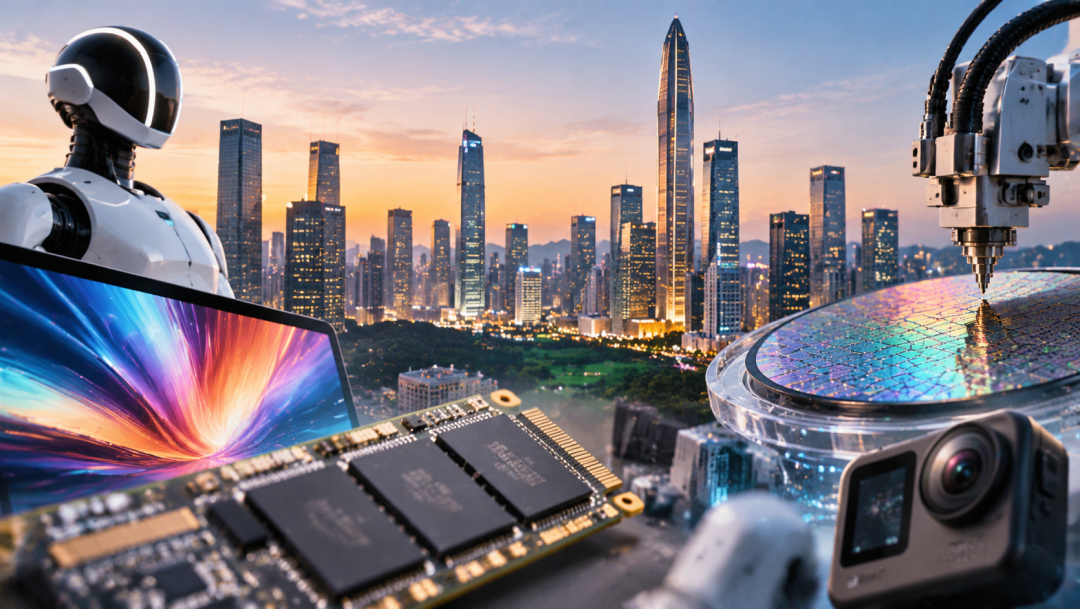
Image | Pencil Road Graphics
The Chinese city with the most billionaires has changed.
On October 27, the Hurun Research Institute released its 2026 Hurun Rich List. Shenzhen, home to 177 listed entrepreneurs, overtook Shanghai and Beijing for the first time to rank first nationwide.
Shanghai followed with 161, and Beijing with 140. Over the past year, Shenzhen added 30 new listed entrepreneurs, the largest increase in wealthy individuals of any city in the country.
The threshold for this list is 5 billion yuan. In other words, Shenzhen is now home to 177 entrepreneurs and families with fortunes exceeding 5 billion yuan.
More noteworthy still is where their money comes from.
In the past, mention Shenzhen billionaires and people would first think of Tencent's Ma Huateng, BYD's Wang Chuanfu, and SF Express's Wang Wei. But leafing through this year's list, a wave of new names emerges.
HKC founder Wang Zhiyong, who sells display panels, has a fortune of 64.5 billion yuan and appears on the list for the first time; Longsys founder Cai Huabo, who makes memory chips, saw his wealth surge 256% to 61 billion yuan; Liu Jingkang, 35, of Insta360, whose panoramic cameras sell worldwide, also made the list; and Zhou Jian, founder of humanoid robot maker UBTECH, joined the ranks of the wealthy as well.
Nothing too fancy in the way of business models. The businesses these billionaires run revolve around chips, panels, memory, and smart hardware.
So why is Shenzhen so good at creating wealth?
- 01 - Shenzhen Spawns Another Batch of Multi-Billionaire Tycoons
The most eye-catching new billionaire in Shenzhen this year is 56-year-old Wang Zhiyong.
In 2001, he founded HKC in Shenzhen, initially doing monitor-related trade. More than two decades later, the company has become a global LCD panel giant.
On June 26, 2026, HKC shares listed on the Shenzhen Stock Exchange main board. The issue price was 10.12 yuan, and the stock closed at 42 yuan on its first trading day—a gain of 315%—pushing its total market value past 300 billion yuan at a stroke.
The business is not complicated to describe: making display panels for TVs, computers, and phones.
But this is a classic heavy-asset industry. A high-generation LCD panel production line often requires tens of billions of yuan in investment. Technology, capital, yield rate—failing any one of these hurdles could swallow the entire investment.
Wang Zhiyong spent more than two decades turning a monitor trading company into a top-tier global player.
Measured by shipment area, in 2024 HKC's TV panel business ranked third globally, and its 85-inch LCD TV panel shipment area ranked first worldwide. In 2025, the company posted operating revenue of 40.897 billion yuan, with net profit attributable to shareholders of 3.801 billion yuan.
On this year's Hurun list, Wang Zhiyong appears for the first time, with wealth reaching 64.5 billion yuan, making him the third-largest new entrant nationwide.
Another winner is Longsys founder Cai Huabo.
Longsys was founded in Shenzhen in 1999. It started out providing storage technology services and later moved into storage product R&D, brand operations, and packaging and testing.
In 2017, Longsys acquired the international storage brand Lexar; in 2022, the company listed on the ChiNext board; it subsequently expanded its overseas manufacturing and packaging and testing footprint through acquisitions.
The current AI wave has brought new opportunities to the storage industry.
AI servers require storage with larger capacity and higher bandwidth, suppliers are channeling more resources into high-margin products, and the supply-demand landscape of the entire storage market has shifted.
In the third quarter of 2026, Longsys achieved operating revenue of 14.630 billion yuan, up 123.74% year on year; net profit attributable to shareholders was 3.745 billion yuan, up 436.60% year on year.
The company's performance growth is also reflected in the founder's wealth.
Cai Huabo's fortune reached 61 billion yuan this year, up 256% from last year.
Also benefiting from the storage market is Shenzhen company Demingli. The wealth of founders Li Hu and Tian Hua grew nearly threefold from last year.
The two companies share one thing in common: neither created an entirely new consumer demand out of thin air; instead, they gradually extended toward high-value-added segments within an already massive electronics supply chain.
This is precisely an important path to wealth creation in Shenzhen.
- 02 - Why Shenzhen?
What Shenzhen is truly good at is not having a few super-rich individuals, but being able to continuously cultivate new entrepreneurs.
Huawei was founded in 1987, BYD in 1995, Tencent in 1998, and DJI in 2006.
These companies had different starting points, yet all ultimately grew into globally important tech enterprises in Shenzhen.
Behind this is a common business logic: in Shenzhen, entrepreneurs can not only find customers but also find almost the entire supply chain needed to produce products.
Take Huaqiangbei as an example.
It gathers electronic component suppliers, solution providers, traders, and various service enterprises. After a startup team completes its design, it can look for mold, PCB, battery, motor, structural parts, and assembly factories across the Pearl River Delta industrial cluster.
A financial media outlet once discussed this speed advantage in a special report on Shenzhen's tech industry: a mature electronic manufacturing network allows entrepreneurs to quickly turn ideas into prototypes and then enter production.
Shenzhen is not just laboratories, nor just factories; it puts R&D, procurement, manufacturing, and the market together.
This is crucial for hardware entrepreneurs.
Developing a new product, what really costs money is often not just technological R&D, but also the process of repeated trial and error, design modification, finding suppliers, and building stable mass production capacity.
Shenzhen's vast industrial network reduces the time cost and coordination cost of some entrepreneurial activities.
Data can illustrate the scale of this industrial agglomeration.
According to Shenzhen's 2025 economic and social development data, the city has more than 4.65 million market entities, over 26,000 national high-tech enterprises, and 1,333 national-level specialized and sophisticated "little giant" enterprises, ranking first among cities nationwide.
Shenzhen's R&D investment in 2024 reached 245.31 billion yuan, accounting for 6.67% of GDP, of which enterprise R&D investment accounted for more than 93%.
There is a noteworthy detail here: Shenzhen's R&D investment mainly comes from enterprises.
This means that a large number of R&D activities are not simply centered on papers or research projects, but directly face customer needs, product iteration, and commercial competition.
At the same time, Shenzhen is not an isolated manufacturing base.
Dongguan provides massive electronic manufacturing capacity, Huizhou gathers electronic information and new energy industries, Foshan has home appliances, machinery and equipment, and other industrial foundations, while Guangzhou has automobile manufacturing, scientific research, and trade resources.
The Pearl River Delta industrial network formed by these cities together allows Shenzhen to take on roles in R&D, product definition, capital operations, and global sales.
Large tech companies provide talent and markets for this system.
The communications and chip talent cultivated by Huawei, the battery and auto parts suppliers driven by BYD, and the drone and robotics technology talent nurtured by DJI may all become the foundation for the next generation of startups.
Today's Shenzhen entrepreneurs have the chance to become suppliers to tomorrow's giants, and may also become their competitors.
From this perspective, Shenzhen's greatest wealth is not the 177 billionaires, but the industrial network that supports their emergence.
- 03 - The Next Batch of Billionaires Will Emerge From Here Again
Shenzhen's wealth landscape is changing.
In the past, the internet, real estate, and consumer electronics were important sources of wealth creation. Today, semiconductors, AI hardware, robotics, and advanced manufacturing are creating new wealth.
Shenzhen's added value of strategic emerging industries in 2025 reached 1.67 trillion yuan, accounting for 43% of GDP.
These figures mean that hard tech is no longer a decoration of the city's economy, but an important pillar.
More interestingly, the new round of opportunities may not all belong to the most dazzling end brands.
AI large models need computing power, computing power needs servers, and servers need chips, memory, power supplies, cooling equipment, and high-speed connections.
The same is true for robots. Behind a robot is a massive supply chain of motors, reducers, sensors, control chips, structural parts, and batteries.
Entrepreneurs do not necessarily have to build the next DJI or BYD.
As long as they can gain technological advantages in key components and enter the supply chain of leading companies, they can likewise build a company worth several billion or tens of billions of yuan.
The wealth growth of Longsys and Demingli provides such observation samples.
However, the wealth list also has another side.
Although HKC has attracted much attention in the capital market, as of the end of 2025, the company's total liabilities reached 63.428 billion yuan. The display panel industry requires enormous investment, and technological upgrades and price cycles are always accompanied by operational risks.
The storage industry is also cyclical. The product price increases and profit growth in 2026 cannot guarantee that the same level will be maintained every year in the future.
More importantly, the wealth calculated by Hurun is mainly based on equity value and company valuation. Rising stock prices can quickly create multi-billionaire tycoons, while falling prices can also sharply shrink wealth.
Therefore, Shenzhen's 30 newly listed entrepreneurs this year not only reflect industrial development but also benefited from changes in tech stock valuations.
But one thing is more certain.
Shenzhen has proven that wealth can be created not only through internet platforms, real estate, and financial transactions. Producing a screen, a memory chip, or a control system can likewise build enterprises worth tens of billions or hundreds of billions of yuan.
In 2026, Shenzhen topped China's billionaire city list for the first time.
More noteworthy than these 177 billionaires are the entrepreneurs who have not yet made the list.
They may be developing chips in an office in Nanshan, debugging equipment in a factory in Bao'an, or searching for the first batch of parts needed for a new product in Huaqiangbei.
The next multi-billionaire may be among them.
This article does not constitute any investment advice.
-
![]()
Shenzhen Adds Another 177 Billionaires: Fortunes Above 5 Billion Yuan
-
![]()
Revenue Under Pressure and a Quarterly Loss: Can AI Transformation Help Supcon Technology Turn Things Around?
-
![]()
3.182 Billion Yuan! Changan Lists 10% Avatr Stake for Transfer, Potentially Bringing in a New External Shareholder
-
![]()
Hesai "Crossing the Bridge"
-
Apple Doesn't Want to Keep "Winning by Lying Flat"
-
![]()
Apple's AI Glasses: Confirmed by a Supplier Slip-Up
-
![]()
Does a Higher Megapixel Count Mean Better Photos?
-
![]()
Storage Costs Soar! Even DJI Feels the Pinch: Some Products to See Price Hikes Starting November 18