Chinese Automakers Break Into Canada by Making EVs Winter-Proof First
 11/16 2026
 391
Introduction
The quota gate has opened, and Chinese automakers are racing to secure a foothold in Canada. But what they need to do goes beyond simply making their EVs "winter-proof."
Canada's EV market is not particularly large, but Chinese automakers are turning it into their first springboard into North America.
Daniel Ross, an analyst at Canadian Black Book, offered a specific figure: by 2029, Chinese independent brands will launch 18 EV models in Canada. The pace is 9 models next year, 17 in 2028, and 18 in 2029.
Speaking at the TalkAuto conference held in Vaughan, north of Toronto, on November 5, Ross put it bluntly: "It's not a matter of waiting a few more years—they're already here."
Canada changed its rules in January this year. The 100% surtax on China-made EVs is gone, replaced by a quota system: 49,000 vehicles allowed in the first year, with tariffs at the 6.1% most-favored-nation rate, increasing by 6.5% each year thereafter, reaching a quota cap of 63,037 vehicles by 2030.
The opening is not huge, but it is enough for Chinese automakers to line up and enter.
At least four have already made their move. BYD, Chery, Dongfeng, and Geely are all paving the way for Canadian sales throughout 2026.
01 The "Big Four" Have Already Taken Action
Geely was the first to put its timetable on the table.
On October 9, Geely Automobile officially announced its entry into the Canadian market, planning to launch its first models in early 2027. Canadian government filing documents updated in November show that it has likely already completed local certification for two popular models.
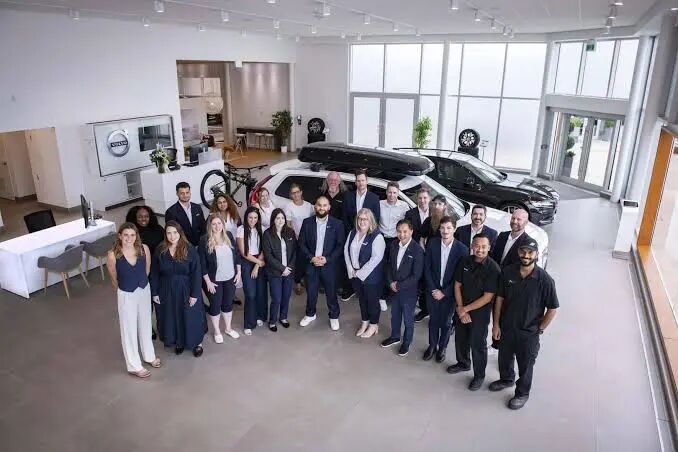
Among these four, Geely has an advantage the others do not: it owns Volvo, Polestar, and Lotus—three brands that are "positioned relatively high-end and carry overseas heritage."
These three brands already have established sales networks, logistics, and certification experience in Canada. Quotas are allocated on a "first come, first served" basis, so Geely does not need to build everything from scratch.
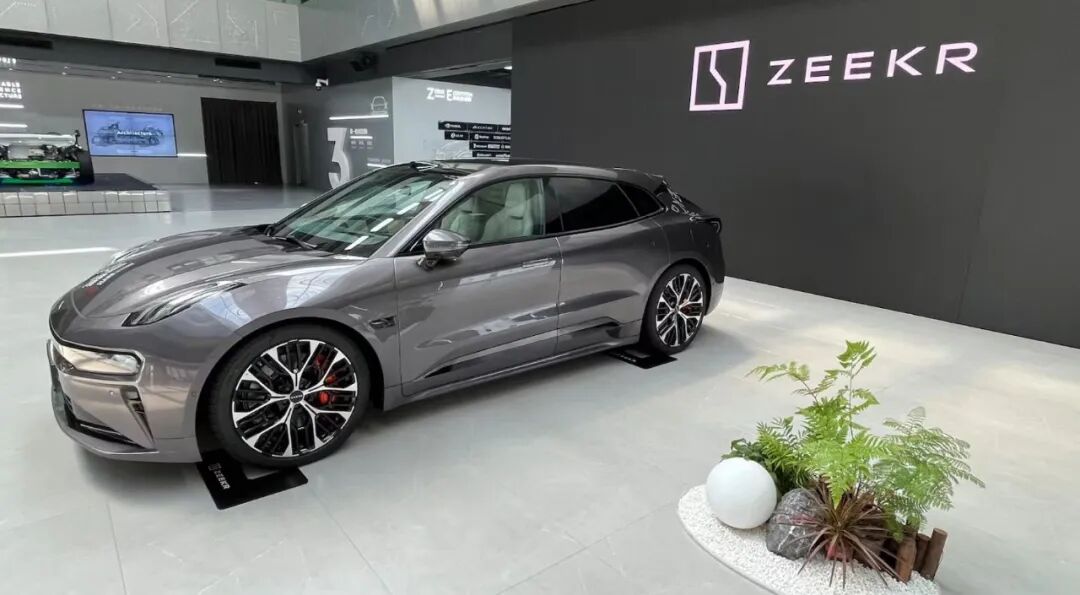
Reports suggest that Geely plans to rely on the channel resources of Volvo and Polestar to bring the Zeekr brand into Canada.
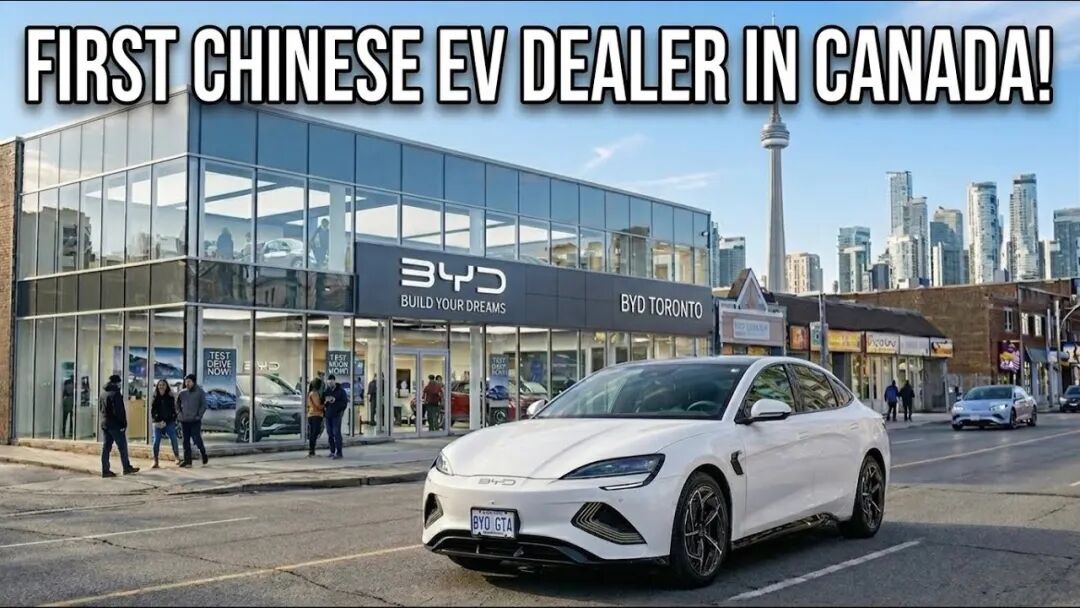
BYD's timeline is even earlier. Executive Vice President Li Ke announced in June 2026 that BYD would enter Canada by the end of the year, with more than 20 dealership stores in the first batch, located in Toronto, Vancouver, Montreal, and Calgary.
The first batch of models includes the Yuan PLUS, Seal, Dolphin, and Seagull, with a starting price of CAD 25,000.
BYD is also the first Chinese automaker to register a passenger car plant in Transport Canada's pre-approval list, while conducting a feasibility study for building a plant in Canada.
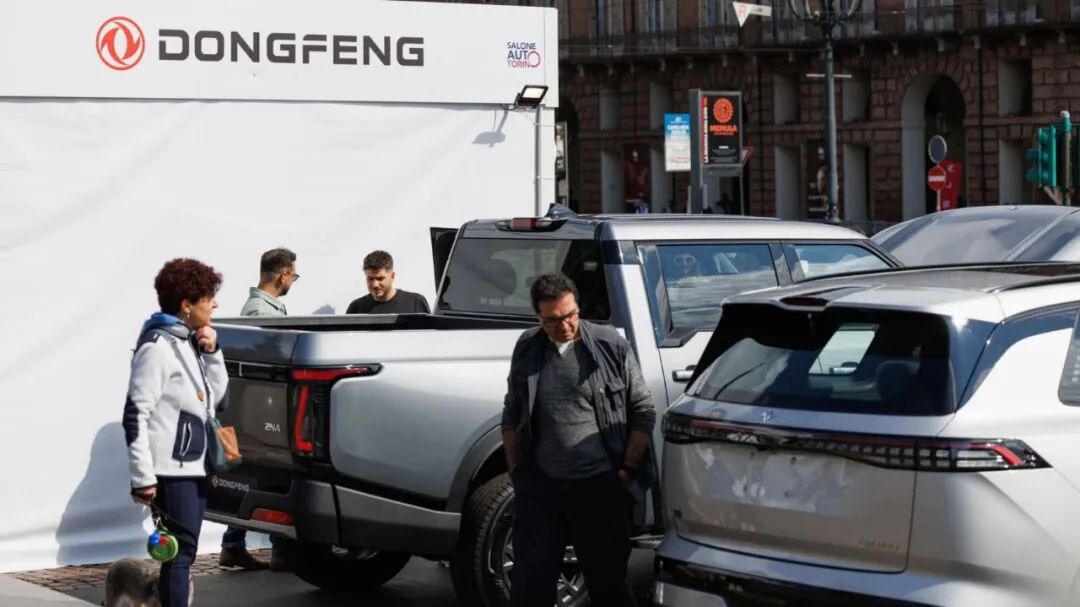
In July 2026, Dongfeng held its first dedicated Canadian new energy vehicle showcase in Montreal, planning to launch two economy EV models in the first phase, and is advancing safety certification and channel development.
Its dealer North World Industry has explicitly stated that its long-term goal is local production in Canada.
Ross's assessment is direct: these new players will quickly secure positions in Canada's EV market, while many traditional automakers have yet to establish a solid footing.
"If established automakers have not yet achieved considerable sales scale, their product portfolios will face risks ahead of schedule."
He expects traditional automakers to launch more than 40 EV models in Canada between 2027 and 2030, with brands like Rivian and Lucid adding another 11. With more vehicles, the market will be pushed forward, and competition will become tougher.
02 Chery's Card: Making "Winter-Proof" First
Among the four, Chery's product approach is the most finely targeted.
The first car it plans to bring to Canada is the Jaecoo ET, a mid-size premium crossover SUV. It features freeze-proof door handles, a heated steering wheel, and a battery optimized for winters in cities like Toronto and Montreal. It is expected to go on sale next year, depending on certification progress, with pricing not yet set.
Lindsay Collins, Chery's Canadian brand manager, told reporters at the Wuhu headquarters that they want to lead with a premium product "that truly demonstrates what the company and the brand can do."
At a briefing in Wuhu, a silver Jaecoo was displayed on a virtual ice floe. The body lines are clean, and the grille features the highly recognizable "walrus whisker" design. The intent is unmistakable: this car is aimed squarely at the Canadian winter.
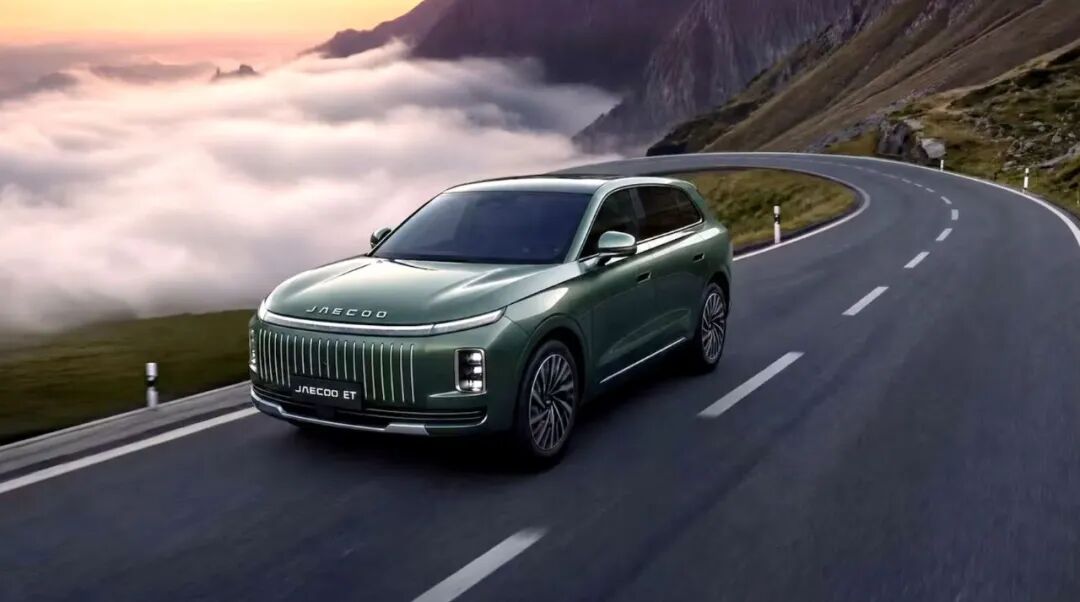
It is equipped with a CATL battery, with an estimated full-charge range of about 525 kilometers, on par with the Tesla Model Y Standard Range and the Chevrolet Equinox EV. It also comes with driver assistance, smart air suspension, and a European five-star safety rating.
Zhang Guibing, Chery's Vice President in charge of international business, put it plainly: "In Canada, heated steering wheels, windshields, and seats are very important."
Chery's roots in Canada also run somewhat deeper than the others. It has been China's largest vehicle exporter for more than 20 consecutive years, accounting for nearly 20% of China's vehicle exports in the first nine months of this year.
In 2025, Chery filed trademark registrations in Canada for brands including Exeed, Omoda, and Jaecoo, and in January this year it began recruiting for core positions for the Canadian market.
Its headquarters is located in the Greater Toronto Area, and it plans to first expand distribution in major cities across British Columbia, Ontario, and Quebec.
With the 2027 quota at less than 60,000 vehicles, the Jaecoo and Omoda brands intend to work with a dozen or so dealers first. About 40 have already approached them, but Chery is not planning to bite off more than it can chew.
Farzad Salehi, Executive Vice President of the two brands in Canada, said: "We are taking a prudent step and want to see how much volume we can get."
Chery is also looking at building a plant. Bloomberg reported in October that Chery is evaluating the possibility of building a complete vehicle production base in Canada. If realized, it would become the first Chinese automaker to manufacture vehicles locally.
Chery later clarified, however, that the relevant remarks expressed an intention for future layout and "are not a current investment plan." The door was not closed, and nothing was set in stone.
Chery's "winter adaptation" is a specific product entry point. But it works because of a whole supporting system behind it: export scale, brand registrations, a local team, and dealer negotiations—not one can be missing.
With this layer clear, looking back at Lifan's experience in Russia makes some things very straightforward.
03 An Important Reminder: Lifan's Russian Past
"Adapting to local winters" is not the first time Chinese automakers have done this.
Russia has long been one of the most important overseas markets for Chinese cars. Auto Commune recalls that from 2010 to 2015, the best-selling Chinese car brand in Russia was Lifan.
The first thing Lifan's Russian team, led by Sun Zejun, did was modify products: each model was adjusted for the local climate, fuel quality, and driving habits.
In Russian winters, road salt is spread, causing rapid chassis corrosion, so Lifan focused on chassis anti-corrosion; Russians are physically larger, so interior space was enlarged while stability in cold weather was strengthened.
The pace was not disrupted either. Lifan entered Russia in 2007, starting with semi-knocked-down assembly and being cautious in selecting assembly plants and distributors.
After the Ukraine crisis in 2014, Russia was sanctioned and many companies withdrew capital, but Lifan instead signed a plant construction agreement in Lipetsk Oblast, with an investment of about USD 300 million and planned annual capacity of 60,000 vehicles.
Channels were built step by step, and by 2018 it had 117 sales centers in Russia.
Products were modified appropriately, channels were built appropriately, and policy relations were managed appropriately. Back then, Lifan in Russia was not just selling its own cars; it also brought Chinese automakers together to seek favorable policy space from the Russian side. That is what deep cultivation means.
But there is another side to Lifan's story.
It held the top spot among Chinese brands in Russia for many consecutive years, but the collapse of its domestic performance was not rescued by overseas sales.
For the vast majority of automakers, revenue and employment are concentrated at home, and the engine of technological iteration is also at home. Overseas is a source of profit, but the foundation of competitiveness remains in the home market.
Applying this lesson to Canada, which is also in a cold-climate region, it does not belong to any single automaker.
Geely has Volvo and Polestar channels to use, BYD has early certification and plant research, Dongfeng has a long-term local production goal, and Chery has winter-adapted products and more than 20 years of export experience.
Each path is different, but the underlying logic is the same: in the overseas battle, what matters is who has roots deep enough at home while also taking solid steps abroad.
On Canada's chessboard, one cannot focus only on the number 18 models. For Chinese brands, this is a quota window, a winter calibration ground, and the first stop for reputation in North America.
In the first half of 2026, pure EVs accounted for 7.4% of new vehicle registrations in Canada, up from 5.8% in the same period last year; Ross predicts it will rise to 11.3% in 2027, 14.2% in 2028, and 16.4% in 2029. The market is recovering, but the number of players is increasing.
The 18 Chinese new models are still on the way. Chery has played the "winter-proof" card first, Geely is taking a new car down Volvo's old road, BYD is calculating the plant construction bill, and Dongfeng has put its first row of display cars in Montreal.
Canada is not the destination; it is a springboard.
Editor-in-Charge: Shi Jie Editor: He Zengrong

THE END
-
Auto Market News: October NEV Penetration Exceeds 50% Across All Segments
-
![]()
Avatr's Valuation Under the Microscope: Monthly Sales Fall Below 3,000 Vehicles
-
![]()
Big Tech's Hunt for "ByteDance Time"
-
![]()
Mazda's Struggle and Transformation: A Case Study in Survival for Second-Tier Automakers | Cover Story: Japanese Automakers at the Crossroads of Transformation (Part VI)
-
![]()
Top 10 SUVs by Sales Are All Feeling a Bit Nervous Now
-
![]()
Eldest Son Returns with a Price Hike: Is AITO Using the New M8 to Take On the 9 Series?
-
![]()
Cerebras: Supply and Demand Are Both Fine — the Fab Is the "Big Headache"
-
![]()
Waymo vs. Tesla: How Far Has the Robotaxi Battle Come—and Will Automakers Become the Foxconn of Cars?