Eldest Son Returns with a Price Hike: Is AITO Using the New M8 to Take On the 9 Series?
 11/16 2026
 485
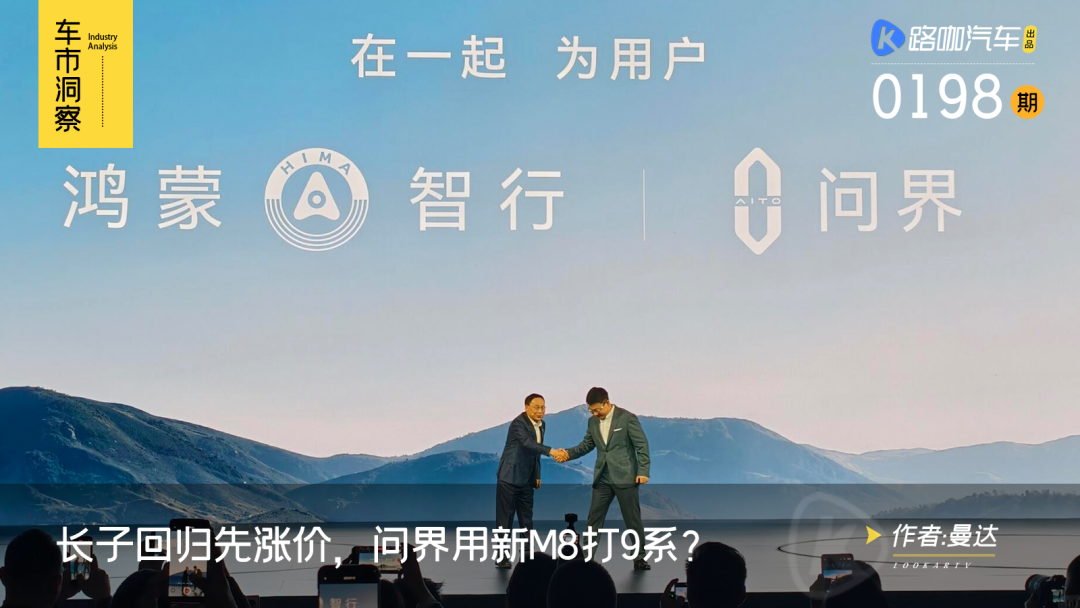
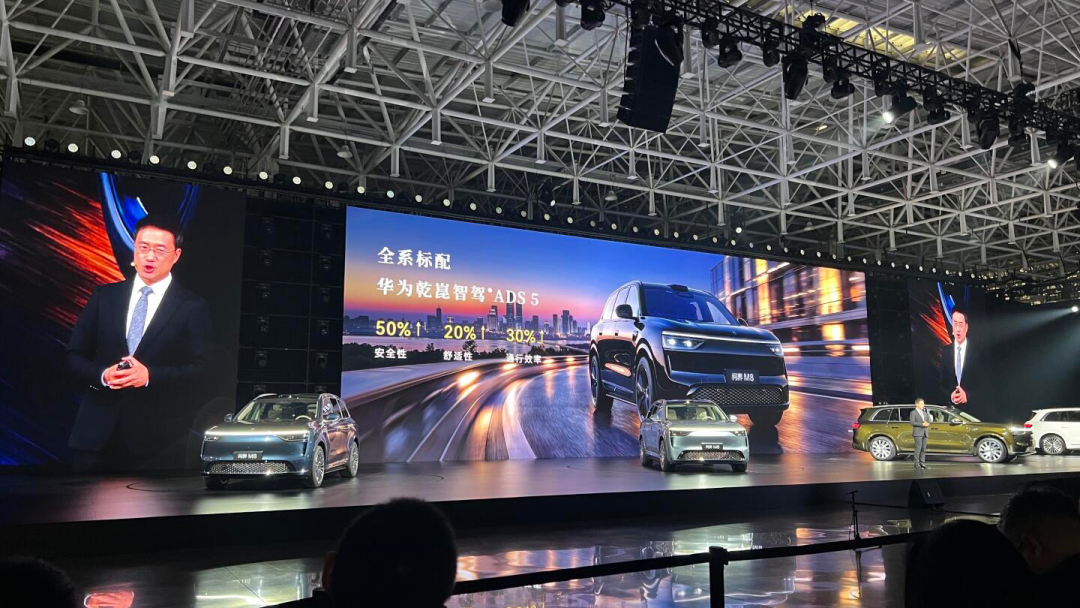
With the launch of the AITO New M8, the outside world is less concerned about price and specs than about how Huawei will show up on Seres' home turf after announcing the adjustment of their cooperation model. When the image froze on the handshake between Yu Chengdong and Zhang Xinghai, the signal was unmistakable.
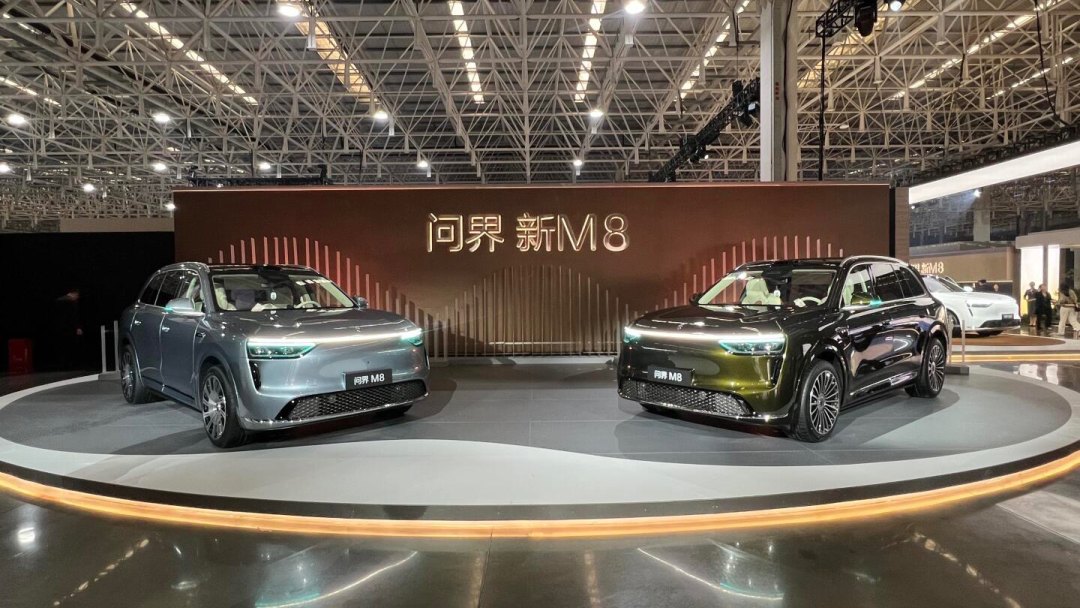
As the first new car led by Seres, the new M8 was unveiled at the Seres Super Factory in Longxing, Chongqing. On the on-site slides, AITO was back in the first position in the display of the "Five Marques." Observers joked that the eldest son had returned.
In fact, even before the launch event, AITO had already returned to HIMA stores, and had even set up dedicated AITO zones in large Huawei stores... AITO's standing among the "Five Marques" is plain to see.
After the event, AITO officially announced 4,600 firm orders in two hours. For a new car with a starting price of 379,800 yuan, that result is hardly spectacular by AITO's past standards.
After 1.5 billion yuan in R&D, the new M8 lineup is priced 20,000 yuan higher
Yu Chengdong said at the launch that Huawei invested more than 1.5 billion yuan in R&D for the AITO New M8, achieving 126 technological innovations.
Look at the actual vehicle and the new M8's perception system, battery, chassis platform, powertrain, cabin, and body have all been almost completely renewed, with the entire lineup upgraded across the board to an 800V high-voltage silicon carbide platform. One point was heavily emphasized at the launch: the new car features the all-new WEWA 2.0 technical architecture, and the entire lineup adopts a future-oriented L3-level autonomous driving architecture, with 38 high-precision sensors throughout the vehicle—including an 896-line dual-optical-path image-level lidar within a four-lidar matrix—paired with Huawei Qiankun ADS 5, with the hardware pushed to the maximum.
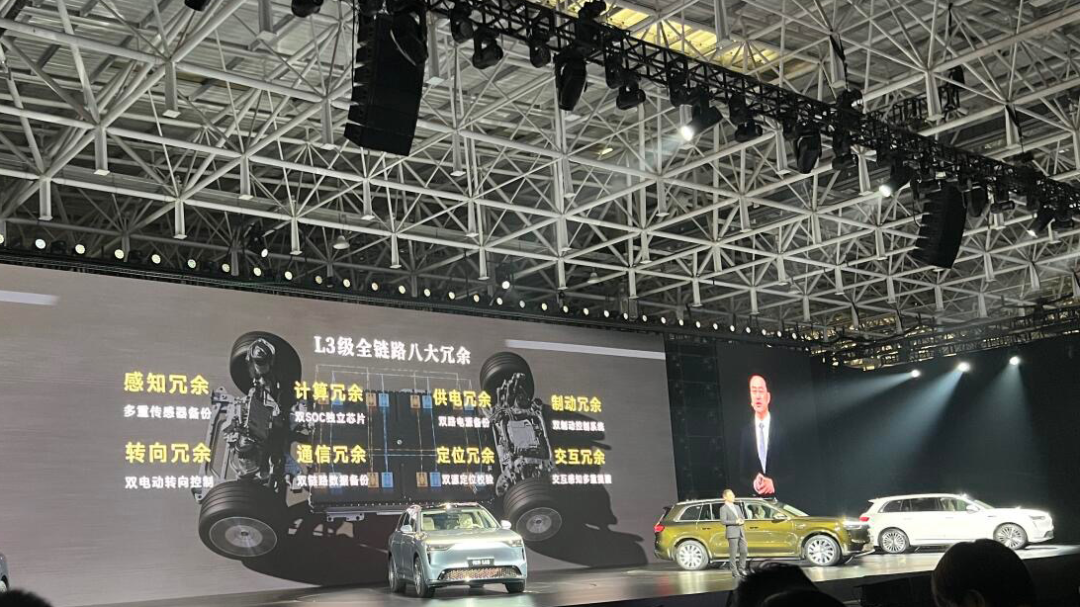
The chassis upgrade is equally substantial: the entire lineup comes standard with dual-valve variable damping shock absorbers and dual-chamber air suspension, adds ±8° active rear-wheel steering and a turning radius of under 5 meters, and also supports crab-walk mode, making narrow-road U-turns, garage maneuvering, and curb-side parking more effortless.
Inside the cabin, the three-screen panoramic display, intelligent fragrance system, ultra-low-temperature heating and cooling box, and front-row queen vanity mirror are all included. The car can be controlled by gestures both inside and outside, with doors opening by a mid-air gesture and closing with a wave—delivering a full sense of ceremony.
The seats are the highlight of this upgrade: the driver's seat is swapped for a zero-gravity seat, the zero-gravity seat on the right side of the second row is upgraded to 3.0, and the rear row offers an optional 21-inch eye-protection entertainment screen. Both the front trunk and the hidden compartment in the rear trunk have been enlarged, finally giving small items like umbrellas and charging cables a place to go. On safety, the all-dimensional collision avoidance 5.0 system plus a Xuanwu body with high-strength materials accounting for over 81% bring protection to flagship standards as well. In terms of range, the extended-range version has a CLTC combined range of 1,435 km, and the pure electric version a maximum of 830 km.
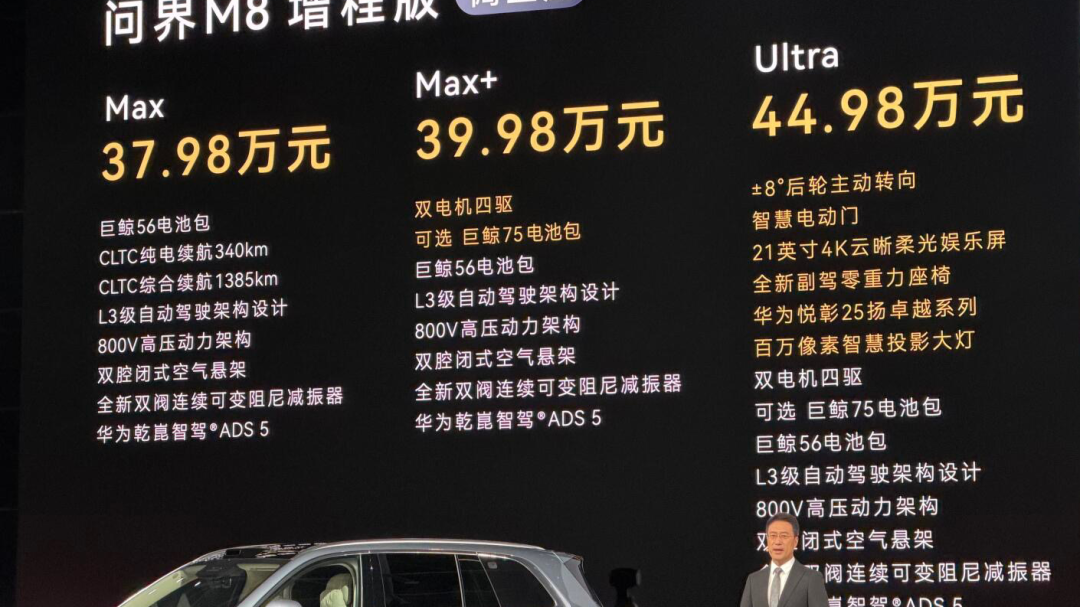
The spec sheet is indeed impressive, but the price is the most eye-catching part: the entire lineup is 20,000 yuan more expensive. The six extended-range variants are each 20,000 yuan pricier; the pure electric versions are even more aggressive, with the 359,800 yuan entry-level trim dropped outright, raising the starting price to 399,800 yuan.
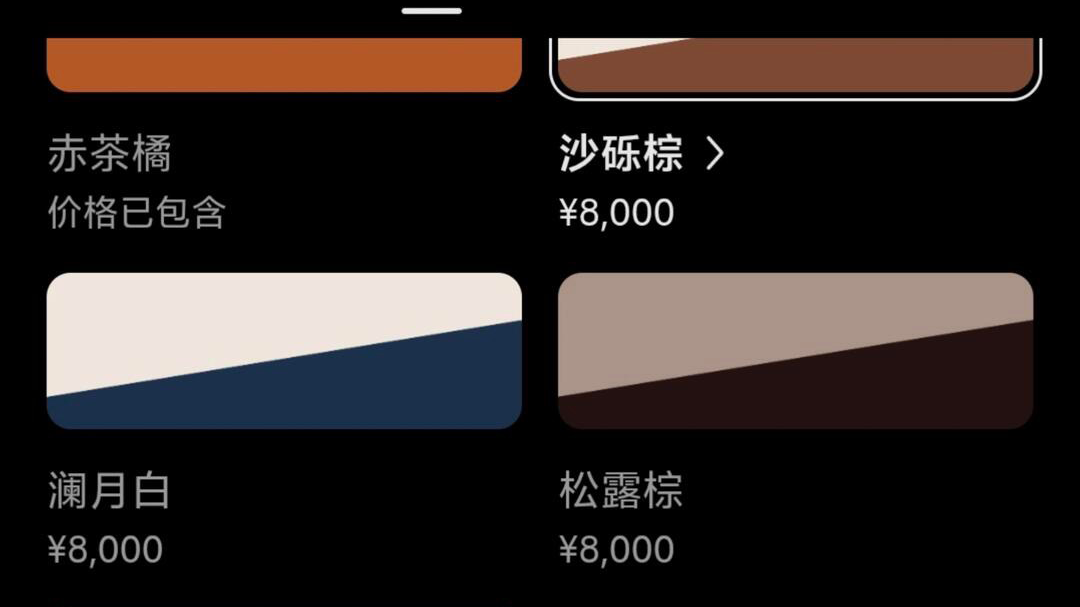
More critical is the option logic. On mid-level trims, popular features such as the large battery pack, rear-wheel steering, front passenger zero-gravity seat, electric side steps, and smart electric doors are all optional items requiring extra payment. In other words, for cars in the 360,000 and 470,000 yuan tiers, the lidar and intelligent driving are exactly the same, and the real differences lie only in the battery, seats, and audio. To get a "fully equipped home," your wallet has to bleed again. The official side also left a buffer: users who place orders before January 4, 2027, can enjoy first-sale benefits of up to 35,000 yuan—a gesture that can be read as softening the price increase.
Can Seres' first new car under its leadership break out of the spec-stacking model?
More noteworthy than the product itself is the identity of the new M8: this is the first new car led by Seres after the adjustment of the cooperation model between Huawei and Seres.
At the launch, Yu Chengdong once again explained the new division of labor between the two sides: Huawei is responsible for core technology, product definition, and product design; Seres is responsible for vehicle manufacturing, R&D engineering implementation, marketing, sales, service, and upgrade maintenance; the two sides conduct joint R&D and jointly provide products and services to users. Zhang Xinghai then shook hands with Yu Chengdong on stage, leaving a thought-provoking remark: "If HIMA is strong, AITO is strong; if AITO is strong, HIMA is even stronger."
The signal is unmistakable: Huawei and Seres cannot do without each other. AITO in particular remains the absolute sales mainstay of HIMA, while Luxeed, Stelato, and Maextro have so far failed to carry the volume banner, and HIMA's sales base still rests on AITO. It is therefore not hard to understand why Huawei is willing to cede leadership: Seres needs a car to prove its leading capability, and Huawei needs AITO to keep carrying sales—each takes what it needs.
But the market's first reaction was not particularly enthusiastic. The firm order result announced by AITO was 4,600 units in two hours, visibly far behind the old model's 32,000 firm orders in the 24 hours after launch. Combined with this year's market situation, the main reason lies in the price: the new M8 after options is already close to mainstream 9-series SUVs on the market, such as the Li Auto L9, Zeekr 9X, and NIO ES9. With the same budget, users have too many options.
Interestingly, the positioning of the new M8 has similarities with the flagship M9. When competitors are all desperately stacking specs, AITO chose to use options to defend its positioning and premium. Judging from the transaction price and market share of the M9, this strategy works: the AITO M9 firmly ranks among the top three new energy SUVs in the 500,000 yuan class and is also the best-selling model in the entire HIMA camp. In other words, AITO wants to pull away from the spec-stacking competition.
But whether this strategy will work on the M8 is hard to say. Judging from the sales performance of the old M8 before the price increase, cumulative sales in the past three months were only about 1,000 units, while the NIO ES8 at a similar price has monthly sales of around 10,000 units. Both are "high-spec, high-price," but users' tolerance for the M9 may not carry over to the M8: buyers in the 500,000 yuan class are buying a status label, while buyers in the 400,000 yuan class are calculating the family budget.
Ultimately, what the new M8 really needs to verify is whether the old rule—that "Huawei cars" sold better the more expensive they were—still holds. The 1.5 billion yuan R&D investment, the L3-level architecture pre-embedding, and Seres' first time leading are all bets on this answer.
-
Auto Market News: October NEV Penetration Exceeds 50% Across All Segments
-
![]()
Avatr's Valuation Under the Microscope: Monthly Sales Fall Below 3,000 Vehicles
-
![]()
Big Tech's Hunt for "ByteDance Time"
-
![]()
Mazda's Struggle and Transformation: A Case Study in Survival for Second-Tier Automakers | Cover Story: Japanese Automakers at the Crossroads of Transformation (Part VI)
-
![]()
Top 10 SUVs by Sales Are All Feeling a Bit Nervous Now
-
![]()
Eldest Son Returns with a Price Hike: Is AITO Using the New M8 to Take On the 9 Series?
-
![]()
Cerebras: Supply and Demand Are Both Fine — the Fab Is the "Big Headache"
-
![]()
Waymo vs. Tesla: How Far Has the Robotaxi Battle Come—and Will Automakers Become the Foxconn of Cars?