Mazda's Struggle and Transformation: A Case Study in Survival for Second-Tier Automakers | Cover Story: Japanese Automakers at the Crossroads of Transformation (Part VI)
 11/16 2026
 452
The competitive landscape of the automotive industry is being reshaped, and the window for transformation is narrowing. Electrification and intelligence have become the core engines of upgrading, while globalization has become the proving ground for their success. As electrification and intelligent technologies shift from quantitative to qualitative change, and Chinese automakers rapidly expand globally, Japanese automakers find themselves standing at the crossroads of transformation. At this historic juncture, if Japanese automakers want to have the last laugh, they urgently need to rebuild their existing advantages and create new late-mover advantages.
Focusing on the transformation of Japanese automakers, Auto Review has specially produced this issue's "Cover Story" special report. This special report consists of six articles. Today we publish the sixth—please stay tuned.
Under the impact of the electrification wave, Mazda is mired in a triple predicament: shrinking profits, lost market share, and lagging transformation. To survive, it has chosen to ally with Changan and Toyota in pursuit of a breakthrough. But alliances are only a buffer; how to protect its brand core concerns the survival of an automaker and the future of all second-tier brands.
As a highly distinctive company in the Japanese automotive camp, Mazda once won a large number of loyal users in the global auto market with its "Jinba Ittai" handling philosophy, Kodo design language, and SKYACTIV powertrain technology. But in an era where electrification and intelligence sweep across the global auto industry, this automaker that insists on mechanical aesthetics has fallen into multiple contradictions: the North American market can still maintain a profitable base, but the Chinese market continues to shrink significantly; the internal combustion engine technology it was proud of in the fuel era has become a historical burden in the new energy transition; and its limited corporate scale prevents it from making massive whole-industry-chain investments like Toyota and Volkswagen.
Triple Predicament
Mazda's predicament today is not a defeat in a single market, but the superposition of a triple compound crisis: a fragile global profit base, continuous bleeding in the Chinese market, and an arduous electrification transformation.
Fiscal year 2025 (April 2025–March 2026) is a year of profit "diving" for Mazda. In this fiscal year, Mazda's global sales were 1.223 million units, down about 6% year-on-year; revenue was 4.92 trillion yen, down about 2% year-on-year; operating profit was only 51.6 billion yen, plunging 72.3% year-on-year; net profit was 35.1 billion yen, sharply down 69.2% year-on-year.
Mazda's sharp profit shrinkage is mainly dragged down by US tariffs, rising raw material prices, and insufficient competitiveness of electrified products. According to the operating profit change factors disclosed by Mazda, the drastic changes in US tariff policy alone caused a negative impact of 154.9 billion yen—an amount even exceeding the overall profit decline. As a second-tier automaker with annual global sales of only about 1.22 million units and extremely high dependence on the US market, Mazda lacks the scale barrier of Toyota to absorb tariff shocks.
Meanwhile, Mazda's sales base is still contracting: in fiscal year 2025, Mazda's sales in North America fell 6% year-on-year, Europe fell 6%, and other markets fell 8%. The widespread shrinkage of global sales means Mazda is losing its traditional weapon of "compensating price with volume." From the perspective of product strength, on the one hand, a large number of models rely on imports, and fluctuations in US tariff policy may erode profits at any time; on the other hand, Korean and American competitors continue to squeeze share, and the market share of its main SUV models declines year by year. From the perspective of regional markets, Europe is suppressed by strict carbon emission regulations, Japan's domestic market is limited in size, and emerging markets such as Southeast Asia and Australia have obvious ceilings, making it difficult to form new profit growth poles.
If the decline in global profits is an "external injury," then the loss of the Chinese market is "internal bleeding." China was once Mazda's most important overseas incremental market. In 2017, the sales of FAW Mazda and Changan Mazda in China exceeded 300,000 units for the first time, setting a historical peak, and then began a continuous decline lasting several years. In 2025, the annual sales of Changan Mazda (FAW Mazda was merged into Changan Mazda in August 2021) shrank to 87,000 units, down more than 70% from the peak. Entering 2026, the situation has not improved significantly. From January to August 2026, Changan Mazda's cumulative sales were only 66,800 units, and at this pace, it may be difficult to firmly hold the 100,000-unit threshold for the full year.
The defeat in the Chinese market is rooted not in the failure of a single product, but in long-term strategic misjudgment. For a long time, Mazda adhered to a globally unified product development logic and paid insufficient attention to local Chinese demand. For example, domestic consumers value rear-seat space, large-screen cabins, and rich intelligent configurations, while many Mazda models have cramped rear seats, long lagging infotainment system iterations, and intelligent configurations concentrated in high-trim versions, leaving the product experience disconnected from mainstream domestic consumer demand. More importantly, during the window period of explosive growth in domestic new energy vehicles, Mazda could not offer truly competitive electrified products and could only watch the market being seized by independent brands and other joint venture brands. By the time it came to its senses, the market landscape had basically taken shape.
In the era of electrification and intelligence, Mazda has fallen into a deep dilemma regarding its electrification transformation path. Mazda's electrification path has always been wavering. It originally planned to invest 2 trillion yen in electrification by 2030, later optimized to 1.2 trillion yen, a reduction of 40%; the global pure electric sales target was lowered from the original 25% to about 15%, and the first model on its self-developed pure electric platform was postponed from 2027 to between 2028 and 2030. Its first global pure electric model, the MX-30, was released as early as 2019, but the electric version CX-30 EV in the Chinese market sold only about 500 units in three years, with dismal market response. While Tesla, BYD, NIO, XPeng, and Li Auto iterate frantically, Mazda's "obsessiveness" in the internal combustion engine era has become a shackle in the electric era.
On one side, the basic base in the North American market is fragile and unstable; on the other side, it is retreating steadily in the largest new energy market. On one side, it has deep internal combustion engine technology accumulation; on the other side, its self-developed pure electric platform has been delayed repeatedly. On one side, it has an engineer culture that insists on independent R&D in its bones; on the other side, it has to successively join hands with Changan and Toyota, relying on external technologies to fill shortcomings in electric drive, battery, electronic control, and intelligence. Multiple contradictions intertwine, jointly outlining Mazda's current survival picture. Its predicament is not only the individual experience of a Japanese automaker, but also the common proposition of the era for many second-tier automakers worldwide: in an era when giants monopolize capital and technology, how can second-tier automakers protect their own brand core and complete the transformation of the times?
The Road to Breakthrough
When "self-development obsession" becomes a survival burden, Mazda has to re-examine its positioning. Facing multiple predicaments, Mazda ultimately abandoned its obsession with insisting on all-independent R&D and established a "multi-solution strategy + asset-light alliance" model, relying on external partners to fill shortcomings according to differentiated needs in different regional markets, while retaining its core capabilities in vehicle tuning, design, and brand definition to avoid becoming a mere badge-engineering operation. The two most important cooperation mainlines point respectively to Changan Automobile in the Chinese market and Toyota Motor at the global level.
The Chinese market is Mazda's biggest pain point and has now become its most important test field for electrification breakthrough. In the past, Mazda's China business model was Japanese R&D and domestic assembly, with the Chinese team having weak say in product definition, and products were detached from local demand. After the sales defeat, Mazda thoroughly adjusted its China strategy, deeply bound itself to Changan Automobile, and embarked on a path of "in China for global," no longer treating China merely as a sales market but transforming China into Mazda's global new energy R&D and manufacturing base.
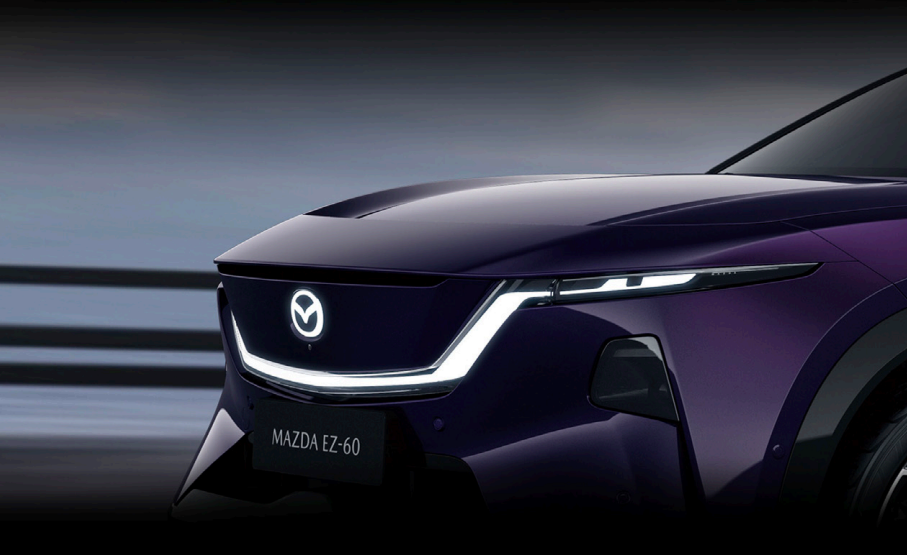
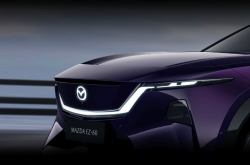
The representative models of the cooperation are the EZ-6 (overseas name Mazda 6e) and EZ-60 (overseas name CX-6e). The two models are developed based on Changan's EPA electric platform and fully absorb the Chinese side's mature electric drive, battery, electronic control systems, intelligent cabin, and intelligent driving hardware foundation. Mazda is responsible for vehicle exterior and interior design, chassis calibration, and NVH tuning, retaining Mazda's iconic driving texture and realizing a division of labor model of "Chinese underlying hardware + Mazda upper-layer product definition and tuning."
This cooperation model brings two direct results. First, it greatly compresses the development cycle of all-new electric vehicles, eliminating the need to invest huge sums from scratch to build an electric drive R&D system, and quickly launches pure electric and extended-range products that meet Chinese market demand. In the first quarter of 2026, the proportion of new energy sales at Changan Mazda reached 47%, and the company's goal is to push the full-year new energy proportion to 70%, attempting to become the first joint venture automaker in China with a new energy sales proportion of over 70%. Of course, it should also be objectively noted that behind the high proportion there is a "denominator effect," partly from the sharp decline in sales of fuel models, not entirely from explosive growth of new energy vehicles.
Second, it realizes reverse overseas export of products developed in China. The overseas version of the EZ-6, the Mazda 6e, has already landed in more than 20 country markets including Europe and Australia, receiving thousands of orders shortly after launch; the CX-6e has also successively begun overseas rollout. An electric vehicle jointly developed with China has become Mazda's main model for expanding into the European electric market, which is a very rare case among traditional joint venture automakers.
But this path also harbors risks. The electric drive, battery, electronic control, and intelligent underlying architecture are in the hands of the partner, and Mazda focuses more on design and chassis tuning, creating a long-term hidden concern of technological hollowing-out. As the industry enters the era of 800V high voltage and next-generation intelligent driving large models, can Mazda keep up with the platform iteration pace? How to balance the Chinese platform foundation and Mazda's brand uniqueness and avoid products losing Mazda's soul? How to connect old and new user circles? These are all practical issues that need to be solved next.
At the global level, Mazda and Toyota concluded a capital and business alliance as early as 2017, establishing a deep collaborative relationship covering multiple dimensions such as a US joint venture plant, hybrid technology, basic electric vehicle technology, and connected vehicle security technology. In the North American market, the two sides jointly built the Alabama plant to achieve local US production of Mazda models and hedge import tariff risks. At the hybrid technology level, the North American hybrid version of the CX-50 directly adopts Toyota's mature hybrid system, quickly completing the hybrid product matrix without developing an entire hybrid system from scratch, meeting North American energy-saving demand at lower cost. In fields such as basic electric technology, in-vehicle connectivity, and advanced safety technology, the two companies conduct joint research to share high basic R&D costs.
Of course, Mazda has not completely given up independent powertrain R&D. In the official progress of its self-developed SKYACTIV-Z all-new hybrid system, it is planned to be launched in 2027 on the all-new CX-5, representing that Mazda still retains powertrain self-development capability. The alliance is a supplement, not a complete replacement, adopting a dual-track parallel strategy of "self-development + external technology introduction."
Risks Remain
Mazda's breakthrough path is like a double-edged sword, accompanied by risks and challenges.
At the product level, Mazda has abandoned the old idea of one global product package conquering the world and implemented a differentiated multi-solution strategy, adopting different technology routes in different markets and adapting to local regulations and consumer demand according to local conditions. In the Chinese market, it leverages the Changan platform and focuses on pure electric and extended-range; in the North American market, it prioritizes hybrid + fuel, while also covering some pure electric products; in the European market, it launches pure electric models jointly developed with China, paired with plug-in hybrid products to meet strict emission regulations; in markets such as Southeast Asia and Australia, it arranges hybrid, fuel, and pure electric in a gradient according to local charging infrastructure penetration.
The advantage of this strategy is that it can flexibly adapt to the completely different electrification rhythms of various global markets and avoid the operational risks brought by some automakers' one-size-fits-all full discontinuation of fuel vehicles. But disadvantages also exist: parallel multiple technology routes increase the complexity of product management and parts supply chains, placing higher demands on corporate operations management.
Similarly, seeking survival through alliances has bought Mazda a window for transformation, but that does not mean it has fully escaped its predicament. Several core risks still loom overhead.
First, the alliance cooperation model carries a hidden risk of diluting the brand's core. Mazda's core asset is its "Jinba Ittai" brand character. When a large number of electric products source their underlying hardware from external partners, and Mazda's work is concentrated on design and chassis tuning, ensuring that a large number of jointly developed models still possess the Mazda traits consumers recognize is a huge challenge. If consumers cannot perceive Mazda's unique product differentiation, its products will easily fall into homogeneous competition, and the original brand premium will be continuously eroded.
Second, growth in the Chinese market is uncertain. Although the EZ-6 series has achieved overseas exports, the overall domestic sales base remains relatively small. Competition in the joint venture new energy segment has already become white-hot: independent brands are driving prices down, and other joint venture brands are accelerating their electrification transformation. For Changan Mazda, turning the increase in new energy proportion from "a passive improvement brought about by shrinking fuel vehicle sales" into active growth in sales of new energy models themselves remains very difficult. If the domestic market maintains an annual sales scale of less than 100,000 units for a long time, it will be difficult to support sufficiently large R&D and channel investment.
Third, the time window left for the self-developed technology route is rapidly narrowing. Mazda has not completely given up on its self-developed pure electric platform, but the timing has been repeatedly delayed. In the medium and long term, relying entirely on external cooperation cannot build a complete technology moat. Once the self-developed platform is delayed again, against the backdrop of continuously rising electric penetration in major global markets, the gap with peers will continue to widen. At the same time, the Large Architecture rear-wheel-drive platform required huge upfront investment, and its product performance fell short of expectations. How to complete a reset and iteration will consume valuable corporate financial resources.
Fourth, sentiment cannot become a long-term commercial pillar. The rotary engine is Mazda's most resounding sentimental symbol, but commercially it has proven difficult to achieve large-scale mass production. The Iconic SP concept car ignited the expectations of many car fans, but officials also frankly acknowledged that mass production would face extremely high cost pressure. Sentiment can be used for brand communication, but it is difficult to serve as the foundation of volume products; companies ultimately still need to rely on mainstream models aimed at the mass consumer market to achieve profitability and survival.
Fifth, global geopolitics and policies are complex and changeable. US tariff policy, EU carbon tariffs, and constantly changing new energy subsidies and emission regulations in various countries will all directly impact Mazda, which is highly dependent on exports. North America is its core profit pool; once trade policy undergoes major changes, it will directly impact the company's cash flow safety.
Industry Mirror
Standing at the time node of 2026, alliance cooperation has won Mazda a valuable buffering window for transformation, but it is far from meaning that it has weathered the survival crisis.
Relying on North American market SUV products to maintain stable cash flow; leveraging Changan cooperation to quickly obtain mature electric products and achieve reverse overseas export; leveraging the Toyota alliance to share global R&D and manufacturing costs; while retaining core capabilities in self-developed hybrids, vehicle tuning, and design—this combination punch has won Mazda transformation time.
But Mazda's future development still has two completely different possibilities: either protect its differentiated positioning and complete a smooth transformation, or continue to be marginalized by the market. Objectively speaking, it is difficult for Mazda to replicate giant-style growth like Toyota and BYD. Its way out does not lie in becoming a large-scale top automaker, but in whether it can protect its differentiated ecological niche. In an era when everyone pursues large screens, high-level intelligent driving, and extreme parameters, insisting on "good to drive" as its core label and attracting a group of users who value driving texture, finding survival soil in the cracks squeezed by giants.
In fact, Mazda's struggles and quests are not just the story of one company; they reflect the shared survival dilemma of second-tier automakers under the sweeping wave of transformation across the entire automotive industry.
In the past fuel era, the automotive industry allowed a large number of "small but beautiful" players to exist. As long as they polished their engines and chassis, they could secure a slice of the pie for themselves. In the era of intelligent electric vehicles, however, R&D costs have risen exponentially, economies of scale have been amplified infinitely, and the threshold for full-stack in-house development has been raised to a height that most second-tier companies can hardly bear independently.
The options facing second-tier automakers are already few: either keep expanding scale to join the first tier; or form deep alliances, leverage external resources to shore up weaknesses, and preserve their own brand and product definition rights; or keep contracting and focus on extremely niche segmented markets; and some companies will inevitably be eliminated by the times.
Mazda has chosen the second path—survival through alliance. But survival through alliance does not mean lying flat and slapping on badges. Cooperation is only a means to acquire technology; a brand's soul, product definition, tuning capabilities, and design aesthetics are the foundation on which an automaker stands. If these cores are lost and only hardware assembly remains, the company will completely lose its reason to exist.
The biggest lesson Mazda offers the industry is this: electrification does not mean wholly negating the accumulated heritage of the past. The vehicle tuning, chassis engineering, vehicle integration, and industrial design capabilities accumulated in the internal combustion engine era will not become completely obsolete with the disappearance of the engine. The key lies in how to transfer these traditional strengths into the product experience of electric vehicles.
In the more than century-long history of the automotive industry, there has never been a shortage of obsessive engineers, nor of companies overturned by the times. Mazda embodies both ideals and reality: on one side is the mechanical romance represented by the rotary engine and SkyActiv technology; on the other side are the cold, cruel business survival rules of the electric era.
Today's Mazda has let go of the engineer's obsession with "relying on oneself for everything" and chosen to embrace cooperative alliances in exchange for the chance to survive and continue evolving. But cooperation is only a bridge, not the destination. Whether it can successfully break through in the future ultimately depends on one thing: while borrowing external technological shells, can it preserve the soul that belongs to Mazda and truly transplant "Jinba Ittai" into the new world of electrification? And the answer Mazda delivers will also answer whether the "small but beautiful" model still has a place in the electric era.

Image: from the internet
Article: Auto Vertical and Horizontal
Layout: Auto Vertical and Horizontal
-
Auto Market News: October NEV Penetration Exceeds 50% Across All Segments
-
![]()
Avatr's Valuation Under the Microscope: Monthly Sales Fall Below 3,000 Vehicles
-
![]()
Big Tech's Hunt for "ByteDance Time"
-
![]()
Mazda's Struggle and Transformation: A Case Study in Survival for Second-Tier Automakers | Cover Story: Japanese Automakers at the Crossroads of Transformation (Part VI)
-
![]()
Top 10 SUVs by Sales Are All Feeling a Bit Nervous Now
-
![]()
Eldest Son Returns with a Price Hike: Is AITO Using the New M8 to Take On the 9 Series?
-
![]()
Cerebras: Supply and Demand Are Both Fine — the Fab Is the "Big Headache"
-
![]()
Waymo vs. Tesla: How Far Has the Robotaxi Battle Come—and Will Automakers Become the Foxconn of Cars?