Two Years Into End-to-End: How Far Has Each Automaker's Intelligent Driving Really Come?
 11/17 2026
 460
In 2024, end-to-end became one of the most closely watched technical directions in the intelligent driving industry.
From Tesla FSD to domestic automakers, companies rolled out end-to-end solutions one after another, and the industry came to see it as a key path for breaking through the bottlenecks of traditional intelligent driving architectures.
Two years on, end-to-end is no longer a technical badge worn by only a handful of companies; more and more mass-produced models have begun to adopt data-driven driving models.
Yet for all that they share the end-to-end label, companies have not stayed on the same road.
Some have begun pushing VLA toward mass production, some have brought world models into their training systems, some are trying to further optimize driving policies through reinforcement learning, and some have started combining embodied foundation models with assisted driving. After two years of development, where exactly does each company's end-to-end approach now stand? What substantive changes have taken place in their technical solutions?
01 Tesla Keeps Deepening Its End-to-End Model
Any discussion of how end-to-end has developed has to start with Tesla.
Tesla was relatively early in applying end-to-end neural networks to FSD at scale. Its core idea is to use the real-road data accumulated by its fleet to let neural networks learn directly the relationship between the driving environment and vehicle control behavior, cutting down the large number of hand-engineered rules and intermediate processing steps found in traditional systems.
By 2026, Tesla is still iterating continuously along this route.
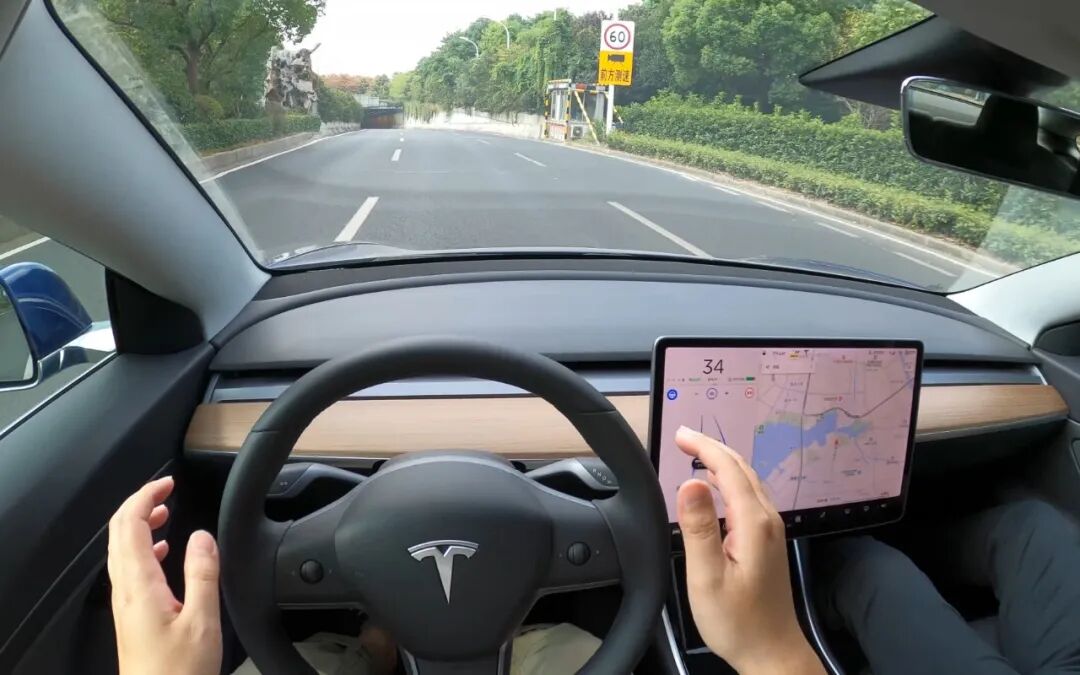 Image source: Internet
This year's FSD V14 continues to upgrade around the end-to-end foundation model. In its Q1 2026 update, Tesla disclosed that V14 further improved the reinforcement learning training process to enhance handling of long-tail scenarios, while also upgrading the vision encoder and optimizing model compilation and inference efficiency. The company said runtime latency was reduced by up to 20%. As of now, FSD has entered the V14.3 iteration series.
One point to add: what is discussed here is FSD (Supervised), which still requires continuous driver supervision and does not mean the vehicle has achieved full autonomous driving.
One characteristic of Tesla's route is that it has not frequently changed technical names, but has continued to iterate around data scale, neural networks, and training efficiency.
This also shows that end-to-end has not lost value just because new technologies such as VLA and world models have emerged. How to keep improving existing models remains a very practical technical direction.
02 Huawei Extends From End-to-End to the Cloud
World models and online reinforcement learning. Huawei's changes are mainly reflected in further upgrades to its training system and vehicle-side decision architecture. In April 2026, Huawei officially released Qiankun Intelligent Driving ADS 5, built on the WEWA 2.0 architecture.
This architecture no longer only emphasizes how the vehicle-side model completes perception and driving decisions, but further strengthens the connection between cloud training and vehicle-side execution.
In the cloud, WEWA 2.0 introduces a multi-agent mechanism, allowing different traffic participants to form dynamic interactions in a simulated environment, while adding online reinforcement learning to try to improve model training and validation efficiency.
On the vehicle side, it introduces safety risk field technology, which provides a basis for driving decisions by evaluating risks in different directions around the vehicle. This is in fact an extension of the traditional end-to-end system.
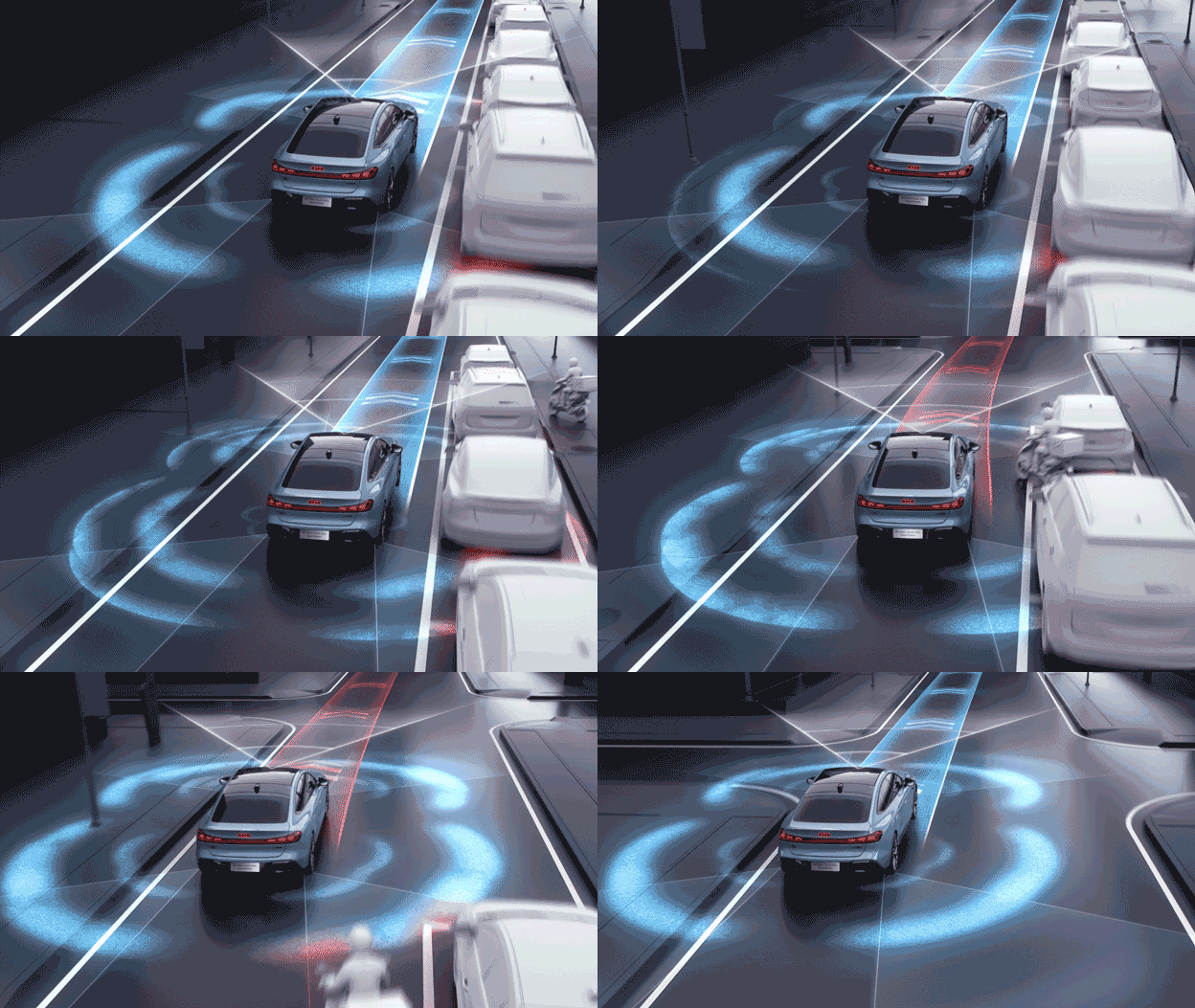 Image source: Internet
In the past, models relied more on real road data to learn driving behavior. Now, Huawei has begun to pay further attention to the dynamic relationships among traffic participants and the risks that different driving actions may bring.
For example, at complex intersections, the vehicle must not only identify pedestrians and other vehicles ahead, but also combine their motion states to judge possible interactions among different traffic participants.
Such problems are difficult to solve solely through static object recognition. Therefore, Huawei combines world models, multi-agent mechanisms, and reinforcement learning, attempting to give the model richer scenario experience during training.
Judging from the technical changes in ADS 5, Huawei's focus is no longer just improving the driving capability of the vehicle-side model, but further improving the entire system from cloud training to vehicle-side decision-making.
03 XPeng Begins to Strengthen Temporal Understanding and Future Prediction
XPeng is one of the domestic automakers that advanced end-to-end mass production earlier. In 2024, XPeng launched an end-to-end large model solution composed of the XNet perception network, the XPlanner planning model, and others, gradually applying data-driven models to mass-produced assisted driving systems.
By 2025, XPeng further launched VLA 2.0, advancing the driving model into a physical-world large model with billions of parameters on the vehicle side, removing the language translation step, and directly generating actions from visual signals. In 2026, this solution has shown more substantive changes.
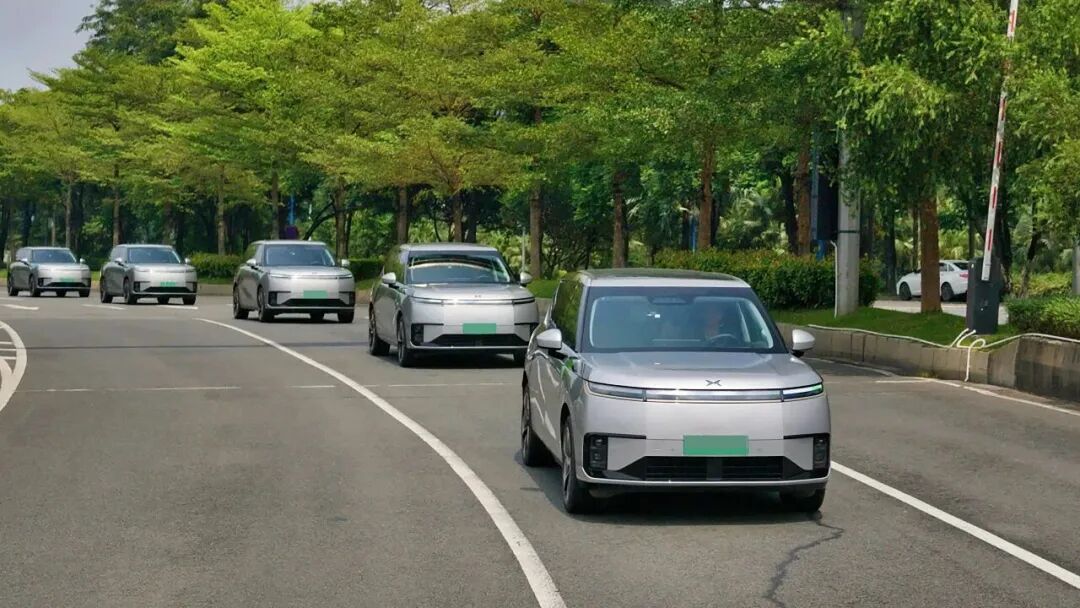 Image source: Internet
In April this year, XPeng published the X-World world model technical report, introducing the specific application of world models in end-to-end R&D.
X-World uses video generation technology to generate future multi-view road scenarios based on historical images from multiple cameras and vehicle actions.
It is not only used for scenario generation, but has also entered R&D links such as closed-loop simulation, online reinforcement learning, and data synthesis. There is a very important difference here.
VLA 2.0 focuses on learning driving policies from real driving data and directly generating actions; X-World focuses on deducing possible changes in the surrounding environment under given action conditions, providing an interactive environment for training and validation.
The two are not substitutes for each other, but undertake different tasks. By September this year, XPeng further upgraded its second-generation VLA through XOS 6.3.0, incorporating historical information, future prediction, and continuous decision-making capabilities into the new architecture.
According to public information, XPeng's VLA 2.0 has entered mass-production application, and X-World has also been actually used for R&D and validation.
This means XPeng's technical focus has extended from simply training driving models to how to make models understand scenario changes over a longer time range.
04 Li Auto's MACH VLA Continues to Iterate
Model and chip synergy becomes the focus. Li Auto's end-to-end route has also undergone relatively obvious changes in recent years.
From the end-to-end model in 2024 to VLA in 2025, Li Auto has gradually combined vision, language, and driving behavior, attempting to give the assisted driving system stronger spatial understanding and behavioral decision-making capabilities.
At present, Li Auto is focusing on advancing MACH VLA. What is noteworthy about this solution is that Li Auto is not only expanding model capabilities, but also simultaneously advancing its vehicle-side computing platform.
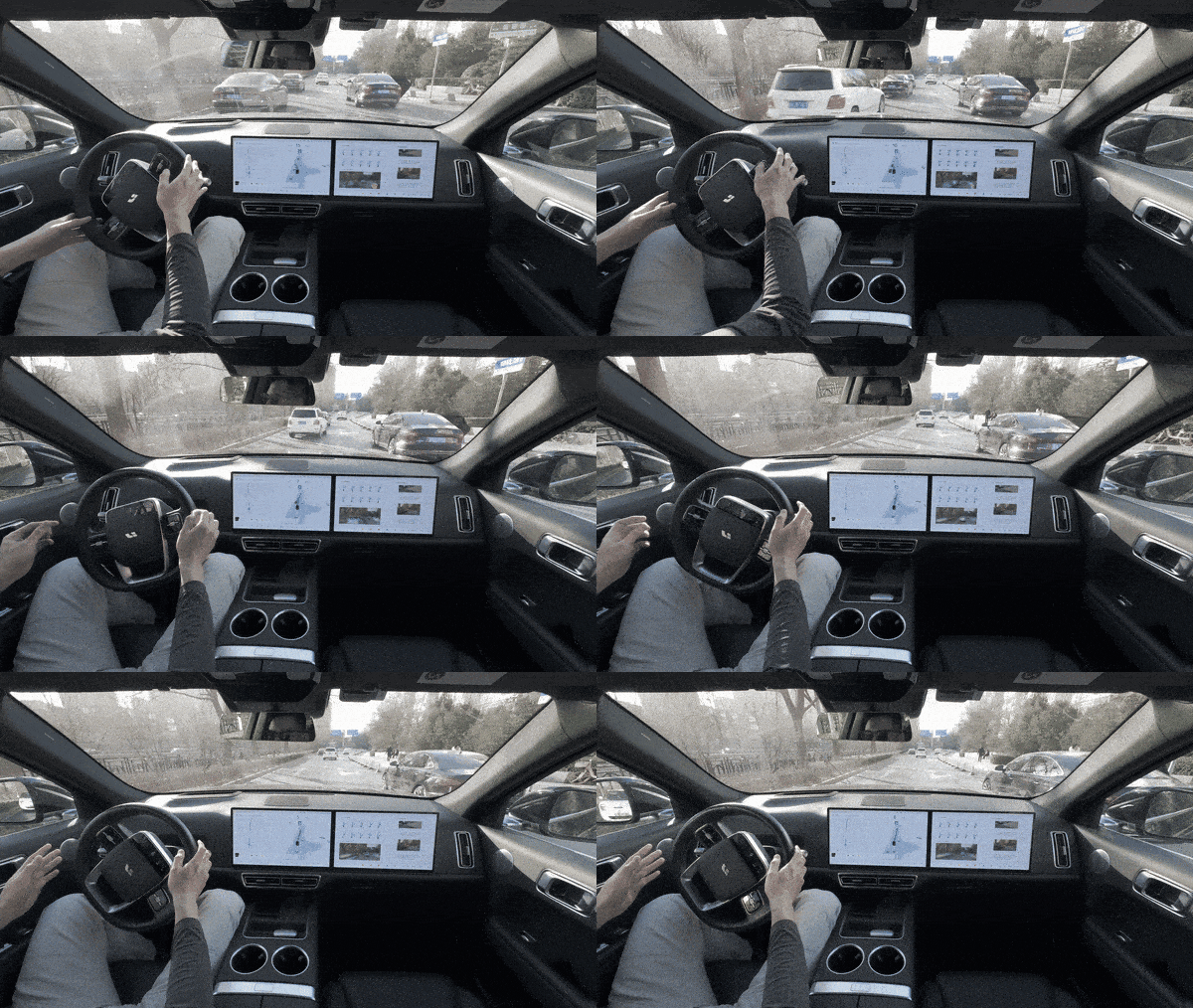
Image source: Internet
The self-developed M100 chip has entered mass-produced models, providing a hardware foundation for larger-scale model deployment.
There is a very realistic engineering problem here: cloud models can continuously increase parameters and computation, but the intelligent driving system on the vehicle must complete real-time inference within limited computing power, power consumption, and response time.
A larger model scale does not mean that simply putting it on the vehicle will deliver a better driving experience. Therefore, Li Auto needs to simultaneously handle the relationship among model architecture, inference efficiency, and chip adaptation.
In the delivery information announced in October 2026, Li Auto confirmed that it will begin pushing OTA 9.2 in November, including the upgraded MACH VLA 2.5. This shows that Li Auto is still continuously advancing mass-production iteration of VLA, rather than remaining at the early technology release stage.
The highlight of Li Auto's route is how to enable more complex driving models to run stably on mass-produced vehicles through synergy between models and self-developed chips.
05 NIO's NWM World Model and Fully Closed-Loop Reinforcement Learning
One relatively obvious characteristic of NIO's technical route is its investment in world models and training loops.
After launching the NWM world model, NIO gradually combined it with its original assisted driving system to form the NWM-driven NADArch 2.0 end-to-end architecture.
Public technical materials show that NWM has long-sequence modeling capability and can better handle complex road scenarios.
More noteworthy is that since 2025, NIO has begun switching its training system to a paradigm of world model + closed-loop reinforcement learning. In the mass-production version in January 2026, complete closed-loop reinforcement learning was applied to assisted driving for the first time.
The modeling capability driven by NWM has also expanded from some scenarios to full coverage of urban and highway navigation-assisted driving.
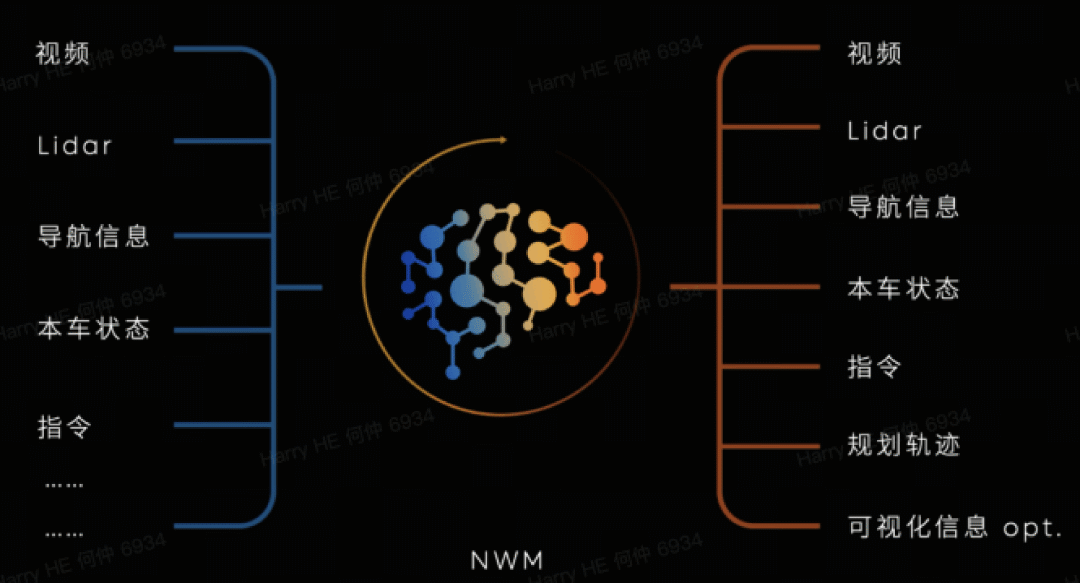
Image source: Internet
At the end of January 2026, applicable models had begun to receive a new round of NWM versions. Behind this technical change is a question worth discussing. Traditional imitation learning mainly relies on human driving data, and the model forms its own driving policy by learning driver operations.
However, human driving data cannot directly provide optimal decisions in all situations. The same scenario may have multiple driving styles, and how to achieve a better balance among safety, efficiency, and comfort requires further learning and optimization by the model.
This is where the value of reinforcement learning lies. Through environmental feedback, it can evaluate and optimize different driving policies, rather than simply imitating historical driving behavior.
NIO's current direction is to make world models, end-to-end architecture, and reinforcement learning form a closer training system. The focus of this route is no longer just letting the model learn to drive, but further studying how to continuously optimize driving policies.
06 Xiaomi XLA Begins Introducing Embodied Foundation Models Into Assisted Driving
Compared with the companies discussed above, Xiaomi's intelligent driving has clearly received less discussion, but its technical route changes are still worth attention.
In March 2026, the new-generation SU7 introduced the Xiaomi XLA cognitive large model, marking that Xiaomi's assisted driving has entered a new architectural stage.
According to official Xiaomi materials, XLA is built on the self-developed Xiaomi MiMo-Embodied foundation model, emphasizing multimodal information acquisition, scenario cognition, and behavioral reasoning capabilities. Its technical approach differs somewhat from traditional end-to-end models.
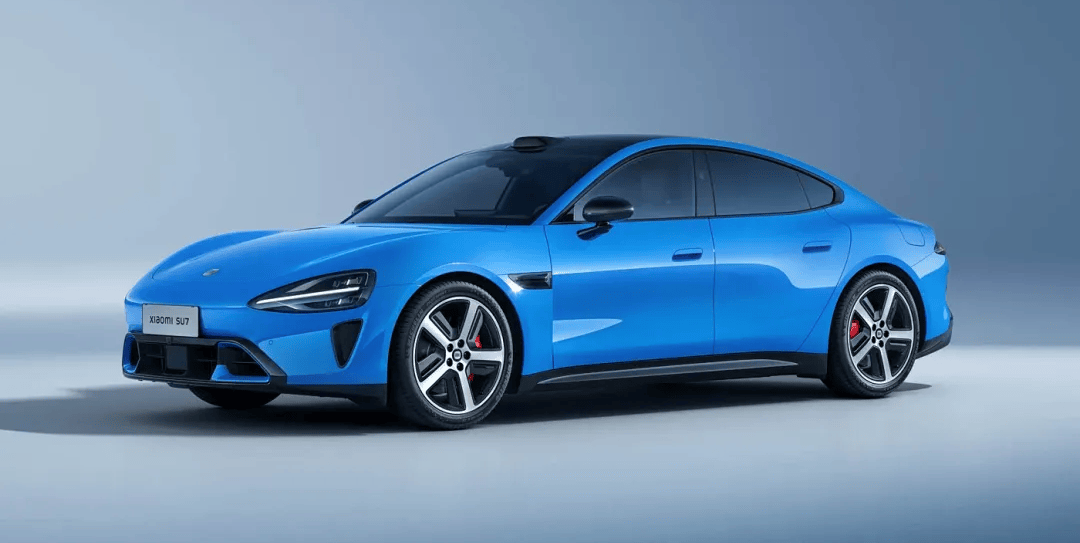 Image source: Internet
In the past, assisted driving models were mainly trained around driving data to learn the relationship between the road environment and driving actions. Xiaomi hopes to introduce broader spatial understanding and real-world cognition capabilities into assisted driving through an embodied foundation model.
It should be noted here that an embodied model does not mean the vehicle already possesses complete human-like cognitive capabilities. Its actual value still needs to be verified through specific driving tasks and mass-production performance.
From the perspective of mass-production progress, the new-generation SU7 is already equipped with XLA, while some models of the first-generation SU7 and YU7 require subsequent OTA upgrades.
What is worth observing about Xiaomi's route is that it has begun trying to connect automotive assisted driving with more general embodied intelligence models. Whether this kind of model can bring actual capability improvements in complex road scenarios in the future still requires more mass-production data for verification.
07 Momenta R7 World Model Begins Entering Multi-Brand Mass-Produced Models
Strictly speaking, Momenta is not a vehicle manufacturer but an intelligent driving supplier. However, if we only look at automakers' in-house solutions, it is easy to overlook important progress in domestic end-to-end technology, so I will supplement Momenta's technical solution here.
In April 2026, Momenta officially announced the mass-production debut of the R7 world model.
 Image source: Internet
The technical system of this solution mainly includes world model pre-training, world model simulation, and reinforcement learning. Its core idea is to let the model not only learn scenarios the vehicle has experienced in the past, but also predict possible future changes in the physical world.
For example, when driving on a highway, if an irregular obstacle suddenly appears ahead, the system needs to judge the obstacle's position, motion state, and changes in surrounding vehicles, and then decide whether to slow down or go around.
Such scenarios are difficult to anticipate through traditional rules and are equally hard to collect in large quantities on real roads. World models attempt to leverage existing data to learn patterns of environmental change, generate and deduce more scenarios in a virtual environment, and then use them for model training and validation.
From a practical application standpoint, R7 is no longer at the technical demonstration stage. In November 2026, Momenta's official website disclosed that R7 is being integrated into more models, including related projects for brands such as Mercedes-Benz, BMW, Cadillac, and Audi.
This indicates that world models have begun to extend from R&D systems into multi-brand mass-production projects.
Of course, entering mass-produced models does not mean that capabilities in all scenarios have been fully validated, but at the very least it shows that world models are becoming an important direction of technical investment for suppliers in the next stage.
08 After Two Years of End-to-End Development, Where Does the Real Gap Lie?
Putting these companies together, a very obvious shift becomes apparent. Two years ago, the focus of industry competition was whether end-to-end could be deployed on vehicles.
Now, end-to-end is no longer a proprietary technology of a few companies, and each company has begun to layer new capabilities on top of it. As for which route is best, there is still no definitive answer.
It can only be said that they each reflect several real-world problems that end-to-end development has encountered to this day.
First, real driving data still has its limits. Ordinary scenarios can be accumulated in large quantities, but truly dangerous and rare scenarios are difficult to obtain through natural vehicle driving. World models and simulation training are attempting to change the way models acquire training scenarios.
Second, imitating human driving is not equivalent to finding a better driving strategy. Models not only need to learn how drivers drove in the past, but also need to continuously optimize among safety, efficiency, and comfort. Reinforcement learning is precisely centered on this issue.
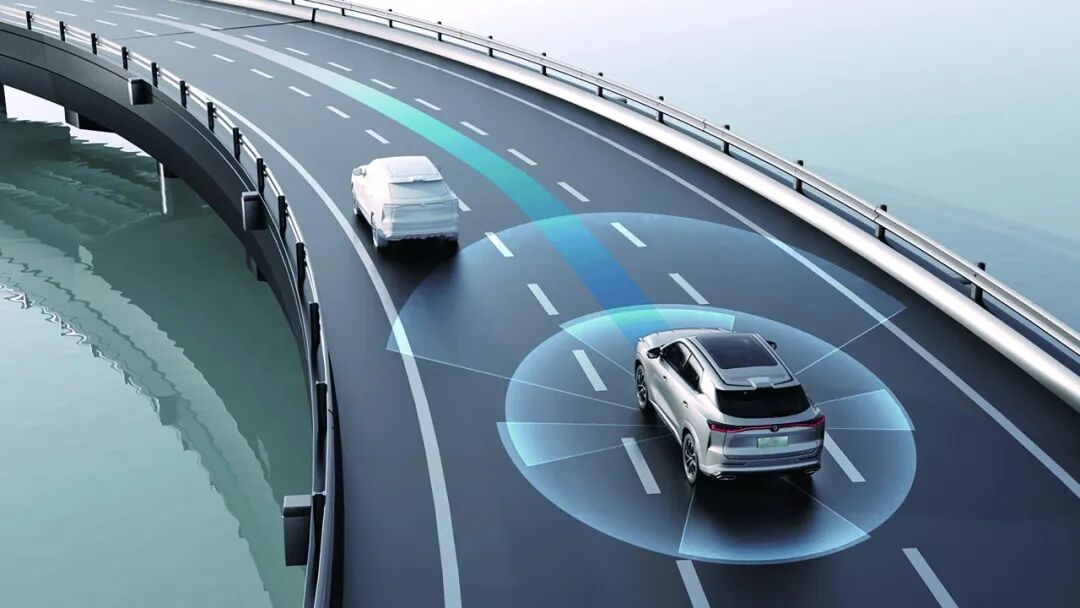
Image source: Internet
Third, driving models need stronger scene understanding and future prediction capabilities. Roads are not static, and dynamic interactions always exist among traffic participants. Simply improving object recognition capability cannot solve all complex driving problems.
Temporal modeling, world models, and multimodal models are all attempting to fill this capability gap. In addition, there is another issue that cannot be ignored: the more complex the model, the harder it is to balance vehicle-side computing power, inference latency, system safety, and mass-production cost.
This is also why, even though all companies are advancing end-to-end, the technical combinations they ultimately adopt remain different. Looking back, end-to-end has not become outdated, nor has it been replaced by VLA, world models, or embodied models.
It is more like an important step in intelligent driving's transition from traditional rule-driven approaches to data-driven approaches. But to this day, the industry has gradually come to realize that merely teaching models how to drive is not enough.
What truly needs to be solved in the next stage is enabling models to still make reasonable judgments when facing scenarios they have not fully seen; enabling models not only to imitate human driving but also to continuously optimize driving strategies;
at the same time, these capabilities must truly be implemented under limited vehicle-side computing power and strict safety requirements. This is the deeper reason why, two years after the development of end-to-end, the technical routes of various companies have begun to diverge.
When evaluating a company's intelligent driving level in the future, it may no longer be enough to ask only whether it has end-to-end; instead, it will be necessary to see what capabilities it has truly added on top of end-to-end, and whether these capabilities have truly translated into driving performance on mass-produced vehicles.
#AutonomousDriving #End-to-EndAutonomousDriving
-
![]()
GAC Group Sells 143,687 Vehicles in October: How Should Aion and the Joint Ventures Redistribute Roles?
-
![]()
2.5x More Light Intake: Why Mobile Phone Cameras Need to Retire the 1974 Filter
-
![]()
What Chinese Automakers Look Like in the Eyes of European Policy Circles
-
![]()
Huawei Doesn't Build Robots, Yet 80% of Robot Companies Run on Its Cloud
-
![]()
Breaking! Changan Automobile Sells 10% Avatr Stake for 3.2 Billion Yuan—What's the Real Reason?
-
![]()
2-Year 80% Buyback: How Does SAIC Volkswagen Pull This Off?
-
![]()
Two Years Into End-to-End: How Far Has Each Automaker's Intelligent Driving Really Come?
-
![]()
iPhone 18 Ditches the Mute Button! Why Is Apple Fighting So Hard to Keep the Camera Button?