Managing These 17 Automakers Well Means Managing the Entire Auto Market Well
 11/20 2026
 365
Introduction
Introduction
The payment terms issue is merely the tip of the iceberg.
Recently, a netizen replied to the post "CAAM to Survey and Assess Supplier Payment Conditions at 17 Key Automakers: What Information Deserves Attention?" with the following message:
"Yesterday I received a tender from an automaker, estimated at around 20 million yuan for calibration work. Requirements: 1. Bid bond of 560,000 yuan; 2. No advance payment, no payment upon shipment—payment only after acceptance; 3. The evaluation principle is lowest-price winning bid." He said that under these requirements, he would need to front 15 million yuan, with no timeline for when he might get paid.
What is even more striking is the reaction to this netizen's information—no one questioned whether it was true or false; instead, everyone treated it as the industry status quo.
This alone shows that long payment terms, heavy advance funding, and low-price winning bids are no longer problems of individual enterprises but hidden rules that the industry has come to accept. It also demonstrates that the supply chain ecosystem has deteriorated to the point where such practices are widely taken for granted, making regulatory surveys and rectification all the more necessary.
Accordingly, on November 16, CAAM issued a notice to launch a survey and assessment of supplier payment practices at automotive enterprises. The Ministry of Industry and Information Technology responded that it will conduct a systematic survey and assessment once a year and publish the results.
It should be noted that, thus far, the issue of automaker supplier payments has gone through three rounds of advancement. Moreover, according to media statistics, listed company financial reports show that the average turnover days of accounts payable and notes payable for 14 mainstream listed automakers in the first half of 2026 still reached 187.5 days, rebounding by 23.1 days compared with the end of 2025—indicating that there is still a large gap between nominal and actual payment terms.
In other words, this issue has reached the point where strong regulation is needed.
01 Keeping an Eye on the Few Means Managing the Many Well
In fact, many people know that the issue of supplier payment terms is not simply a matter of honest business operations; behind it lies the healthy operation of the entire automotive industry ecosystem. This article will not elaborate on the detailed rules of the assessment content, but instead attempts to explore the importance of these 17 automakers to China's automotive industry.
The 17 key enterprises included in the CAAM assessment cover FAW, SAIC, Dongfeng, Changan, GAC, BAIC, Chery, JAC, Great Wall, Geely, BYD, Seres, as well as Li Auto, NIO, XPeng, Xiaomi, and Leapmotor—almost encompassing all mainstream players from traditional giants to top new forces.
Looking back, in June 2025, these 17 automakers publicly committed to payment terms of no more than 60 days. More than a year later, regulators are following up with normalized assessments. The signal sent by this renewed action could not be clearer: managing these 17 well means managing the most fundamental landscape of China's auto market.
In other words, the weight of these 17 automakers is most directly reflected in sales concentration. Their combined sales share may well exceed 70%; after all, the market share of domestic-brand passenger vehicles has already stabilized above 70%, and these 17 are the most important and direct bearers of that share.
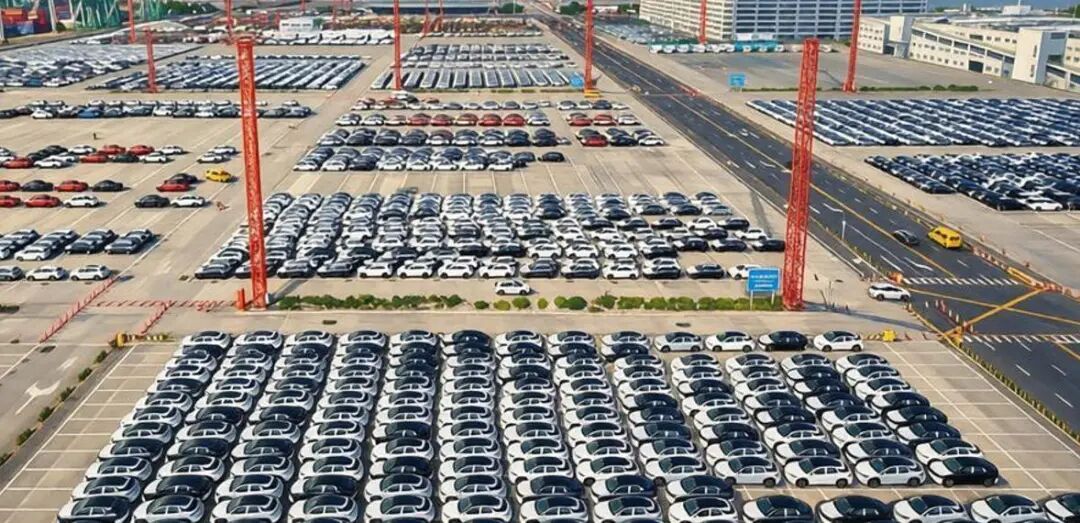
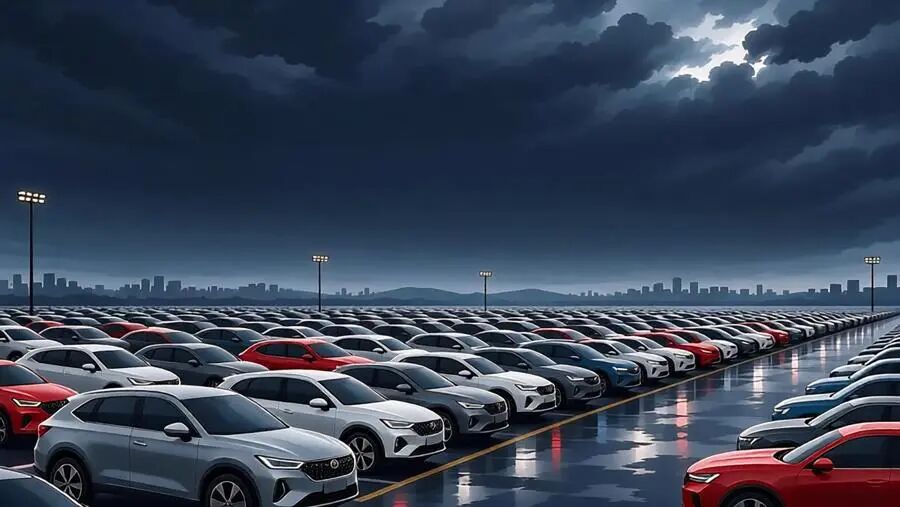
But a large share does not automatically equal health. In recent years, the most obvious contrast in China's auto market is precisely the divergence between scale and profit. In the first half of 2026, domestic vehicle sales reached 15.017 million units, down 4.1% year-on-year; total industry profit was 195.35 billion yuan, down 19.5% year-on-year, and the revenue profit margin fell to 3.8%. Sales dipped slightly but profits shrank significantly, clearly showing that the industry is increasing revenue without increasing profit.
The vehicle manufacturing segment is even worse. In the first half of the year, the average profit margin of domestic vehicle manufacturing fell to 1.5%, a nearly ten-year low. Based on this calculation, for every 100,000-yuan new car sold, the automaker earns only about 1,500 yuan. More than 130 brands are tearing into each other in a shrinking market, terminal prices continue to decline, and automakers dare not raise prices for fear of losing share, with profits squeezed from both sides.
Trading price for volume has become the mainstream approach in the current auto market, which directly causes dealers to bleed in price inversion. In 2025, more than 80% of dealers nationwide fell into price inversion, losses expanded to 55.7%, the gross profit contribution of new car sales fell to -25.5%, and nearly 5,000 4S stores withdrew from the network and shut down during the year.
When automakers' losses on the sales side are passed upstream, supplier payment terms become an outlet for shifting pressure. Defaulting on payments to small and medium-sized enterprises, replacing cash with bills, and delaying acceptance to indirectly extend payment cycles—these behaviors, taken together, erode the credit foundation and reinvestment capacity of the entire industrial chain.
It should be noted that upstream suppliers in the automotive industry are in a differentiated state of survival. Leading suppliers with core technologies such as batteries, chips, and intelligent driving have seen profits soar, while small and medium-sized parts enterprises lacking technological barriers are squeezed from both sides by OEM price cuts and rising raw material costs, with a large number of them already on the cliff edge of losses and survival.
International parts manufacturers have also experienced this firsthand. Bosch's operating profit in 2025 nearly halved year-on-year, facing a cost gap of about 2.5 billion euros and forced into large-scale layoffs and business restructuring; traditional suppliers such as Recaro have filed for bankruptcy or been acquired. The net profit margin of traditional suppliers fell from 9% in 2015 to about 4% in 2025.
The natural law of survival of the fittest exists in any industry. Competition should screen out more efficient and more innovative enterprises, naturally generating efficiency and innovation. But if suppliers are dragged down by unpaid bills and forced advance funding, then what is eliminated is not backward capacity but the health and trust foundation of the entire industrial chain.
Therefore, when the Ministry of Industry and Information Technology includes the payment term management of 17 automakers in an annual major review at this time, it is essentially setting a bottom line for the industrial chain against the backdrop of a continuously declining industry profit center. Automakers can continue to compete, but not at the expense of the survival of upstream and downstream players. This is an important part of safeguarding the healthy development of China's automotive industry.
02 A Large Share Does Not Equal Strong Capability
However, setting a bottom line only defines the rules of competition; it cannot change the fact that competition is converging. As the dividends of scale expansion fade and profit space continues to be compressed, a crueler consensus has long formed within the industry: not all players can reach the endgame, and the countdown to elimination has already begun.
For this reason, in the past few years, executives' judgments on how many players will ultimately remain have been almost universally regarded as industry warnings. He Xiaopeng once explicitly stated that in the next 10 years only 5 to 7 new energy vehicle companies would survive, later narrowing it to fewer than 5. Li Bin estimated that among the more than 40 passenger car companies currently registered in China, only about 8 can survive stably—an elimination rate of over 80%.
Leaders of new force automakers can have such awareness and understanding, let alone traditional automakers. Zhu Huarong judged as early as 2024 that in the next 3 to 5 years, 60% to 70% of auto brands would be shut down, suspended, merged, or transferred. A Chery executive bluntly predicted that during the integration process, at most 5 Chinese brands would survive.
Although automakers and brands cannot be conflated, these statements point in a highly consistent direction. There is a huge gap between the number of brands in China's auto market and the market capacity. And the 17 automakers targeted by CAAM this time happen to be in the ambiguous zone between possibly surviving and not necessarily thriving.

Among them, traditional large automotive groups are the first to face the question of being large but not strong. Groups such as FAW, SAIC, Dongfeng, Changan, GAC, and BAIC are enormous in size. Although the share of their joint venture segments is declining, many of their own-brand businesses continue to climb. But for them, building sales scale simply by stacking brand numbers is not a sign of strength but rather a hidden risk.
That is why in recent years the industry has been talking about the problem of brand redundancy. A group often operates several sub-brands with overlapping positioning in parallel, resulting in duplicate investment in R&D, channels, and marketing, cannibalizing each other's customers, dispersing resources, and causing serious internal friction. This instead weakens economies of scale and brand premium capability, making the group as a whole large but not strong, unable to form synergy or support high-end breakthroughs.
Fortunately, some automakers have recognized this problem and are working hard to adjust. For example, Changan Automobile has clearly planned to streamline its product lineup from 63 models to 36; Geely is orderly shutting down, suspending, merging, or transferring redundant entities related to Geely Automobile Group; Chery has established a unified domestic business division; and BYD has been reported to be pushing sub-brands to be responsible for their own profits and losses.
The common logic behind these moves is that the expansion model of "the more children, the better the fighting" has become a burden on profits in the stock competition stage. More brands do not equal broader coverage. More models do not equal more hit products. By comparison, Tesla can match the combined annual sales of multiple domestic automakers with just two main models, Model 3 and Model Y.
Therefore, although many of the 17 automakers have impressive sales figures, the brand density and product efficiency behind those sales are still quite far from being strong. In this respect, new force automakers may face an even more worrying situation. Many brands have neither reached the stage of scale volume nor acquired effective funding capacity.
In the first half of this year, Leapmotor's price-for-volume strategy paid off, with deliveries ranking first among new forces, but profit per vehicle was less than 600 yuan—belonging to small profits but quick turnover. Li Auto, affected by product model changeover, an excessively high proportion of the low-priced i6 model, and rising raw material costs, saw its vehicle gross margin plunge from 19.6% to 7.8%, turning from profit to loss.
The above two are considered among the better performers among new force automakers. NIO delivered 191,100 new vehicles in the first half of 2026, with total revenue up 85.8% year-on-year; operating profit was 274 million yuan, positive for three consecutive quarters, but net profit attributable to shareholders still showed a loss of 1.218 billion yuan. XPeng's total sales in the first half were about 166,000 vehicles, total revenue was 32.78 billion yuan, and net loss was 3.12 billion yuan.
It is not hard to see that as competition intensifies, many automakers are repeatedly jumping back and forth between profit and loss. In other words, they can surge to a sales peak within one product cycle and may quickly slide in the next cycle due to a single product stalling. Insufficient sales scale, low average selling prices of new cars, and a thin profit foundation mean new force automakers are far from being able to rest easy.
Therefore, whether traditional large automotive groups or new force automakers, among these 17 companies, those truly possessing sustainable profitability and global competitiveness are far fewer than the number suggests. The payment terms issue is just an amplified shadow; whether China's automotive industry can develop healthily and in an orderly manner is the essence of this issue.
So managing the payment behavior of these 17 automakers is in fact also forcing the leading players to strengthen their internal capabilities.
Editor: Du Yuxin Editor: He Zengrong

THE END
-
![]()
XPeng's Strongest Financial Report Yet — and the Challenges That Lie Ahead
-
![]()
Alibaba Q3 Report: Revenue Beats by 1 Billion Yuan, Profit Falls 6.7 Billion Yuan Short
-
![]()
Is the "Battle for the Entry Point" of AI Office Work Over?
-
BAIC Abandons Independent Battery Swapping Strategy
-
![]()
Tencent's Shareholders Must Bear a Little More Hardship
-
![]()
At 28, Tencent Begins Rebuilding Itself Around AI
-
![]()
Tencent: A Rare Profit "Reversal"—How Long Will This AI Tuition Have to Be Paid?
-
![]()
Managing These 17 Automakers Well Means Managing the Entire Auto Market Well