AI Bestows Animation-Inspired Short Dramas with a Magical Touch
 12/01 2025
 738
738
Can a 90% Reduction in Costs Unleash a Content Tsunami?
Author | Wang Tiemei Editor | Gu Nian
"Animation-inspired short dramas bear little resemblance to traditional anime; they are short dramas cloaked in an animated exterior, sharing identical core content and business models," explains Feng Wan, a leading producer of animation-inspired short dramas.
Yet, why has a new genre like animation-inspired short dramas emerged alongside traditional short dramas, even prompting Hongguo Short Drama to launch a dedicated app? The crux lies in its identity as an AI-driven reinvention of short dramas, positioning itself as a blockbuster within the short drama landscape.
Industrially, there’s no need to start from scratch—it feels like a recipe for success. Themes are drawn from online novels, driven by plot twists and "satisfying moments"; distribution channels still rely on Douyin, Kuaishou, and mini-programs; monetization remains through paid unlocks and ad revenue sharing.
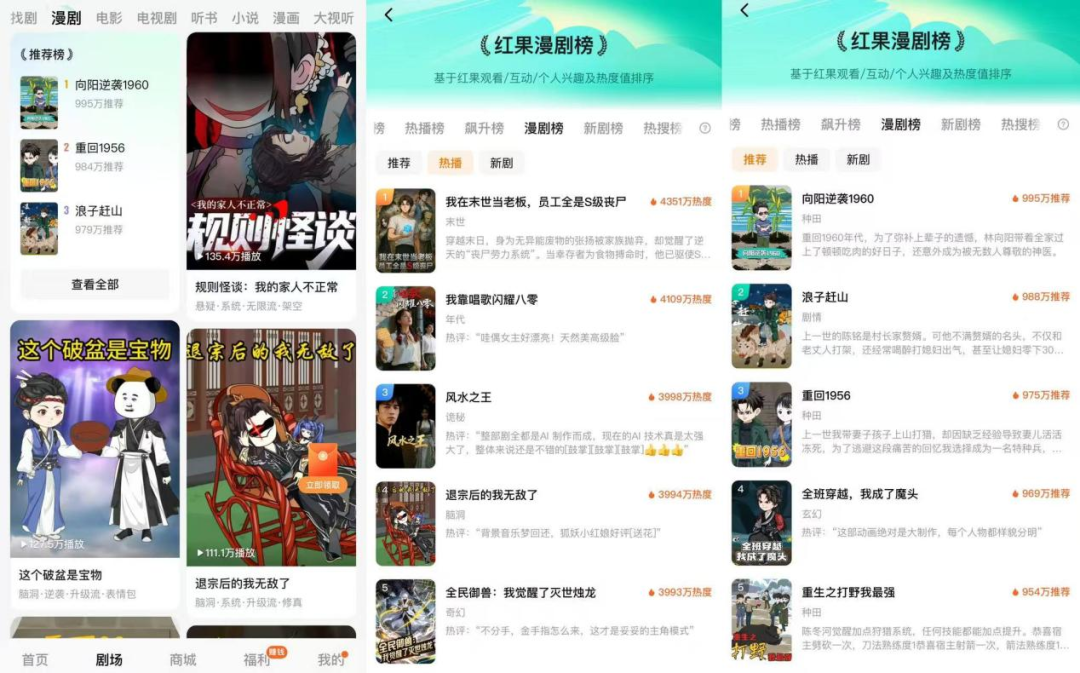
Under this familiar business model, animation-inspired short dramas have received a magical boost from AI. Feng Wan’s six-person team can produce 60 episodes monthly, spanning popular genres like fantasy and cultivation, with a 100-episode series costing under 100,000 RMB.
This translates to replacing live-action filming with AI content tools without altering the underlying commercial logic, achieving a dramatic reduction in cost structure.
The key distinction: while short dramas have transitioned from rapid growth to an era of high-quality competition, with soaring production costs, animation-inspired short dramas are in a golden window of "relaxed regulations + evolving tools + platform subsidies," resembling a "risk-free" frontier.
This is precisely why Feng Wan chose to enter the market: "The proven commercial path of short dramas can be replicated by AI at unimaginably low costs." If short dramas represent the vertical screen transformation of long-form video, animation-inspired short dramas are the AI-driven evolution of short dramas.
However, while AI can revolutionize production methods, it cannot serve as a permanent competitive edge. As traffic dividends peak, models proliferate, and tools become standardized, the industry’s true competition shifts from technical proficiency to storytelling prowess and market aesthetics—narrative capabilities that define content.
AI has reshaped the supply side of the short drama industrial chain through a cost revolution, but the content industry will never be defined by tools alone—only by content itself.
The AI-powered engine for short dramas has ignited, but where will it take the industry? What will be the core variables of this revolution? Who will seize control of the next industrial leap? The story is just beginning.
01 The Cost Blockbuster of Animation-Inspired Short Dramas
With lower costs and higher efficiency, the cost dynamics of animation-inspired short dramas defy imagination.
Feng Wan reveals that her six-person team focuses on genres like fantasy cultivation and supernatural awakening, producing 60 episodes monthly. "We’ve established a highly standardized pipeline, with AI covering nearly 80% of the process, from scripting and storyboarding to audio and video production."
Unlike live-action short dramas, the cost structure of animation-inspired short dramas is entirely reimagined: eliminating expenses like actor salaries, location rentals, and production crews, with core costs concentrated on script/IP licensing, key creative talent, voice acting, soundtracks, and computational power.
Compared to short dramas, which often require tens of thousands of RMB per production, a 100-episode animation-inspired short drama can be produced for around 100,000 RMB.
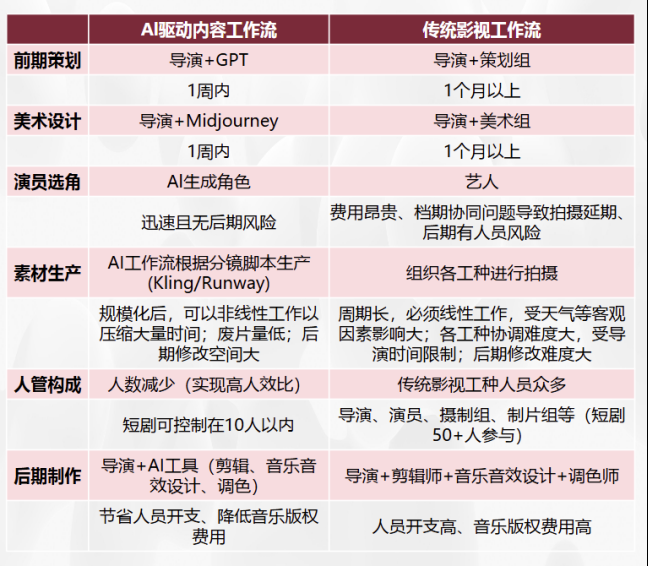
Moreover, unlike short dramas—where market costs for top actors and writers surge despite economies of scale as more players enter—animation-inspired short dramas exhibit industrial-scale efficiency.
Initially, production costs were not inherently low. A few months ago, the industry average hovered at 2,000–3,000 RMB per minute; now it has dropped below 1,000 RMB, a hallmark of AI tools: increased adoption leads to greater maturity and lower unit costs.
This contrasts with traditional content industries, where more players intensify competition and raise costs for quality content. Instead, it resembles the software industry: wider adoption reduces marginal costs. This shift directly impacts advertising strategies and ROI structures.
With reduced content costs, the room for trial and error expands significantly, allowing more budget to be allocated upfront for advertising and distribution.
Giant Engine data shows a monthly compound growth rate of 83% in animation-inspired short drama supply in the first half of the year, with over 3,000 titles launched and revenue surging 12-fold. AI’s deep integration has compressed production cycles by 80–90% and reduced costs by 70–90%.
Simultaneously, advertising spend has grown in tandem. Multiple insiders report daily ad expenditures for animation-inspired short dramas rising from several million RMB initially to 20–30 million RMB, nearing half of live-action short dramas’ peak. This dynamic accelerates the shift of capital flows toward animation-inspired short dramas.
According to industry sources, a paid AI animation-inspired short drama with over 10 million views can generate net profit of approximately 200,000–300,000 RMB; free titles can still yield around 100,000 RMB.
The market has validated this potential, with hits like Nine-Tailed Fox Male Demon Falls for Me amassing billions of views on Douyin; I Alone Save the Villain attracting tens of thousands of paying users on Bilibili; and I Run a Business in the Apocalypse exceeding 100 million views. Multiple blockbusters confirm the sector’s heat and commercial viability.
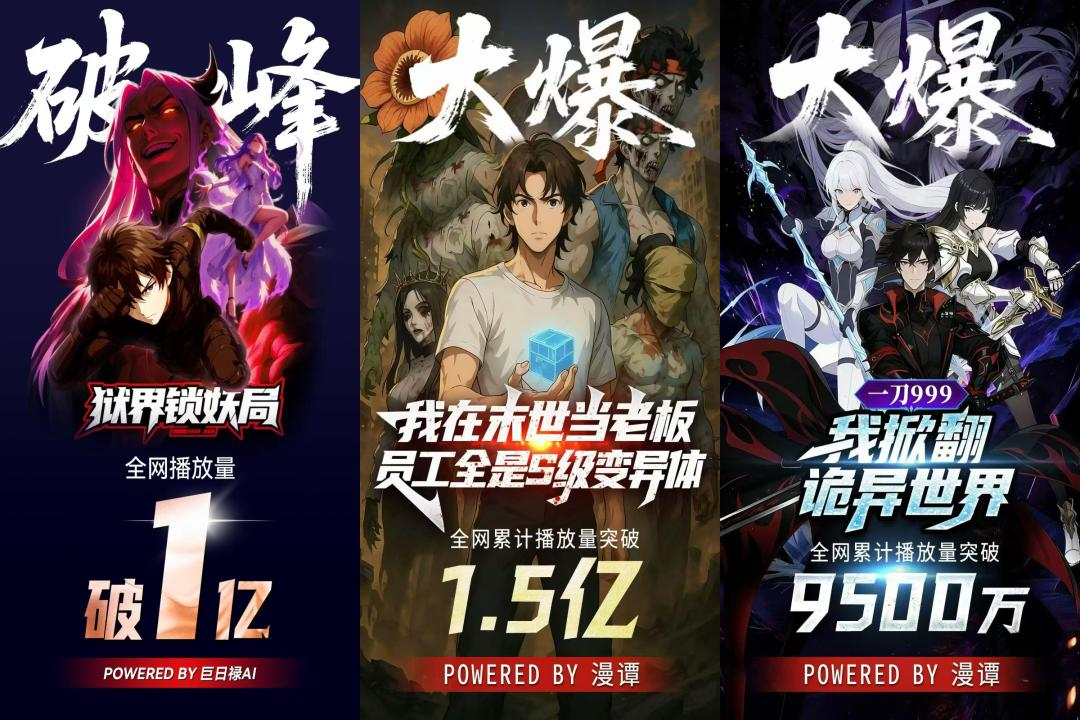
For all participants, animation-inspired short dramas remain a profit frontier. For small teams like Feng Wan’s, it offers a rare window for reversal: with limited manpower and token costs, they can test demos and, if they strike a chord with audiences, reap extraordinary returns.
For IP owners, it resembles a low-cost, high-parallelism IP options experiment. A hit among numerous collaborating teams can validate an IP’s value, paving the way for long-term development in film, gaming, and other sectors.
02 Two Approaches to AI Technology
To evolve from a trending niche to a mature industry, animation-inspired short dramas demand exponential improvements in AI capabilities.
An industry consensus is that AI-driven refinement must avoid repeating the cost-intensive path of short dramas. Instead, it should leverage superior aesthetics, cutting-edge technology, and efficient workflows to produce higher-quality works under equivalent cost constraints.
Producer Feng Wan reveals her team frequently uses tools like Vidu, Jimeng, and Jurilu. "Kling offers decent results but high computational costs. Vidu is currently the best—it can directly generate videos from images and iterates rapidly."
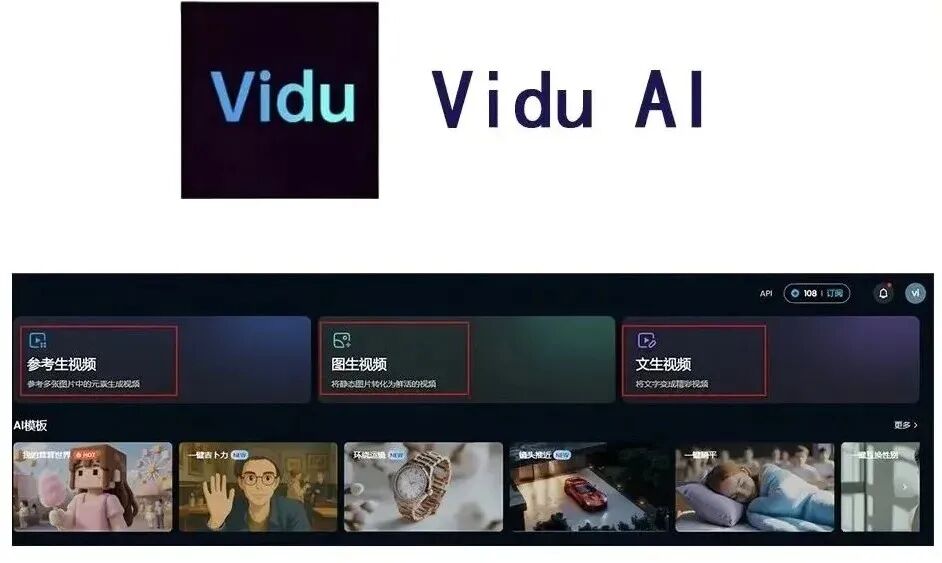
Domestically, multiple AI tools coexist, each with technical strengths.
In Feng Wan’s view, Kling excels in video duration and physical realism but at high computational costs; Jimeng prioritizes generation speed and Chinese language adaptability, ideal for rapid prototyping; Vidu shines in anime-style aesthetics and multi-character consistency; while Jurilu AI integrates AI agents into industrial workflows, serving professional teams’ stable production needs.
Tool selection is driven by scenarios, with producers balancing quality, efficiency, cost, and style. However, behind this tool proliferation lies a core pain point: consistency.
Unlike single-frame art, animation-inspired short dramas demand uniformity in characters, styles, and narratives. In reality, "a female lead generated today may look like a stranger tomorrow from a different angle," while abrupt genre shifts—from school life to fantasy adventures—are common. These inconsistencies represent AI’s greatest weakness.
Technically, AI can generate fluid motion sequences but still struggles with subtle facial expressions and synchronized limb movements, compromising immersion. "Lottery-style" storyboard generation suffers low success rates, wasting computational power and time.
Beyond tools, two AI methodologies dominate. "AI now understands human instructions," Feng Wan describes. "You can request specific character actions, generate seconds-long clips, and stitch 20–30 clips into a 1–2 minute episode."
Currently, animation-inspired short drama production splits into two schools: the "Multi-Reference School" and the "First-Last Frame School." The Multi-Reference School leverages "reference-based video generation" for modular mass production, prioritizing extreme efficiency and low costs for "disposable content"—ideal for small teams chasing traffic but prone to homogenization.
The First-Last Frame School relies on "first-last frame functionality" for premium quality, emphasizing narrative coherence and animation polish. Better suited for grand, world-building genres, it serves long-term IP incubation and is favored by major studios, albeit at the cost of lower efficiency, higher expenses, and slightly weaker viral potential.
These technical differences reflect divergent paths: "scalable fast consumption" versus "premium incubation." Regardless of choice, human intervention remains indispensable in critical stages.
During script development, AI primarily assists in theme exploration and logical structuring but cannot independently generate qualified scripts. Storyboarding and image generation similarly require deep human input, directly impacting aesthetic style and cost efficiency.
To address AI’s instability, mature teams establish unified tones, compositions, and costumes before project launch, creating a foundational style. Each output segment undergoes manual review to maintain consistency.
This balance of quality and quantity drives animation-inspired short dramas toward industrialization: the goal is to rapidly produce visually appealing, imaginative works "without flaws." Behind this lies a comprehensive competition of technology, talent, and organization.
03 Big Players Vying for AI’s Magical Touch
To platforms, animation-inspired short dramas represent not just a new content format but an AI monetization ecosystem, built on closing the loop between "AI technology and content ecosystems." More precisely, they serve as a golden opportunity for AI tools to commercialize within the animation-inspired short drama industry.
Whether through ByteDance’s Seed series, Kuaishou’s "Kling," or content channels like Douyin and Hongguo, platforms are driving AI animation-inspired short drama production surges by providing AI tools, opening IP libraries, and offering traffic and cash subsidies.
For example, Douyin has adjusted its revenue-sharing model, heavily incentivizing simulation human and 2D/3D animation-inspired short dramas with high AI participation over "meme-style" titles.
This strategy rapidly enriches platform content libraries, boosts traffic, and, critically, transforms AI models from "consumer interest tools" to "B-end commercial production tools."
This shift provides a clear path for generative AI adoption: using content ecosystems as outlets and commercial returns to fuel R&D, creating a sustainable feedback loop.
Over the past month, a "land grab" for animation-inspired short drama production capacity has erupted, with platforms rolling out intensive incentive policies.
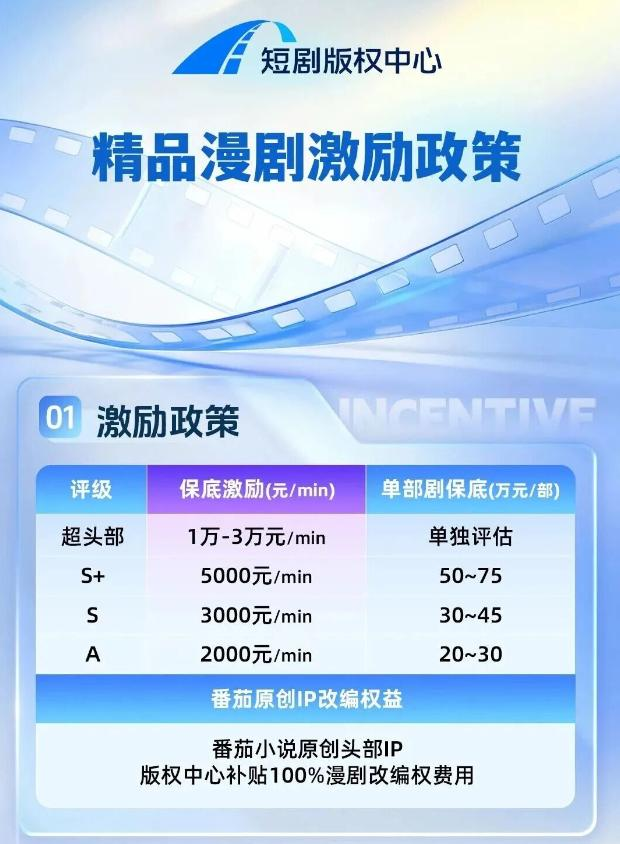
In early November, Douyin Group’s Short Drama Copyright Center announced premium incentives for high-quality animation-inspired short dramas, offering 5,000 RMB per minute and 500,000–750,000 RMB per title for S+ tier works; top-tier projects can secure guarantees of 10,000–30,000 RMB per minute, with amounts assessed individually.
Hongguo Short Drama’s strategy is even more aggressive. On November 21, it categorized animation-inspired short dramas into four tracks—simulation human, 2D/3D, emoji, and static—each with distinct revenue-sharing coefficients. Simulation human titles can earn up to 60x coefficients.
Under its formula—"free revenue = new effective watch time × time unit price × genre coefficient × copyright coefficient"—high-coefficient works offer immense earning potential.
Baidu, Kuaishou, Tencent, iQiyi, China Literature, and others have also entered the fray, each with unique strategic goals: Baidu and iQiyi aim to capture production capacity and enrich content to boost user engagement and daily active users; Kuaishou supports animation-inspired short dramas to supplement content and promote its proprietary large model, "Kling."
These generous incentives force producers to elevate content quality while driving rapid AI tool iteration to develop vertical functions tailored for animation-inspired short dramas.
Insiders view the animation-inspired short drama market as a 10-billion-RMB opportunity, with potential far exceeding traditional short dramas and the chance to spawn animation IPs on par with Legend of Hei. However, like short dramas, animation-inspired short dramas will inevitably transition from rapid growth to premium competition.
Most AI works currently rely on "material stacking," lacking genuine cinematic language and narrative rhythm. Next-gen tools must evolve from "image generation" to "understanding and creating advanced storytelling."
Lowered barriers also trigger a content crisis, flooding the market with imitative and formulaic works. AI’s ability to preserve uniqueness and creativity becomes critical for sustainable growth. Additionally, questions about the legitimacy of AI training data and potential copyright infringement remain industry concerns.
The future trajectory of the industry is geared toward refined production processes, distinct artistic styles, and the development of long-term intellectual property (IP) franchises. Achieving this vision necessitates that artificial intelligence (AI) surmounts technical challenges, such as "flickering" effects and inconsistencies in output. The entity that first attains sustained consistency in AI-generated content will set the benchmark and shape the next era of the market.
(Note: The names mentioned in this article are pseudonyms.)
This article represents an original work by *Shixiang*.
Any unauthorized reproduction or mirroring of this content is strictly prohibited.
-
![]()
Alibaba's AI Offensive: Over Half of Investment Allocated, Time to Reap Returns
-
![]()
Alibaba’s AI Push: Over Half of Investments Made, Time to Harvest Returns
-
![]()
Chinese Enterprises Going Global 3.0: From World Factory to AI Infrastructure Builder
-
![]()
Honor RobotPhone Review: Half Movie Camera, Half Robot
-
![]()
AI-Driven Cheating Surges in Universities! Online Exams Reduced to Mere Formalities, Degree Credibility on the Line
-
Insta360’s Decade in Panoramic Imaging: Making Cameras ‘Invisible’ and Returning Creation to the Masses
-
![]()
Foreign Media Claims Apple is Concentrating Resources on AI Development: Vision Pro and Siri Teams Lay Off 200 People
-
Big News! Huaneng and Huawei Hold Talks in Shenzhen with Ren Zhengfei in Attendance; Huawei Emerging as the 'Second Brain' of China's Energy System