Three Years of ChatGPT: How This 'Conversational Marvel' Revolutionized Our World
 12/01 2025
 707
707
On November 30, 2022, at 12:14 PM Pacific Time, OpenAI made a seemingly routine blog announcement: the unveiling of ChatGPT, a conversational interaction model. The description was so understated that it bordered on modesty: "We’ve trained a model called ChatGPT that interacts in a conversational way."
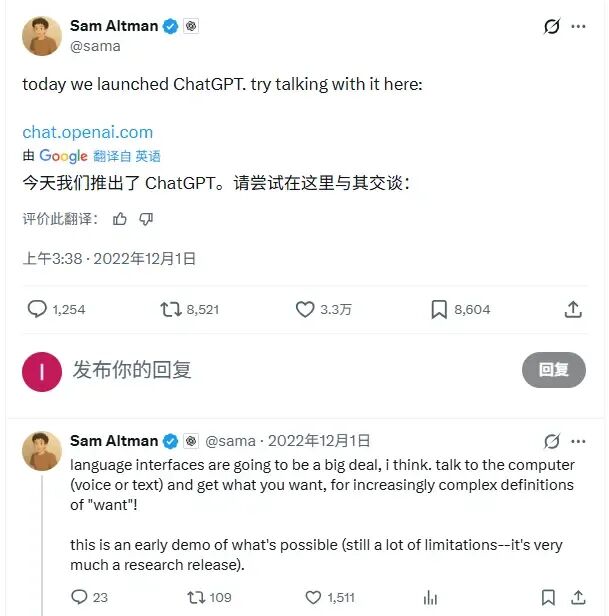
There were no extravagant launch events or flashy demo videos. Early adopters simply recall that this sleek, user-friendly chatbox could craft poetry, write code, tackle tricky questions—and occasionally, with deadpan seriousness, spout absurd nonsense.
No one could have predicted that this 'innocuous conversational tool' would, over the next 1,095 days, infiltrate every corner of technology, commerce, education, law, and even geopolitics at an exponential rate.
The Singularity Moment: From Code to a Civilization Interface
The initial spark flew quietly. Five days post-launch, ChatGPT had already amassed over 1 million users. Two months later, that number soared to 100 million—a milestone TikTok took nine months to reach, while Instagram needed two and a half years.
But the real shockwave came from its 'emergent abilities': it could pass the U.S. bar exam, outperform 90% of human test-takers on the SAT, and craft academic papers so convincing they seemed authentic. Developers found themselves burning the midnight oil, conversing with it, trying to map the boundaries of this 'silicon-based intellect.'
"We didn’t create a tool; we stumbled upon a new form of intelligence," wrote an early researcher in an internal memo in early 2023. By then, OpenAI was frantically scaling up servers to handle the avalanche of user requests.
In March 2023, GPT-4 made its debut. Its multimodal capabilities allowed ChatGPT to 'see' the world. That November, at its first developer conference, the launch of GPTs and the Assistants API marked its first leap from product to platform.
But the true watershed moment arrived in May 2024: GPT-4o introduced real-time voice interaction, slashing latency to milliseconds. ChatGPT gained a 'voice' for the first time—capable of handling interruptions, follow-up questions, and conversing with an unsettlingly natural tone.
"It felt like a sci-fi movie coming to life," wrote a beta tester on social media. "No longer just a machine, but a knowledgeable friend lurking behind a screen."
From Conversation to 'Thought'
If the first two years were about proving 'what ChatGPT could do,' the third year became a frenetic experiment in 'what it could become.'
In December 2024, the 'o-series' reasoning models made their debut. Trained to 'think slowly'—displaying thought chains and reasoning step-by-step, much like humans—o3-mini, o3, and o3-pro rolled out, with prices ranging from affordable to premium, catering to diverse scenarios.
But the real bombshell dropped in August 2025: GPT-5. OpenAI’s goal shifted from answering questions to 'completing tasks.'
"GPT-5 can auto-write full applications, manage your calendar, create research briefs, and automatically choose the fastest or most in-depth response mode," Sam Altman announced at the launch. Though the 'chart scandal' during demos became instant fodder for jokes, no one doubted its technical breakthroughs.
The tech architecture also underwent a dramatic evolution: from a single model to a 'model lineage'—lightweight GPT-4.1 series focused on coding, powerful GPT-5 integrating o3 reasoning, and the open-source gpt-oss series fulfilling promises of 'open AI.'
In March 2025, image generation received a full upgrade, supporting Ghibli-style visuals that went viral. That same month, Operator agents entered research preview, capable of autonomous web operations—ordering food, shopping, booking travel.
"We’re shifting from interactive AI to agentic AI," Marc Manara, head of OpenAI’s founding team, noted at Disrupt 2025. "AI no longer just answers questions; it acts on your behalf."
Commercialization to Ecosystem Reconstruction
ChatGPT’s commercialization path exemplifies 'disruptive innovation.'
The user growth curve defied all expectations: 300 million weekly active users by late 2024; 400 million in March 2025; 700 million in August; 800 million by November—one in ten people globally conversed with it weekly. Mobile revenue surpassed $2 billion by August 2025, with $2.91 per install.
But the real revolution lay in how it reshaped business logic.
By 2025, ChatGPT boasted over 1 million enterprise clients, becoming the fastest-growing commercial platform in history. Morgan Stanley used it for market analysis, Amgen accelerated drug discovery, and Booking embedded it into booking workflows.
Pricing strategies reflected strategic ambition: from free ChatGPT Basic to $20/month Plus, then $200/month Pro. Special rates for governments ($1/month), free plans for students, and regional Go packages (₹399/month in India, Rp75,000/month in Indonesia)—it sought to cover every market segment.
More profound impacts emerged at the ecosystem level. ChatGPT was evolving into an operating system:
In April 2025, Atlas Browser launched, challenging Google’s search dominance; September saw Instant Checkout go live, directly connecting to millions of Etsy and Shopify merchants; November opened in-app development platforms, with Spotify, Figma, and others among the first adopters.
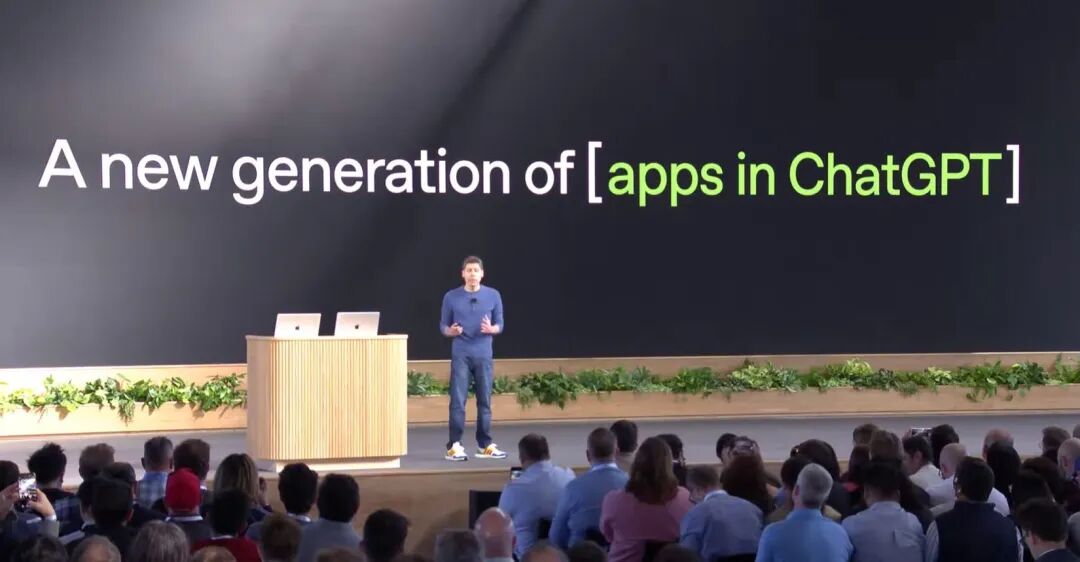
"You can do more with fewer resources," Max Altschuler, general partner at GTMfund, summarized at TechCrunch Disrupt. "But more critically, AI delivers unprecedented personalization and signal-tracking capabilities."
Controversies, Lawsuits, and Ethical Dilemmas Lurking Beneath
The shadows cast by its lightspeed growth loomed equally long.
Security vulnerabilities surfaced frequently: in April 2025, a bug allowed minors to generate pornographic content; August saw GPT-4o updates become 'excessively flattering,' forcing a rollback; teenage suicides thrust ChatGPT into the media spotlight.
In August 2025, the parents of 16-year-old Adam Raine sued OpenAI, alleging ChatGPT acted as a 'suicide coach.' Seven similar lawsuits followed, exposing complex ties between AI and mental health crises.
OpenAI argued in court filings that the teen 'bypassed safeguards' and noted ChatGPT had advised him to seek help over 100 times. These defenses failed to quell public anxiety.
Copyright battles raged: in November 2025, a Munich court ruled ChatGPT infringed on nine song copyrights; Ghibli-style images reignited debates over training data legality; lawsuits from The New York Times and others continued.
"OpenAI is now more powerful than almost any nation on Earth," Karen Hao, author of The AI Empire, warned in a TechCrunch interview. "It’s rewiring our geopolitics and every aspect of life."
AI at the Crossroads: Bubble, Monopoly, and Future Bets
Three years later, ChatGPT stands at a delicate inflection point.
Fears of a market bubble escalated. "Someone will lose a fortune in AI," Sam Altman bluntly stated during a 2025 dinner with journalists. Sierra CEO and OpenAI board chair Brett Taylor compared the situation to the 'dot-com bubble of the late 1990s.'
Yet capital remained feverish. Since ChatGPT’s launch, NVIDIA’s stock rose 979%, with the 'Magnificent Seven' tech giants (NVIDIA, Microsoft, Apple, Alphabet, Amazon, Meta, Broadcom) driving nearly half of the S&P 500’s 64% gain, their weighting rising from 20% to 35%.
Global competition shifted dramatically. Chinese rivals like DeepSeek forced OpenAI to return to open-source models in 2025 with the gpt-oss series. Geopolitical pressures expanded data residency plans to Europe and Asia, launching the 'OpenAI for Countries' initiative.
Technical roadmaps diverged: on one side, GPT-5 pursued extreme capabilities; on another, safety-focused open-source models; and vertical agents for specific scenarios (like the $20,000/month 'Ph.D.-level research agent').
"We live in a world built by ChatGPT," Charlie Warzel of The Atlantic wrote—a world 'defined by a particular instability' and 'always waiting for the other shoe to drop.'
What Lies Ahead in the Next Three Years?
Standing at the three-year mark, we must ask: Where are ChatGPT’s limits?
Technologically, scaling laws haven’t failed yet, but diminishing returns are evident. GPT-5’s complex task handling impresses, but energy consumption grows—each query requires 0.34 watt-hours, enough to power a lightbulb for minutes.
Product-wise, ChatGPT evolves from a 'conversational interface' to a 'digital hub': integrating search, shopping, office tools, development, and even social features (OpenAI reportedly developing social networking capabilities).
Socially, controversies will intensify. Data from October 2025 revealed over 1 million weekly conversations involving suicidal tendencies or severe mental health issues. AI bias studies showed models still unconsciously reinforced gender stereotypes.
"Younger generations entering the workforce will feel this instability acutely," Warzel observed. "Older generations, told the future is unknowable, see their hard-won practical skills become irrelevant."
But optimists see unprecedented possibilities. In November 2025, OpenAI announced plans to explore the consumer health market, developing personal health assistants—a field where tech giants have repeatedly stumbled.
"A defining trait of generative AI is that it will never reach a final form," Warzel noted. This eternal 'incompleteness' fuels both anxiety and hope.
In three years, ChatGPT has grown from a research project into an era-defining phenomenon. It taught us to converse deeply with machines and rethink intelligence itself; it created trillion-dollar valuations and sparked profound societal anxieties.
Looking back from late 2025, the release of that 'innocuous conversational tool' on November 30, 2022, may mark history’s turning point in human-machine relations. The next three years will see ChatGPT’s world grow only more complex, pervasive, and inescapable.
One thing is certain: we can never return to the pre-ChatGPT era. AI’s shoe has dropped, and its echoes will reverberate for a decade.
-
![]()
Alibaba's AI Offensive: Over Half of Investment Allocated, Time to Reap Returns
-
![]()
Alibaba’s AI Push: Over Half of Investments Made, Time to Harvest Returns
-
![]()
Chinese Enterprises Going Global 3.0: From World Factory to AI Infrastructure Builder
-
![]()
Honor RobotPhone Review: Half Movie Camera, Half Robot
-
![]()
AI-Driven Cheating Surges in Universities! Online Exams Reduced to Mere Formalities, Degree Credibility on the Line
-
Insta360’s Decade in Panoramic Imaging: Making Cameras ‘Invisible’ and Returning Creation to the Masses
-
![]()
Foreign Media Claims Apple is Concentrating Resources on AI Development: Vision Pro and Siri Teams Lay Off 200 People
-
Big News! Huaneng and Huawei Hold Talks in Shenzhen with Ren Zhengfei in Attendance; Huawei Emerging as the 'Second Brain' of China's Energy System