Starlink's Move: The Next-Gen Network Controversy Unfolds
 12/02 2025
 527
527

News rapidly swept across Southeast Asia: Starlink, the satellite internet service provider owned by Elon Musk, abruptly severed internet access to multiple telecom fraud hubs in Myanmar and Cambodia, disconnecting over 2,500 devices.
These fraud hubs, predominantly situated in remote regions with severely underdeveloped local communication infrastructure, depend on stable high-speed networks to perpetrate their fraudulent activities. Starlink's service had once served as their technological lifeline.
To a certain extent, Starlink's blockade also signals the end of telecom fraud operations in those areas.

Following the news, public opinion was sharply divided. Some hailed it as a righteous sanction, with Starlink employing technological means to precisely target fraud syndicates. Others, however, expressed concern that the power to cut off the internet was entirely vested in a private company, implying that network sovereignty could be easily manipulated by a single entity.
Thus, discussions surrounding Starlink's move entered the public spotlight.
From African tribes and the Amazon rainforest to Antarctic research stations, an increasing number of remote regions worldwide now view Starlink as their sole gateway to the modern world. Yet, the master switch for this lifeline rests in the hands of a private company. Does this herald a new, more efficient, yet uncontrollable method of network blockade? Who defines the boundaries of such technological sanctions, even if they are justified in the name of justice?

To comprehend the significance of the 'Starlink Move,' one must first understand what Starlink is.
For most individuals, the internet relies on underground fiber-optic cables and ground-based base stations. This physical infrastructure necessitates massive investment and lengthy construction periods. Consequently, connectivity gaps persist across vast expanses of the Earth. While residents of Beijing, New York, and London enjoy 5G and gigabit fiber, the depths of the Amazon rainforest, the vast grasslands of Africa, and isolated islands in the Pacific remain on the fringes of the information age.
Starlink emerged to alter this reality.
This satellite internet service, launched by SpaceX, aims to construct a global network through thousands of satellites in low-Earth orbit, providing high-speed internet access worldwide.

These satellites, orbiting just a few hundred kilometers above the ground, significantly reduce signal latency compared to traditional geostationary satellites positioned 36,000 kilometers high. This makes real-time applications like video calls and online gaming feasible in remote areas.
More critically, Starlink virtually eliminates reliance on ground-based infrastructure. Traditional terrestrial internet depends on fiber optics and base stations, which are inadequate in remote or underdeveloped regions. Starlink achieves global network coverage through its low-Earth orbit satellite constellation, enabling users to connect to the internet by simply installing a dish-shaped satellite antenna terminal, even in deserts, oceans, or deep within mountains.
By 2025, SpaceX had deployed tens of thousands of Starlink satellites in low-Earth orbit, with approximately 8,600 to 8,700 functioning normally. This massive satellite cluster allows Starlink to cover most of the globe, including previously hard-to-reach remote areas.
Deep in the Brazilian Amazon rainforest, the isolated Marubo tribe gained internet access via Starlink for the first time last year. In Africa, Starlink is providing stable internet to remote rural schools in countries like Kenya and Nigeria. In Antarctica, researchers previously relied on expensive and slow satellite services for data transmission; Starlink's arrival has significantly enhanced the efficiency of scientific data retrieval.
Starlink represents a new networking paradigm: network infrastructure extends from the ground to space, and communication services are no longer constrained by geography or national borders.
However, at the same time, controversies over the power and technology behind it have surfaced.

The inception of Starlink was initially seen as a noble endeavor to democratize internet access. Leveraging tens of thousands of low-orbit satellites, it bypasses the limitations of traditional telecom infrastructure, enabling people in remote areas to access the global network with low latency for the first time.
Yet, upon closer inspection, a more complex reality emerges: while Starlink brings connection freedom, it also places control in the hands of a few.
The traditional internet is a decentralized network where no single entity can fully control it. Cutting off internet access to a country or region often necessitates technical measures taken by the government, such as shutting down international gateways or severing undersea cables.
However, Starlink disrupts this logic.
As a globally covering satellite network, Starlink's services are centrally managed by SpaceX. The decentralized network model seems to symbolize an ideal of technological freedom: no need for government approval, no need for base station construction, no reliance on telecom monopolies. As long as there's an antenna, one can go online.

Yet, freedom also conceals concerns about control. All Starlink terminals worldwide require authorization from SpaceX's servers; network coverage, spectrum, and power for each region can be remotely controlled. In other words, while users are globally distributed, the network switch resides solely in California.
Starlink currently dominates the low-Earth orbit satellite internet sector, nearly forming a monopolistic global network infrastructure. When it can arbitrarily disconnect a region, it effectively exercises network control rights similar to those of sovereign nations. If left unsupervised, this power could be abused or selectively enforced for commercial or political purposes.
For instance, Elon Musk himself has repeatedly made controversial statements on social media regarding Starlink's use: during the Russia-Ukraine conflict, he initially refused requests to use Starlink to control drones, citing a reluctance to become involved in the war. During protests in Iran, he announced the opening of Starlink services to help citizens bypass internet blockades. These actions indicate that Starlink's on-off switch largely depends on the personal will of corporate decision-makers rather than transparent international rules.
However, even without personal intervention, the technical reliability of the Starlink system has been repeatedly tested.
On July 24, 2025, Starlink experienced a global outage affecting approximately 61,000 users for about 2.5 hours due to a 'failure in critical internal software services running the core network.' On August 19, Starlink services were disrupted again, with thousands of fault reports filed. In the early hours of September 15, another network outage occurred, impacting over 43,000 users in the United States. Such frequent failures expose the inherent fragility of centralized systems. Once a core component malfunctions, the entire network may be affected.

Moreover, Starlink satellites operate in low-Earth orbit and are inevitably directly influenced by the space environment. For example, intense solar activity can cause Earth's upper atmosphere to heat and expand, increasing drag on low-orbit satellites, rapidly decaying their orbital altitude, and shortening their lifespan. Additionally, the threat from space debris is growing increasingly severe. Data shows that by June 9, 2025, out of the 8,875 Starlink satellites launched by SpaceX, 1,163 had already deorbited. Thus, Starlink's instability is not only reflected in signal quality but also in its potential to become a new intervention tool. Today, it can cut off internet access to fraud parks; tomorrow, could it be used for other purposes?
As more regions worldwide begin to rely on a system controlled by a single enterprise, the answer to this question becomes increasingly critical.

Starlink connects the world more tightly but also makes disconnection easier.
Traditional sanctions, such as economic blockades or trade embargoes, are complex and slow-acting processes. They require multinational coordination within frameworks like the United Nations and always have loopholes for evasion.
In contrast, the efficiency of Starlink's move is overwhelming. Sanction orders from Starlink can take effect within minutes, causing instant paralysis in target regions. It can precisely shut down networks in specific areas, such as financial centers or government buildings, while maintaining normal communication in critical locations like hospitals and schools. The decision-maker is no longer an international body like the UN Security Council but potentially just the SpaceX board.
This is the true paradox of Starlink: it is geographically decentralized but highly centralized in its power structure.
Over-reliance on a single technology provider poses strategic risks. As we become addicted to technological convenience, we may unconsciously surrender our network autonomy.
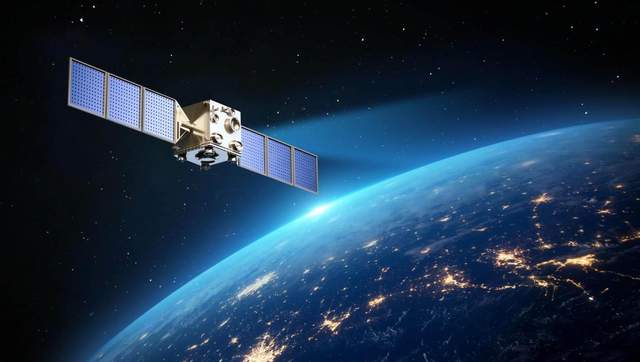
For ordinary users, Starlink's move implies a new type of network vulnerability. Once highly dependent on Starlink for communication, a region's network will collapse if the service provider cuts off the connection for any reason. This could have severe consequences in emergencies. For example, could there be a risk of collective disconnection for a country's users if its government has tense relations with SpaceX? This dependency on a single supplier transforms network security from past issues of 'severed cables' or 'shut-down base stations' into 'closed satellite accounts.'
Starlink's disconnection actions have also reignited debates over national sovereignty and network governance. Traditionally, a country's internet is primarily managed by domestic operators and regulatory bodies, making direct intervention by foreign entities difficult. However, Starlink satellites operate in space orbits, with services naturally transcending national borders, enabling a foreign company to provide or cut off internet access within a country without its knowledge or consent.

For this reason, out of concerns that Starlink could be used for subversive activities or spreading harmful information, China, Russia, and other countries have explicitly banned unauthorized satellite internet devices from entering their territories. Similarly, when SpaceX unilaterally cut off network services to telecom fraud parks in Myanmar without consulting the government, some viewed it as a case of a private company intervening in another country's affairs. This raises a practical and urgent question: while promoting global internet access, how can we respect national sovereignty and maintain the boundaries of network security? This balancing act now confronts an increasing number of countries.
It can be said that Starlink's disconnection of telecom fraud parks in Myanmar has brought the Starlink controversy to the forefront.
We see how a single decision by Elon Musk can instantly paralyze a region's network, while in remote tribes and disaster areas, the same technology brings vital connectivity to people.
Starlink is not simply good or bad. It is more like a mirror, reflecting the power and responsibility behind technology. Who has the authority to decide connection or disconnection? Based on what rules? As more regions worldwide become increasingly dependent on such networks, this question has become an urgent dilemma facing governments, enterprises, and the public.

-
![]()
Alibaba's AI Offensive: Over Half of Investment Allocated, Time to Reap Returns
-
![]()
Alibaba’s AI Push: Over Half of Investments Made, Time to Harvest Returns
-
![]()
Chinese Enterprises Going Global 3.0: From World Factory to AI Infrastructure Builder
-
![]()
Honor RobotPhone Review: Half Movie Camera, Half Robot
-
![]()
AI-Driven Cheating Surges in Universities! Online Exams Reduced to Mere Formalities, Degree Credibility on the Line
-
Insta360’s Decade in Panoramic Imaging: Making Cameras ‘Invisible’ and Returning Creation to the Masses
-
![]()
Foreign Media Claims Apple is Concentrating Resources on AI Development: Vision Pro and Siri Teams Lay Off 200 People
-
Big News! Huaneng and Huawei Hold Talks in Shenzhen with Ren Zhengfei in Attendance; Huawei Emerging as the 'Second Brain' of China's Energy System