Behind Deepseek's Major Update: The AI War Looms Large, and Hesitation Spells Doom
 12/03 2025
 548
548
By Chen Bai
Source: Node Finance
On December 1st, the much-anticipated DeepSeek update once again stole the limelight.
According to Deepseek's official announcement, two full-fledged models have been unveiled: DeepSeek-V3.2 and DeepSeek-V3.2-Speciale.
As per the official introduction, DeepSeek-V3.2 is designed to strike a balance between reasoning prowess and output length, making it ideal for daily use, such as in Q&A sessions and general Agent task scenarios.
In essence, DeepSeek is no longer content with just being an AI chatbot. Its ambition is to morph into a versatile AI assistant for the future.
Coincidentally, on the same day as DeepSeek's press conference, Doubao Mobile Assistant, a ByteDance product, also announced a significant upgrade. It directly leaped over the barriers set by all super apps, integrating into mobile operating systems as a system-level service, aiming to redefine what a true 'AI phone' entails.
This flurry of activity signals that Chinese tech giants are collectively pivoting from the 'model layer' to the 'system layer'.
Meanwhile, across the Atlantic in Silicon Valley, progress has been equally swift and exhilarating. Just a week after Google's Gemini 3.0 was launched, it dominated global evaluation benchmarks with its remarkable multimodal understanding capabilities; OpenAI didn't hold back, with ChatGPT 5.1's 'group chat feature' shattering the one-on-one interaction barrier between humans and machines, and the surging downloads of Sora have intensified competition in the video generation arena.
All these developments indicate that Silicon Valley AI has moved beyond the stage of mere technical showmanship and has fully entered a cutthroat phase of application competition.
If 2023 brought a sense of awe and dizziness at the sudden emergence of ChatGPT, and 2024 was marked by the 'hundred-model war' where companies vied on parameters and benchmark scores, then the end of 2025 signifies the end of one era and the dawn of another—we have finally transitioned from merely competing on parameter stacking and brute-force computing power.
With the release of DeepSeek V3.2, the signal has never been clearer: the focus of the global AI competition has shifted from who is smarter to who can better solve real-world problems.
The AI war of 2026 has already started to show its signs.
01 Breaking Through the AI Business Ceiling
The release of DeepSeek V3.2 has stirred up far more excitement in the tech community than ordinary users might perceive.
For a long time, DeepSeek has been known as the 'geek's first choice' for its exceptional performance in code generation and complex reasoning. However, in the V3.2 version, the official specifically highlighted 'general Agent task scenarios' and 'a balance between reasoning and output length.' Behind this seemingly mundane technical description lies a massive strategic shift driven by 'anxiety' among model developers.
Over the past two years, we've grown accustomed to typing prompts into a chatbox and waiting for AI to generate a block of text or code. While this 'ChatBot' model is novel, its marginal utility is diminishing.
Users are growing weary of copying and pasting between different windows, and businesses are complaining that AI cannot truly solve problems in a closed loop. An AI that can only 'talk' but not 'act' has a limited commercial value.
DeepSeek clearly recognizes this. The introduction of the V3.2-Speciale version is likely intended to complement the main model for precise strikes in specific complex environments.
What this truly signifies is that DeepSeek is no longer content with being a human companion and consultant but aims to become a human 'executor.' This update is essentially declaring that, as a flagbearer for China's open-source and closed-source models, it is ready to transition from a 'large language model' to a 'general intelligent agent foundation.'
This is not just Liang Wenfeng's vision but a collective breakthrough for the entire industry.
We observe that Anthropic in the United States is frantically (using the term 'frantically' for emphasis) enhancing computer operation capabilities in subsequent versions of Claude; OpenAI, after the o1 series, has shifted all its R&D focus to Agent models capable of autonomous path planning.
In the Chat era, model developers were confined within chatboxes, and the application layer was dominated by shell companies. Entering the Agent era, the model itself becomes the operating system, and the model itself becomes the browser.
DeepSeek V3.2 and Doubao are not just aiming to be your chat time-killer dialog boxes or merely a webpage on your computer; their ambition is to directly assist you in writing code, testing and running it, and even deploying it online, becoming the core engine of your workflow.
02 The Battle for Entry Points
If we zoom out from the technical products themselves to the dimensions of global geopolitics and macroeconomics, we will find that DeepSeek's evolution is not an isolated incident but a reaffirmation of global trends.
The Sino-US AI battlefield at the end of 2025 presents a curious and tense 'convergence of different paths': all tech giants on both sides of the Atlantic are frantically integrating AI into specific business workflows, transforming AI from an 'explicit' conversationalist to an 'implicit' controller.
However, beneath the surface of this technological race prosperity lies a fierce hidden war between China and the United States in policy games, standard-setting, and computing power defenses.
Let's first look across the ocean.
OpenAI and Google's moves are extremely aggressive and invasive. The group chat feature introduced in ChatGPT 5.1 may seem like a simple social experiment, but it is actually a deep invasion of human social relationships. The video explosion represented by Sora has allowed OpenAI to seize control of short video content production and even begin to threaten Hollywood's traditional production processes.
Google cannot be overlooked either. Gemini 3.0, paired with its extremely impressive 'Nano Banana' end-side lightweight model, is sweeping through the AI application market.
Google is attempting to turn the Android system itself into a massive Agent, directly bypassing apps to call services. This is essentially an attempt to establish a 'global AI operating system' defined by Silicon Valley. If successful, all companies dependent on the app ecosystem will face the risk of being marginalized.
In contrast, in the Chinese market, from Alibaba's Qianwen and Ant's Lingguang to ByteDance's Doubao, although the paths of various major companies differ, their goals are highly aligned: to forge a 'Chinese-characteristic path' driven by applications at the bottom layer amid computing power blockades.
Behind this seemingly prosperous application explosion lies a deeper game between China and the United States in 'computing power breakthroughs' and 'ecosystem construction.'
Over the past three years, the United States has attempted to lock down the evolutionary ceiling of Chinese AI through wave after wave of high-end chip bans. They hope that physical-level blockades will keep Chinese AI at a second-rate level indefinitely.
However, the emergence of DeepSeek V3 in early 2025 and the iterations of other leading domestic models have powerfully demonstrated, from a side perspective, the temporary ineffectiveness (Chinese term meaning 'temporary setback') of such physical blockades.
Chinese manufacturers have shown astonishing resilience and ingenuity. Since they cannot buy top-tier single cards, they compensate through algorithmic optimization; since computing cluster interconnection is restricted, they improve parameter utilization through innovations in the MoE (Mixture of Experts) architecture; since there are hardware shortcomings, they enhance efficiency through extreme soft-hard collaboration.
The Chinese AI industry has managed to train models on par with GPT-4.5 and even GPT-5 under the harsh conditions of restricted computing power.
As a result, the focus of the game has begun to shift. From mere 'hardware blockades,' it has moved to a softer but ultimately more fatal competition over Agent behavior and ecosystem application barriers.
03 The Reconstruction of the Physical World Has Just Begun
In early 2025, the emergence of Manus introduced everyone to the concept of AI Agents for the first time.
Looking ahead from the end of 2025, a trend is becoming increasingly evident: 2026 will truly be the Year of AI Agents.
Why 2026? Because by then, the technology will be mature, application scenarios will be established, and strategic games at the national level will have entered a critical period for establishing 'new rules.'
Between 2023 and 2025, we addressed two core obstacles: 'models not being smart enough' and 'reasoning costs being too high.' The release of DeepSeek V3.2 symbolizes a further decline in the cost of high-performance models and an exponential increase in practicality.
When reasoning costs become negligible and models' context lengths can accommodate entire books or even entire project codebases, quantitative changes finally trigger qualitative changes.
The core difference between an Agent and a ChatBot lies in perception, planning, and action. In other words, in 2026, we will witness AI no longer confined to screens but beginning to reconstruct the physical world.
At the software level, AI will completely reconstruct workflows. In the past, we used SaaS (Software as a Service); in the future, we will enter the SaaS (Service as a Software) era—where service is software.
You will no longer purchase a CRM system to input customer information yourself but hire a 'sales Agent' that automatically captures leads, sends emails, and schedules meetings. The balanced reasoning capabilities demonstrated by DeepSeek V3.2 are precisely to support such long-chain complex decision-making.
At the hardware level, embodied intelligence is likely to experience a new wave of explosions due to breakthroughs at the software level.
AI, as the brain of robots, is ready; next comes equipping it with a body. Whether it's Tesla's Optimus or a series of domestic humanoid robots, their core souls are all general-purpose large models like DeepSeek V3.2.
When models can understand the laws of the physical world and break down seemingly simple yet complex instructions like 'pour a glass of water,' the curtain on AI transforming the world truly rises.
For Chinese enterprises, 2026 presents both opportunities and a life-or-death situation. In this battlefield, AI is no longer a toy for chatting but a programmer who writes code for you, a financial advisor who manages your finances, a director who edits videos for you, and even a driver who drives for you.
From 'chatting' to 'doing,' from 'illusion' to 'reality,' in 2026, when Agents are ubiquitous, we will have to rethink humanity's place in this new world.
And this is the true root cause of the urgency and anxiety among global tech giants. The war to transform the physical world with AI has already begun, and the time for tech companies to seize the entry point for the next era is running out.
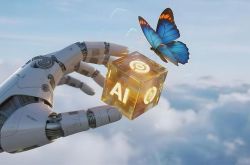
*The featured image is generated by AI.
-
![]()
Alibaba's AI Offensive: Over Half of Investment Allocated, Time to Reap Returns
-
![]()
Alibaba’s AI Push: Over Half of Investments Made, Time to Harvest Returns
-
![]()
Chinese Enterprises Going Global 3.0: From World Factory to AI Infrastructure Builder
-
![]()
Honor RobotPhone Review: Half Movie Camera, Half Robot
-
![]()
AI-Driven Cheating Surges in Universities! Online Exams Reduced to Mere Formalities, Degree Credibility on the Line
-
Insta360’s Decade in Panoramic Imaging: Making Cameras ‘Invisible’ and Returning Creation to the Masses
-
![]()
Foreign Media Claims Apple is Concentrating Resources on AI Development: Vision Pro and Siri Teams Lay Off 200 People
-
Big News! Huaneng and Huawei Hold Talks in Shenzhen with Ren Zhengfei in Attendance; Huawei Emerging as the 'Second Brain' of China's Energy System