Deciphering Shenzhen's 'Blueprint' in the AI Age: Forging a 'Fortress' with Core Competencies
 12/03 2025
 615
615

Rewinding to early 2025, the "DeepSeek" phenomenon quietly ignited a fierce competition among Chinese cities striving to claim the title of the "AI Capital."
Over the past six months, we've witnessed Hangzhou's "Six Little Dragons" race ahead in application layers, Beijing's bold leaps in model development, and even relatively remote central and western Chinese cities scrambling to deploy intelligent computing infrastructure, fearful of missing the "ticket to the future."
How has Shenzhen, the famed City of Innovation, positioned itself in this race?
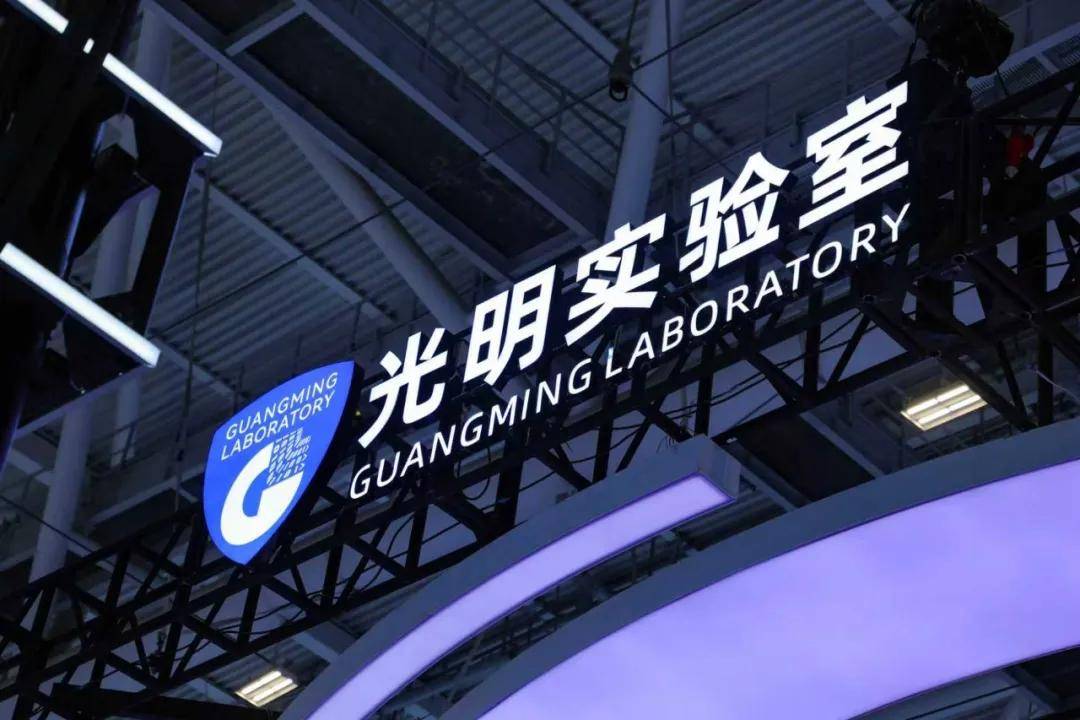
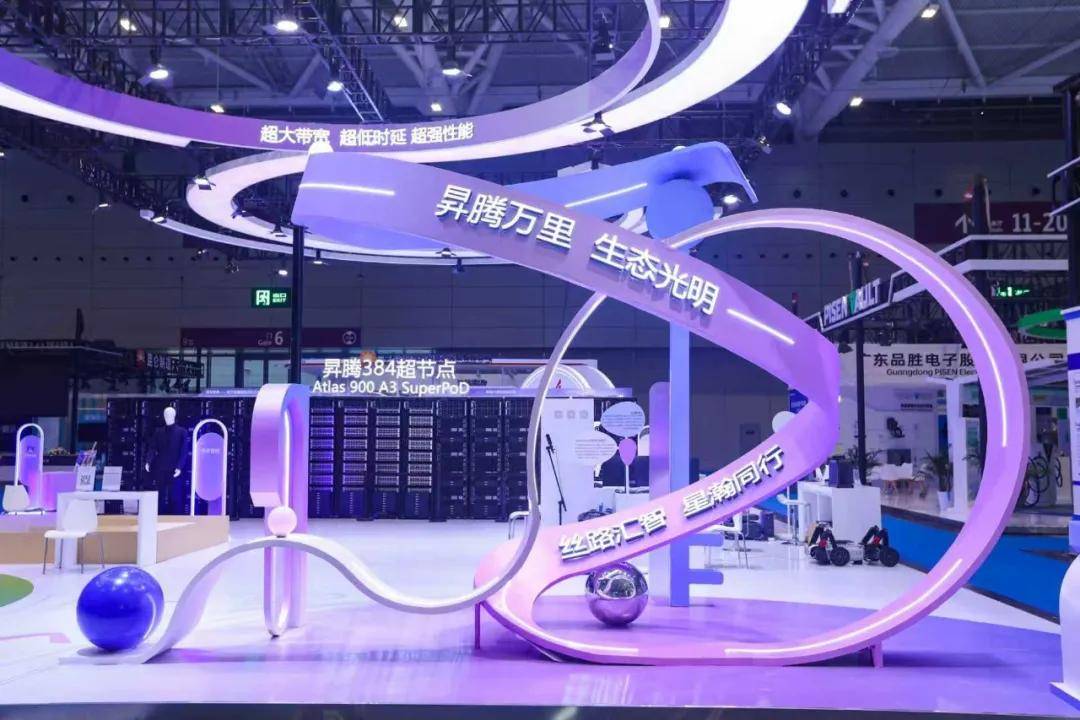
At the 27th China Hi-Tech Fair two weeks ago, the "Domestic AI Ecosystem Exhibition Based on Ascend," co-organized by the Guangming Laboratory and Huawei, unveiled the Ascend 384 super-node in Shenzhen for the first time. This formidable computing backbone showcased the "hard power" of a national strategic asset, embodying Shenzhen's "blueprint" for AI ecosystem development: while other cities vie for the "AI Application Capital" crown, Shenzhen has quietly constructed a broader, deeper "moat" of technological supremacy.
01 Computing Power as the 'New Oil': Shenzhen Builds a 'Refinery'
From unlocking your phone with facial recognition in the morning to receiving precisely tailored "Sichuan cuisine" recommendations from food delivery apps at lunch, or enjoying bespoke video content before bed—every mundane digital experience hinges on computing power.
Much like oil's pivotal role in the Second and Third Industrial Revolutions, computing power is often hailed as the "oil" of the Fourth Industrial Revolution. Though invisible to end-users, it serves as foundational infrastructure, "powering" applications such as content generation, autonomous driving, and embodied AI.
In the oil economy, bottlenecks arise not solely from crude oil supply but also from inefficient refining processes. Similarly, China's AI industry faces constraints not only from computing hardware (GPUs, CPUs, NPUs) but also from software stacks and ecosystems that determine utilization efficiency—a critical yet often overlooked link.
Thus, Shenzhen's AI strategy eschews the "oil rush" mentality, focusing instead on long-term, high-value foundational engineering—the "refinery."
The story begins in March 2025.
At the launch of the Greater Bay Area Ascend Computing Application Innovation Institute, a senior official from the Shenzhen Science and Technology Innovation Bureau made a bold declaration: "We aim to build a computing ecosystem that surpasses NVIDIA's, creating new growth opportunities for global AI developers."
Why does Shenzhen prioritize computing ecosystems? The answer lies in its unique strengths.
Shenzhen boasts China's most comprehensive hardware supply chain, with Huawei's Ascend computing power and CANN open-source ecosystem serving as unparalleled assets. More importantly, Shenzhen recognizes that in the AI marathon, competing solely at the model or application layers risks homogenization. A self-controlled computing ecosystem foundation is the ultimate determinant of industrial success.
This forms the first layer of the "Shenzhen Blueprint": aggregating resources to seize "certainty dividends."
The Greater Bay Area Ascend Computing Application Innovation Institute, co-established by the Guangming Laboratory and Huawei, is tasked with "ecosystem building through government-enterprise collaboration." By open-sourcing operator libraries, standardizing model migration, and optimizing frameworks, it attracts global developers to tackle hardware-software compatibility challenges. This concentrated effort strengthens domestic computing power's compatibility with GPUs, builds a secure and controllable supply chain, and lays a solid foundation for AI innovation.
From an industrial perspective, Shenzhen's choice is clear: rather than pursuing short-term model or application booms, improving computing utilization, reducing training/inference costs, and shortening development cycles offer "certainty dividends" that sustain long-term growth.
Shenzhen aims to construct a vertical industrial chain spanning foundational computing power, system software, training/inference frameworks, industry models, and applications.
02 Avoiding 'Lone Wolf' Tactics: Waging an 'Organized War'
Throughout tech history, no ecosystem has thrived through isolated efforts. The Wintel alliance, Android, and NVIDIA's CUDA ecosystem all exemplify collaborative success.
For a city's AI industry to thrive, it must build on a healthy computing ecosystem, integrating long-term government commitment, cutting-edge research from institutions, engineering prowess from enterprises, and sustained contributions from developer communities. This "multi-factor-driven" flywheel ensures growth stems from ecosystem synergy rather than technological happenstance.
The second layer of the "Shenzhen Blueprint" lies here—an "organized war" coordinating "proactive government" and "efficient markets."
As previously mentioned, Shenzhen's approach is "ecosystem building through government-enterprise collaboration." The Guangming Laboratory acts as the "proactive government" hub, creating an open, collaborative ecosystem that bridges academia and industry. Universities and research institutes tackle foundational technologies, while enterprises validate applications in real-world scenarios, forming a closed loop of "technology breakthroughs → application feedback → iterative optimization."
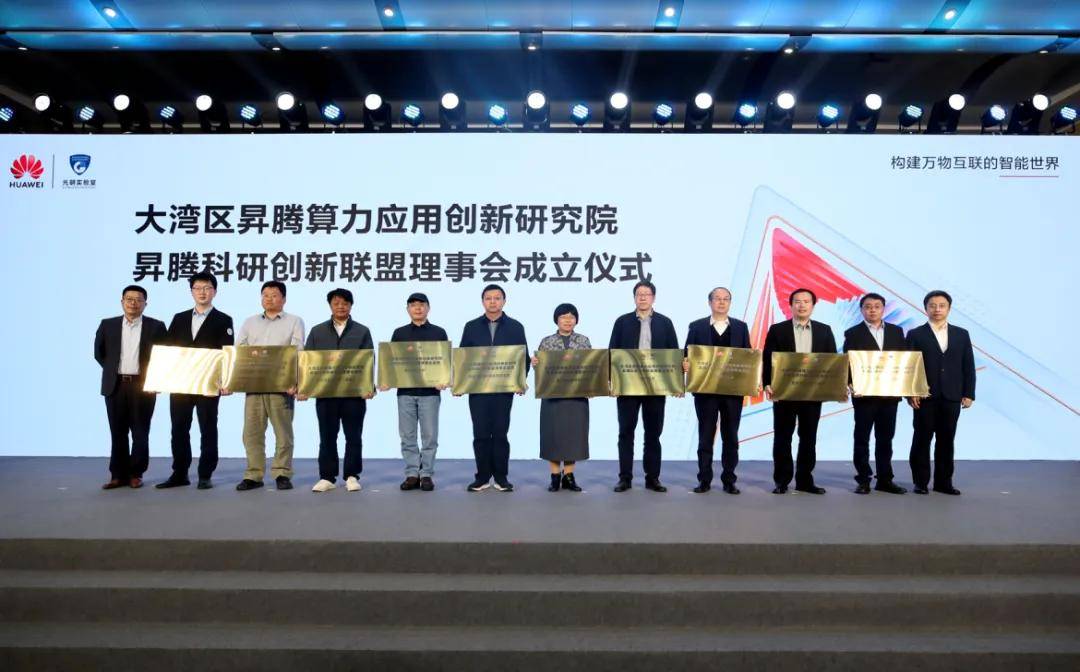
Take the institute's "alliance-based operations," which spearheaded the "Ascend Research Innovation Alliance." On one side, it connects universities like the Shenzhen Institute of Advanced Technology, Southern University of Science and Technology, Sun Yat-sen University, and The Chinese University of Hong Kong, Shenzhen, driving Ascend-based innovation and talent development. On the other, it aligns with industrial demands to accelerate product localization, upgrades, and iterations, deepening Ascend's market penetration and transforming research into productivity.
Under this "top-down design + market-driven" mechanism, Shenzhen's AI industry has shifted from "fragmented guerrilla warfare" to organized, systematic "frontline advances." The government provides "logistics" (computing subsidies, policy guidance), the laboratory trains "troops" (technology R&D, talent cultivation), and enterprises execute "missions" (scenario deployment, commercialization).
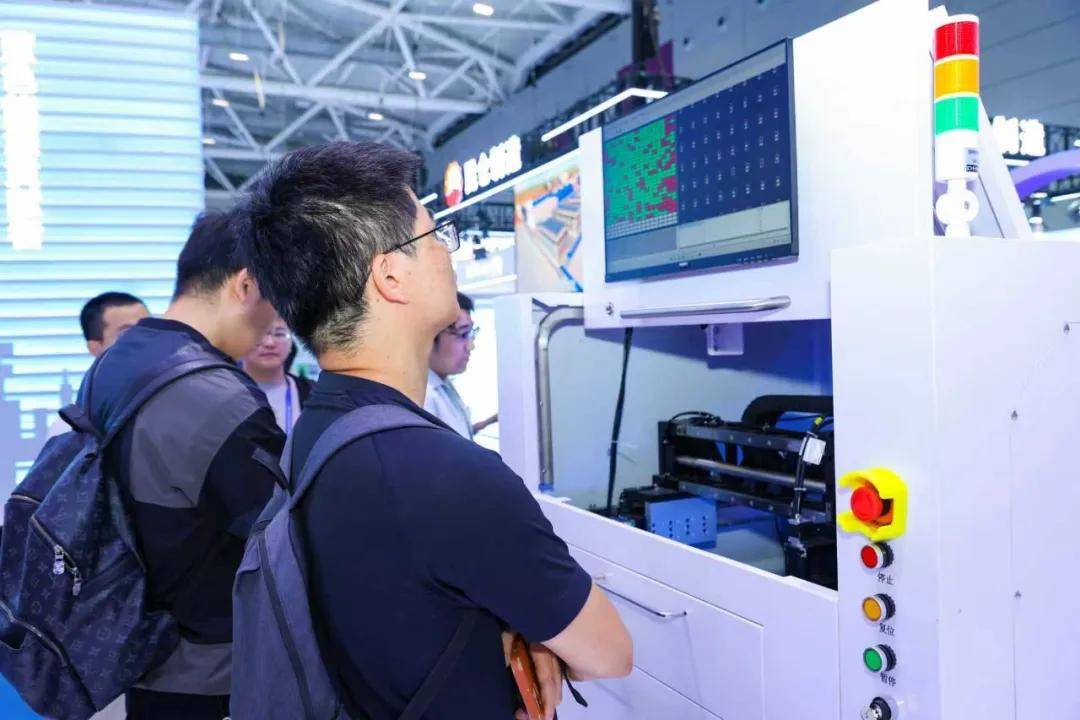
A prime example is the industrial quality inspection model showcased at the Hi-Tech Fair.
Traditional small models struggle with generalization, requiring retraining for each production line. With the Guangming Laboratory's facilitation, Ascend-powered large models were introduced to industrial quality inspection, enabling real-time validation and feedback on production lines. This significantly reduced training costs and improved inspection accuracy.
The model's deployment is a microcosm of Shenzhen's unique AI competitiveness, reflecting a systemic innovation framework.
While many cities still engage in "project-based sprints"—focusing on infrastructure, recruitment, or conceptual hype—Shenzhen treats AI as a "long-term curve," integrating computing infrastructure, foundational technological innovation, and industrial validation. This approach strengthens the ecosystem's self-sustaining capacity: research innovations transcend academic papers, policies remain grounded in reality, and enterprise growth aligns with practical scenarios.
03 'Real-World' Drills: Accelerating the 'Ecosystem Flywheel'
As 2025 draws to a close, the intelligent transformation of industries intensifies. The core challenge for domestic AI ecosystems has shifted from "functionality" to "performance"—whether they can unlock new productive forces.
The third and most critical layer of the "Shenzhen Blueprint" lies in the bidirectional enhancement of foundational computing power and upper-layer applications.
To borrow the earlier metaphor, amid fierce and rapid "AI warfare," no city can afford leisurely strategic simulations—they must drill in "real-world" conditions.
At the Hi-Tech Fair's "Domestic AI Ecosystem Exhibition Based on Ascend," the Guangming Laboratory showcased cutting-edge explorations like world models, multimodal large models, and spatial intelligence. These not only validated Ascend's real-world efficacy but also demonstrated an innovation paradigm where "application demands drive computing evolution."
For instance, when Guangming Laboratory researchers localized a video understanding model, they pushed Ascend's hardware performance to its limits in long-sequence, multimodal scenarios. They identified bottlenecks in dynamic shape generalization, memory bandwidth, and cluster communication scheduling.
Under foreign computing systems, such issues would require community feedback and passive optimization waits, potentially lingering indefinitely.
However, Shenzhen's collaborative innovation mechanism enabled the laboratory to partner with Huawei, deeply optimizing core operators like CANN's flashattention, wkv7/wkv7grad, swiglu, channelmixing, and tokenshift. By systematically addressing performance gaps across model training and inference, they achieved over 50% average performance gains per operator and ~30% end-to-end efficiency improvements.
This underscores that only by integrating the full stack from chip instruction sets to application algorithms and establishing upstream-downstream collaboration can innovations be "reusable." Even a simple video analysis app can enjoy 30% efficiency gains.
The Hi-Tech Fair featured numerous such innovations.
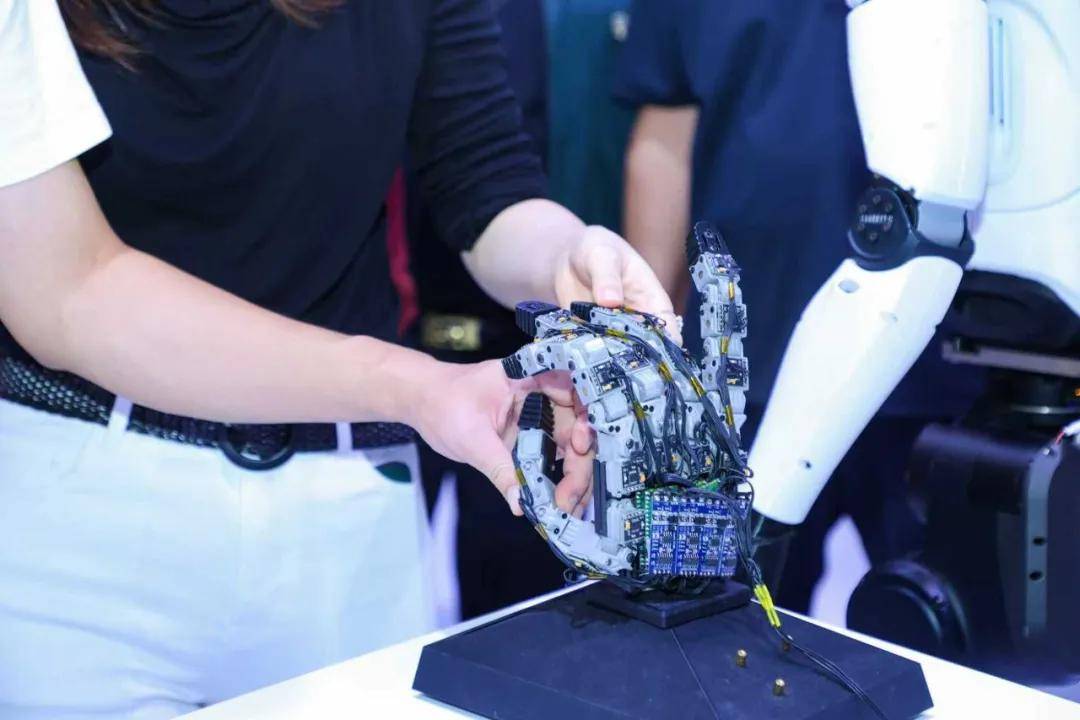
Take FLERA, an embodied AI dexterous hand, which demands extreme real-time computing power and low latency. Empowered by the Ascend ecosystem, FLERA achieved highly human-like motion and precise control, covering over 95% of human hand movements like pinching, grasping, and opposing fingers.
Another example is GMTalker, a full-stack interactive digital human solution. Leveraging CANN's high-performance operator library and MindSpore's end-to-end optimization, it significantly lowered deployment barriers and resource consumption, delivering an immersive human-machine dialogue experience with "clear hearing, accurate speaking, authentic expressions, and rapid responses."
In summary, the core of the "Shenzhen Blueprint" is using scenario innovation to drive foundational technology optimization, which in turn enables more complex scenario innovations—a classic "flywheel effect." Once spinning, this flywheel generates far-exceeding momentum.
04 Conclusion
The AI ecosystem exhibition at this Hi-Tech Fair offers a complete snapshot of Shenzhen's strategic deployment and development philosophy for domestic AI.
From the steady construction of the Ascend computing foundation to the maturation of industry-academia-research collaboration mechanisms and the formation of full-stack autonomy, Shenzhen is pioneering a replicable, sustainable AI development path through a "proactive government + efficient market" synergy. The Guangming Laboratory plays a pivotal role as the ecosystem's "catalyst," aligning research capabilities, industrial demands, and urban resources into an evolvable systemic force.
At its core, AI represents a paradigm shift in computing. Those who define computing power and build resilient ecosystems will shape the future. For China's tech industry, the "Shenzhen Blueprint" is the "Chinese Solution" that the AI era demands.
-
![]()
Alibaba's AI Offensive: Over Half of Investment Allocated, Time to Reap Returns
-
![]()
Alibaba’s AI Push: Over Half of Investments Made, Time to Harvest Returns
-
![]()
Chinese Enterprises Going Global 3.0: From World Factory to AI Infrastructure Builder
-
![]()
Honor RobotPhone Review: Half Movie Camera, Half Robot
-
![]()
AI-Driven Cheating Surges in Universities! Online Exams Reduced to Mere Formalities, Degree Credibility on the Line
-
Insta360’s Decade in Panoramic Imaging: Making Cameras ‘Invisible’ and Returning Creation to the Masses
-
![]()
Foreign Media Claims Apple is Concentrating Resources on AI Development: Vision Pro and Siri Teams Lay Off 200 People
-
Big News! Huaneng and Huawei Hold Talks in Shenzhen with Ren Zhengfei in Attendance; Huawei Emerging as the 'Second Brain' of China's Energy System