The AI Boom in Education: A Rush for User Numbers or a True Educational Revolution?
 12/04 2025
 622
622
Ultimately, education is not a business centered around generating traffic but a noble cause focused on people.
Since the latter half of the year, the market for AI applications in education has seemed to be on a rapid acceleration track. On parents' mobile screens, a silent yet fierce battle is raging. ByteDance's "Doubao Aixue" (Doubao Loves Learning), Alibaba's "Kuake Xuexi" (Quark Learning), and AI-driven products from educational behemoths like Yuanfudao and Zuoyebang are all fiercely vying for top spots in app store rankings. Data reveals that the monthly active users of leading products have soared past 100 million, with some tools witnessing download growth rates nearing 1,000% month-on-month.
Behind this frenzy lies a reconfiguration of family education demands, spurred by the "Double Reduction" policy, coupled with the maturity of generative AI technology. In particular, the widespread adoption of the "Large Model + RAG + Massive Question Bank" technical architecture has provided a near-perfect landing scenario for "AI Tutors."
The age-old field of education is now under the intense scrutiny of algorithms and capital, undergoing an unprecedented deconstruction and reconstruction. However, amidst the excitement, this sector has reached a pivotal crossroads.
Market Surge: Driven by Demand Reconfiguration and Technological Maturity
The meteoric rise in market data is a testament to the urgency of demand. An IDC report reveals that in the second quarter of 2025 alone, China's learning tablet market shipped 1.54 million units, marking a year-on-year increase of 44.6%. A broader perspective shows that China's educational smart hardware market is projected to surpass 100 billion yuan by 2025 and is expected to reach 112.5 billion yuan by 2027. A report by iiMedia Research further supports this trend, noting that educational smart hardware effectively fills the market void left by the reduction in after-school tutoring following the "Double Reduction" policy.
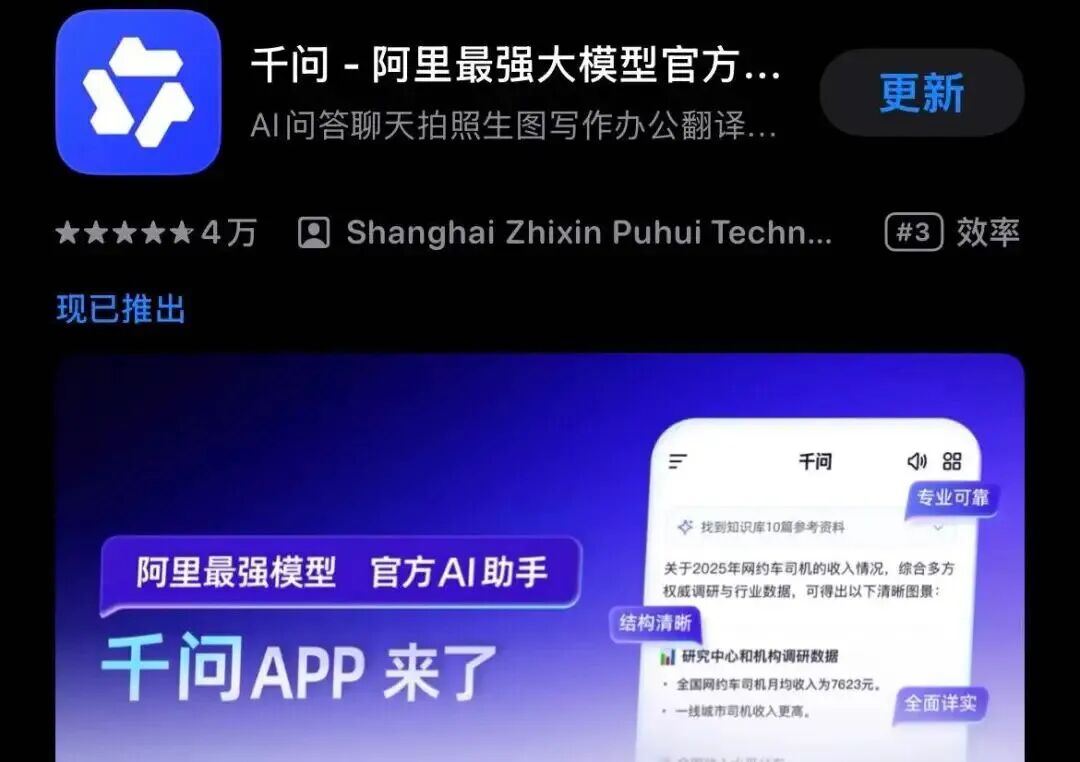
| The Qianwen APP, updated on December 3rd, deepens its AI educational capabilities.
The underlying logic driving this boom is crystal clear. On one hand, post-policy adjustments, parents' anxieties and tutoring responsibilities have been internalized within families to an unprecedented degree, creating a rigid demand for efficient, convenient, and affordable auxiliary tools. On the other hand, breakthrough technological advancements have made the once-imagined possible. Large models are no longer just chatbots; they can now comprehend complex mathematical reasoning steps, grade essays with subjective tones, and even simulate teachers in heuristic question-and-answer sessions.
The high-frequency, rigid, and standardizable nature of educational scenarios makes them a golden track for the commercialization of AI technology. After all, no field is more suited for large-scale, personalized machine processing than the learning loop composed of "repetitive practice" and "instant feedback."
Path Divergence: The Difference Between Traffic Mindset and Educational DNA
However, the players flooding into this sector harbor vastly different business blueprints and product philosophies. This competition is essentially a clash between two types of DNA and two types of logic.
Tech giants like ByteDance and Alibaba, leveraging their strong traffic entry points, cloud computing resources, and capital advantages, adopt a typical platform-based offensive strategy. Their core goal is not short-term direct profitability from educational services but ecological layout and data accumulation.
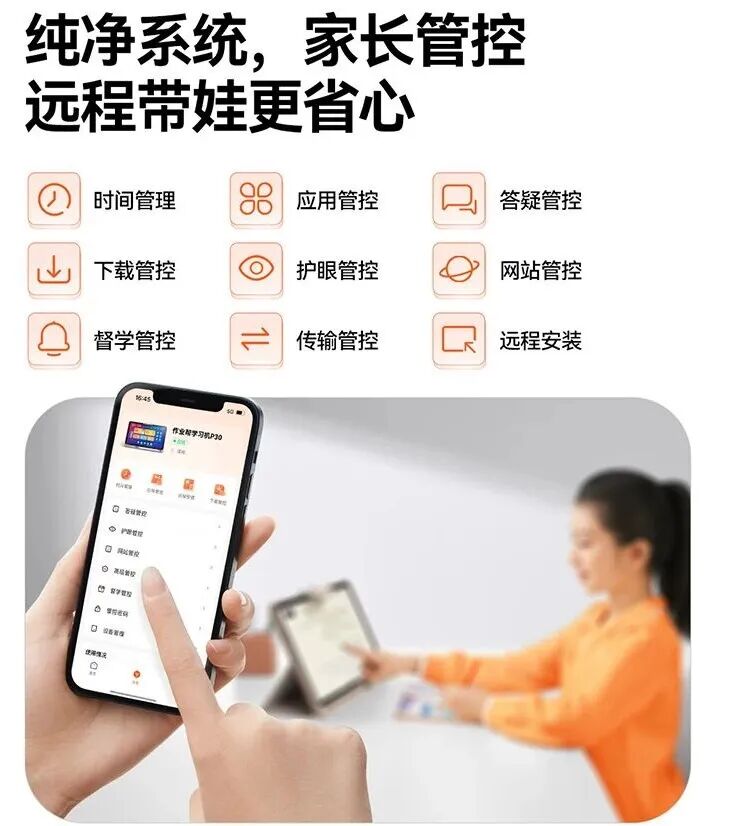
| Interface of Zuoyebang's AI product
An industry practitioner pointed out that tech giants attract users by providing free basic tool functions, with the ultimate aim of keeping users within their own ecosystem, where data can feed back into core businesses such as advertising, cloud services, and even e-commerce. Therefore, their products, like "Doubao Aixue" and "Kuake Xuexi," often feature simple designs and smooth interactions, focusing on high-frequency tool attributes like photo search for questions and homework grading, striving to lower usage barriers and achieve rapid user acquisition.
In contrast, traditional educational giants like Yuanfudao, Zuoyebang, and TAL Education are fortifying their moats with AI technology. Their core competitiveness lies in years of accumulated teaching and research systems, massive question banks, renowned teacher resources, and a profound understanding of the K12 score-improvement logic. Their AI-driven transformation aims directly at enhancing teaching effectiveness and commercial realization.
Therefore, the products of educational giants place greater emphasis on constructing a complete "teaching, learning, practicing, testing, and evaluating" loop. For example, TAL Education's proposed model of "renowned teacher-led instruction + secondary instruction services + AI companion learning" deeply embeds AI into the teaching service process. Their AI applications, like "Xiaoyuan Souti" (Little Ape Question Search), while also offering free basic functions, typically require membership for core value-added services such as video explanations, personalized learning plans, and live courses.
This difference is starkly reflected in product experiences. Testing reveals that most products can provide correct answers to the same math problem. However, when clicking on "video explanations," products from internet giants (like Kuake Xuexi) may offer free access, while those from educational giants are more likely to require membership privileges. In terms of interface design, internet giants favor simple Chatbot-style dialogues, while educational giants retain the traditional APP's multi-module layout densely packed with functions.
Technological Core: The Competition from General Models to Vertical Ecosystems
Beneath the surface application battles lies a deeper competition in technological foundations and ecosystem construction. In 2025, China's educational large models are experiencing a surge.
NetEase Youdao has deeply cultivated its self-developed "Ziyue" large model, deriving over a dozen vertical applications covering translation, essay grading, oral practice, and more. iFLYTEK has deeply integrated its "Xinghuo Cognitive Large Model" into smart education products, claiming coverage in over 50,000 schools nationwide, reaching 130 million teachers and students. Its "Xinghuo Teacher Assistant" can boost teacher slide production efficiency by 64.18%. Learning machines from brands like Xueersi and BBK are equipped with self-developed or collaborative models like "Jiuzhang Large Model" and "Deepseek X AI Teacher." Even an open-source educational reasoning model, "Ziyue-o1," has emerged, attempting to lower industry technological barriers.

| Doubao Aixue under ByteDance
The competitive landscape is stratifying with differentiation: tech giants with technological and traffic advantages; educational giants with curriculum and user data resources; and startups focusing on niche scenarios.
However, it must be pointed out that true competition has shifted from single-function comparisons to ecological solutions encompassing "terminals + content + platforms." Some leading enterprises are beginning to build product matrices covering full scenarios of teaching, teaching research, management, and autonomous learning. iFLYTEK's educational products now cover full scenarios of school teaching, teacher development, smart examinations, and quality education. This marks the industry's transition from providing scattered tools to constructing integrated, scenario-based professional ecosystems.
Real-world Challenges: Superficial Applications and Technological Limitations
While the market is ablaze with excitement, the deep integration of AI and education is far from smooth sailing. Beneath the noise, multiple challenges have quietly emerged.
The first is the superficiality and mismatch of applications. An unnamed education practitioner pointed out that most current AI tools still focus on "presentation-type" behaviors like slide generation and homework grading. While these enhance efficiency, they fail to deeply intervene in the two core teaching behaviors of "dialogue" and "guidance." True teaching occurs in the exchange of glances, verbal collisions, and intellectual stimulations. If AI can only accomplish the first 5% of tasks but leads us to believe we've completed 90%, it will actually undermine teaching professionalism.
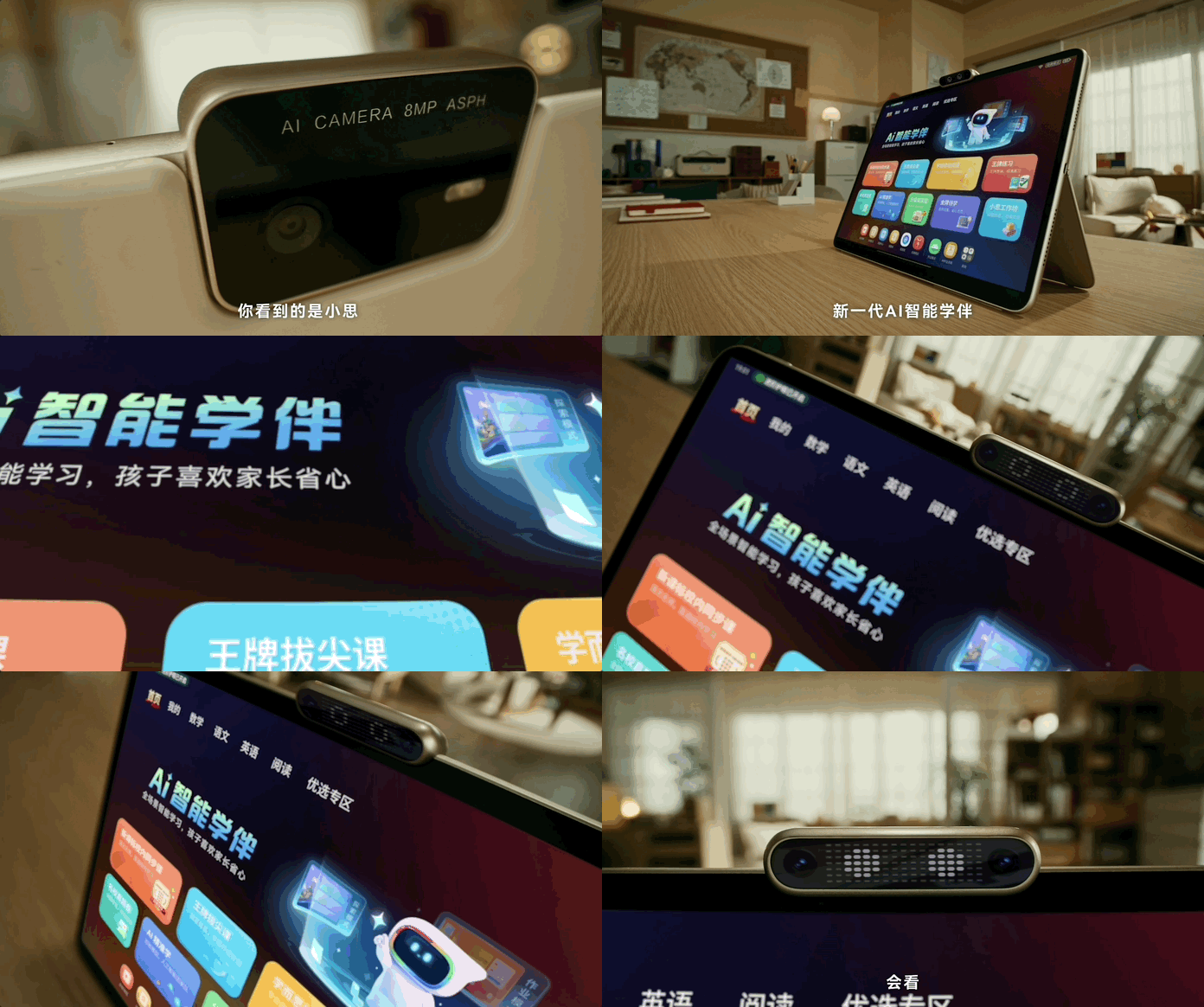
| Xueersi launches a new generation of AI intelligent learning companion
Inadequate teacher adaptability is another major bottleneck. Some teachers lack understanding of algorithmic principles, easily relying on system recommendations or fearing replacement. Meanwhile, most teachers possess the ability to operate AI tools but lack the capacity to analyze data. The "explanation gap" between AI-generated learning reports and real classroom situations makes it difficult for teachers to translate them into precise teaching strategies.
The limitations and risks of the technology itself cannot be overlooked. The "hallucinations" of generative AI may bring information misguidance during teaching. More profoundly, there is the risk of "cognitive outsourcing": students using AI to directly generate homework answers may lead to a degradation of autonomous thinking abilities; teachers overly relying on AI for grading may weaken precious teacher-student interactions.
Data privacy and algorithmic bias are also Damocles' swords hanging overhead. New regulations from the Ministry of Education in 2025 now require all educational AI products to include a "manual review switch" to ensure teachers always retain the dominant role in teaching decisions. This is both a prudent response to technological uncertainties and a defense of educational agency.
Finally, the issue of educational equity becomes increasingly prominent amidst the technological wave, with the digital divide potentially widening in new forms. The gap in learning resources between families that can afford high-end AI tutoring services and those that can only use basic functions may be further exacerbated by technology.
Conclusion: The Evolution from Efficiency Tools to Educational Partners
How will the future of this golden track unfold?
In April of this year, nine departments including the Ministry of Education jointly released the "Opinions on Accelerating the Digitalization of Education," proposing to create innovative application scenarios for "AI + Education" and build a multi-participant AI application ecosystem to promote the healthy development of "AI + Education."
The "China Smart Education White Paper" released at the 2025 World Digital Education Conference points out that 2025 marks the first year of smart education, with artificial intelligence comprehensively transforming educational content, teaching modes, educational governance, and educational forms.
It is predictable that the "AI + Education" track will continue to heat up. A report by Changjiang Securities Institute shows that the "AI + Education" market size is expected to reach 160 billion yuan by 2027 and approach 180 billion yuan by 2030.
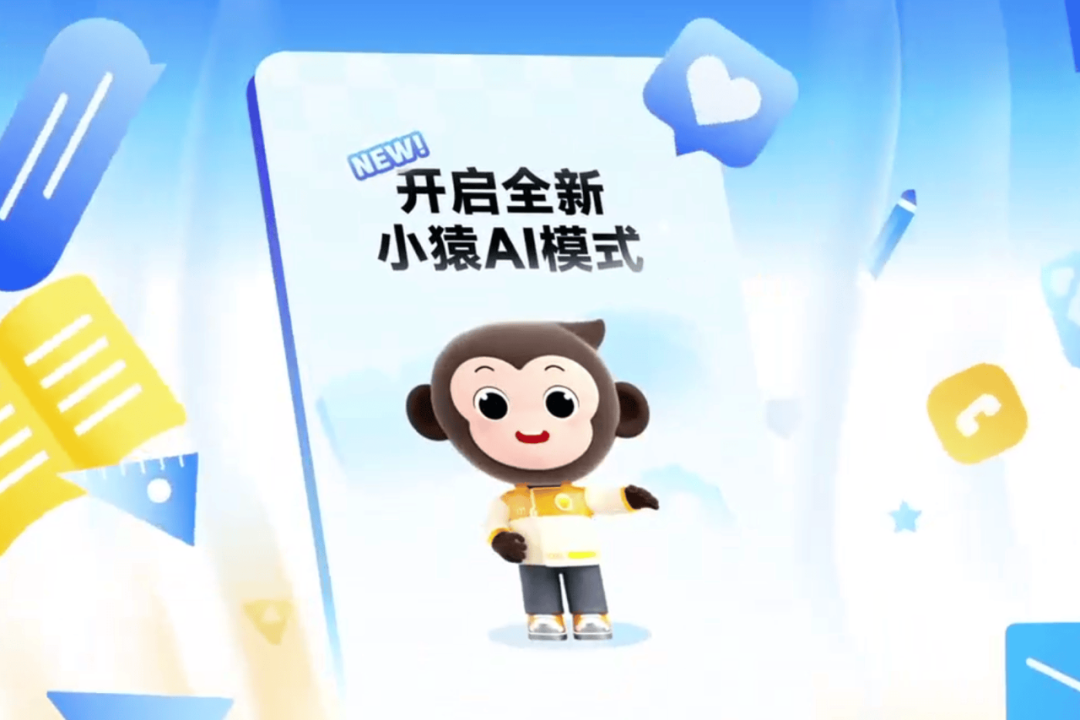
| Yuanfudao launches Xiaoyuan AI
Looking back at the development of educational technology, we once believed in the magic of smart whiteboards, only to find they merely became "advanced blackboards"; we once championed online live courses, neglecting the reality that most students lack autonomous learning abilities. Will the emergence of AI tutors repeat these mistakes? The answer depends on whether the industry can address this fundamental question: What exactly are we trying to solve with technology? If we merely transfer the "ocean of questions" tactic online and replace paper exercise books with AI, then this revolution will ultimately become a rush for user numbers. However, if we can leverage technology to achieve "personalized education for thousands of students," enabling children in remote areas to access high-quality teaching resources, then AI will truly drive educational equity and progress.
Therefore, the race in "AI + Education" will ultimately shift from a "speed competition" to a "value competition." Tech giants need to let go of their traffic obsession and delve into classroom scenarios to understand the essence of teaching; educational giants must break down experience barriers and embrace the efficiency revolution brought by technology. The future winners will be those who can balance efficiency and warmth, technology and ethics: using technology to enhance efficiency without letting education lose its warmth; using data to optimize methods without letting growth lose its individuality.
The 2025 wave driven by capital, anxiety, and innovation will eventually wash away the froth. When the tide recedes, only those enterprises that can balance commercial interests with educational essence will truly stand firm in the vast sea of education. After all, education is not a business centered around generating traffic but a noble cause focused on people—an essence that AI, no matter how intelligent, cannot alter.
END
-
![]()
Alibaba's AI Offensive: Over Half of Investment Allocated, Time to Reap Returns
-
![]()
Alibaba’s AI Push: Over Half of Investments Made, Time to Harvest Returns
-
![]()
Chinese Enterprises Going Global 3.0: From World Factory to AI Infrastructure Builder
-
![]()
Honor RobotPhone Review: Half Movie Camera, Half Robot
-
![]()
AI-Driven Cheating Surges in Universities! Online Exams Reduced to Mere Formalities, Degree Credibility on the Line
-
Insta360’s Decade in Panoramic Imaging: Making Cameras ‘Invisible’ and Returning Creation to the Masses
-
![]()
Foreign Media Claims Apple is Concentrating Resources on AI Development: Vision Pro and Siri Teams Lay Off 200 People
-
Big News! Huaneng and Huawei Hold Talks in Shenzhen with Ren Zhengfei in Attendance; Huawei Emerging as the 'Second Brain' of China's Energy System