Starting at 6799 yuan! In-depth Review of YINGLING Antigravity A1: Beginner-Friendly Interaction, Professional Imaging
 12/05 2025
 595
595
It brings joy that traditional drones cannot provide.
In July of this year, Leitech received an invitation from Insta360 and was the first to experience the first panoramic drone brought by YINGLING Antigravity, jointly incubated by Insta360 and a third party—the YINGLING Antigravity A1.
However, since the machine at that time was still an engineering prototype, some functions were not yet perfect, and stability needed improvement, so it could not be considered a complete product. Recently, Leitech received the latest mass-produced version of the Antigravity A1. As the first panoramic aerial photography drone on the market, can the Antigravity A1 revolutionize the drone aerial photography experience? Without further ado, let's dive into the experience.
Beginner-Friendly Drone with Simple Operation
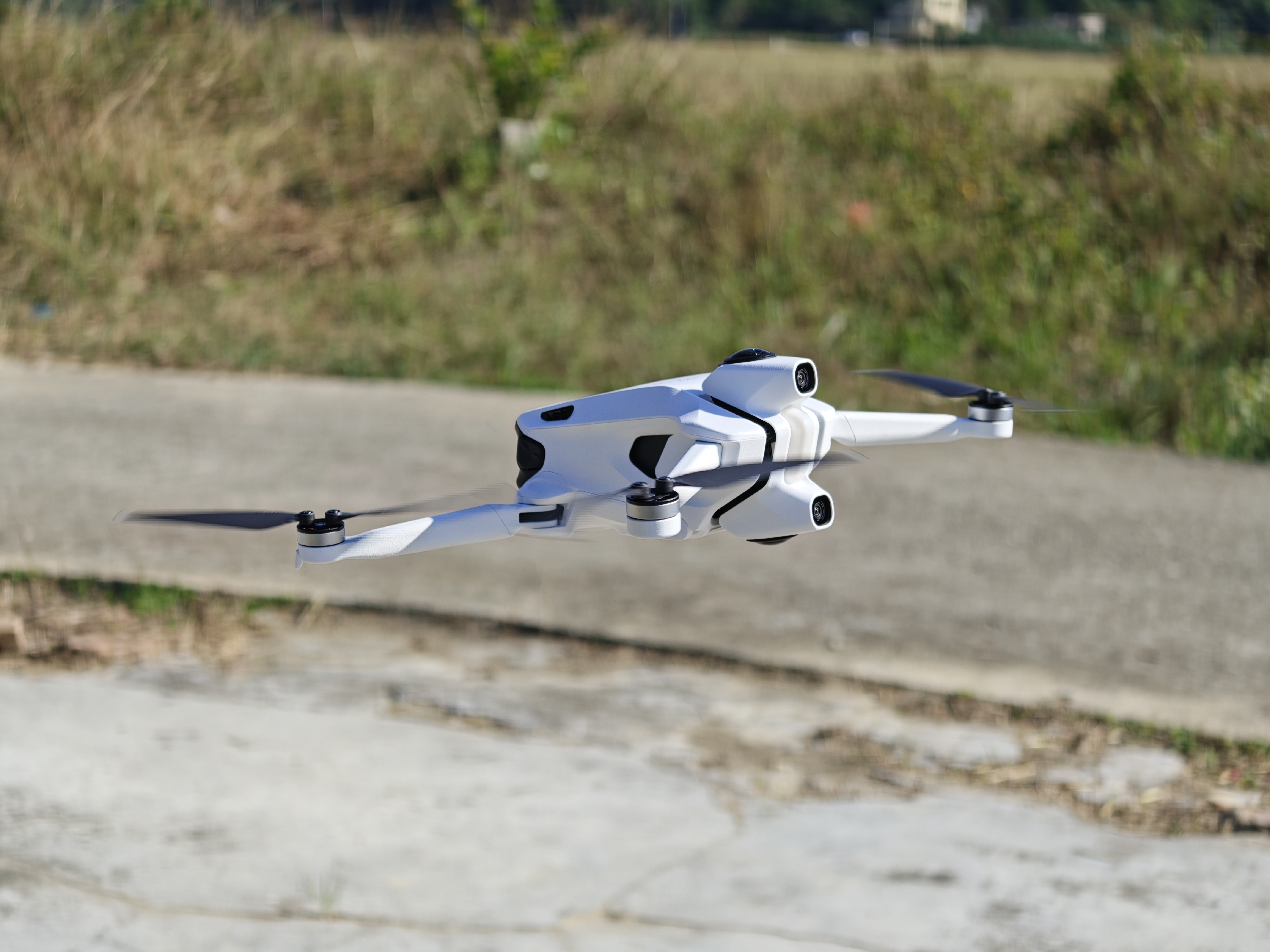
From its appearance and size, it is not difficult to see that the YINGLING Antigravity A1 is a compact drone, more suitable for most beginner users.
Similar to mainstream drones, the YINGLING Antigravity A1 has only one power button, one USB-C port, and one Micro-SD card slot. The battery adopts an easy-to-remove structure, making it easy to understand within a few minutes without a manual.
In terms of weight, the entire YINGLING Antigravity A1 weighs 249g, eliminating the need for training or exams in most countries or regions, meaning users can easily take it abroad for travel photography.
(Image source: Leitech)
The lens is the highlight of the YINGLING Antigravity A1. Its entire module consists of four lenses, including two front obstacle avoidance lenses and two panoramic fisheye lenses on the top and bottom. The entire module is fixed to the front of the fuselage using a bracket suspension method, providing excellent shock absorption and stability. Compared to anti-shake algorithms, physical anti-shake is clearly more reliable.
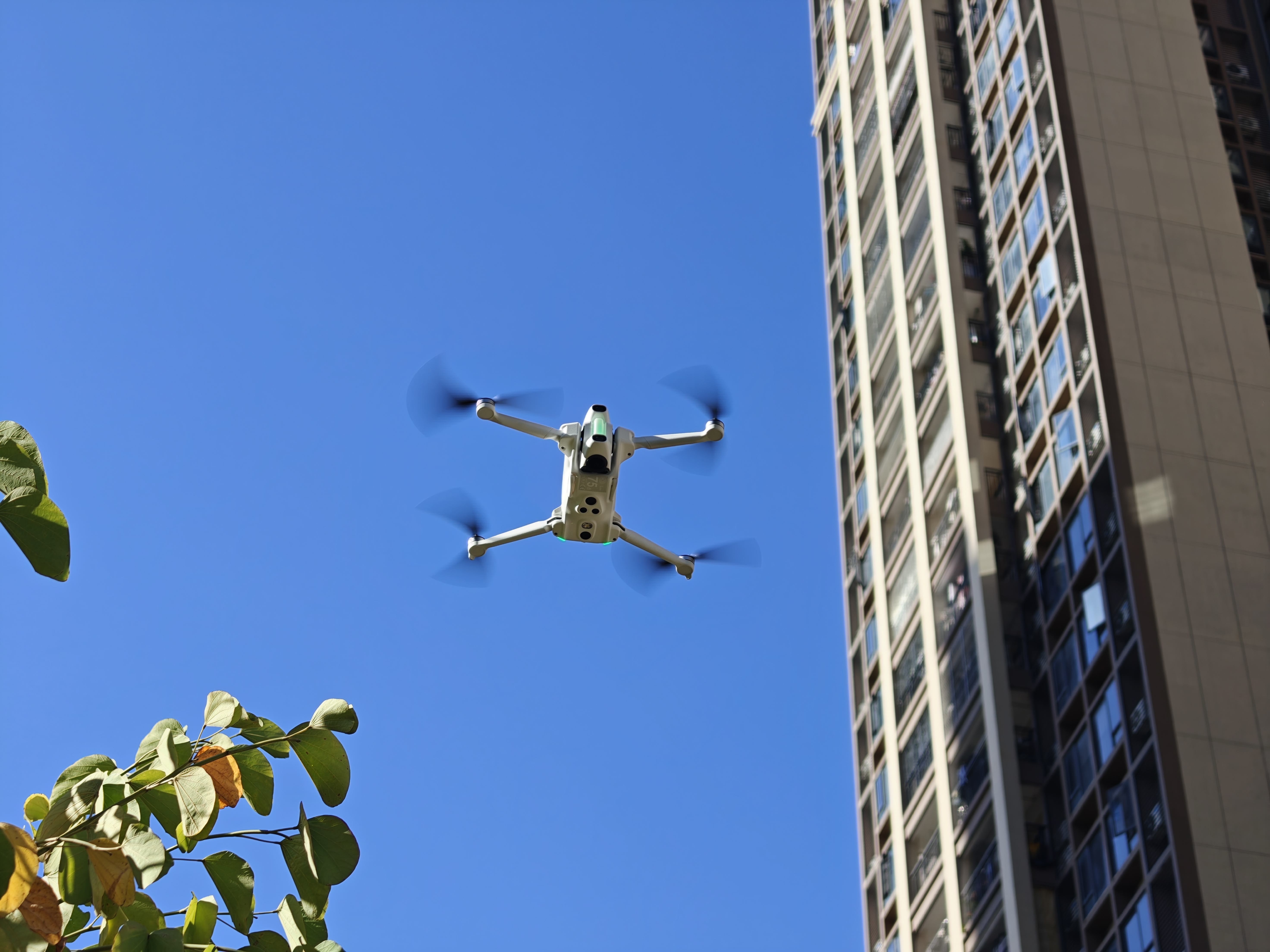
On the bottom of the fuselage are two downward vision sensors, two ToF modules, and a fill light. The most eye-catching feature is the innovatively added automatically retractable mini landing gear.
(Image source: Leitech)
During takeoff, the landing gear automatically retracts inward to reduce flight resistance; during landing, it automatically extends outward, raising the sensors and lenses at the bottom of the fuselage by 2cm, effectively avoiding scratches to core components from rough ground, stones, grass, and other complex materials. In actual tests, landing on a gravel-covered suburbs (rural) ground, the landing gear steadily supported the fuselage, and the bottom sensors remained unscathed. This design is particularly practical for outdoor shooting users.
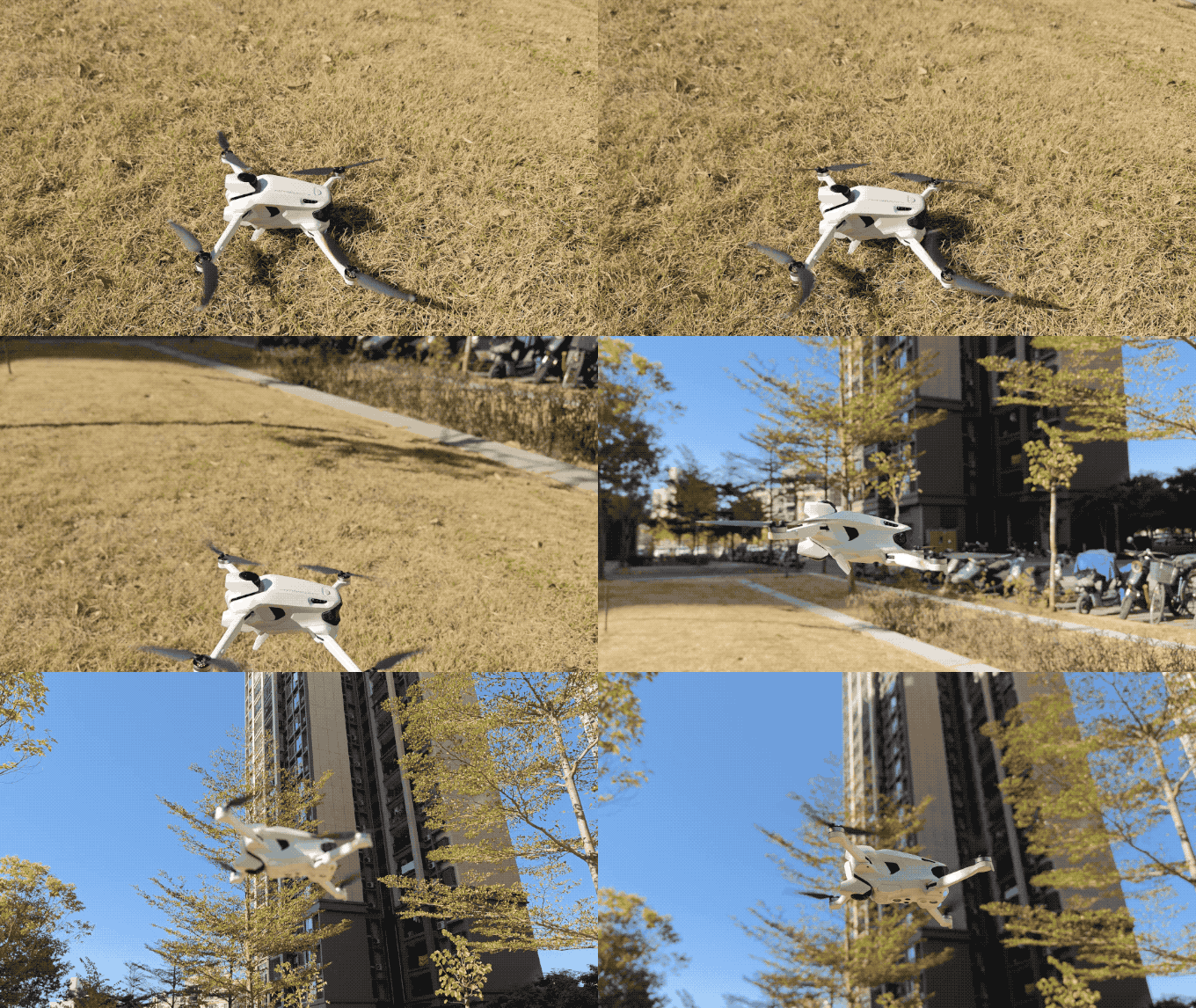
(Image source: Leitech)
Unlike common aerial photography drones, to allow users to experience the charm of panoramic aerial photography, the YINGLING Antigravity A1 is specially equipped with a pair of Vision flight goggles. According to official descriptions, these flight goggles feature the same Pancake optical system and Micro-OLED display as the Apple Vision Pro. In actual experience, the image quality far exceeds expectations, even surpassing the display effects of most VR goggles on the market in terms of delicacy, color accuracy, and smoothness.
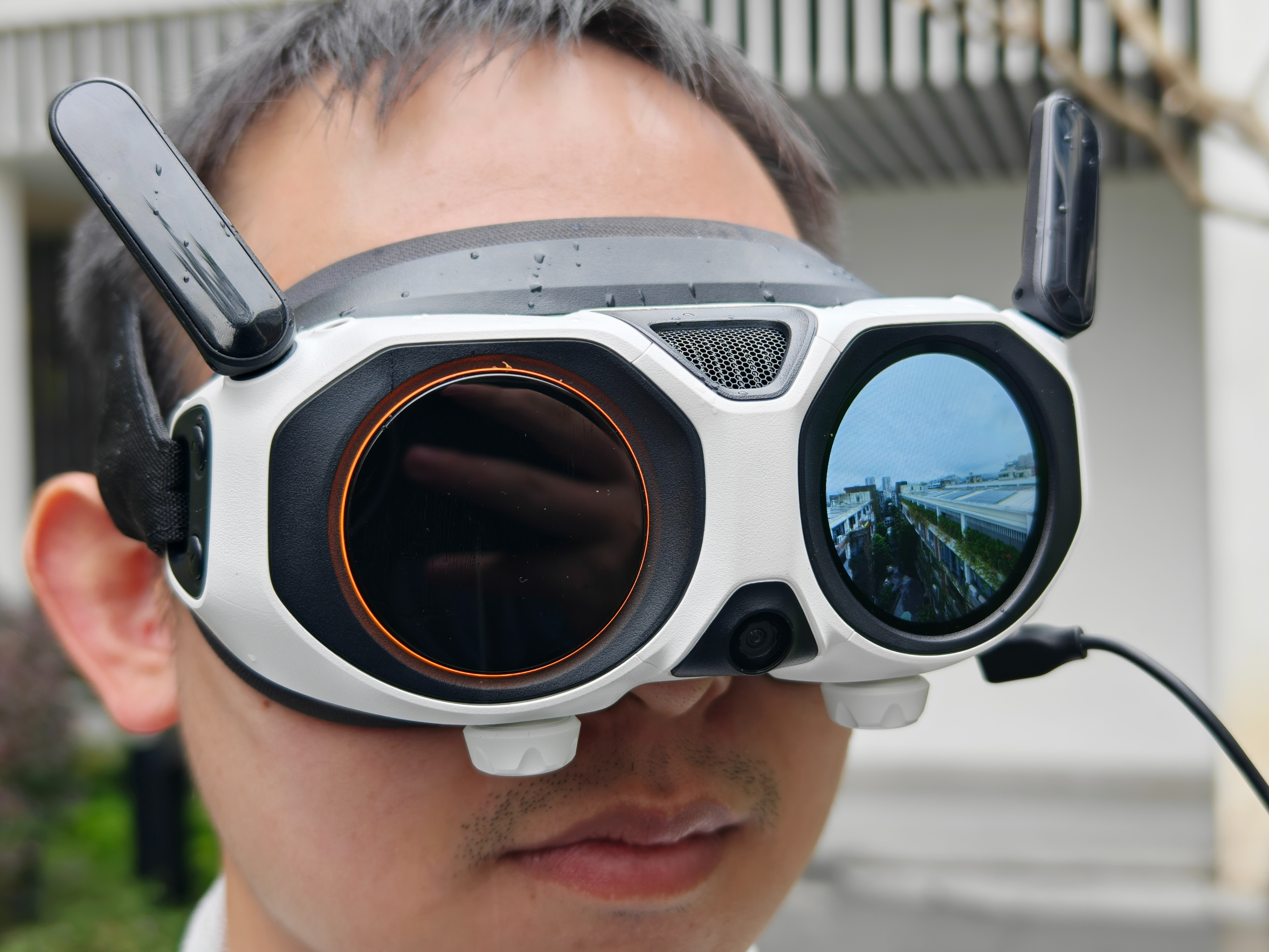
(Image source: Leitech)
With these flight goggles, we can intuitively experience the uniqueness of panoramic aerial photography. For example, after enabling immersive mode, the user themselves becomes the "pilot" of the drone, with a 360° panoramic view. However, this unique experience may require some time to adapt for users with acrophobia.
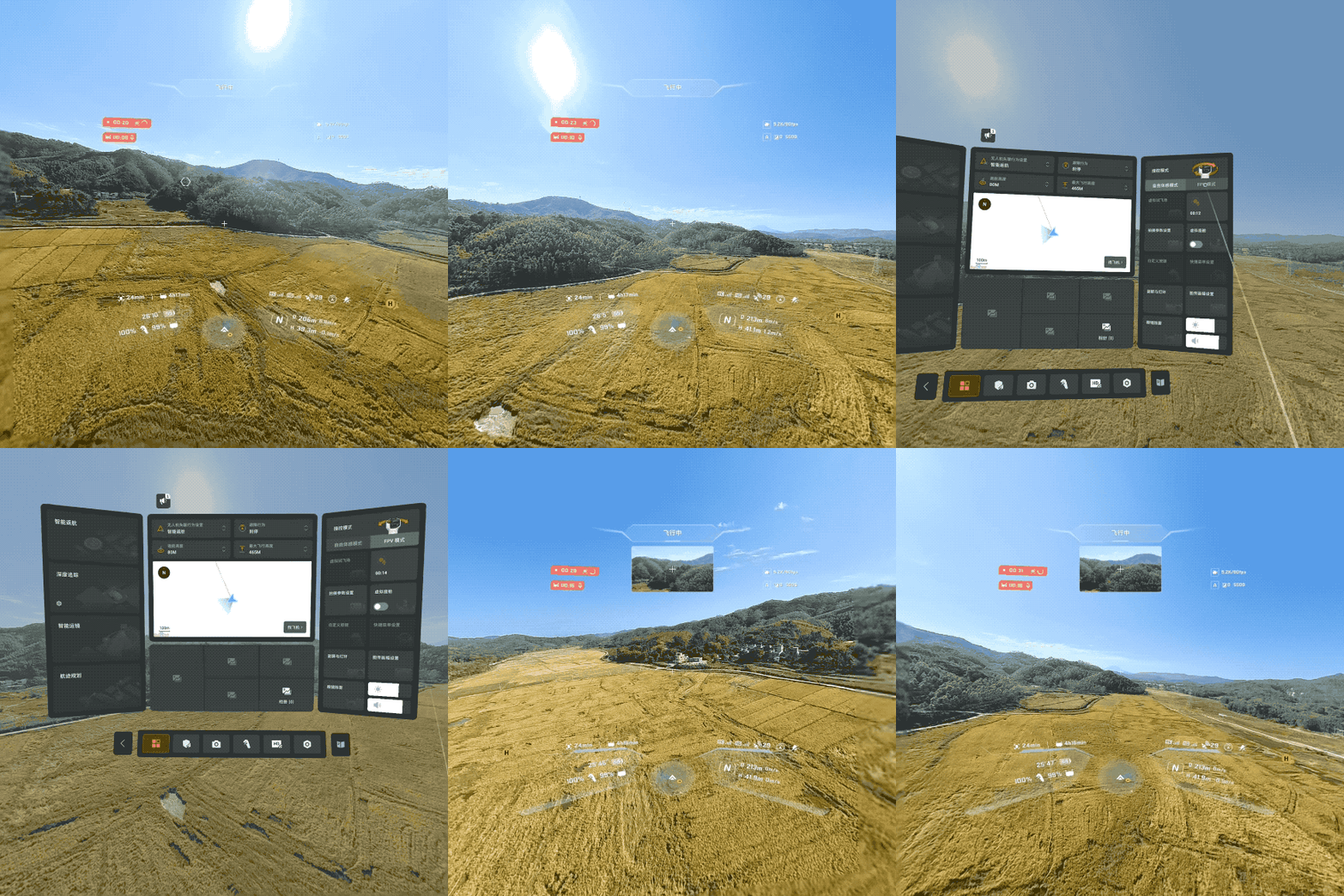
(Image source: Leitech)
Of course, these Vision goggles naturally support adjustments for diopter and eye distance, with a maximum diopter adjustment of 500 degrees, which is very friendly to nearsighted users like me. If the user's prescription exceeds 500 degrees, additional optical lenses can be inserted. Additionally, the Vision goggles have a display area, allowing others to "share" the view from the YINGLING Antigravity A1 through this screen, with no issues in smoothness.
However, as VR goggles, they do have some drawbacks, such as the need to wear your own nearsighted glasses after removing the VR goggles when you need to communicate with the outside world temporarily, as well as discomfort such as heat and dizziness from prolonged wear. However, YINGLING has done its best to provide the optimal solution, and there are always trade-offs.
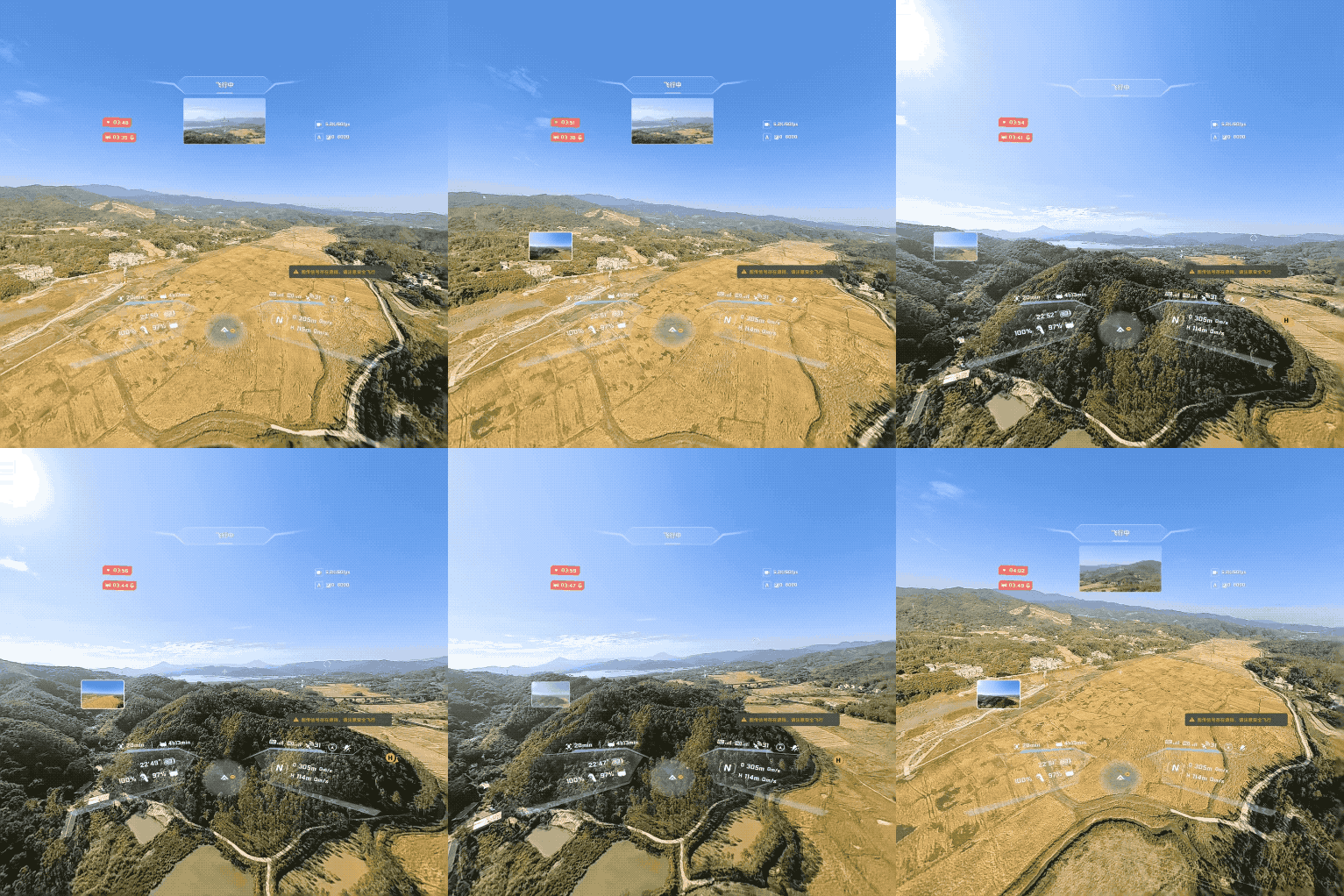
(Image source: Leitech)
The control joystick of the YINGLING Antigravity A1 is also different from the drone remote controllers we are familiar with; it resembles a game controller, and the logic is completely different.
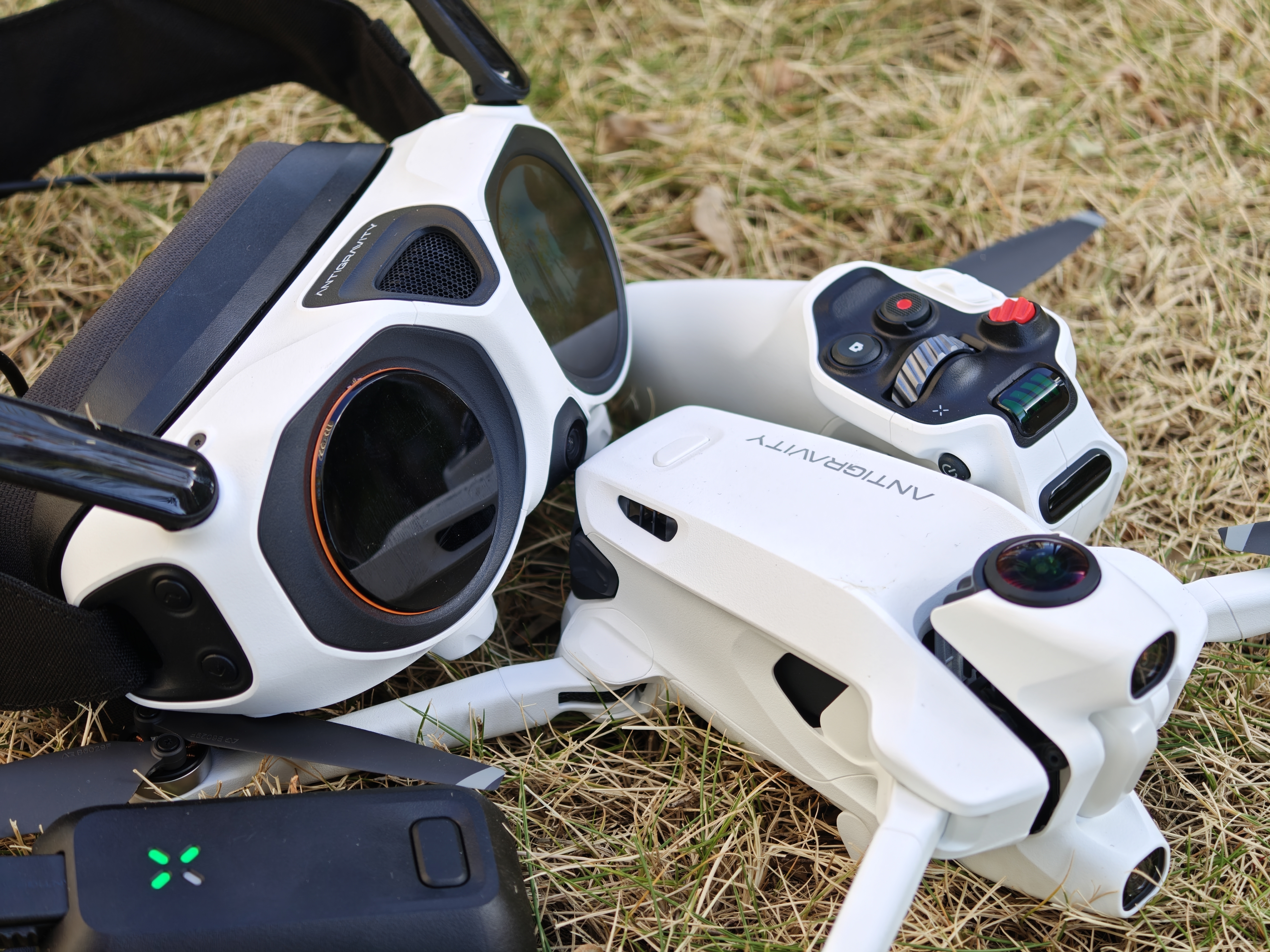
(Image source: Leitech)
For a simple example, when using a drone traditionally, we usually control the drone's ascent, descent, and flight direction through a dual-joystick remote controller. The YINGLING Antigravity A1, on the other hand, controls the drone's direction through a built-in gyroscope in the controller, while ascent and descent are concentrated on a push-pull button. The advantage of this design is that we can almost control the drone intuitively, significantly reducing the learning curve.
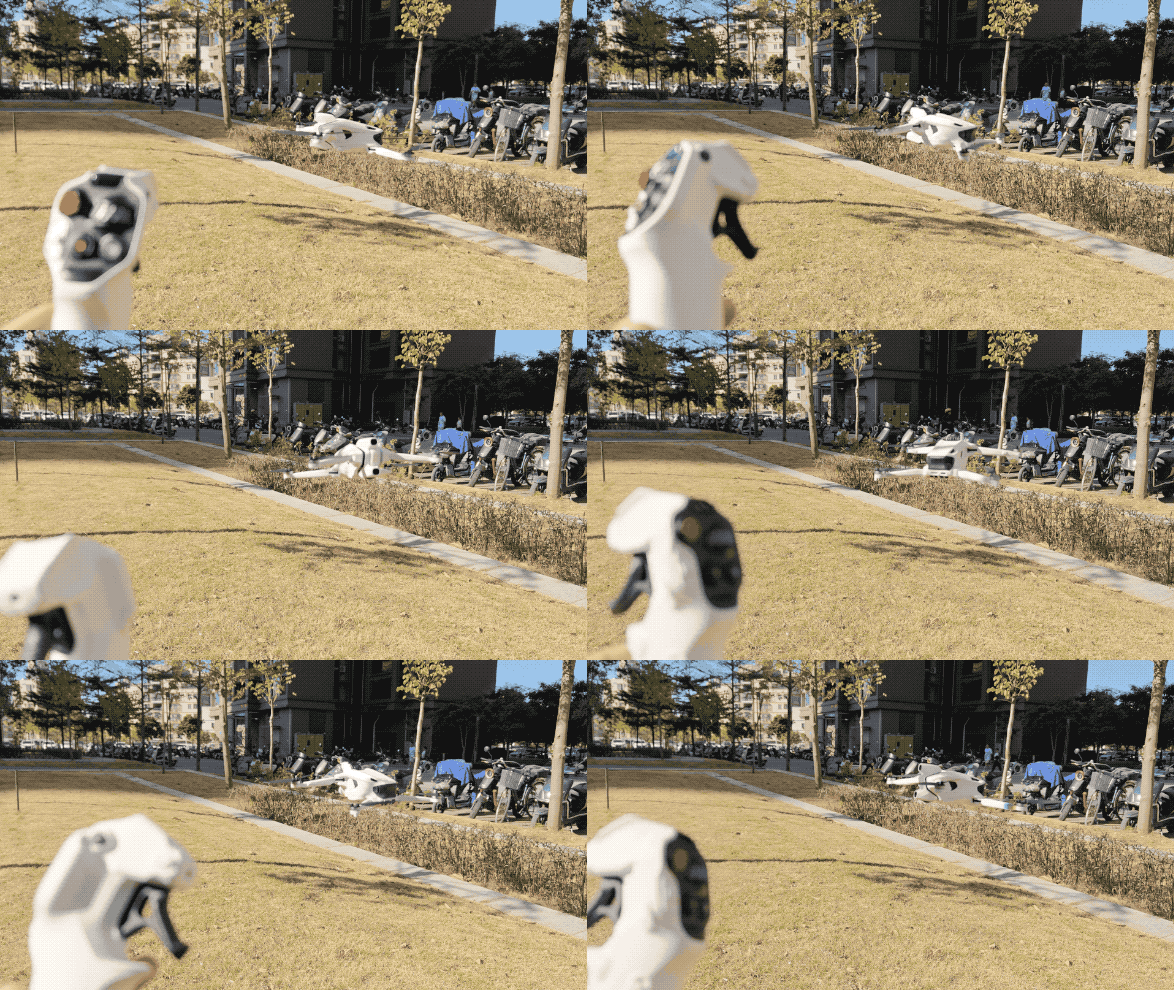
(Image source: Leitech)
Here is a brief overview of the functions corresponding to other buttons: The dial knob on the main interface can adjust the drone's viewing angle, the red button has return-to-home and pause functions, the push-pull button below it controls the drone's ascent or descent, the red dot button starts/ends recording, the button with a camera icon is for taking photos, and there is a trigger button on the back, which can be considered as an accelerator pedal, accelerating/decelerating based on the user's applied force.
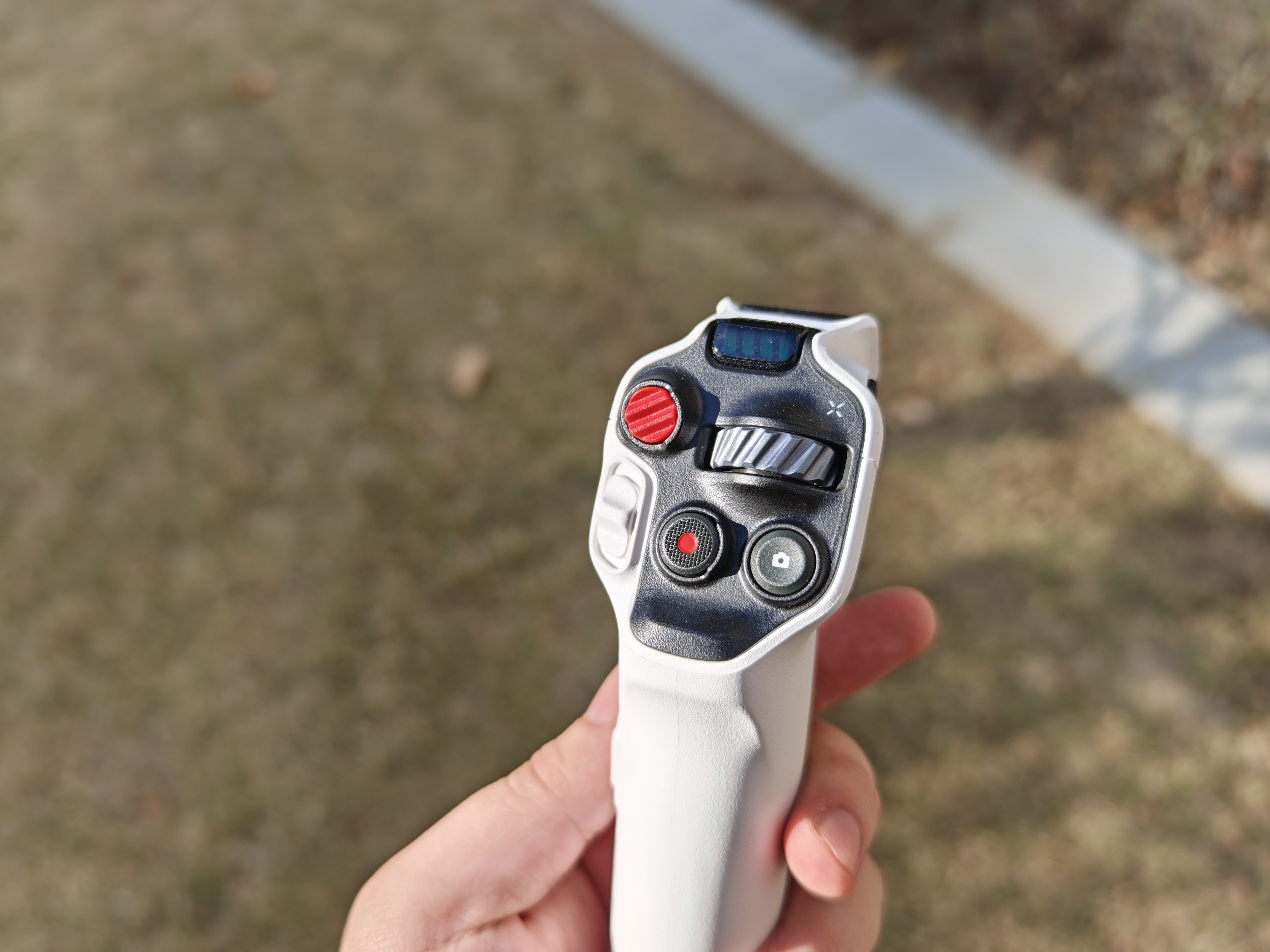
(Image source: Leitech)
Yes, the YINGLING Antigravity A1 requires turning on the drone, remote controller, and flight goggles before each takeoff, which is indeed more cumbersome compared to traditional aerial photography drones. However, in the face of such a unique and outstanding experience, it seems like a minor issue.
Oh, I almost forgot, the design of the battery manager for the YINGLING Antigravity A1 is also worth mentioning. In daily use, it can only accommodate two batteries simultaneously, but there is a hidden detail behind the charging manager. By simply removing the rubber cover at the back and lightly pressing the button at the bottom, its capacity can be increased to three batteries. This small detail is quite interesting.
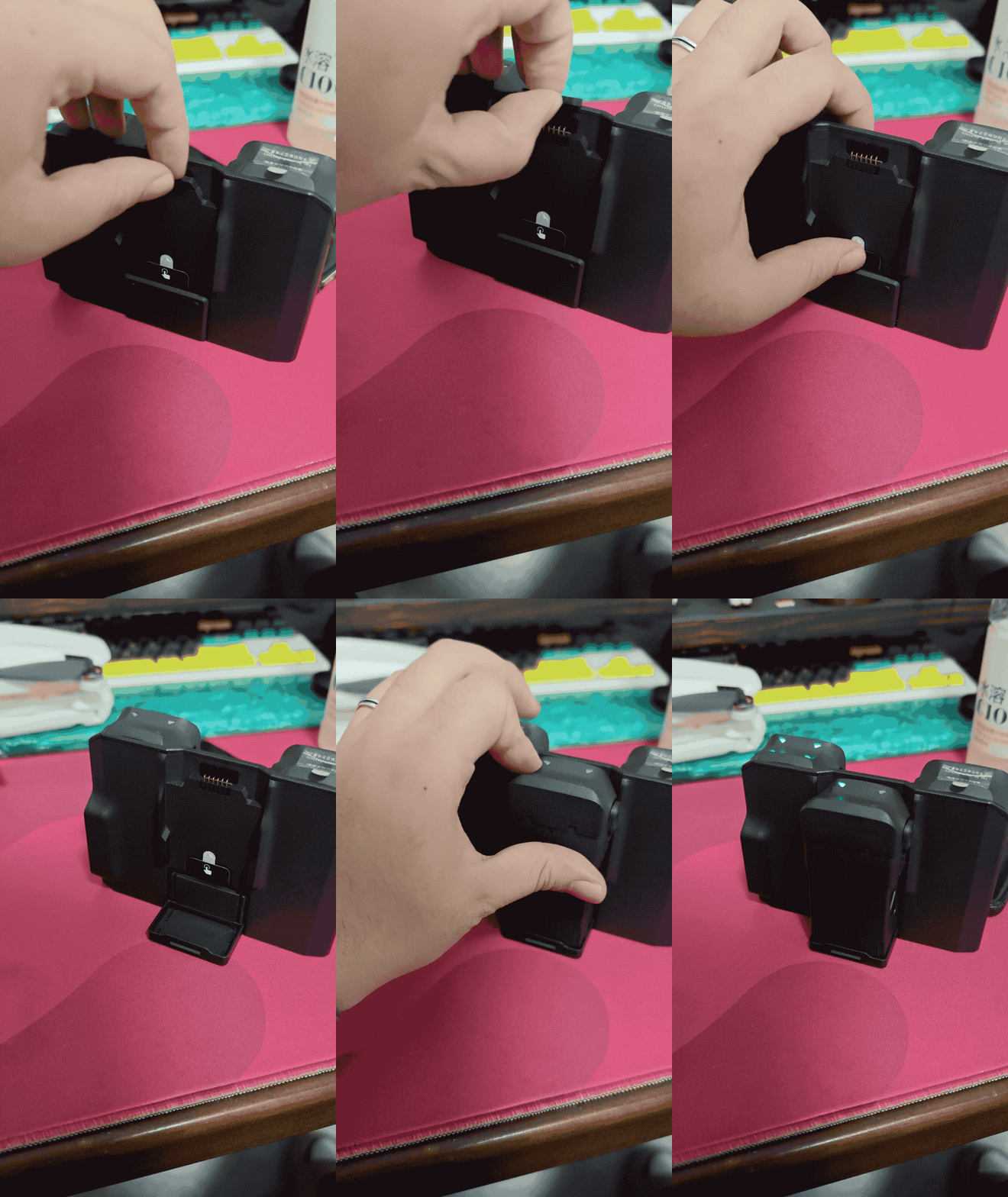
(Image source: Leitech)
Although the YINGLING Antigravity A1 is Insta360's first drone, I did not see much imitation in it. Whether in terms of appearance, usage, operation methods, or shooting experience, it is completely different from mainstream drones and offers its own unique experience, which I highly appreciate.
Giving Panoramic Cameras Wings
After discussing the drone itself, let's talk about the flight/shooting experience of the YINGLING Antigravity A1. As the first panoramic drone on the market, YINGLING has made many innovations in terms of control and shooting methods.
Firstly, there is the shooting concept of shooting first and then composing. We only need to press the record button during takeoff and then control the drone to fly around the desired location, without having to consider "which angle looks good."
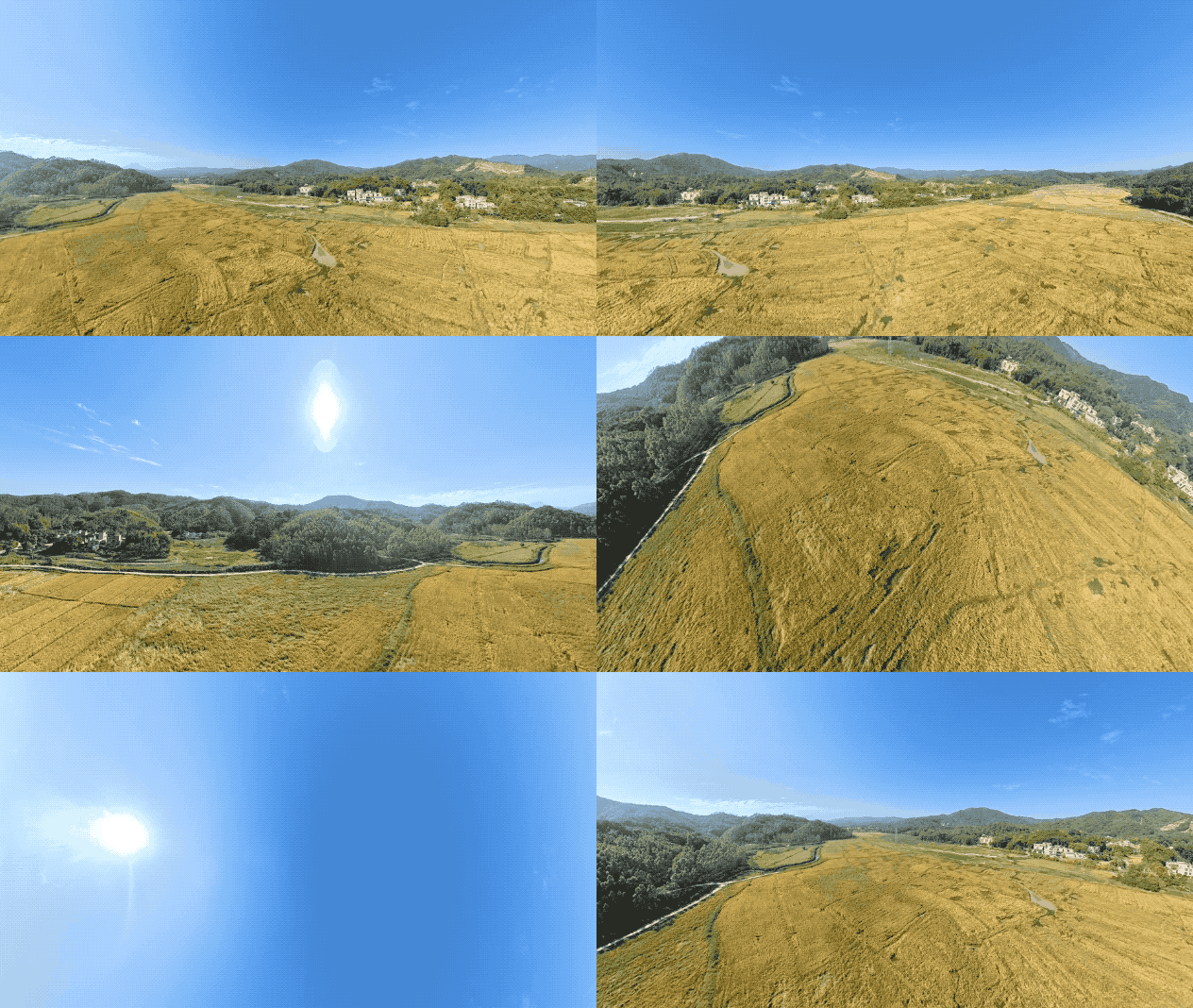
(Image source: Leitech)
Of course, its image quality is also excellent. Under extremely good lighting conditions, its color style is "restrained," not overly increasing the saturation of the image, but remaining highly consistent with the actual scene viewed with the naked eye. A slight adjustment of the color temperature in post-processing with CapCut can produce a very textured "cinematic" image.
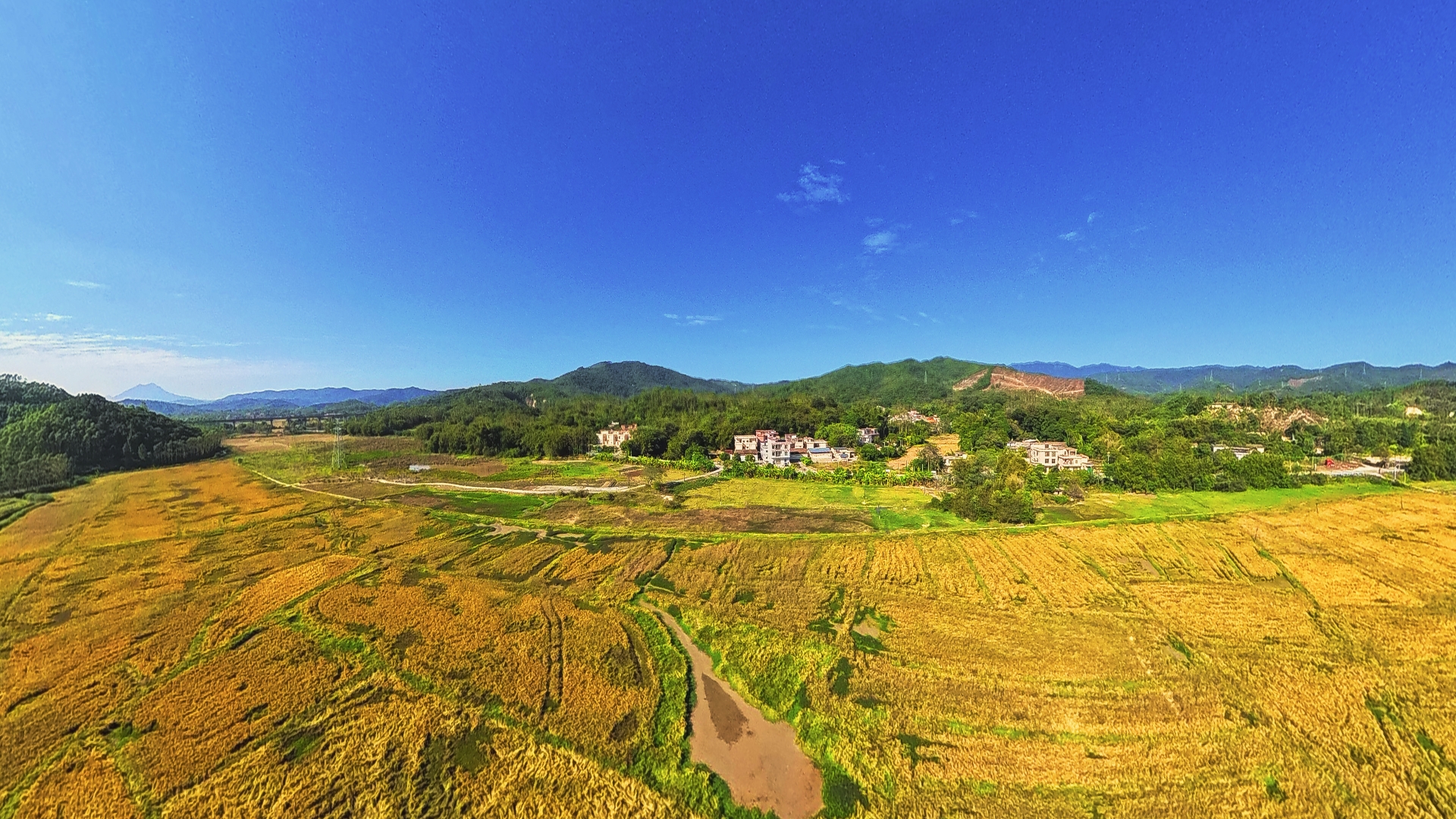
(Image source: Leitech)
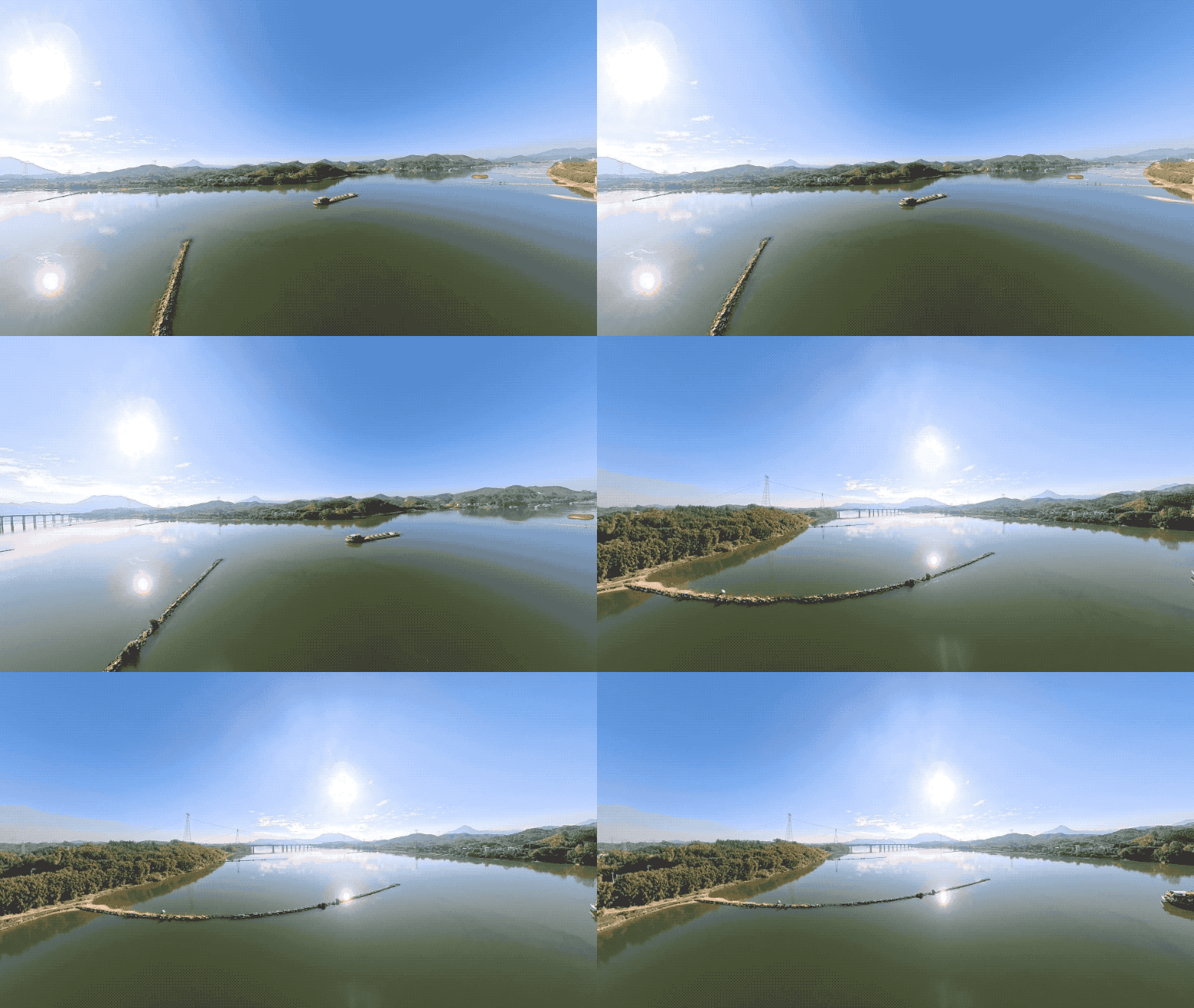
The "omnidirectional" advantage of the panoramic lens is fully utilized in open scenes. Over the weekend, I went to shoot by the river in the suburbs (rural area). I simply let the drone fly parallel to the water surface without deliberately adjusting the angle. After exporting the footage, I was able to edit four completely different final clips from just this 5-minute flight recording: The first is a high-altitude overhead shot, showcasing the full view of the river and the surrounding mountains; the second is a horizontal perspective, focusing on the rippling water and cargo ships on the river; the third is a low-angle shot close to the water, with the lens skimming the surface, capturing an immersive "flying over the water" scene; the fourth is an upward shot, with the sky as the background, capturing the dynamic sense of the drone's ascent. With a traditional drone, capturing these four perspectives would require at least four flights, not to mention the precision needed in takeoff positions each time. The YINGLING Antigravity A1 accomplishes this in one go, quadrupling efficiency.
(Image source: Leitech)
To further lower the barrier to use, the YINGLING Antigravity A1 includes several "one-click" functions in the menu, such as waypoint planning, intelligent camera movement, and deep tracking. For example, after enabling follow mode, you only need to select the subject you want to follow on the interface and press the "C1" button to completely free your hands, eliminating the need for any additional operations.
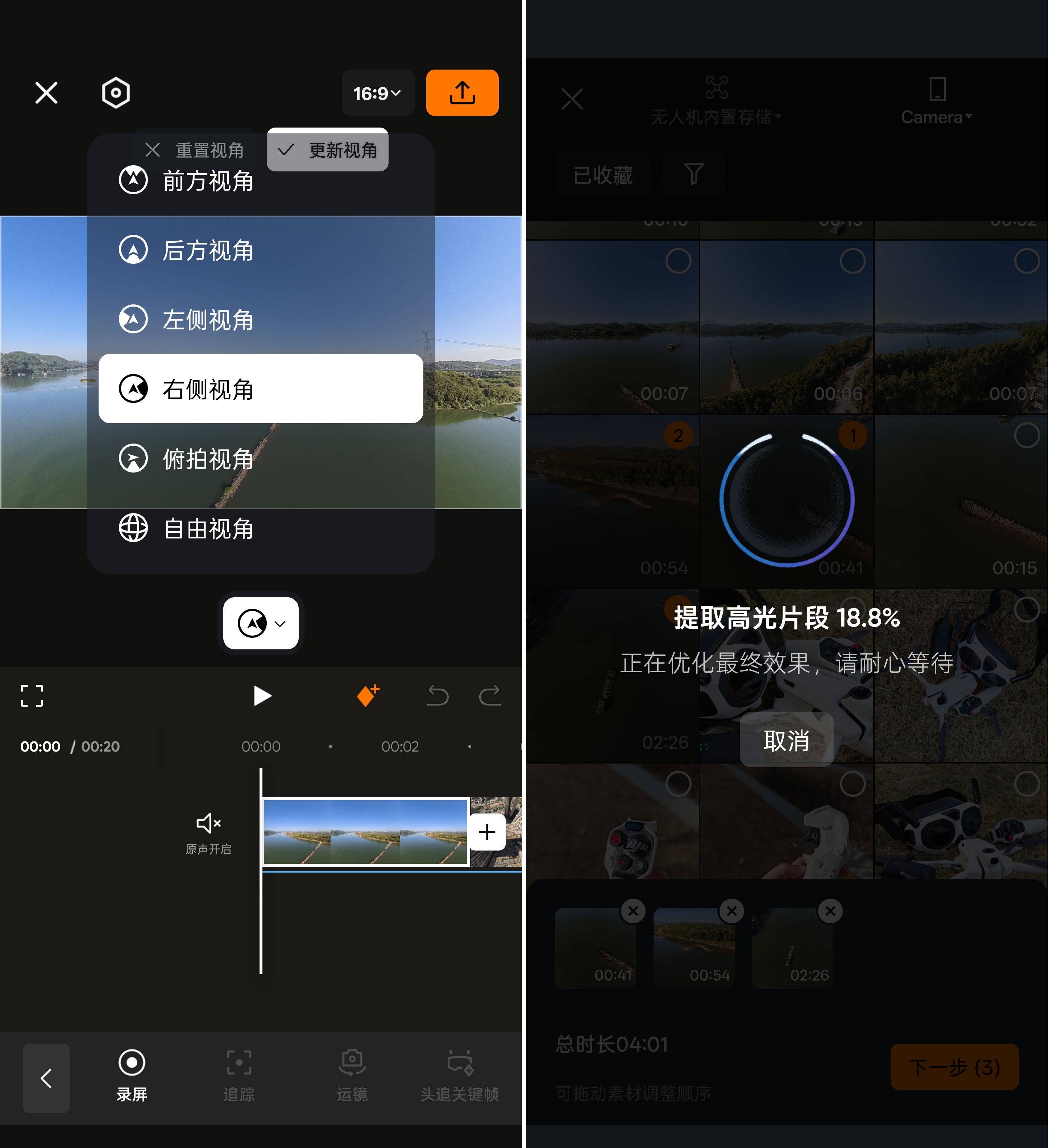
Leveraging the panoramic feature, if you are not satisfied with the video, you can also make adjustments in the app during post-processing.
Another particularly important point is that videos in panoramic format allow for horizontal or vertical output according to your needs during post-production, which is a very thoughtful feature for many video creators.
Of course, panoramic shooting also requires some simple tips. For example, when shooting buildings, it is recommended to control the drone's height at the middle of the building, so that when cropping to a "flat perspective" later, the building will not appear significantly distorted. When shooting natural landscapes, try to keep the horizon in the middle of the frame to avoid "imbalance between heaven and earth" after cropping. Additionally, try to maintain a constant speed during flight and avoid sudden acceleration or turning, as this will result in smoother panoramic footage and prevent blurring or trailing during post-cropping.
However, the common issues with panoramic lenses cannot be avoided in the YINGLING Antigravity A1. There is slight distortion at the edges of the lens, and when shooting scenes with many straight lines, such as buildings, post-processing correction is needed. When exposed to strong light, the white balance of the image may shift, affecting the overall visual experience. During night shooting, noise significantly increases, and the dynamic range performance is average, falling short of the delicacy of professional aerial photography cameras.
(Image source: Leitech)
Additionally, the "invisible fuselage" technology of the YINGLING Antigravity A1 is worth mentioning. Through panoramic stitching algorithms, the fuselage completely disappears in the final footage, which is a pleasant surprise for users pursuing a clean image.
The obstacle avoidance system is the aspect of the YINGLING Antigravity A1 that I am least satisfied with. Initially, I thought the obstacle avoidance capabilities were somewhat "lacking." However, upon further reflection, I realized that we should not view it through the lens of traditional drones. The flight logic of the YINGLING Antigravity A1 is "forward," without the need for us to control its movement in all directions. Coupled with its fisheye lenses providing spatial awareness, as long as we can anticipate and avoid obstacles with our eyes, it can perfectly avoid them as well.
However, it still has some minor drawbacks, such as an overly conservative obstacle avoidance algorithm. In most cases, it triggers a yellow warning when detecting an obstacle three meters ahead and directly slows down and hovers within one meter. This is indeed beneficial for beginners, but sometimes when the front is clearly empty, it frequently gives yellow warnings and won't move even when the stick is pushed forward. It can be said that the more anxious you are, the slower it flies. Not to mention the delay in obstacle avoidance under strong light, taking about 0.5 seconds to react when facing backlight. Additionally, it basically fails to detect transparent objects such as glass and water surfaces during the day.
As a consumer-grade drone aimed at the general public, the 'stability' of flight performance is far more important than 'extreme parameters,' and the Yingling Antigravity A1 excels in this regard. Let's start with battery life. The standard battery in Xiaolei's hands underwent multiple tests in different scenarios: In urban low-altitude hovering and shooting (within 10 meters in height), it can fly steadily for 22 minutes; in suburban medium-to-high altitude cruising (at 50 meters in height), the flight time is about 20 minutes; if flying quickly in sport mode throughout the entire journey, the battery life shortens to about 15 minutes. The maximum battery life of the long-range version can reach 39 minutes. In actual tests, when flying quickly in sport mode throughout the entire journey and recording is enabled, the battery life is around 32 minutes. This performance ranks as above average among drones in the 249g category, meeting daily shooting needs.
In terms of flight control, the Yingling Antigravity A1 also features thoughtful design details. It supports 'one-key return home.' Even if a novice makes an operational mistake, pressing the return home button allows the drone to automatically plan a route and fly back to the takeoff point, eliminating concerns about 'flying away and not being able to find its way back.'
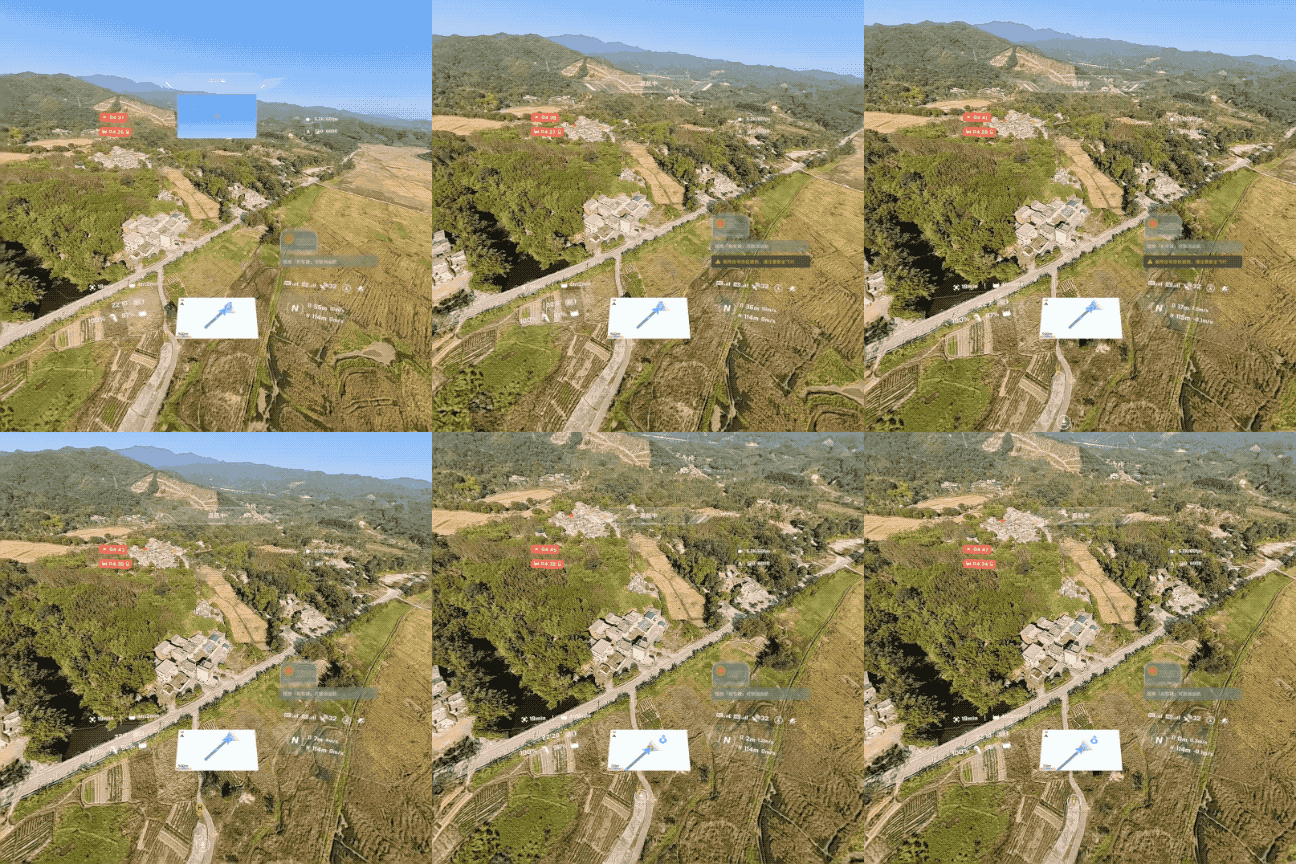
(Image source: Photographed by Leitech)
Additionally, in the flight menu, we can choose the FPV mode and the free flight mode pioneered by Yingling. In the free flight mode, we can rely on our intuition to control the Yingling Antigravity A1 without having to think about which buttons to use for direction control or worry about the drone flying too fast. Everything is under the user's control, making it highly suitable for users who are new to the Yingling Antigravity A1.
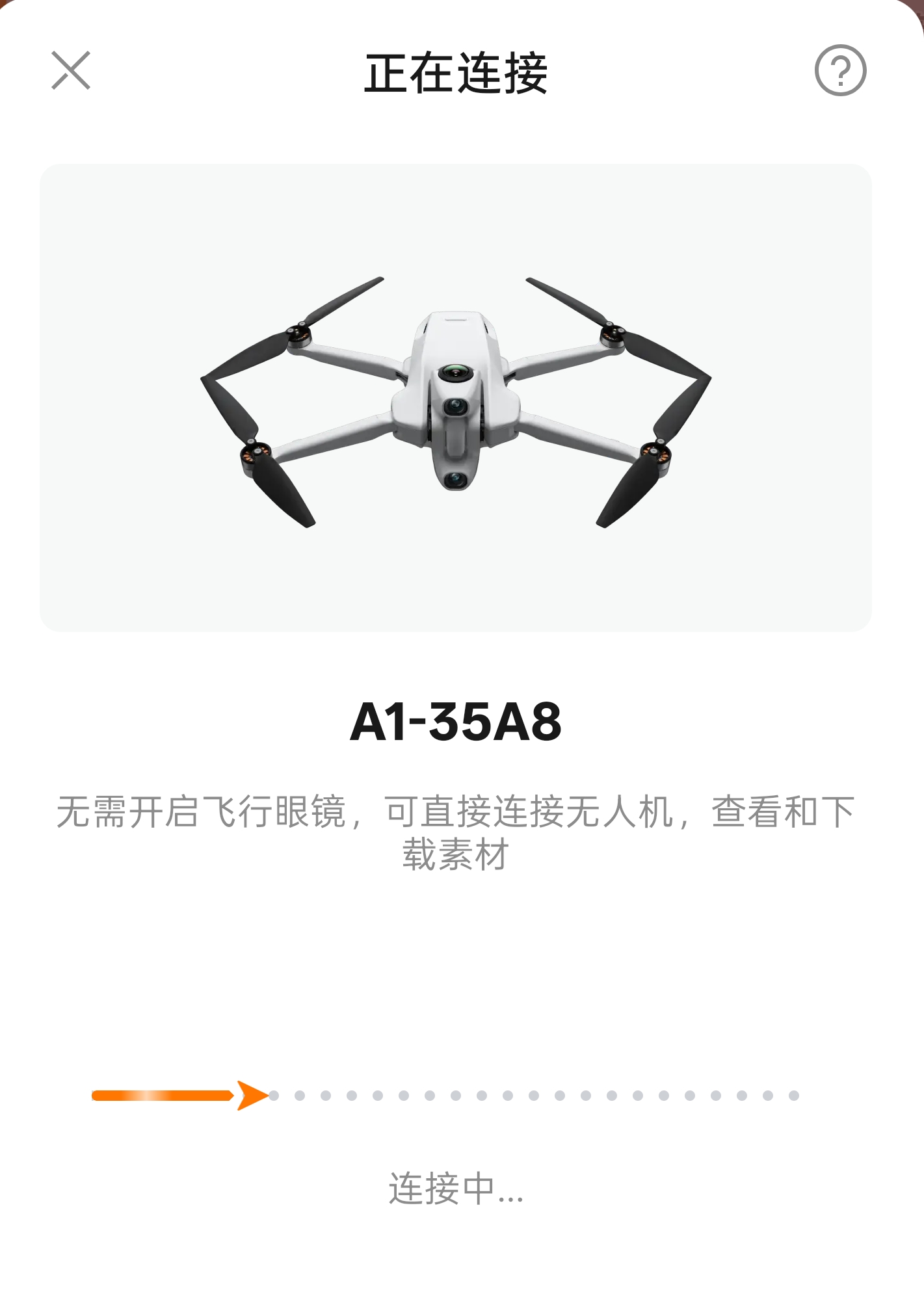
Finally, let's talk about the APP experience of the Yingling Antigravity A1. Although it is the first version of the APP, its functions and interface have basically transplanted all the core features of Insta360, including material transfer, editing, and device connection. We can even directly connect to the drone to transfer materials, saving a significant amount of time.
(Image source: Photographed by Leitech)
In terms of editing, the Antigravity also follows Insta360's highlight moments feature. We only need to upload the footage we have shot into the APP, and it can generate a short video with BGM, transitions, and special effects. Users can even adjust the template and duration to their liking.
Summary: Opening a New Chapter in Drone Aerial Photography
Finally, following Leitech's tradition, let's provide a brief summary of the Yingling Antigravity A1:
Advantages:
1. A revolutionary shooting/flight experience that is easy for beginners to pick up;
2. The ability to adjust angles freely during post-editing, reducing the difficulty of pre-shooting;
3. A more straightforward somatic remote control operation, suitable for novices.
Disadvantages:
1. An overly conservative obstacle avoidance algorithm;
2. Early bugs in the APP that need to be addressed.
In terms of pricing: The standard set of the Yingling Antigravity A1 is priced at 6,799 yuan, the exploration set at 7,999 yuan, and the long-range exploration version at 8,499 yuan.
For most users, drones are not professional tools but carriers for recording life. The Yingling Antigravity A1 precisely captures this point—when you put on the glasses, you are not just 'shooting' but truly experiencing the freedom of flight. This feeling is something traditional drones have never provided.
As the world's first mass-produced panoramic drone, the Yingling Antigravity A1 is undoubtedly a product full of innovative spirit. It breaks free from the homogeneous competition of traditional drones, focusing on '360° panoramic shooting + immersive flight' as its core. It addresses the core pain points of novice aerial photography—difficult composition, complex operation, and susceptibility to 'crashes'—allowing more people to easily enjoy the fun of aerial photography.
However, it also has some unavoidable shortcomings: an overly conservative obstacle avoidance algorithm, average nighttime image quality, insufficient high-speed pursuit capabilities. These issues make it difficult for it to become an 'all-rounder' and more suitable (more suitable) for specific scenarios and user groups. Nevertheless, considering that this is the first product, many issues can be improved through later firmware updates and software optimizations, which is worth anticipating.
Overall, the Yingling Antigravity A1 is not a perfect drone, but it is a drone with 'distinctive features and highlights.' It does not aim to outperform its competitors in terms of parameters but redefines the significance of consumer-grade aerial photography through innovative shooting logic and experience—aerial photography should not be exclusive to professionals but should be a pleasure that everyone can easily enjoy.
Insta360 Yingling Aerial Photography Drone Panoramic Drone Drone
Source: Leitech
The images in this article are from the 123RF licensed image library.
-
![]()
Alibaba's AI Offensive: Over Half of Investment Allocated, Time to Reap Returns
-
![]()
Alibaba’s AI Push: Over Half of Investments Made, Time to Harvest Returns
-
![]()
Chinese Enterprises Going Global 3.0: From World Factory to AI Infrastructure Builder
-
![]()
Honor RobotPhone Review: Half Movie Camera, Half Robot
-
![]()
AI-Driven Cheating Surges in Universities! Online Exams Reduced to Mere Formalities, Degree Credibility on the Line
-
Insta360’s Decade in Panoramic Imaging: Making Cameras ‘Invisible’ and Returning Creation to the Masses
-
![]()
Foreign Media Claims Apple is Concentrating Resources on AI Development: Vision Pro and Siri Teams Lay Off 200 People
-
Big News! Huaneng and Huawei Hold Talks in Shenzhen with Ren Zhengfei in Attendance; Huawei Emerging as the 'Second Brain' of China's Energy System