Doubao Mobile Assistant Tinkers with Permissions! Are AI Phones a Boon, Not a Bane?
 12/08 2025
 684
684
AI Without 'Delegation' Is a Non-Starter.
Despite Doubao's official response a few days ago, the AI 'ban' controversy ignited by the Doubao Mobile Assistant still lingers.
On December 5, 2025, users of the Nubia M153 (a tech preview device for Doubao Mobile Assistant) reported that not only were banking apps rendered unusable, but some online financial services also barred the M153 due to risk management concerns. In response, Doubao Mobile Assistant issued another statement, reiterating that 'AI phone functionalities require explicit user consent, and users can halt tasks mid-execution at any time. For sensitive authorizations in third-party apps, users must manually confirm a second time.'
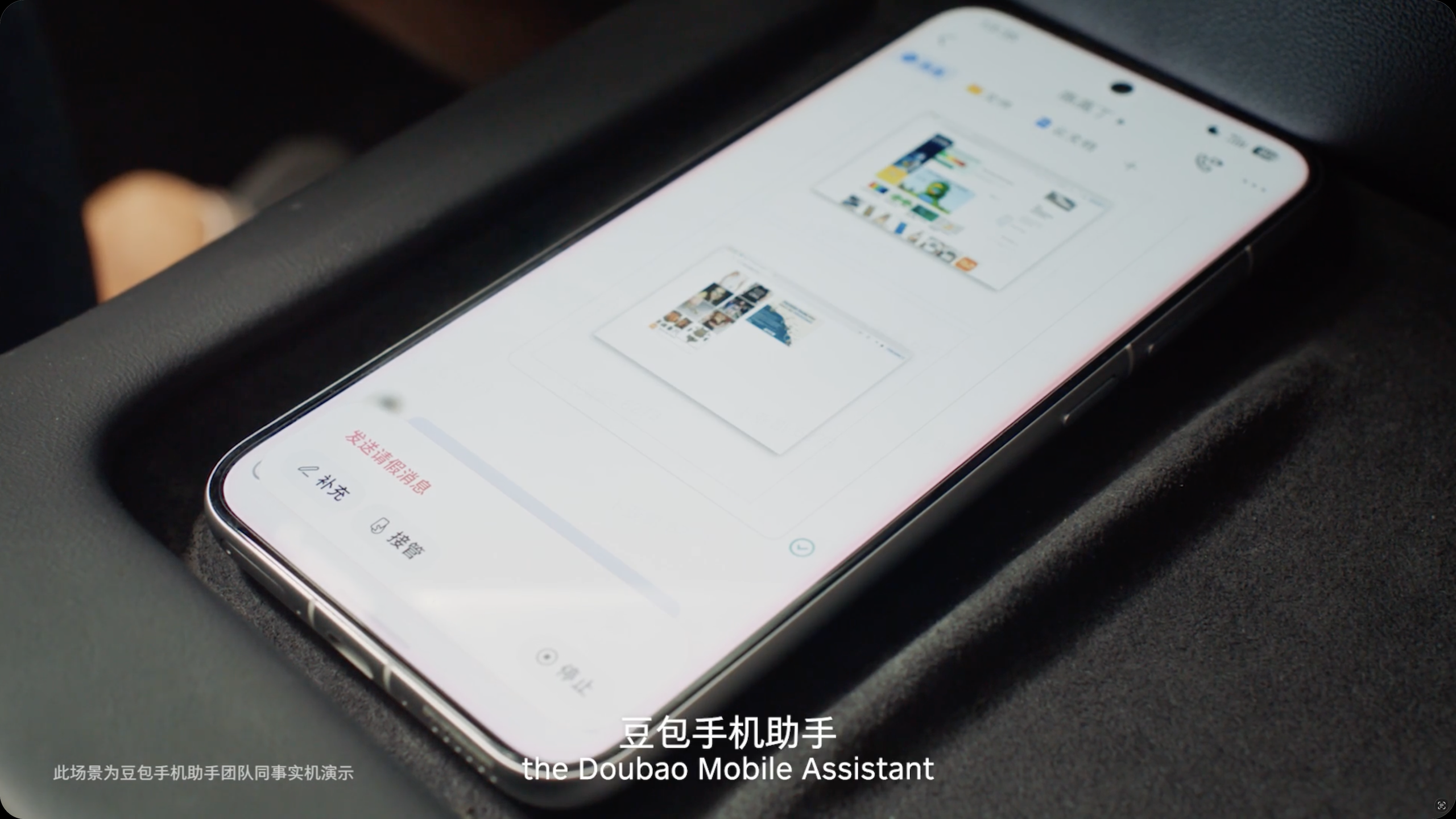
Image Source: Doubao Mobile Assistant
Moreover, Doubao Mobile Assistant has fine-tuned its AI capabilities:
1. It has curbed automatic operations for app score-boosting and incentive-grabbing to honor manufacturers' intentions of fostering 'genuine user engagement.'
2. It has further tightened delegated operation limits for financial apps, including banking and online payment services.
3. It has temporarily paused AI usage in certain competitive gaming scenarios to uphold fairness.
From the cases highlighted in the announcement, it's evident that, within the current mobile internet landscape, Doubao Mobile Assistant's vision is somewhat ahead of its time. Doubao aims to expedite technological advancements with GUI-Agent but hasn't fully grasped the profound impact this solution will have on the mobile internet ecosystem.
However, given that the AI era is inevitable and AI-Agents will inevitably handle tasks for users, why does the internet industry still approach Doubao Mobile Assistant and similar 'AI-Agents' with such caution?
Why Are Internet Firms Wary of AI Phones?
On the surface, the Nubia M153's status as a 'sensitive device' in the mobile internet sphere stems from its reasonably requested sensitive permissions or its precise interaction traits, akin to those of 'mainboard phones.' Third-party apps can't ascertain whether these permissions were confirmed by the user or granted under the influence of malicious actors or phishing software. Consequently, they suspend relevant services for security risk management and launch investigations.
Fundamentally, the advent of the GUI-Agent solution disrupts the long-standing entry logic of the global internet ecosystem. Previously, users accessed apps via routes like searching, clicking, and redirecting, with each step intertwined with the app's distribution, traffic guidance, and even commercialization tactics. Take last month's Double 11 as an illustration: Want to explore trending topics on Zhihu? The splash screen shake-to-advertise feature instantly redirects you to an e-commerce app. Want to order food? Promotional services from various delivery platforms prioritize 'partner stores.' Even web searches can't evade paid results.

Image Source: Leitech
If AI Agents can seamlessly execute entire operations, such as posting on Weibo or ordering food, for users, the original traffic systems of apps will crumble. GUI-Agent operates like an omnipotent 'Li Tiaotiao,' completing tasks for users entirely in the background (MCP solution) or foreground (GUI-Agent solution) without any user interaction. No matter how sensitive your shake-to-advertise feature is or how minuscule the 'X' to close ads is, the ad exposure rate for users is zero because they don't need to glance at the screen at all.
Furthermore, the 'fully delegated' nature of AI-Agent operations may spark fairness debates. Take the 'Red Packet Assistant' as an example:
Mainstream domestic phone brands incorporate a 'Red Packet Assistant' feature into their systems, enabling users to claim red packets swiftly. However, from a public order and good customs standpoint, a fully automated 'Red Packet Assistant' is essentially a 'red packet hack.' To address this, WeChat adopted a straightforward approach: Phones can receive red packet notifications in advance, but the final step of clicking the red packet must be done manually by the user.
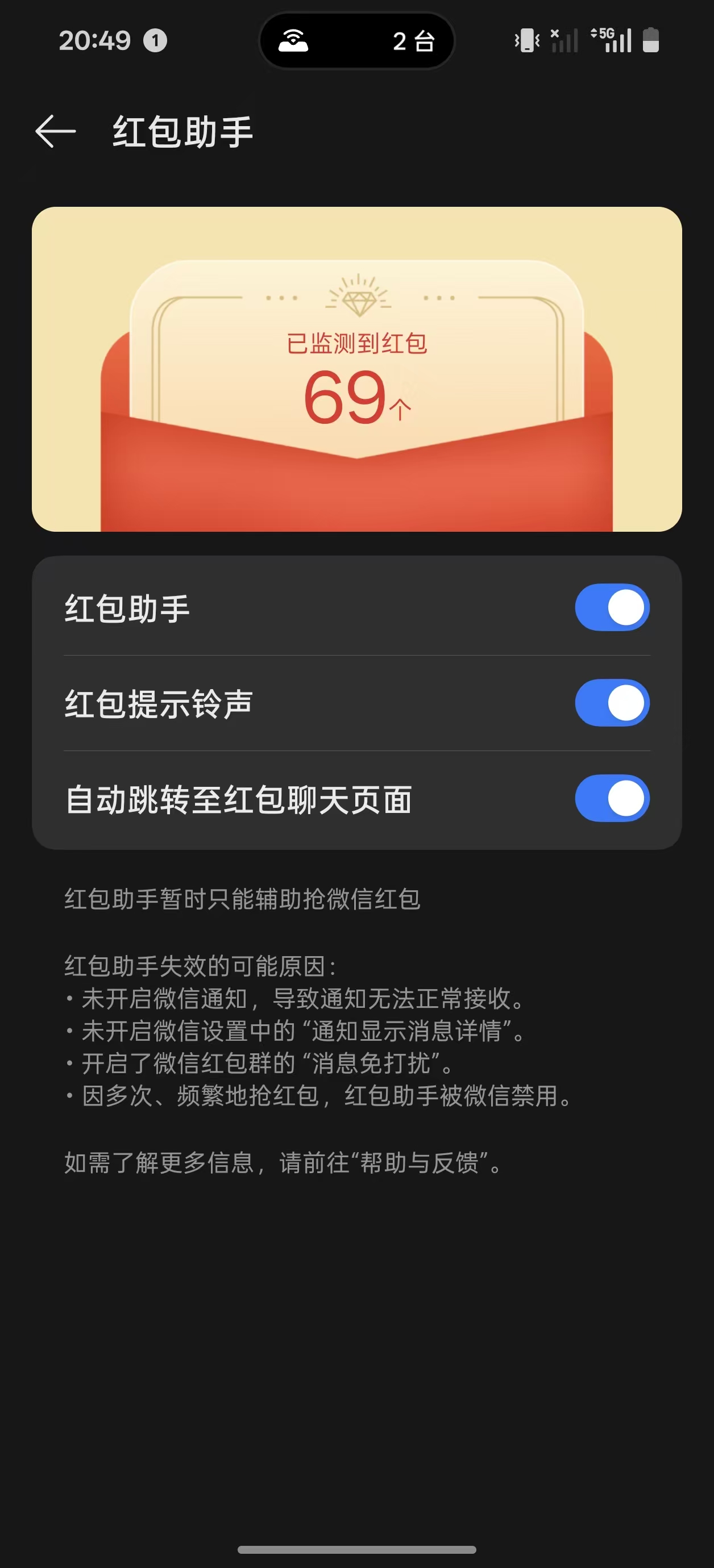
Image Source: Leitech
However, the emergence of GUI-Agent disrupts this 'tacit agreement' on fairness. Users can exploit GUI-Agent to perform operations like ticket-grabbing at breakneck speeds and frequencies. Some users even apply this efficiency-boosting system feature to competitive gaming, disrupting game balance.
Under these circumstances, it's understandable that internet firms opt to approach GUI-Agent cautiously. Ultimately, most risk management systems weren't designed to consider scenarios where 'users authorize AI to complete tasks.' They can only rely on existing logic to assess risks. From this vantage point, neither Doubao Mobile Assistant nor the apps are at fault; it's simply that rapidly advancing technology has thrust both sides into an uncharted 'regulatory void.'
'Delegation Capability' Is the Bedrock of AI Agents
In the comments section of yesterday's article, Leitech noticed another perspective on AI Agents:
Does the phone even need an owner anymore? Is it an AI assistant or a user monitor?
As a user, I empathize with the skepticism toward AI assistants and the perception that they 'overstep their bounds.' After all, not everyone has the time to peruse Doubao's privacy white paper, nor does everyone know that Doubao Mobile Assistant requires manual authorization from users (which can be revoked at any time) and that sensitive operations like payments must be performed manually by the user.
However, just as you can't 'delegate' your cards to AI while preventing it from seeing your hand, AI Agents, as revolutionary efficiency tools, must be capable of performing tasks on behalf of users. In Leitech's view, if AI can only recognize content and answer questions, it will always remain an assistant, not an Agent.
From a practical standpoint, users are genuinely intrigued by AI Agents not because of 'how intelligent they are,' but because of their ability to liberate users from repetitive and mechanical tasks. For instance: Using a cooking robot to cook yields 'soulless' stir-fried dishes, but using a dishwasher after cooking spares you from 'repetitive mechanical labor.'
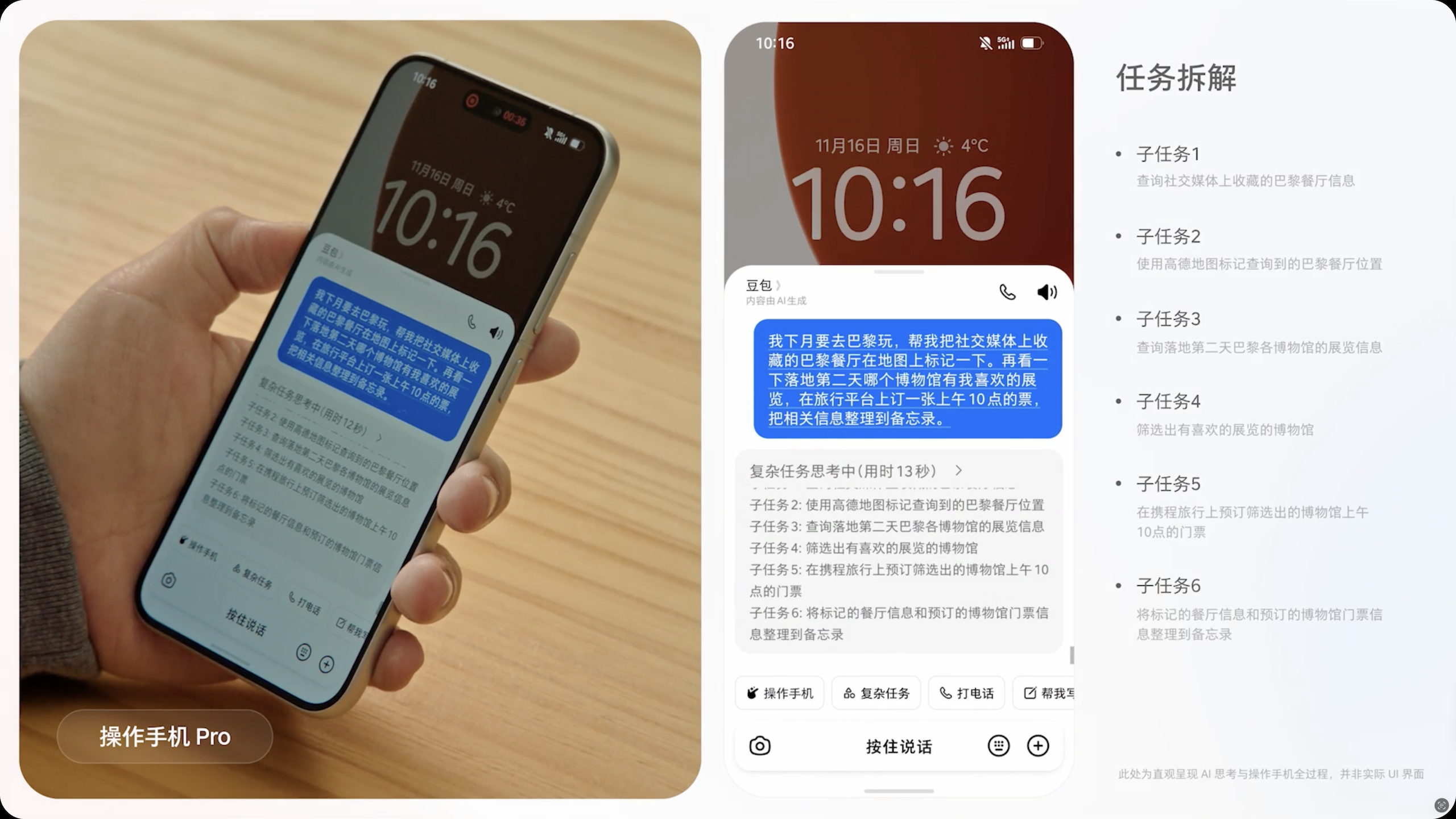
Image Source: Doubao Mobile Assistant
The same rationale applies to AI Agent delegation: ordering food, grabbing tickets, finding deals, organizing messages, and submitting forms all adhere to fixed rules but can be time-consuming to do manually. For tasks that don't 'directly generate value' or showcase creativity, I don't believe that having AI Agents perform them is misguided. After all, tools are meant to enhance efficiency.
AI Phones Are a 'Boon,' Not a 'Bane'
In Leitech's view, while the 'Doubao Incident' has sparked debate, it has also unveiled unique new issues in the AI era: What kind of relationship should exist between AI phones and internet services?
It's certain that the 'clash' between AI Agents and apps won't endure long. In the future, the two will collaborate in a novel manner. Before the MCP era arrives, app developers will define 'allowable AI operation' scopes with AI phone brands and may even introduce new digital signature or credit systems to 'whitelist' common AI Agent operations. Using 'foreground AI Agents' as a training ground, they will refine processes for the 'background MCP' era.
As for internet firms, Leitech believes that even under the MCP model, internet firms can still showcase their unique value. However, in the AI Agent era (and the subsequent MCP era), internet firms must transition from being 'interface gateways' to 'capability interfaces.'
Take iPhone's Siri as an illustration: Based on Apple's SiriKit, apps like WeChat and Didi can directly invoke relevant components to complete operations like sending WeChat messages or hailing rides without fully launching the app. Regarding the current 'permission concerns,' once MCP protocols become widespread, AI phone brands can abandon technical workarounds like event injection triggers and screen capture. Instead, they can achieve AI Agent interoperability in a more rational and secure manner, ensuring that all AI-related parties operate within a controllable framework.
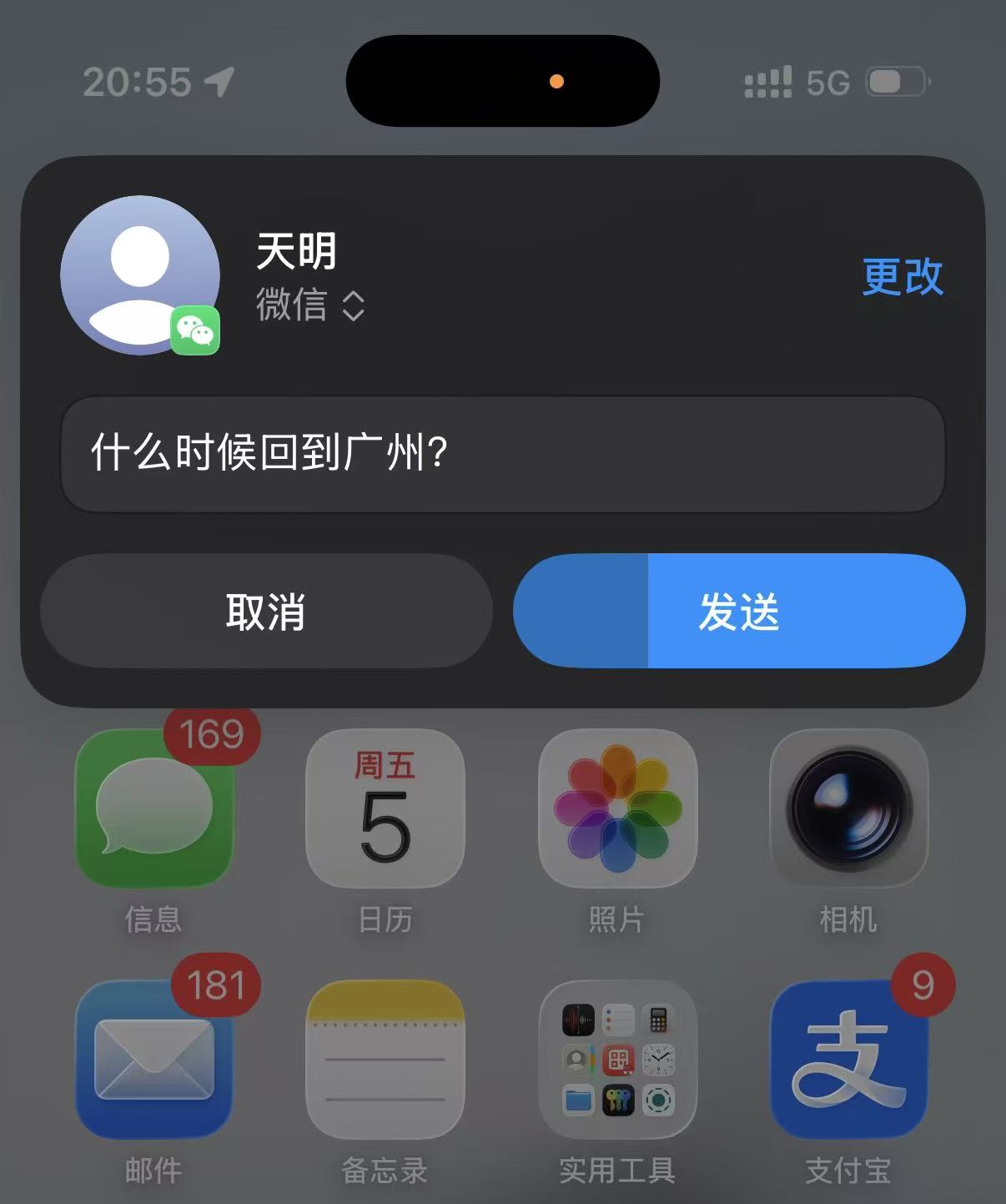
Image Source: Leitech
Only then can AI Agents truly seamlessly integrate into our daily lives.
What's certain is that once AI Agent technology matures and becomes ubiquitous, the way we use phones will undergo a radical transformation: Users provide directional instructions, AI Agents handle the 'hands-on' work, and third-party platform components execute the tasks. The relationship among the three won't be one of replacement but of interdependent collaboration. Internet firms will still control service capabilities, AI phones will become new entry points, and users will enjoy a smoother and more efficient experience.
On the evening of December 4, Zhou Hongyi also posted a video on Weibo, comparing the 'smart assistant competition' to past subsidy wars in ride-hailing and food delivery—'ultimately making phone operations simpler, where a single sentence can accomplish everything.' From Leitech's perspective, when the true era of AI phones arrives, not only will our phone usage change, but even the form factor of smartphones will evolve again.
Ultimately, technological revolutions are inevitable. When the AI wave sweeps across the industry, giants will naturally make their choices.
AI ByteDance Doubao Mobile Assistant Agent AI Phone
Source: Leitech
All images in this article are sourced from the 123RF Authentic Library (123RF Royalty-Free Image Library). Source: Leitech
-
![]()
Alibaba's AI Offensive: Over Half of Investment Allocated, Time to Reap Returns
-
![]()
Alibaba’s AI Push: Over Half of Investments Made, Time to Harvest Returns
-
![]()
Chinese Enterprises Going Global 3.0: From World Factory to AI Infrastructure Builder
-
![]()
Honor RobotPhone Review: Half Movie Camera, Half Robot
-
![]()
AI-Driven Cheating Surges in Universities! Online Exams Reduced to Mere Formalities, Degree Credibility on the Line
-
Insta360’s Decade in Panoramic Imaging: Making Cameras ‘Invisible’ and Returning Creation to the Masses
-
![]()
Foreign Media Claims Apple is Concentrating Resources on AI Development: Vision Pro and Siri Teams Lay Off 200 People
-
Big News! Huaneng and Huawei Hold Talks in Shenzhen with Ren Zhengfei in Attendance; Huawei Emerging as the 'Second Brain' of China's Energy System