Doubao Mobile Takes the Lead in the Race for the 'AI Super Gateway'
 12/08 2025
 729
729
Source | Bohu Finance (bohuFN)
While Apple has aspirations to create AI-driven phones, Doubao has already taken the lead in making this vision a reality.
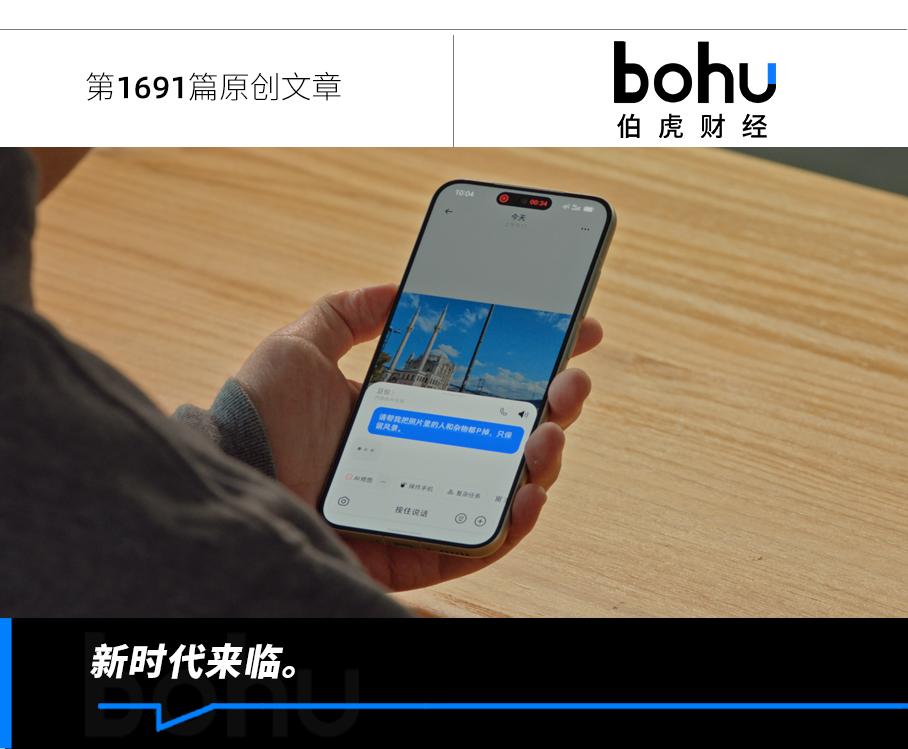
Recently, the technical preview version of the Doubao Mobile Assistant was officially launched. This AI assistant, based on the Doubao large model, was developed through deep collaboration with mobile phone manufacturers at the operating system level. It is capable of genuinely understanding and operating mobile phones to complete tasks, just like a human user.
In a demonstration video, users simply issue verbal commands, and the phone automatically invokes different apps to perform a series of complex operations, such as comparing prices, making dining reservations, and planning trips. This functionality bears a striking resemblance to the AI phone concept introduced with the iPhone 16, and it is even more powerful.
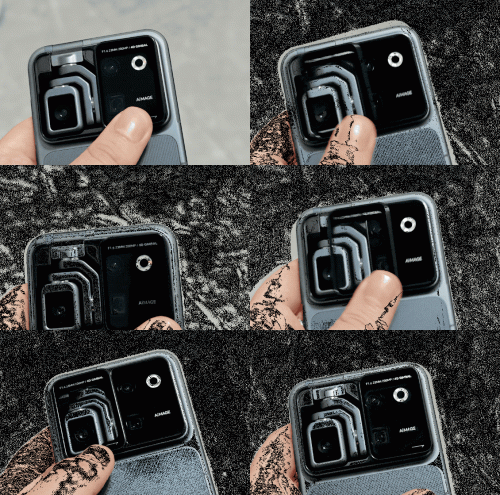
Currently, the Nubia M153 engineering prototype, co-developed by ZTE and ByteDance and equipped with this feature, is already available for purchase at an official price of 3,499 yuan. However, many users are reselling it at higher prices on second-hand platforms.
Interestingly, despite being dubbed the 'Doubao Phone' by the outside world, ByteDance has explicitly stated that it currently has no plans to develop its own mobile phone. Instead, it is negotiating collaborations with multiple mobile phone manufacturers to integrate its assistant technology.
From aggressively pursuing large models to experimenting with self-developed AI hardware, and now embedding its technology into terminals through an 'ecosystem cooperation' model, ByteDance's exploration path mirrors that of global tech giants vying for the 'super gateway' in the AI era.
As for where this next-generation gateway will emerge and who will define and control it, the answer remains fiercely contested.
01 An AI Assistant That 'Bypasses Apps'
In September of the previous year, Apple took the lead in defining what an 'AI phone' is, including features like one-click invocation of AI capabilities, having Siri create travel plans, book flights, and more.
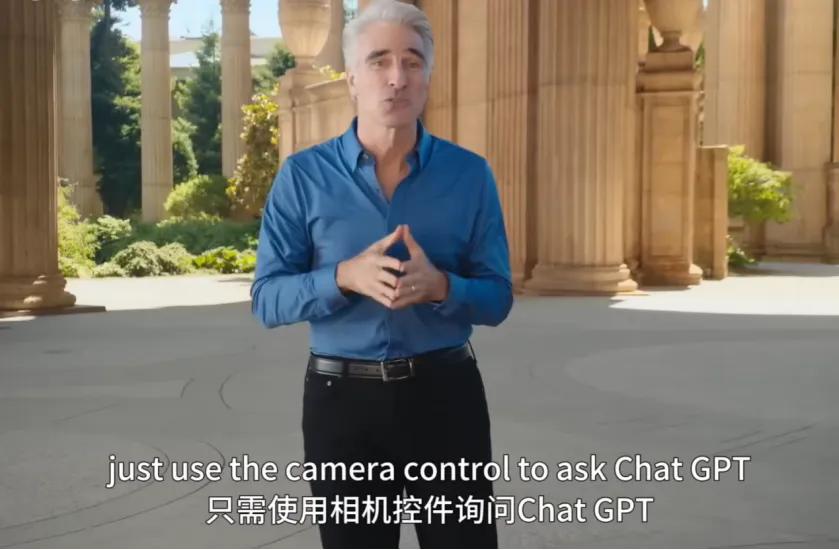
However, these features are not yet available on the domestic versions of the iPhone. Some functions, such as automatic organization of call recordings and intelligent trip planning, have not been fully rolled out. Even Apple executives admitted earlier this year that the first version of AI Siri did not meet expectations.
While Apple is still working on these enhancements, Doubao has already made significant progress. In the AI era, time is of the essence.
Recently, the Doubao team released the technical preview version of the Doubao Mobile Assistant. It bypasses apps and is directly embedded into the underlying layer of the mobile phone's operating system, mobilizing system resources and all apps to 'simulate human-like phone operations.'
If Apple AI focuses more on 'assisted interaction,' with the core goal of making phones smarter and reducing friction in using various functions, then the Doubao Mobile Assistant goes a step further by 'seeing' and directly simulating user click operations, thereby redefining human-computer interaction.
In a demonstration video released by Doubao, users simply input, 'Help me compare prices and place an order for a certain product on various e-commerce platforms,' and Doubao automatically searches major e-commerce platforms, selects the lowest price, and waits for user confirmation during the sensitive payment process.
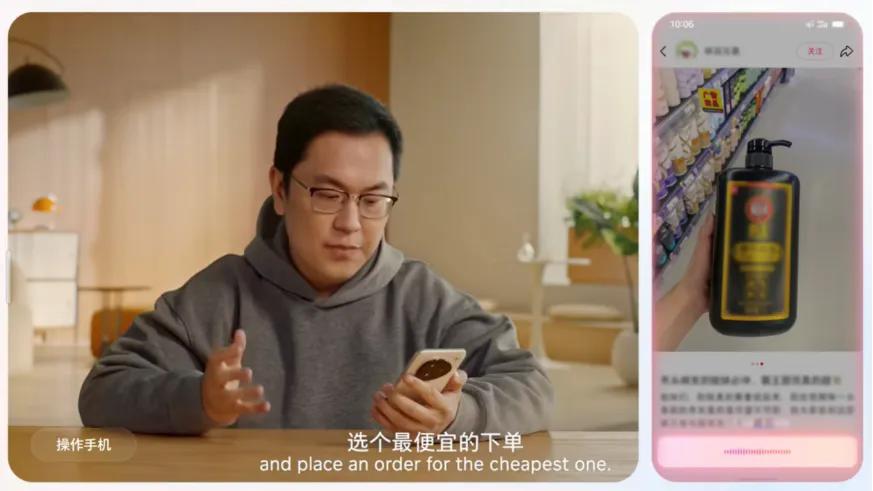
Additionally, in many scenarios, users can give Doubao a voice command, and it effectively executes various tasks, including submitting business trip applications, booking flights, and clocking in at scheduled times.

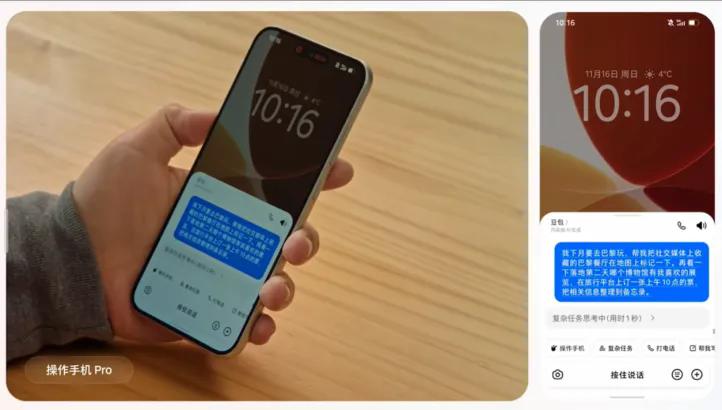
Doubao even features a memory function. In the upcoming Pro mode, if users enable memory, they won't need to repeatedly provide details for each task, making the entire operation process smoother.
Moreover, the reasoning capabilities of Pro mode will be further enhanced. In the demonstration video, a user planning a trip to Paris asked Doubao to mark restaurants they had saved on social platforms, organize information about exhibitions they liked, and book flights. Doubao successfully opened multiple apps and performed a series of complex operations, taking approximately 8 minutes in total.
Of course, the capabilities demonstrated by the Doubao Mobile Assistant are not entirely new in concept. Since the emergence of ChatGPT, the cross-application task execution capabilities of such 'AI Agents' have been widely discussed.
However, most mobile phone manufacturers are still in the 'demonstration stage.' Among phones that can truly be mass-produced, the Doubao Mobile Assistant offers the most comprehensive performance. The key to Doubao's early success lies in two major breakthroughs:
Firstly, system-level deep embedding allows the Doubao Mobile Assistant to obtain underlying permissions of the Android system, breaking down barriers between applications and enabling seamless cross-application operations. This greatly enhances the overall 'smoothness' of the user experience.
In comparison, many intelligent agents on the market attempt to perform 'human-like operations' such as booking flights and processing reimbursements. However, due to the need for seamless transitions and data transfers across multiple independent applications, only customized enterprise-level intelligent agents can truly integrate data from airlines and company reimbursement processes to complete commercial closures.
Secondly, the accumulation of multimodal capabilities in the Doubao large model. Based on ByteDance's short video DNA, Doubao has a deep understanding of visuals, voice, and scenarios, enabling it to seamlessly transfer multimodal perception capabilities to mobile phone interactions. This allows the Doubao Assistant to 'see' and operate mobile phone screens like a human.
Although Doubao did not directly 'build a phone,' it has transformed the existing gateway system by defining hardware through software. However, as Doubao secures the gateway, other applications may be reduced to software service providers, setting the stage for an imminent battle for the 'super gateway.'
02 A Dual Approach: Software and Hardware
In fact, ByteDance has long harbored a 'hardware dream.' Early on, it ventured into the AR/XR field through Pico. Since last year, it has been exploring AI headphones, AI toys, and there have even been rumors of self-developed AI phones.
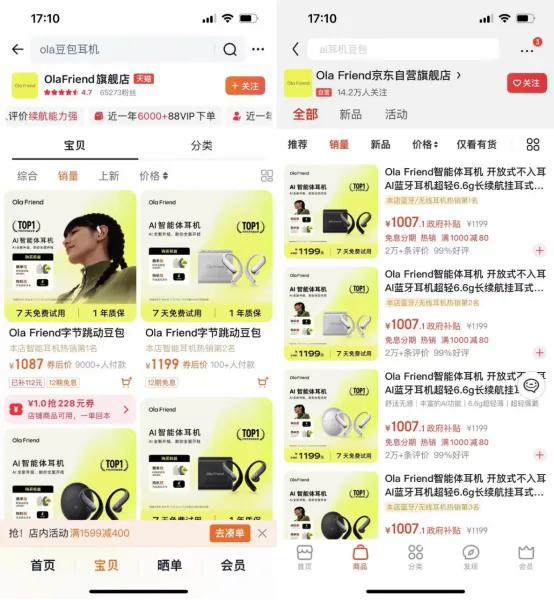
However, the disbandment of the Pico team and the modest sales of the AI headphones 'Ola Friend,' with cumulative sales of only 10,000 to 20,000 units on Tmall and JD.com within a year of launch, indicate that the AI hardware sector is no easy feat.
Nevertheless, the AI hardware sector remains hot because the 'soul' of large models ultimately needs a 'body.'
Only by embedding AI functions into real-world carriers like phones, headphones, and cars can AI permeate different scenarios of daily life, access more authentic data, meet direct user needs, and deeply integrate with hardware capabilities.
This is why an increasing number of internet giants and car manufacturers are labeling themselves as 'AI tech companies.' The future super gateway will not be just an application or a phone but a cross-device, cross-scenario, continuously evolving AI agent. Whoever can get closer to users, control more terminals, and have more authorized access points will hold the ecological initiative.
Currently, the paths chosen by giants in finding suitable hardware carriers vary.
Alibaba, ByteDance, Xiaomi, and other major players have initially opted for self-development. Alibaba launched the Quark AI Glasses; Google's two AI glasses projects have entered small-batch trial production; even Li Auto recently announced plans to launch AI glasses called Livis.

The advantage of the self-development model is complete control over the entire process of data collection, system invocation, and user interaction, enabling rapid iteration of software and hardware collaboration. Major players can also gain more initiative in defining the next generation of interaction gateways.
However, ByteDance has also explored a more flexible approach by collaborating with mobile phone manufacturers to reconstruct the main control logic of mobile phone operating systems and empower the entire terminal ecosystem with AI as a link, effectively gaining a say in the ecological gateway in another form.
Prior to this, Google Gemini and Samsung phones adopted a collaboration model similar to that of ZTE and Doubao, essentially 'mutually beneficial.'
From the perspective of mobile phone manufacturers, although many have been promoting self-developed large models in recent years, the AI functions that have actually landed are mainly concentrated on experiences that consumers can directly perceive, such as image generation and summarization. There is still a significant generational gap in landing speed and depth compared to leading large models.
Collaborating with a powerful AI assistant like Doubao can not only bring more user traffic to mobile phone products but also quickly bridge the gap in large model capabilities.
From the perspective of large model companies, the AI hardware sector, particularly the mobile phone industry, is already a red ocean. However, as a crucial carrier for AI, it represents an unavoidable gateway. Collaborating with second- and third-tier mobile phone manufacturers and OEMs allows for 'riding the wave.'
Although their goals differ, their objectives align. As AI extends its 'hand' into the physical world, the priority is to grasp 'this hand' as quickly as possible, shifting from a mere arms race in model capabilities to a 'penetration war' of intelligent terminals that integrate software and hardware.
03 Who Will Be the Ultimate Winner?
However, fully rolling out and promoting the Doubao Mobile Assistant will not be easy.
Firstly, there is still a gap between the practicality of the Doubao Mobile Assistant and expectations. LatePost conducted a real-world test on the Nubia M153 engineering prototype, asking it to open various food delivery platforms, select the lowest-priced takeout option, and place an order.
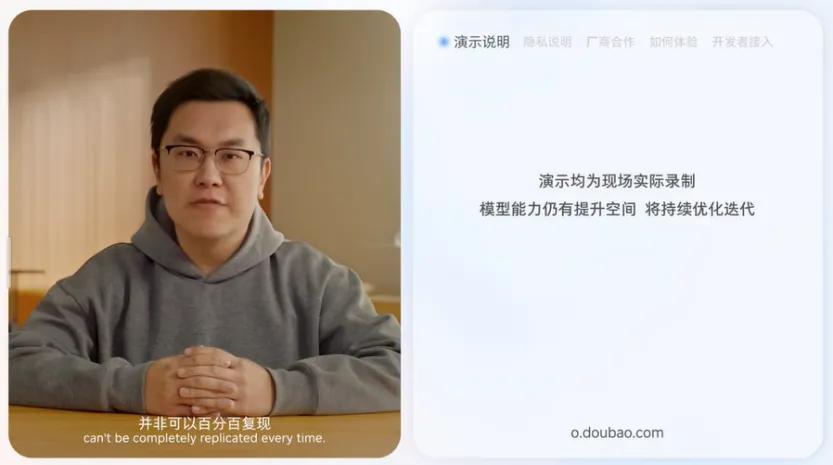
Compared to human operation, the phone's operation appeared somewhat 'clumsy,' taking nearly 2 minutes, about 1 minute slower than manual operation, and there was a possibility of misreading information. The Doubao team also mentioned that model capabilities still need optimization.
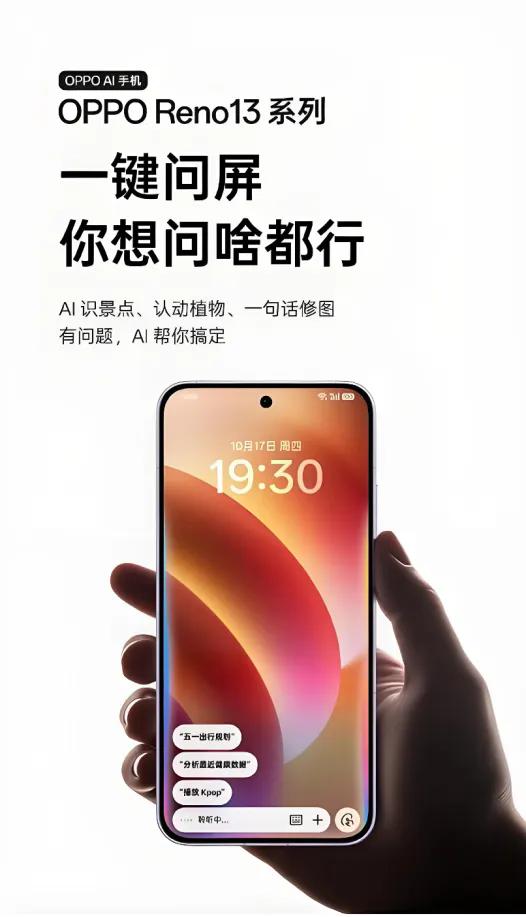
Secondly, Doubao's competitors will not sit idly by. Currently, mainstream mobile phone manufacturers like Huawei, Xiaomi, OPPO, and Vivo all have their own self-developed large models. Although their current model capabilities may not match Doubao's, market competition pressure will drive them to enhance their model capabilities through acquisitions, collaborations, and other means.
A clear trend is that these manufacturers are collectively embracing another option: integrating high-performance open-source models like DeepSeek, outsourcing the 'brain' while keeping the system's 'Achilles' heel' in their own hands.
Major e-commerce and social applications will also not willingly become mere 'service providers.' After all, user data, traffic gateways, and content ecosystems are the foundations of their entire business models. Once these elements are reduced to mere 'data,' not only will the business moats of these giants be disrupted but also the entire platform-centric internet order.
Finally, Doubao must also navigate the hurdle of mobile phone operating system manufacturers. In recent years, traditional operating system giants like Google and Apple have also initiated AI-oriented upgrades. Although Apple's AI progress has not met expectations, they will not sit idly by as AI assistants 'usurp' their authority. Doubao, which relies on them, is no exception.
Therefore, the smooth operations demonstrated by the Doubao Assistant currently are more based on idealized cooperation premises. In reality, commercial negotiations will make this path fraught with challenges.
Moreover, as Doubao attempts to redefine hardware through software, it cannot escape the constraints of the hardware itself. The accumulations of professional mobile phone manufacturers in chip tuning, multi-camera coordination, and on-device reasoning optimization cannot be simply overcome by a system-level assistant.
Currently, both Doubao and Nubia emphasize that this AI phone is primarily targeted at developers and tech enthusiasts, with an initial sales inventory of approximately 500,000 units, still significantly lagging behind the 2 to 3 million unit shipments of mainstream flagship phones.
If Doubao wants to collaborate with more mobile phone manufacturers, it cannot just create a 'demonstration machine.' Finding ByteDance's own 'Seres' will be crucial for expanding the ecological cooperation model in the future.
However, most mobile phone manufacturers are still observing. An insider from a mobile phone manufacturer revealed that they need to observe Doubao's next technical solution, considering the current product more as a test version rather than a truly meaningful consumer electronic product.
For ByteDance, the number of orders for its first AI phone is not the key. What matters is deeply integrating its previously scattered AI strategic layouts in large models, applications, and hardware to form a coherent, usable, and closed-loop intelligent service system.
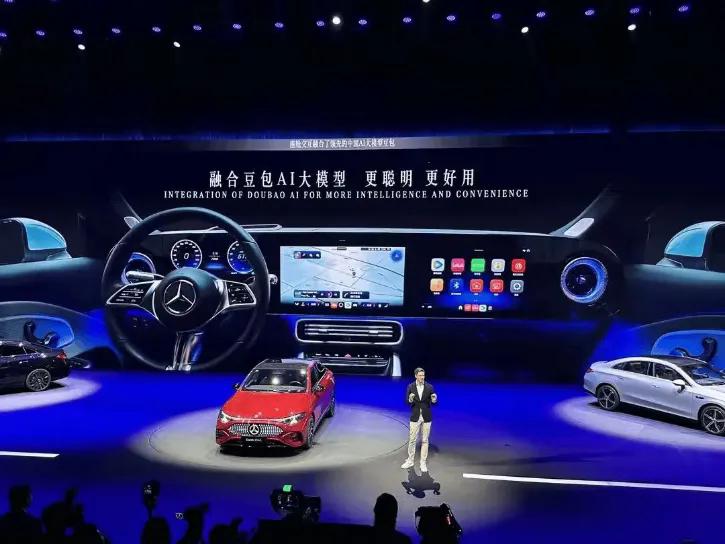
Looking ahead, this intelligent service system holds the potential for deployment across a wider array of terminal devices. Beyond phones, it could be integrated into glasses, headphones, smart home appliances, and even smart car infotainment systems. At present, smart car infotainment systems from renowned automakers such as Mercedes-Benz and Seres have already incorporated the Doubao large model.
The Doubao Mobile Phone has garnered praise from numerous hardware entrepreneurs. Luo Yonghao, the founder of Smartisan Technology, remarked, "ByteDance's pioneering move is truly commendable and worthy of recognition."
ByteDance has harbored a 'hardware dream' for several years, yet it remained unfulfilled until now. With the advent of Doubao, the company has made a resurgence. While ByteDance may not emerge as the sole victor in this competitive landscape, it has undoubtedly opened up new avenues and introduced a fresh variable into the 'gateway battle'.
In an era where AI shapes user experiences, software companies lacking hardware development capabilities and hardware companies devoid of an AI-driven essence may face obsolescence. Hence, to ascend as the new 'super gateway', tech giants must seek out additional novel assets.
The copyright of the cover image and accompanying pictures in this article is owned by their respective copyright holders. Should the copyright owners deem their works unsuitable for public viewing or believe they should not be used free of charge, please notify us promptly. Our platform will take immediate action to rectify the situation.
-
![]()
Alibaba's AI Offensive: Over Half of Investment Allocated, Time to Reap Returns
-
![]()
Alibaba’s AI Push: Over Half of Investments Made, Time to Harvest Returns
-
![]()
Chinese Enterprises Going Global 3.0: From World Factory to AI Infrastructure Builder
-
![]()
Honor RobotPhone Review: Half Movie Camera, Half Robot
-
![]()
AI-Driven Cheating Surges in Universities! Online Exams Reduced to Mere Formalities, Degree Credibility on the Line
-
Insta360’s Decade in Panoramic Imaging: Making Cameras ‘Invisible’ and Returning Creation to the Masses
-
![]()
Foreign Media Claims Apple is Concentrating Resources on AI Development: Vision Pro and Siri Teams Lay Off 200 People
-
Big News! Huaneng and Huawei Hold Talks in Shenzhen with Ren Zhengfei in Attendance; Huawei Emerging as the 'Second Brain' of China's Energy System