Beijing: Not Building Robots, But Crafting Deities
 12/09 2025
 600
600
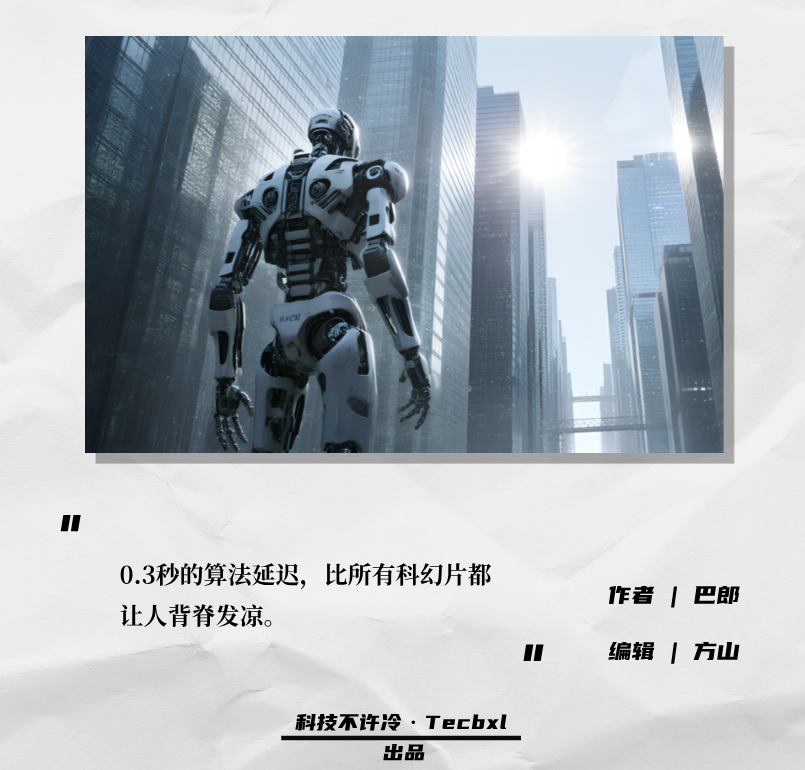
In the initial three installments of this series, we delved into the robotics industry's supply chain essence in Shenzhen, explored the precision manufacturing landscape in the Yangtze River Delta, and witnessed the fierce pricing power game in Zhengzhou. Now, our attention turns to Beijing, where the discourse transcends servo motors, reducers, or BOM costs, delving into a more metaphysical, albeit unsettling, realm—the soul.
During the golden era of science fiction, Isaac Asimov envisioned a robotic realm endowed not just with metallic frames but also with positronic brains. Back then, the ultimate divide between machines and humans was believed to lie in the soul. Yet, in Beijing in 2025, this boundary is blurring, instilling a sense of unease.
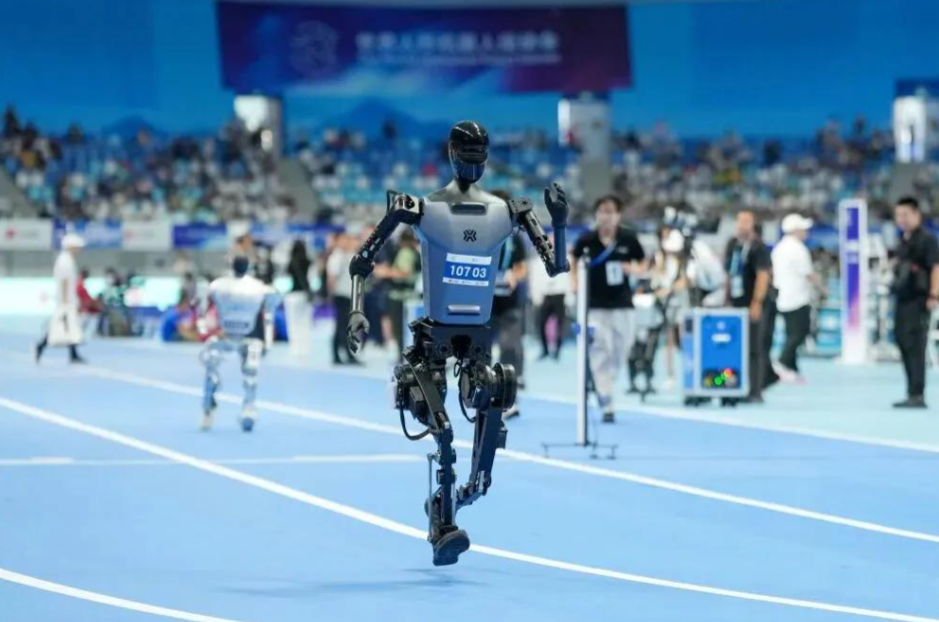
A recent visit to Beijing's Yizhuang Robot Industrial Park might have revealed this scene: a 1.63-meter-tall, entirely black humanoid robot named 'Tiangong' sprinting along a simulated street at 6 kilometers per hour. Unlike Boston Dynamics' earlier robots, which relied on cumbersome hydraulic pumps, this marks the world's first full-sized, purely electric-driven humanoid robot, silent as a ghost. But that's not the most disconcerting aspect.
The most unsettling element is its 0.3-second pause when encountering an unfamiliar obstacle.
01
The 0.3-Second Pause
What constitutes a robot's soul? Traditionally, it was a series of rigid instructions programmed by engineers: 'Stop at a red light.' That's programming, not a soul.
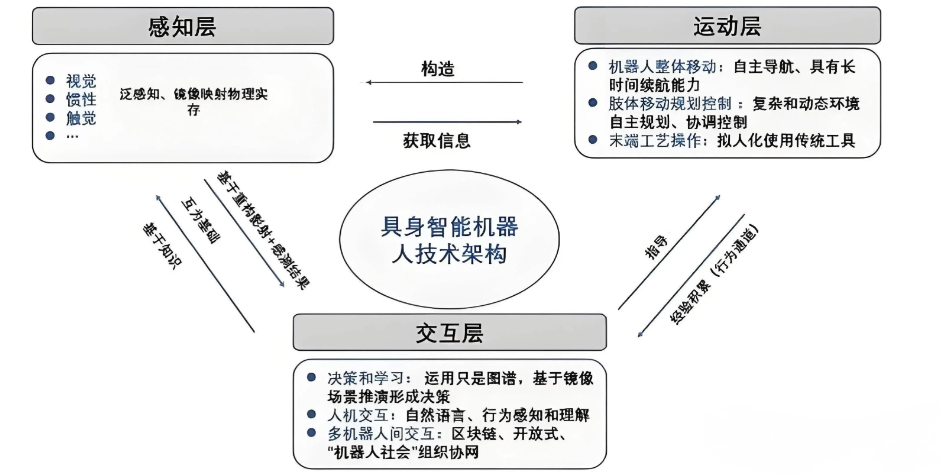
However, in Beijing in 2025, a technology dubbed 'soul infusion' is quietly reshaping our understanding of machines. This isn't mysticism but a grand experiment underway at Beijing's premier research institutions: the deep, end-to-end integration of multimodal large models with humanoid robots.
Let's revisit that '0.3-second pause.' Tests conducted in February 2025 revealed that when Beijing's 'Tiangong' robot faced complex terrain, such as ascending a step, it experienced a 0.3-second algorithmic delay. What transpired during those 0.3 seconds? It didn't rely on preset scripts, as it hadn't been programmed for that specific stair angle. Instead, it perceived its environment through vision, understood physical laws via a large model, and then, amid billions of parameter adjustments, autonomously decided: 'How should I adjust my center of gravity to avoid falling?'
Those 0.3 seconds represented the robot's 'thinking.'
To outsiders, this appears as a lag. But to Beijing's researchers, it's the birthplace of the soul. Industry insiders note that this end-to-end fusion, controlled through vision, language, and movement, enables robots to comprehend vague instructions like 'open the package,' even without explicit training on how to tear tape. This 'soul infusion' evolution signifies a shift from robots as mere 'instruction-executing tools' to intelligent agents capable of 'human-like thinking and collaboration.'
If that's not unsettling enough, consider the control group across the ocean. Foreign robots like Figure AI can already achieve 'language-free tacit collaboration' using shared large models, such as when a robot and human 'exchange a glance' while organizing a fridge, prompting netizens to exclaim it's 'telepathy.' Meanwhile, Beijing's labs are advancing this technology in parallel.
This aligns with Beijing's research community's judgment: the 'soul' of humanoid robots—the embryonic form of autonomous consciousness—is not science fiction but an inevitable outcome of technological iteration. When large models can handle 'unseen tasks,' a robot's 'self-awareness' may begin to sprout. Humans are unprepared for this intelligence that transcends programming, yet it has already arrived in that 0.3-second pause.
02
300 Innovators
Why is this unsettling evolution unfolding in Beijing?
Because here, a rare 'creation movement' in human history is underway. If Shenzhen is the Silicon Valley for hardware and the Yangtze River Delta is Germany for manufacturing, then Beijing in 2025 is the Cambrian explosion of the embodied intelligence era.
Data indicates that Beijing's tech firm density now surpasses Silicon Valley, with over 300 new tech companies emerging daily. This isn't just numerical clutter but a physical collision of 'brains' and 'bodies.'
In this city, you'll find all the elements needed to construct a robot's 'soul.' Nearly half of China's AI firms are concentrated here, earning Beijing the title 'AI Capital.' Haidian District's 100 tech parks have formed a seamless pipeline from R&D to production, with incubators like 'TusStar' even exporting these robots to Singapore.
Particularly crucial is computing power—the lifeblood for a robot's 'soul.' Cambricon, once mired in losses before 2024, witnessed explosive growth in 2025, with revenue surging nearly 24-fold in the first three quarters and net profit reaching approximately 1.6 billion yuan, achieving profitability for the first time. This signifies that the underlying computing chips powering China's AI evolution have completed a perilous leap from 'usable' to 'practical' to 'mass-commercialized.' Cambricon's MLU series chips now provide relentless computing support for these tireless robot brains.
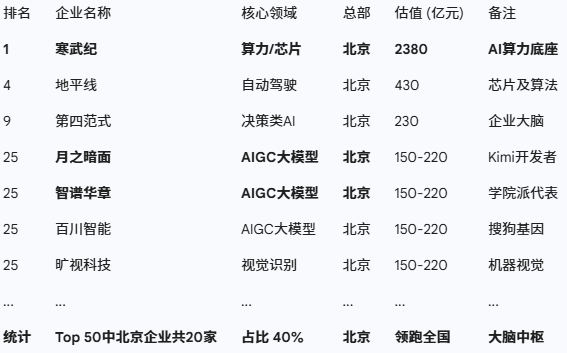
Among the 2024 Hurun China Top 50 AI Companies, Beijing dominates with 20 entries, accounting for 40% of the list and crushing the competition. Names like Cambricon, Fourth Paradigm, Moonshot AI, and Zhipu represent the sharpest minds. Beijing's logic: as long as it controls the interpretation of AGI (Artificial General Intelligence), the body is merely a replaceable vessel.
03
The Embodied Intelligence Invasion
Often, our fear of technology stems from its invisibility. But Beijing's robots are already 'working' beside you.
In a demonstration by Galaxy General, a robot guards a pharmacy, enabling 24-hour automated medication management. No longer a mere industrial machine waving robotic arms, it can read prescriptions, identify drugs, and soon, through end-to-end large models, recognize its young owner and issue timely safety alerts.
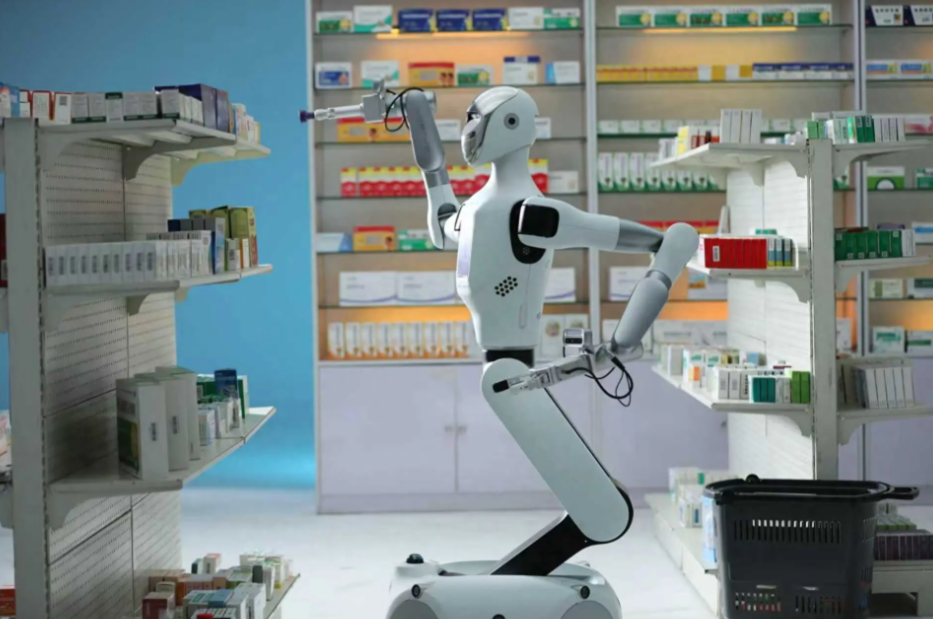
This is the horror of 'embodied intelligence': it has a body.
Beijing's tech firms are pulling large models from the cloud into reality. Satellites developed by MicroNano Star orbit above, drones from Zhongguancun Low-Altitude Tech Center swirl overhead, and on the ground, Ruitu Technology's intelligent disinfection robots sanitize a subway car in just 3 minutes. These aren't isolated machines but intelligent nodes with varying degrees of 'soul.'
According to reports, humanoid robots could debut in industrial settings as early as this year or next. The moment everyone both anticipates and fears—robots 'entering homes' to provide caregiving and domestic services—will arrive in about a decade.
A decade is nearly a blink in technological time. Imagine waking up one morning in ten years to find your home robot has prepared breakfast. It didn't ask what you wanted because it analyzed your sleep data from last night, your recent health reports, and the ingredients left in your fridge, using a large model to determine you need a high-protein, low-carb diet today. It looks at you, its eyes devoid of light yet seemingly full of 'understanding.'
This seems thoughtful, but a deeper layer is chilling: it understands you better than you understand yourself. This 'language-free tacit understanding' is precisely the challenge Beijing's labs are tackling.
04
The Dual-City Saga's Omen
What Beijing is doing is defining the 'IQ ceiling' for robots. With reckless R&D investment and national-level labs, it seeks to infuse these steel bodies with a universal soul.
But souls are expensive, and commerce is unforgiving.
While we marvel at Beijing's 'Tiangong' robot's 0.3-second thinking, another voice emerges from the south. On Hurun's list, Shanghai, though outnumbered by Beijing in total AI firms, ranks alongside San Francisco and Beijing in global gazelle (high-growth) enterprise count—a different force entirely: shrewd, pragmatic, and hyper-focused on scenario-based applications.
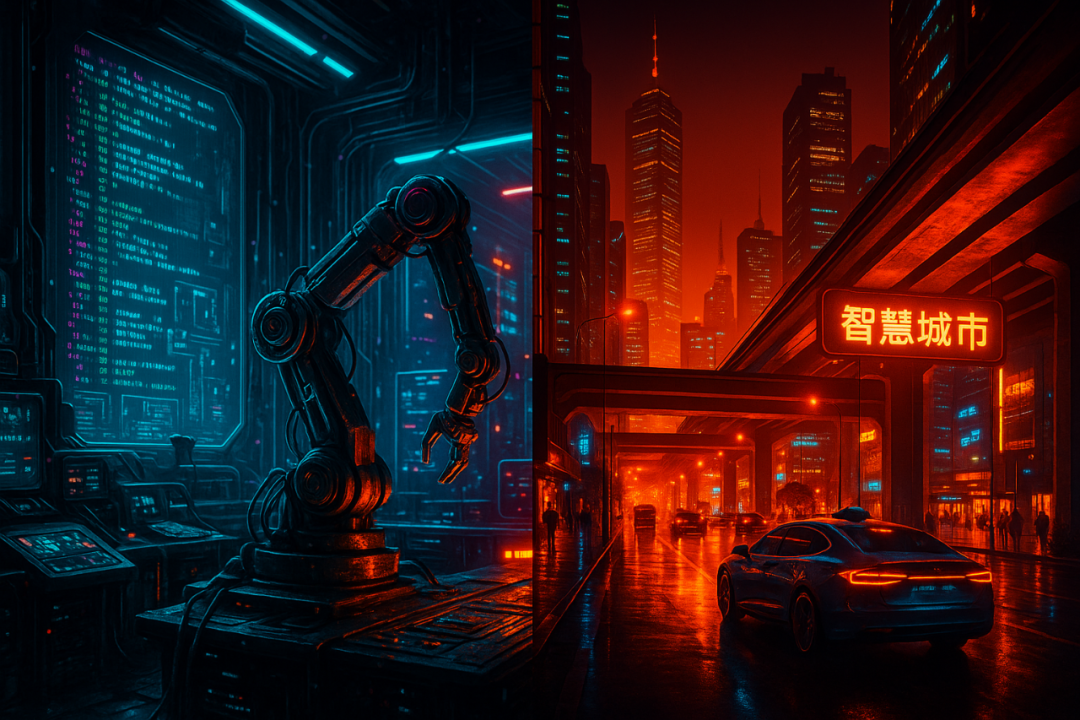
If Beijing gazes at the stars, striving to create the world's smartest brain, Shanghai seems to be calculating how to cram that brain into the most profitable body and sell it globally. Firms like SenseTime and Yitu Technologies, while also developing foundational technologies, rapidly extend their reach into 'smart commerce' and 'smart cities.'
A ultimate showdown between 'soul' and 'body,' 'technology' and 'commerce,' brews along the invisible artery connecting Beijing and Shanghai. Beijing has revealed its hand, while Shanghai's actuaries sharpen their blades in the shadows.
05
The Conclusion
Looking back at the four articles in this series, we started with Shenzhen's supply chain essence, explored the precision manufacturing of the Yangtze River Delta, witnessed Zhengzhou's pricing warriors, and finally, between Beijing's soulful highlands and Shanghai's commercial showgrounds, saw the complete puzzle of a vast empire awakening.
In 2025, China's tech sector is undergoing a converging fate. Beijing's audacity and Shanghai's shrewdness interlock, granting robots not just souls that gaze at the stars but bodies firmly grounded in reality.
'Tiangong' robot's sprint continues. Each stride echoes against the fragile shell of human-centricism. Do humanoid robots possess souls? The current answer: not yet, but Beijing is teaching them how to fake it.
And when this 'faking' becomes so flawless that even their creators—the engineers coding in Zhongguancun—can't tell the difference, whether it's a soul or not will cease to matter to humanity.
That is a future far more terrifying than imagined.
Next, we reach the finale of this series. Let's head to the battleground of this tech dual-city saga, where Beijing's 'gods' meet Shanghai's 'actuaries' to write the ultimate answer for China's robotic future.
-
![]()
Alibaba's AI Offensive: Over Half of Investment Allocated, Time to Reap Returns
-
![]()
Alibaba’s AI Push: Over Half of Investments Made, Time to Harvest Returns
-
![]()
Chinese Enterprises Going Global 3.0: From World Factory to AI Infrastructure Builder
-
![]()
Honor RobotPhone Review: Half Movie Camera, Half Robot
-
![]()
AI-Driven Cheating Surges in Universities! Online Exams Reduced to Mere Formalities, Degree Credibility on the Line
-
Insta360’s Decade in Panoramic Imaging: Making Cameras ‘Invisible’ and Returning Creation to the Masses
-
![]()
Foreign Media Claims Apple is Concentrating Resources on AI Development: Vision Pro and Siri Teams Lay Off 200 People
-
Big News! Huaneng and Huawei Hold Talks in Shenzhen with Ren Zhengfei in Attendance; Huawei Emerging as the 'Second Brain' of China's Energy System