Will the U.S. Issue a 'Robot Executive Order'? Can Embodied AI Evolve into a Burgeoning Strategic Industry?
 12/10 2025
 648
648
Produced by Zhineng Technology
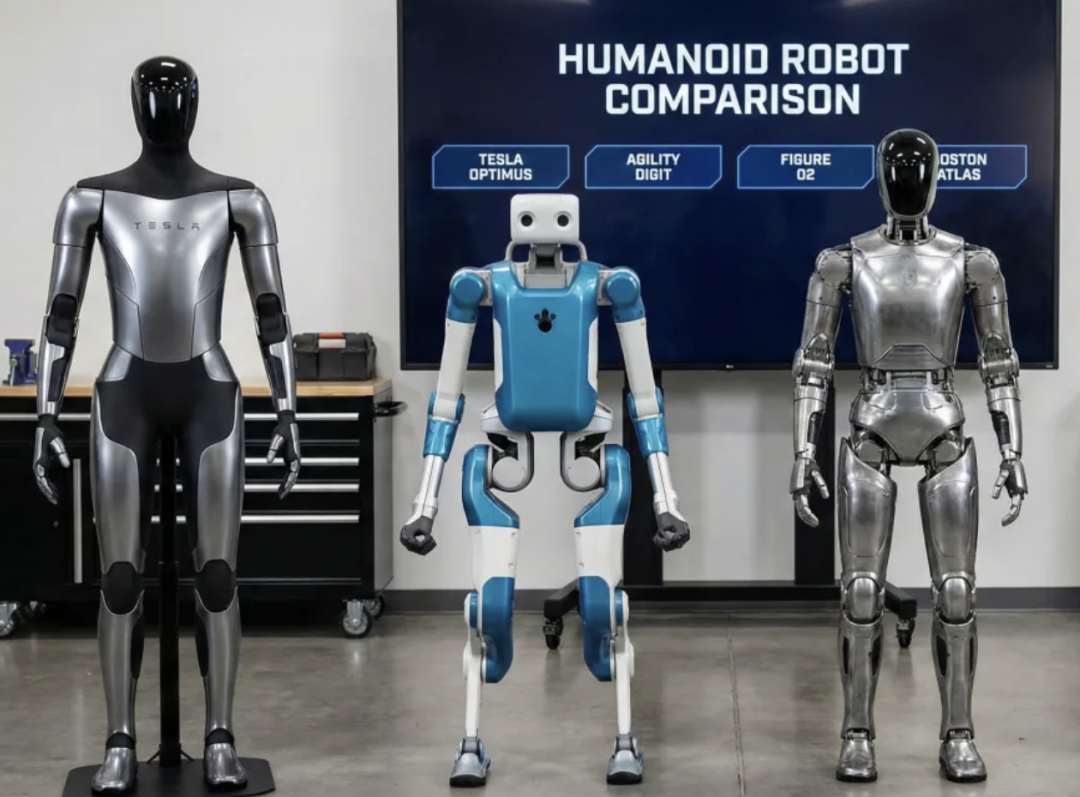
By the end of 2025, as per information from multiple sources, the U.S. government is poised to designate the robot industry as a strategic emerging sector and shift its focus toward 'Physical AI' (embodied AI, particularly humanoid robots). This move could culminate in the introduction of a far-reaching 'Robot Executive Order' in 2026.
Drawing parallels with the automotive industry's evolution, this strategy mirrors the U.S.'s initial foray into new energy vehicles. Despite humanoid robots still being in their nascent stages, the rapid advancement of AI and the U.S.'s ambition to revitalize manufacturing amidst a labor shortage make the proposition of employing humanoid robots to substitute American workers seem plausible.
Question 1: Why is the White House Embracing 'Physical AI'?
The current Trump administration, known for its conservative stance, particularly in the automotive sector, has reverted to a laissez-faire approach. However, the U.S. has long aspired to refocus on manufacturing and repatriate jobs, albeit facing hurdles such as exorbitant labor costs (U.S. hourly wage: $38 vs. China's $6.5) and acute labor shortages (over 800,000 jobs remain unfilled). Echoing Elon Musk's sentiments, the maturation and scalability of humanoid robot technology could serve as a strategic lever to counter low-cost competition and bolster domestic factory capacities.
While the ongoing surge in generative AI (e.g., ChatGPT) predominantly impacts software and services, with certain adverse effects, the realm of humanoid robots (Physical AI) appears poised to directly influence core industries like manufacturing (screwing) and logistics (moving goods), thereby forming a closed loop of 'technology-industry-employment'.
The proposed U.S. executive order is not merely rhetorical; it is anticipated to wield three key instruments: 'tax incentives, R&D funds, and trade barriers' to stimulate demand, overcome technological bottlenecks, and safeguard the domestic market.
● At the demand level, who will be the buyers of robots? Tax incentives could ignite a purchasing spree.
Assuming U.S. factories deploying humanoid robots are eligible for a 30% tax credit on equipment costs, this would substantially lower the entry barrier for enterprise automation, reducing the robot investment payback period from 5-6 years to 3-4 years. This would benefit hardware manufacturers like Tesla (Optimus) and spur demand from small and medium-sized enterprises, which constitute 98% of U.S. manufacturing.
● At the technological level, a $5 billion fund to tackle 'bottleneck' challenges.
The establishment of a $5 billion 'Physical AI R&D Fund' aims to support core components and technologies such as high-torque motors, solid-state batteries, and embodied AI algorithms. Although this sum may seem modest, the objective is to bridge the R&D chasm from 'prototype to mass production' in the U.S., aiming to elevate the localization rate of core components from 40% to 70% by 2028, primarily targeting supplies from Japan, Germany, and other nations in precision components.
The U.S. currently lacks precision machining capabilities in its factories; objectively, investing in manufacturing lines through equipment procurement would suffice.
● Defensively, 25%-35% tariffs to construct trade barriers.
Imposing 25%-35% tariffs on robot products 'benefiting from government subsidies' would capitalize on our cost advantage in low-priced robots, enabling the direct expansion of production lines for numerous automotive components.
Thus, the U.S. aims to shield domestic enterprises from overseas low-cost competition, securing market share and ramp-up time for U.S. robot companies.
Question 2: Will the Global Embodied AI Sector Enter an Era of 'Four-Power Rivalry'?
The U.S.'s strategic deployment signifies the global robot industry's transition from a 'technology race' to a 'national alliance race.'
● The U.S. boasts advantages in AI algorithms, dynamic balance, and precise policy tools, with leading companies like Tesla forging ahead independently and receiving robust policy support.
● China's strengths lie in production scale, cost control, and diverse application scenarios, with startups, tech companies, and automotive firms all actively participating.
● South Korea and Japan possess a wealth of experience in consumer electronics manufacturing, characterized by close corporate collaboration (Samsung/LG/Hyundai), precision manufacturing, core component reliability, and industrial expertise, albeit potentially seen as trailing the leaders.
The U.S.'s weaknesses include insufficient production capacity (currently far below China's) and high costs. This time, the U.S. aims to encourage enterprises to repurpose industrial and automotive component production lines for rapid scaling, leveraging cost advantages to compete.
Objectively, while humanoid robot automation may facilitate manufacturing reshoring, it essentially substitutes low-skilled workers (already in short supply in the U.S.), potentially sparking political backlash from those affected by 'automation-induced layoffs'.
Proponents of robots (business CEOs) argue that robots 'enhance rather than replace' jobs, creating higher-paying positions; opponents, however, worry that millions of low-skilled workers will be displaced by machines, exacerbating wealth inequality.
Summary
Should this executive order be implemented, humanoid robots are poised to herald a new wave of strategic investment—after all, it represents an investment in the future!
-
![]()
Alibaba's AI Offensive: Over Half of Investment Allocated, Time to Reap Returns
-
![]()
Alibaba’s AI Push: Over Half of Investments Made, Time to Harvest Returns
-
![]()
Chinese Enterprises Going Global 3.0: From World Factory to AI Infrastructure Builder
-
![]()
Honor RobotPhone Review: Half Movie Camera, Half Robot
-
![]()
AI-Driven Cheating Surges in Universities! Online Exams Reduced to Mere Formalities, Degree Credibility on the Line
-
Insta360’s Decade in Panoramic Imaging: Making Cameras ‘Invisible’ and Returning Creation to the Masses
-
![]()
Foreign Media Claims Apple is Concentrating Resources on AI Development: Vision Pro and Siri Teams Lay Off 200 People
-
Big News! Huaneng and Huawei Hold Talks in Shenzhen with Ren Zhengfei in Attendance; Huawei Emerging as the 'Second Brain' of China's Energy System