AI Reshapes the Course of $14.2 Billion in "Black Friday" Sales: Can Taobao and Others Sidestep an "Internal Clash"?
 12/10 2025
 569
569

Behind the staggering $11.8 billion in online sales recorded in the U.S. on Black Friday 2025, there lies a profound transformation in the fundamental logic of retail.
According to Salesforce, AI had a direct or indirect impact on $14.2 billion worth of global online sales on Black Friday alone. Yet, this figure is somewhat misleading—it risks painting AI as merely another tool for straightforward industry evolution.
In truth, this year's Black Friday heralds the official transition of e-commerce from the "Recommendation Era" to the "Agentic Era."
As consumers move from manually typing keywords into e-commerce search bars to entrusting their purchasing intentions to large AI models like ChatGPT, Gemini, or Perplexity, the mechanisms governing traffic distribution, pricing strategies, and even brand-user engagement are undergoing an irreversible metamorphosis. This shift feels more akin to a silent infrastructure revolution than a mere sales surge.
AI Agents from Diverse Backgrounds Vie on "Cost-Effectiveness" Adobe Analytics unveils a pivotal metric: AI-driven traffic to retail websites soared by 805% year-over-year during Black Friday. Beneath this data lies the collapse of traditional e-commerce's "traffic funnel" model. For the past decade, e-commerce has revolved around either "people finding products" or "products finding people," both reliant on human visual browsing and clicks, with brands vying for attention through SEO, paid rankings, and feed ads. However, under "AI Agentic Shopping," this chain is shattered.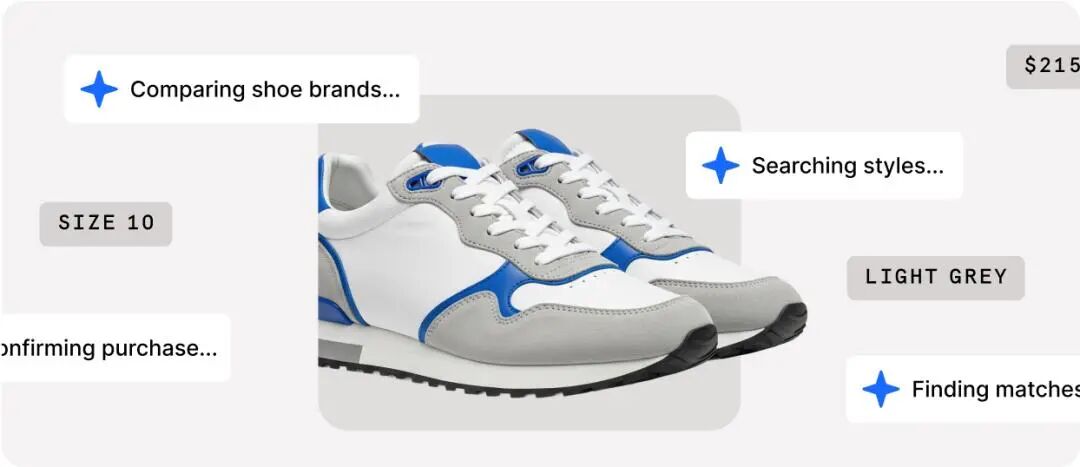
Image Source: Network
Consumers now issue direct commands to AI agents—for instance, "Locate the best-value 65-inch OLED TV nationwide, with three-day delivery and no hidden fees." Under such directives, AI agents bypass the carefully crafted "traps" of e-commerce platforms, ignoring non-essential ads and navigating straight to product details. This signals a transition from the "attention economy" to the "computational economy." The most captivating drama of this year's Black Friday unfolded not in price wars but in the battle for traffic entry points. Take Perplexity's pre-Black Friday launch of "Buy with Pro" as a prime example—a direct assault on traditional e-commerce.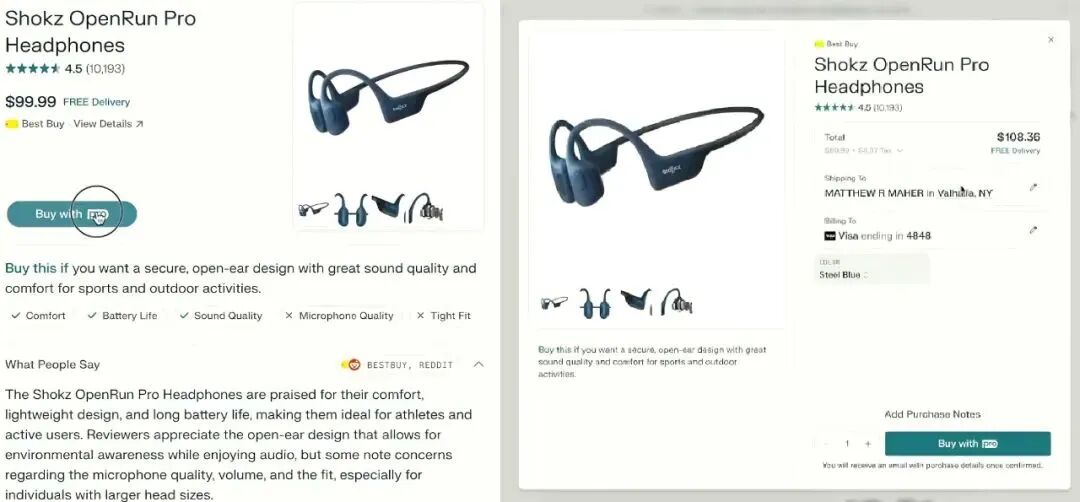
Perplexity Buy with Pro
After a user queries "noise-canceling headphones for college students," Perplexity not only furnishes a comparison table but also offers a one-click purchase button via integrated PayPal, effectively "raiding" e-commerce platforms. For brands, if Perplexity becomes the default shopping interface, Amazon, Walmart, and independent sites are reduced to mere warehouses and logistics providers. Traffic no longer belongs to e-commerce platforms but is intercepted by AI models. Amazon's riposte is its in-house AI tool, Rufus. Embedded at the bottom of the Amazon app, this AI assistant serves as a "defensive weapon."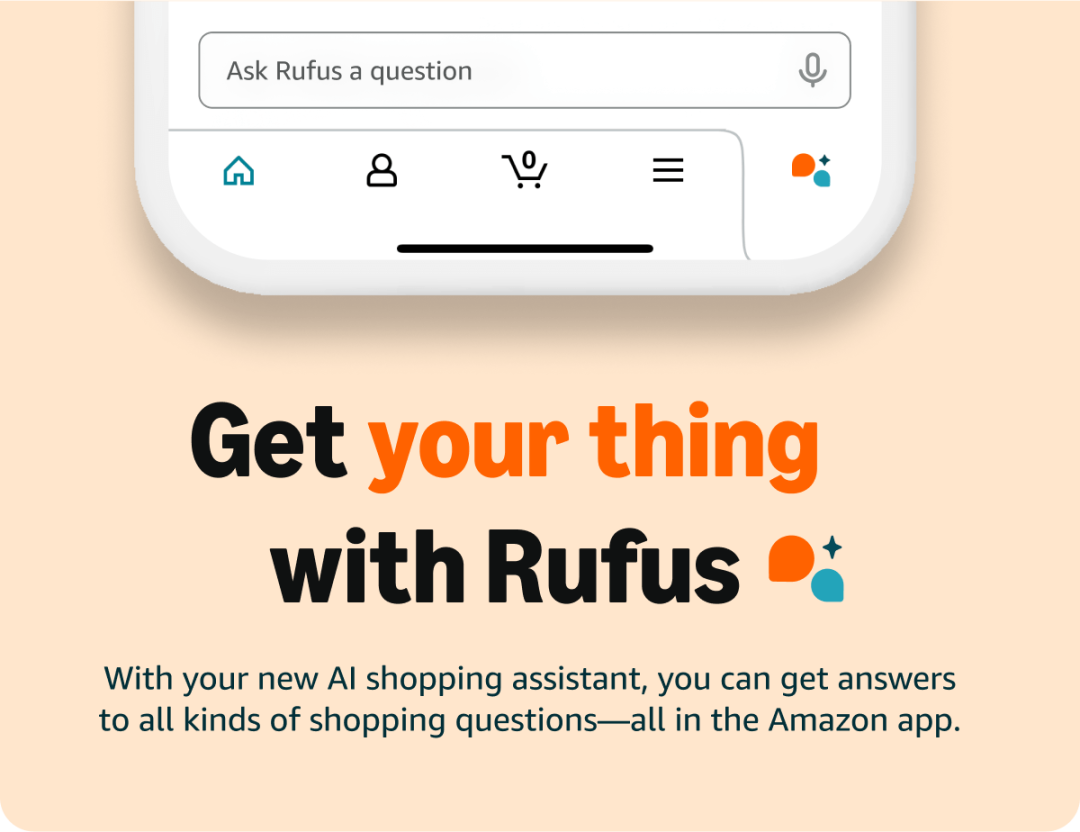
Amazon Rufus
Its core logic is to retain user inquiries within Amazon's ecosystem. When a user inquires, "Which coffee maker is superior?" Amazon prefers they ask Rufus, not ChatGPT. Rufus not only responds but also leverages Amazon's historical pricing and logistics data to demonstrate that "ecosystem AI" surpasses "general AI" in cost-effectiveness. Meanwhile, Walmart adopts a divergent strategy, focusing on scenario generation rather than single-product comparisons.
Walmart APP
For instance, a user entering "I'm hosting a 10-person Thanksgiving dinner" receives a curated shopping cart from Walmart's AI, complete with turkey, side dishes, utensils, and decorations. This strategy deftly sidesteps price-comparison red oceans, leveraging physical supply chains to construct new moats.
Consumer AI vs. E-commerce Algorithms: The Ultimate "Proxy War" As consumers deploy rational, self-interested AI agents, e-commerce platforms swiftly erect algorithmic barriers. This year's Black Friday essentially devolved into a zero-sum game between buyer and seller AI. To counter consumer AI's price-comparison acumen, Amazon deployed millisecond-level dynamic pricing systems. While not novel to e-commerce, this year witnessed unprecedented granularity.
Media tests revealed that consumers utilizing AI assistants encountered subtler "price discrimination." Merchants' algorithms, detecting high-frequency, high-intent AI queries, abandoned simple floor pricing. Instead, they computed conversion probabilities and price sensitivity to push ("tui song" - push) dynamic prices "just enough to seal the deal." This "proxy warfare" spawned an awkward dilemma: efficiency rose, but so did trust costs. While AI resolved information asymmetry, it introduced new "black boxes." Consumers began questioning AI recommendations—was a product genuinely cost-effective, or had brand interference (via data spam or SEO garbage) skewed the model?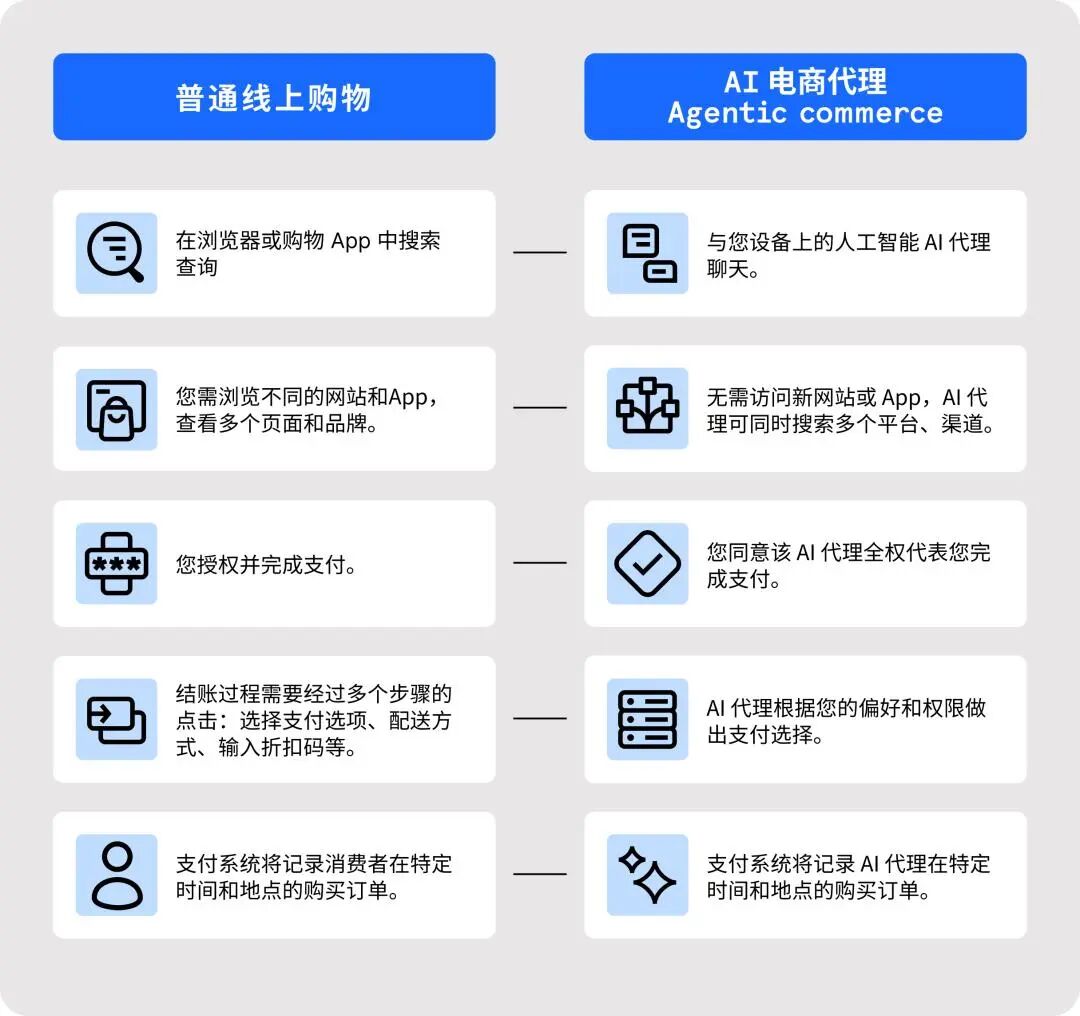
Checkout.com 2025 E-commerce Report
This is particularly vexing given large models' susceptibility to hallucinations and polluted data. When consumers discover AI-recommended "lowest prices" originate from unencrypted phishing sites, the convenience wrought by technology faces severe trust crises.
Black Friday 2025 underscored AI's capacity to usurp core retail operations. The changes are structural: search bars yield to dialog boxes, impulse buying to rational calculation. The shifts witnessed in this year's overseas Black Friday will likely manifest in China's 618, Double 11, and Double 12 next year. For domestic e-commerce platforms adept at micro-level tactics, the question becomes: Can homegrown AI models penetrate their "tricks"? This may matter more than scoring high on benchmarks.
Image Source: Network
For e-commerce platforms, future competition may not hinge on coupons or complex discounts—AI renders human calculations trivial. Instead, victory hinges on crafting friendlier "AI interfaces." Tomorrow's e-commerce giants may need to master "AI deception" alongside exploiting human nature. However, companies balancing e-commerce and AI promotion confront an intriguing dilemma: How to reconcile these conflicting priorities? This trend warrants long-term observation. In an era where "AI agents" gradually assume control, human consumption-driven dopamine may metamorphose into GPU computational power—a sobering thought.
-
![]()
Alibaba's AI Offensive: Over Half of Investment Allocated, Time to Reap Returns
-
![]()
Alibaba’s AI Push: Over Half of Investments Made, Time to Harvest Returns
-
![]()
Chinese Enterprises Going Global 3.0: From World Factory to AI Infrastructure Builder
-
![]()
Honor RobotPhone Review: Half Movie Camera, Half Robot
-
![]()
AI-Driven Cheating Surges in Universities! Online Exams Reduced to Mere Formalities, Degree Credibility on the Line
-
Insta360’s Decade in Panoramic Imaging: Making Cameras ‘Invisible’ and Returning Creation to the Masses
-
![]()
Foreign Media Claims Apple is Concentrating Resources on AI Development: Vision Pro and Siri Teams Lay Off 200 People
-
Big News! Huaneng and Huawei Hold Talks in Shenzhen with Ren Zhengfei in Attendance; Huawei Emerging as the 'Second Brain' of China's Energy System