Doubao: The Table-Flipping Disruptor Challenging Tech Giants’ Ecosystem Fortresses
 12/10 2025
 709
709
Source | Benyuan Finance
Author | Yu Shuya
An AI-powered smartphone, seamlessly integrated with ByteDance’s “Doubao Mobile Assistant,” has stormed onto the market, igniting both industry upheaval and a defensive “blockade” from tech incumbents. This innovation directly threatens the mobile internet’s most coveted assets: system-level control over traffic flow and user entry points.
Unlike conventional voice assistants such as Siri, the official demo reveals a paradigm shift. Users can simply command, “Help me compare prices across platforms and place an order,” and the AI autonomously executes cross-platform price checks on Taobao, JD.com, and Pinduoduo, redirecting to the cheapest option. Basic functionalities span ticket bookings, photo editing, and WeChat message replies, while advanced features include resume submissions, mini-game operations, and even earning coins via Pinduoduo video streams, traffic incentives on Douyin Lite, and AI-driven gameplay in Honor of Kings.
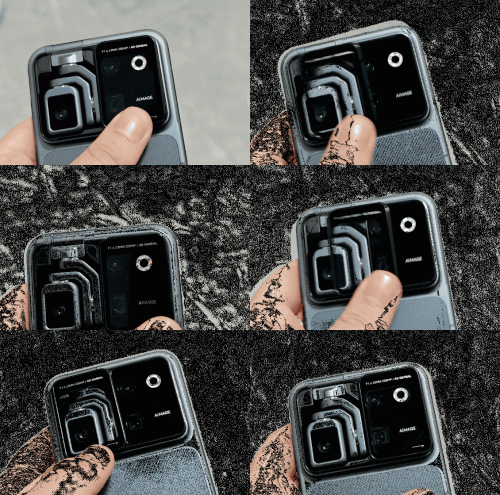
Enthusiastic consumers quickly cleared out the initial stock of the 3,499-yuan nubia M153, with the next batch reportedly delayed until 2026 due to overwhelming demand.
However, app developers have responded with a coordinated “blockade.”
The day after Doubao Mobile’s launch, WeChat users encountered warnings about “abnormal login environments,” with some accounts suspended. Multiple apps, including Taobao, Xianyu, and banking platforms from the Agricultural Bank of China and China Construction Bank, triggered “security warnings” and forced exits when interacting with Doubao Mobile Assistant.
ByteDance’s assurance that Doubao Mobile Assistant does not engage in hacking did little to mollify critics.
Why has the entire mobile internet ecosystem perceived Doubao Mobile as an existential threat?
Doubao Mobile Assistant’s technical framework, known as GUI Agent, relies on “screen reading and simulated clicks,” leveraging low-level permissions like INJECT_EVENTS. With high-risk OS privileges, it operates as a “divine hand,” seamlessly invoking cross-app functions and accessing vast troves of third-party data—a direct assault on developers’ ecological risk controls.
More critically, it dismantles the traditional traffic logic system.
Historically, user journeys—app searches, clicks, dwell time, and navigation—were intricately tied to app distribution, traffic referral, and monetization strategies. With AI’s “Help me buy” command bypassing all app entry and revenue logic, traffic giants risk being reduced from “landlords” to “laborers”—a scenario no stakeholder will tolerate.
Not only app developers but also smartphone manufacturers are reluctant to surrender desktop control.
At Huawei’s June Developer Conference, HarmonyOS 6 showcased early system-level AI capabilities, while Apple’s Siri is evolving toward system-layer execution. Future Apple Intelligence aims to reconstruct cross-app collaboration and operational pathways. Xiaomi, Honor, OPPO, and Vivo are also advancing, leveraging technical expertise to potentially launch more stable, ecosystem-integrated AI agents and outpace rivals.
On the 5th, under mounting pressure, the Doubao team imposed restrictions on financial operations, gaming activities, and score-farming incentives.
Some interpret this as ByteDance retreating, but the reality suggests otherwise: it signals Doubao’s intent to remain at the negotiating table and reshape industry standards.
In the AI era, identifying suitable hardware carriers is urgent, and smartphones—with their ubiquitous presence—are the ideal choice.
ByteDance CEO Liang Rubo revealed in February that the internal hardware team, Ocean, has merged members from PICO VR and Ola Dance smart earphone projects to pursue a “large model + super app + hardware terminal” trifecta ecosystem.
Embedding large models into smartphones is a cornerstone of ByteDance’s AI hardware strategy.
As early as late 2018, ByteDance acquired patents and the Nut Phone (Smartisan) team from Smartisan Technologies. Eager users have even detected remnants of Smartisan OS code in the latest Doubao AI Assistant.
According to Yicai Global, “Doubao Mobile is essentially a ByteDance-developed device, but under pressure, it’s framed as a collaboration. In reality, ZTE is merely the manufacturer.”
Zhang Yiming has a proven track record in product innovation. Reviewing a decade-old financing PPT, nearly all targets have been realized, with ByteDance single-handedly reshaping the BAT (Baidu, Alibaba, Tencent) landscape.
Today’s Headlines validated information distribution models; Douyin and its e-commerce operations demonstrated the fusion of commerce and content; and local services expanded boundaries, securing control over mobile internet’s core entry points.
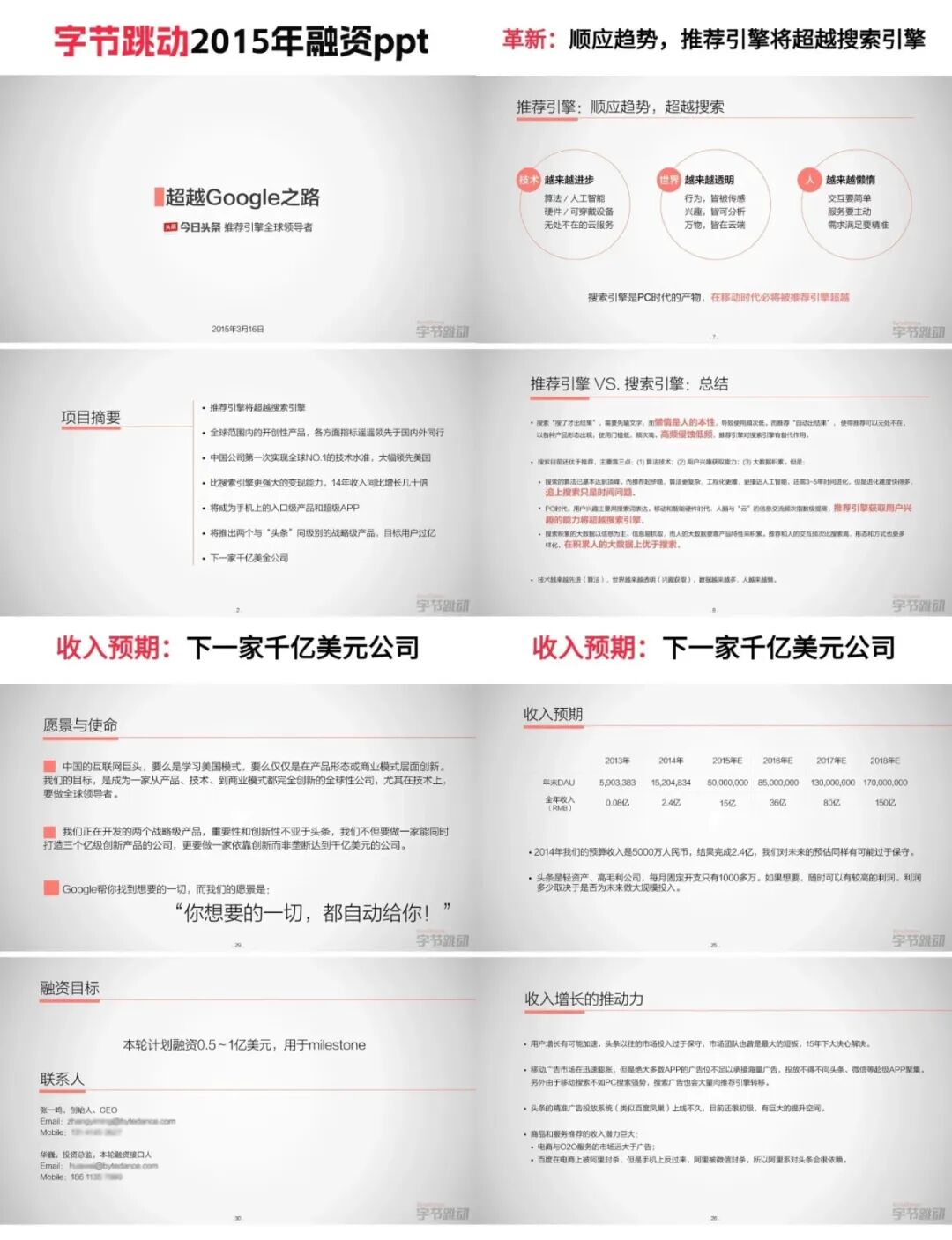
Today’s AI smartphones are even more disruptive, “flipping the table” on traditional norms.
New technology adoption inevitably faces hurdles in adaptation, privacy, and ecosystem disruption...
Behind the clash between AI agents and apps over traffic entry points lies a reconfiguration of profit distribution and business models. Yet the trend is irreversible—a technological revolution, as Luo Yonghao noted, that cannot be halted.
Developmental challenges must ultimately be resolved through progress, not avoidance.
end
-
![]()
Alibaba's AI Offensive: Over Half of Investment Allocated, Time to Reap Returns
-
![]()
Alibaba’s AI Push: Over Half of Investments Made, Time to Harvest Returns
-
![]()
Chinese Enterprises Going Global 3.0: From World Factory to AI Infrastructure Builder
-
![]()
Honor RobotPhone Review: Half Movie Camera, Half Robot
-
![]()
AI-Driven Cheating Surges in Universities! Online Exams Reduced to Mere Formalities, Degree Credibility on the Line
-
Insta360’s Decade in Panoramic Imaging: Making Cameras ‘Invisible’ and Returning Creation to the Masses
-
![]()
Foreign Media Claims Apple is Concentrating Resources on AI Development: Vision Pro and Siri Teams Lay Off 200 People
-
Big News! Huaneng and Huawei Hold Talks in Shenzhen with Ren Zhengfei in Attendance; Huawei Emerging as the 'Second Brain' of China's Energy System