The 'Aggressive' Logic Behind the 180,000-Yuan Price Tag: How China's Supply Chain Outmaneuvered Silicon Valley with the ZQ T800
 12/11 2025
 565
565
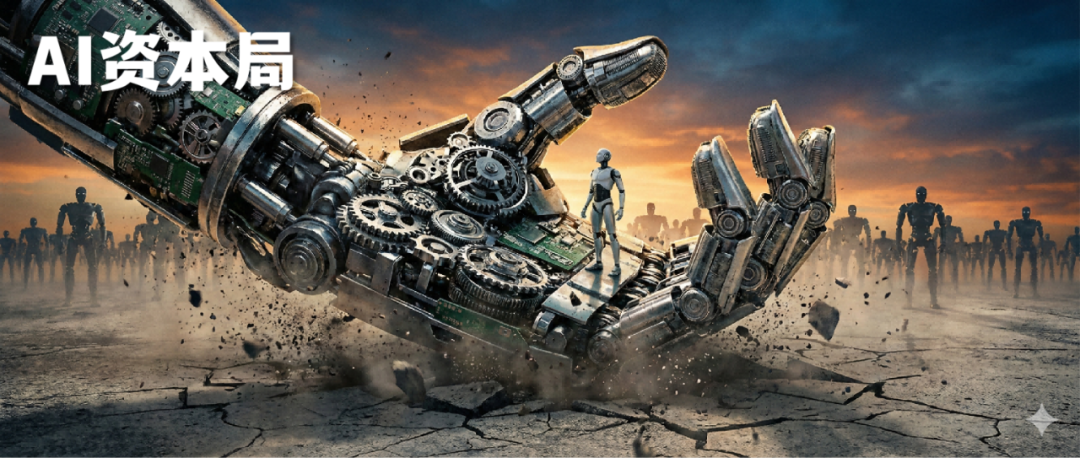
About two years ago, the robotics community followed an unspoken rule: Boston Dynamics stole the spotlight with backflips and parkour on stage, leaving other companies sitting on the sidelines (figuratively 'under the stage'), applauding while scrambling to decipher the mechanics behind those moves.
Then came Unitree's viral Spring Festival Gala robot performance and its breakthroughs in combat robots, followed by a surge of activity from China's embodied AI sector. The launch of the ZQ T800 sent an unmistakable message: the script has been rewritten entirely.
When the T800 slashed the price of full-sized humanoid robots to 180,000 yuan (approximately $25,000) while delivering full-stack, self-developed technical specifications, the roles of audience and performer effectively reversed. Now, the scene features Boston Dynamics watching Chinese peers 'strut their stuff.'
Except China isn't flaunting flashy acrobatics—it's showcasing what Americans currently lack and find hardest to replicate: an unparalleled supply chain advantage.
A Different Dimension of 'Showmanship': Industrial-Grade Mastery
What defines 'showmanship'? Previously, we equated it with robots performing athletic feats like professionals. But in industrial terms, that's more akin to laboratory-scale experimentation.
True industrial-grade 'showmanship' is what ZQ embodies: transforming a highly complex electromechanical system into a standardized industrial product affordable even for small factories, within extremely short production cycles. It's what Unitree exemplifies: selling high-end motors and reducers as if they were everyday commodities.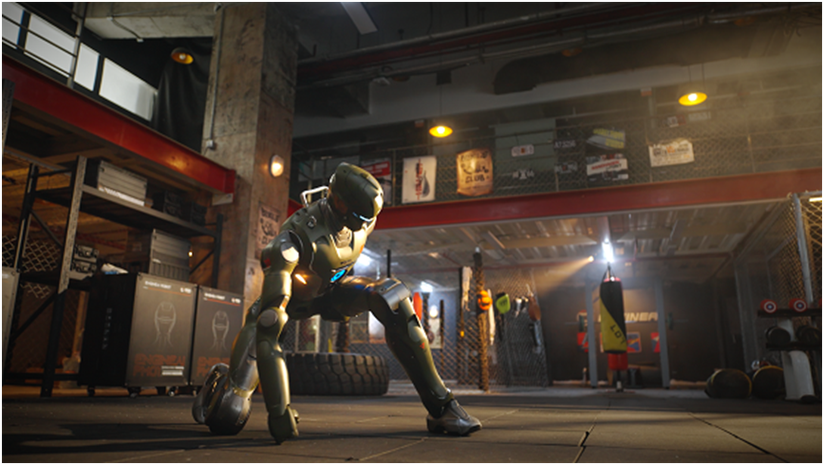
This capability may be tougher for Boston Dynamics to master than backflips.
While Boston Dynamics' Atlas boasts unique strengths, it resembles a handcrafted prototype car where every component demands customization, supported by a fragmented and costly supply chain. Chinese robotics, by contrast, now operates like mass-produced vehicles rolling off the assembly line. We're leveraging 'industrial system depth' to outmatch 'single-point technology sharpness.' This ability to rapidly democratize and scale high-end technologies represents the ultimate form of industrial prowess.
The Actual 'Chokehold' Is on Americans
To put it bluntly, in the humanoid robot race, U.S. companies now confront awkward supply chain realities—arguably placing them in a 'developing nation' position compared to China.
Dissecting the ZQ T800 or products from any leading domestic manufacturer reveals a stark truth: we can assemble a robot almost entirely within the 'express delivery zone' (the Yangtze River Delta).
● Core joints: Domestic motor manufacturers have achieved world-class power density at a fraction of foreign costs.
● Precision transmission: Harmonic reducers once monopolized by Japan are now mass-produced by Chinese firms like Leader Harmonic, delivering sufficient performance at competitive prices.
● Batteries and perception: The T800 uses solid-state batteries, thanks to China's most aggressive new energy battery supply chain. For vision systems, we possess the world's leading visual recognition technology and the largest security verification scenarios, driving superior spatial intelligence models.
In contrast, Boston Dynamics or Agility Robotics face fragmented supply chains. They may excel in hydraulic control or AI algorithms, but scaling production exposes a lack of local motor factories, skilled assembly workers, or even suppliers capable of rapid mold adjustments.
This supply chain 'desertification' forces their products to remain priced at hundreds of thousands of dollars. Watching Chinese peers deliver 80-90% performance at one-tenth the cost—isn't that a 'dimensional strike'?
From 'Spectators' to 'Panic'
Americans once dismissed Chinese robots as 'imitators'; now they perceive them as heavily armed 'barbarians.'
The T800's launch shattered this illusion. It proves Chinese companies no longer settle for cheap alternatives but now define product standards through supply chain advantages: 1.73m height, full-stack self-development, ultra-long endurance, and an 180,000-yuan price tag. Once this standard is set, U.S. firms—no matter how technically advanced—will struggle commercially.
This mirrors DJI's drone dominance: once it occupied the 'performance+price' niche, competitors couldn't even enter the market.
So, stop assuming we're merely stacking components. In modern industrial warfare, stacking requires having 'materials' to stack—and doing it cheaper and faster than anyone else.
China's robotics industry, backed by a colossal, precise, and efficient supply chain 'dragon,' is demonstrating far more shocking (literally 'earth-shaking') 'muscle': not the ability to flip, but to rewrite global manufacturing.
Times have changed. Now it's their turn to sit on the sidelines (under the stage) and watch our performance.
-
![]()
Alibaba's AI Offensive: Over Half of Investment Allocated, Time to Reap Returns
-
![]()
Alibaba’s AI Push: Over Half of Investments Made, Time to Harvest Returns
-
![]()
Chinese Enterprises Going Global 3.0: From World Factory to AI Infrastructure Builder
-
![]()
Honor RobotPhone Review: Half Movie Camera, Half Robot
-
![]()
AI-Driven Cheating Surges in Universities! Online Exams Reduced to Mere Formalities, Degree Credibility on the Line
-
Insta360’s Decade in Panoramic Imaging: Making Cameras ‘Invisible’ and Returning Creation to the Masses
-
![]()
Foreign Media Claims Apple is Concentrating Resources on AI Development: Vision Pro and Siri Teams Lay Off 200 People
-
Big News! Huaneng and Huawei Hold Talks in Shenzhen with Ren Zhengfei in Attendance; Huawei Emerging as the 'Second Brain' of China's Energy System