Qianwen's Surge: Can Alibaba's AI Break Through?
 12/11 2025
 683
683
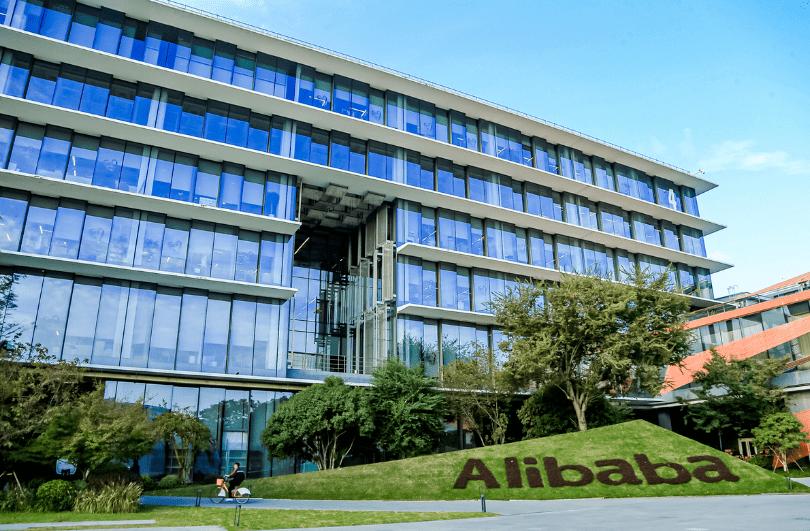
From 'Traffic Anxiety' to 'Breakthrough Entry': Can Alibaba Qianwen Reshape the AI Battlefield?
Written by / Sun Yuhao
Edited by / Chen Xiaoxiao

On December 3rd, the AI industry list 'AI Product Rankings' released its latest monthly data, revealing that Alibaba's newly launched Qianwen App has secured the top spot on the global AI application growth chart with explosive growth. Its monthly active user growth rate reached a staggering 149.03%, with downloads surpassing 10 million within just one week of its launch.

It is evident that Qianwen, leveraging technological breakthroughs, precise positioning, and ecological synergy, has the potential to become Alibaba's core entry point in the AI era.
The success of Alibaba Qianwen is no accident; it is backed by Alibaba's long-term technological deep cultivation (shēn gēng, meaning 'deep cultivation') in the AI field. From integrating the specialized learning large model Qwen3-Learning, trained for learning scenarios, to relying on the Qwen series models and accessing Tongyi Lab's most powerful Qwen3-Max, Alibaba's accumulation of underlying large model capabilities has endowed Qianwen with a strong technological foundation.
Meanwhile, Qianwen has achieved outstanding results in various high-difficulty global exams and competitions.
In the SAT, hailed as the 'gold standard' for American university admissions, Qianwen scored 1580, surpassing 99% of global test-takers and reaching the admission standards of top-tier institutions like Harvard, Stanford, and MIT. The SAT not only assesses academic knowledge but also emphasizes logical reasoning and critical thinking, making this achievement highly valuable due to its difficulty and international recognition.
Qianwen also excels in competitive professional qualification exams with low pass rates.
Qianwen passed the objective test of China's National Unified Legal Professional Qualification Examination with a score of 245 and achieved excellent results in various exams such as the Economic Law and Tax Law sections of the Certified Public Accountant (CPA) Examination.
This is attributed to Qianwen's integration of the Qwen3-Learning model, which is based on Qwen3 and trained with trillion-level educational data. It deeply integrates examination systems and a vast number of real questions from over 30 countries worldwide, possessing cross-cultural and multilingual problem-solving abilities and capable of deeply analyzing complex knowledge systems and answering techniques.
With the support of the new model, Qianwen's capabilities have been significantly enhanced.
When explaining questions, Qianwen simulates the teaching approach of human teachers, meticulously dissecting knowledge points and exam points, and clearly presenting the problem-solving process step by step. Extensive real question training has greatly improved its answer accuracy, making it the most accurate and reliable problem-solving tool in China.
In terms of homework correction, Qianwen can not only grade entire pages of assignments but also generate structured intelligent summaries and provide in-depth explanations for incorrect answers.
However, the domestic AI application market is fiercely competitive, with leading apps like Doubao already occupying a dominant position. Although Qianwen possesses strong technological capabilities, as a latecomer, it faces enormous challenges in competing for users and traffic, making it no easy feat to stand out.

Furthermore, the deep integration of Qianwen with the Quark AI Browser marks a significant step in Alibaba's AI strategy.
The rise of AI is driving the PC end back to the center of productivity tools. As the most core entry point on computers, browsers cover almost all scenarios where users acquire information and perform tasks, offering vast potential for AI assistants.
After the mobile end, Qianwen's foray into the PC end is expected to become its 'golden entry point' for maximizing value.
IDC report predicts that by 2028, the annual shipment of PCs equipped with AI functions in China will be 60 times that of 2024, fully confirming the strong demand for AI functions on the PC end.
From the perspective of market competition, although various AI browsers seem fiercely competitive, no leader has emerged yet.
Google's Chrome dominates approximately 70% of the global browser market share, but its progress in advancing AI has been relatively conservative, merely treating AI as an 'add-on'.
OpenAI's first AI-driven browser, Atlas, focuses on 'agents + scenario implementation'. However, its multi-platform adaptation is not yet complete, and agents still have limitations in handling complex tasks, resulting in a low user base.
In contrast, Qianwen directly becomes the 'system foundation' of the Quark AI Browser. This deep integration upgrades Qianwen from an 'auxiliary tool for web browsing' to a 'system-level task assistant', offering a user experience entirely different from the 'AI plugin model'.
In terms of product form and user experience, the integration of Qianwen and Quark has made differentiated innovations.
Qianwen is deeply embedded in the interface, continuing Quark's consistent simple page design while planning various companion forms to facilitate user invocation and interaction with AI.
Users can directly invoke Qianwen from the search box and sidebar on Quark's homepage without switching tabs, reducing repetitive operation steps. They can take Qianwen out anytime and anywhere to achieve 'browsing while conversing, watching while summarizing, and asking while answering'.
This interaction's smoothness precisely addresses the pain points of workers who need to handle multiple tasks simultaneously and binge-watchers who enjoy chatting with AI while watching TV dramas.
Quark has taken a bold step in leveraging system-level capabilities.
Users can keep Qianwen 'resident on the desktop' and directly invoke the Qianwen AI assistant to handle tasks without opening the Quark AI Browser. The six 'Qianwen Intelligent Suites', including the Qianwen floating ball, Qianwen word selection, and Qianwen screenshot, permeate high-frequency scenarios such as searching, reading, document writing, and file processing.
For example, when a user opens a Word document research report and encounters an unfamiliar professional term, they can take a screenshot and tell Qianwen, eliminating the need to open a browser, copy, and paste. By sharing the screen, they can let Qianwen directly handle the task. This experience subverts the existing logic of traditional browsers, amplifying convenience, power, and usability.
However, the deep integration of Qianwen and the Quark AI Browser, becoming a 'system foundation', brings a fresh experience.
Nevertheless, constructing an ecosystem is not achieved overnight. Although Alibaba possesses a vast ecological system, it still needs to overcome numerous technical and operational challenges to achieve seamless collaboration among various business segments and create a truly 'unified' super entry point. Moreover, changing user habits is no easy task.

As a key move in Alibaba's AI strategy, the integration of Qianwen and Quark will have an exponential impact. Qianwen, as Alibaba's core AI engine for the consumer end, will systematically reshape the underlying capabilities of its affiliated products.
'The synergistic effect between AI and the broader Alibaba ecosystem is a powerful multiplier,' said Wu Yongming, CEO of Alibaba Group, in a conference call on November 25th. Based on AI models and Alibaba's ecological advantages, the Qianwen APP is expected to take the lead in creating future AI lifestyle entry points, providing users with immense consumption value.
While AItoB is accelerating its growth, Alibaba is fully committing to AItoC, aiming to retain users within the Alibaba ecosystem by reducing user operation steps and improving decision-making efficiency.
McKinsey predicts that by 2030, the global AItoC market size will reach US$1.3 trillion, with an average annual growth rate exceeding 35%. Moreover, Chinese consumers' AI usage habits are forming.
'Qianwen' deeply integrates with Taobao, Ele.me, Fliggy, and other platforms, penetrating AI capabilities into high-frequency scenarios such as e-commerce shopping, food delivery ordering, and travel planning, creating an intelligent bridge connecting users with a vast array of lifestyle services.
For example, when shopping on Taobao, Qianwen can recommend products that better meet users' needs based on their historical purchase records and browsing preferences. When ordering food delivery, Qianwen can provide personalized menu recommendations based on users' taste preferences and dietary restrictions. When planning travel, Qianwen can create detailed travel plans based on users' travel time, budget, and interests.
Alibaba's journey in the AI entry point competition has not been smooth sailing.
Over the past two years, domestic AI applications have emerged crazy (fēng kuáng, meaning ' crazy ' or 'wildly') in number, and Alibaba's presence in the consumer-end market was noticeably weak.
Today, although Qianwen, Lingguang, and Quark have successively made their moves, gradually expanding Alibaba's layout in the AI To C battlefield, numerous early-moving competitors have already occupied this entry point. Led by Doubao, apps like Kimi, Wenxin, and Yuanbao are also eyeing the opportunity.
According to the 2025 Q3 AI Application Industry Report released by QuestMobile, Doubao, under ByteDance, topped the chart with 172 million monthly active users, surpassing Deepseek's 144 million. Tencent Yuanbao, although ranking third, had only 32.86 million monthly active users, not on the same scale as the top two.
Alibaba has the determination, financial resources, and technology, but the competition for entry points will not be easily won. In competing with 'newcomers', Alibaba has shifted from offense to defense and is about to be embroiled in a protracted and comprehensive war.
Entering the application layer, Alibaba must first face ByteDance, a formidable opponent. ByteDance not only possesses Doubao but also sees rapid user growth in Jimeng. Its ambition is to form a complete closed loop (bì huán, meaning 'closed loop'), enabling users to achieve search, shopping, consumption, and other services within this loop without opening other apps or browsers in the future.
Allowing one of China's largest traffic pools to become a new-generation super entry point and turning traditional e-commerce into a mere 'shelf' would be a nightmare for Alibaba.
Moreover, Douyin E-commerce is developing rapidly, with its payment GMV in the first ten months of this year approaching that of Pinduoduo, and its advertising revenue last year already surpassing Alibaba's.
On one hand, there is the competition for new AI entry points; on the other hand, there is the fierce battle for the e-commerce foundational market. Alibaba and ByteDance are about to engage in a comprehensive war, with ByteDance more resembling a dominant 'defender' this time.
In summary, Alibaba aims to target the first entry point in the user era through a multi-product layout in the AI To C battlefield with Qianwen, Lingguang, Quark, and others. Moreover, the potential for integrating Qianwen with e-commerce and other businesses is immense. However, on one hand, Alibaba is simultaneously engaged in battles in the food delivery and AI sectors, leading to increased financial pressure and a decline in cash reserves. On the other hand, as ByteDance, Tencent, and others advance in the e-commerce and AI sectors, competition for traffic is becoming increasingly difficult. The cost of acquiring high-quality users and traffic from other giants will increase in the future, posing challenges for Qianwen in traffic acquisition.
Conclusion
In the AI era, whether an application can become a hit is often not solely determined by technological factors. Technology, scenarios, and innovation are all indispensable.
Alibaba's approach of 'holding technology to find scenarios' incurs higher costs than ByteDance's.
ByteDance tends to 'develop AI within scenarios', cultivating and creating AI applications based on core scenarios like short videos and social media, and continuously updating and upgrading them within these scenarios. To complete the closed loop (bì huán, meaning 'closed loop'), Alibaba must first turn 'Qianwen' into a traffic source, which is not achievable solely with financial resources, technology, and determination.
As China's AI large model industry shifts from 'homogenized competition' to 'differentiated breakthroughs', Qianwen achieves high performance at a relatively low computational cost through architectural innovation, constructing a 'reverse moat' in terms of cost-effectiveness and engineering speed in model deployment.
However, Chinese AI companies are vulnerable in the underlying computational power supply chain and have path dependencies in original innovative algorithms. In contrast, the United States possesses advanced GPU clusters and top algorithm scientists. To maintain a leading position in future competition, Qianwen needs to continuously break through in areas like underlying computational power.
From a global AI competition perspective, the United States holds core advantages in closed-source technological paths, leveraging its deep accumulation in computational power, algorithms, and talent. In contrast, China has chosen the open-source ecosystem as its strategic direction for AI development. This choice not only effectively mitigates AI supply chain risks and external technological blockades but also drives China to achieve key technological breakthroughs in AI. Although regions like Europe have also made relevant layouts, they are generally still in the catching-up phase and have not yet constructed a model architecture system with global influence.
In conclusion, our future looks promising!
-
![]()
Alibaba's AI Offensive: Over Half of Investment Allocated, Time to Reap Returns
-
![]()
Alibaba’s AI Push: Over Half of Investments Made, Time to Harvest Returns
-
![]()
Chinese Enterprises Going Global 3.0: From World Factory to AI Infrastructure Builder
-
![]()
Honor RobotPhone Review: Half Movie Camera, Half Robot
-
![]()
AI-Driven Cheating Surges in Universities! Online Exams Reduced to Mere Formalities, Degree Credibility on the Line
-
Insta360’s Decade in Panoramic Imaging: Making Cameras ‘Invisible’ and Returning Creation to the Masses
-
![]()
Foreign Media Claims Apple is Concentrating Resources on AI Development: Vision Pro and Siri Teams Lay Off 200 People
-
Big News! Huaneng and Huawei Hold Talks in Shenzhen with Ren Zhengfei in Attendance; Huawei Emerging as the 'Second Brain' of China's Energy System