Diguang Robotics: Empowering Everyone to Build Robots
 12/12 2025
 627
627
Produced by Zhineng Zhixin
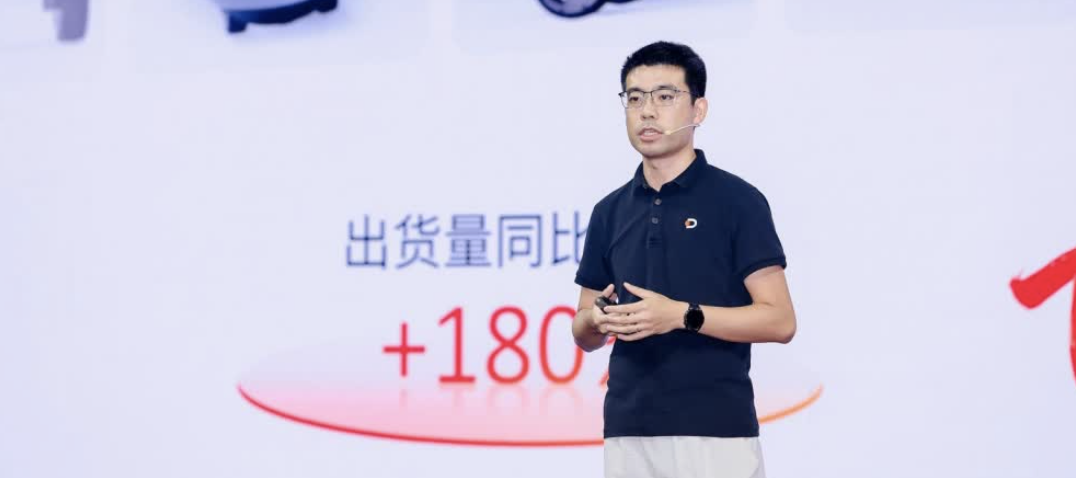
At this year's Horizon Technology Ecosystem Conference, Hu Chunxu, the leader of the Diguang Robotics Ecosystem, shared his insights on facilitating robot innovation and iteration.
Diguang Robotics offers a practical, engineering-oriented approach, exploring why robots can be built and how they can be genuinely utilized by a broader range of developers, enterprises, and ordinary individuals.
Furthermore, with the advancement of AI, we are keenly interested in when robots will become a commonplace part of daily life and how they will seamlessly integrate into both home and work environments. Diguang Robotics has charted a feasible course for this transformation.
Part 1: The Most Significant Shift in the Industry—Not Robots Becoming More Powerful, But More People Aspiring to Build Them
When people encounter a robot, they often express, "I want one too." This desire to purchase is unprecedented.
This sentiment underscores a crucial point: Robots now have the potential to become products that the general public genuinely desires to own, rather than remaining distant sci-fi fantasies. However, "wanting to buy" does not equate to "being able to buy," let alone "being able to use."
For robots to become a part of everyday life, they require more than just a robust physical structure. They need a wealth of practical and implementable application ideas, a large pool of enthusiastic developers and enterprises, and a sufficiently mature, affordable, and unified underlying technology platform.
The bottleneck for the robotics industry lies not in technology but in the ecosystem. To make robots ubiquitous, "building robots" must first become a straightforward process.
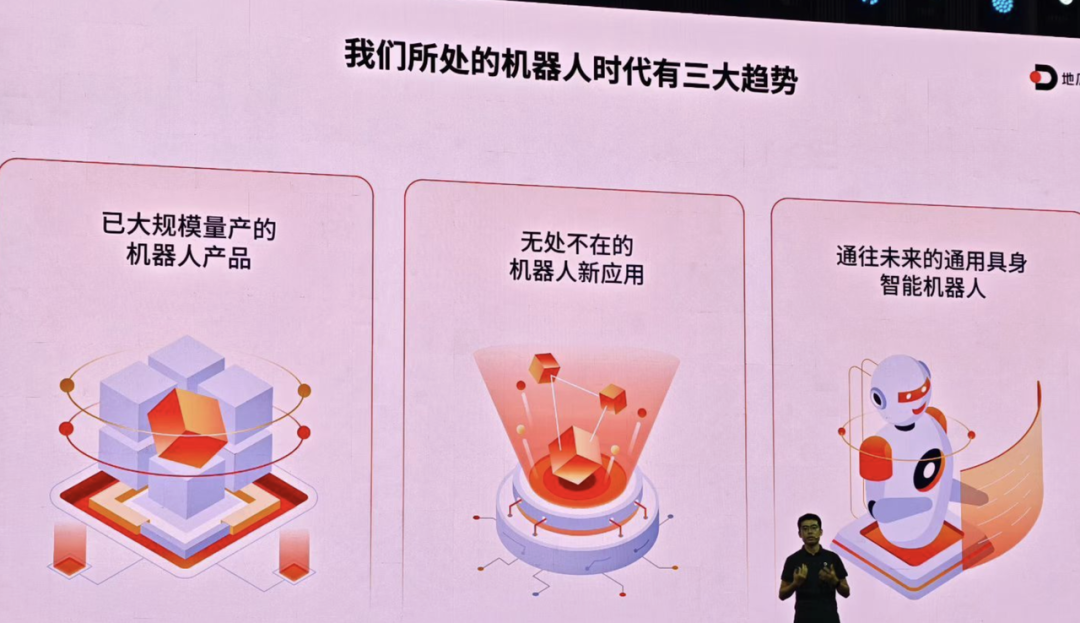
Diguang Robotics focuses on "ecosystem foundations," setting itself apart from companies that pursue isolated breakthroughs. Its vision is to become the cornerstone ecosystem of the future robotic era.
This cornerstone ecosystem enables as many individuals as possible to create robotic products based on Diguang's capabilities, allowing the robotics industry to flourish organically like a forest, rather than being dictated by a few dominant players.
The new logistics robots seen in supermarkets, home robots, and future embodied robots in factories are likely not constructed by Diguang itself but will operate on Diguang's technology stack, determining whether the industry can truly scale.
Part 2: Why Is Building Robots Challenging? Three Core Paths Offer Realistic and Pragmatic Solutions 
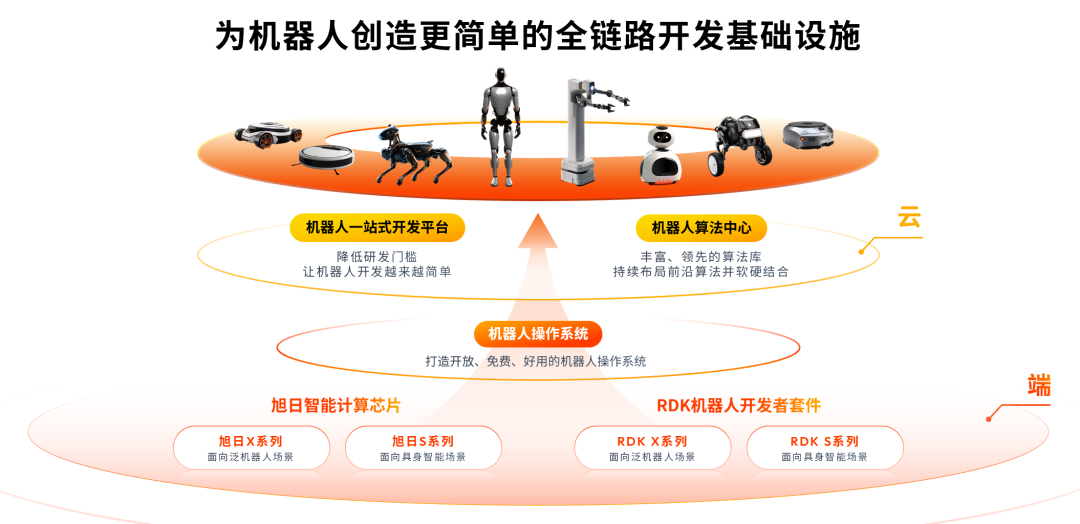
A computing foundation that seamlessly integrates hardware and software necessitates "standardization of the robot's underlying capabilities." Robots are becoming increasingly intricate, with larger models, higher computational demands, and stricter power consumption and real-time requirements. If every company were to start from scratch, they would face numerous challenges in chips, algorithms, motion control, perception, and particularly data closed-loops.
Diguang's solution is to develop a universal "chassis" comprising chips (BPU + CPU + GPU), modules, a comprehensive operating system, ready-to-use algorithms, and a large-scale open-source Model Zoo. This approach allows developers to bypass "reinventing the wheel" and commence from a more advanced stage.
Diguang's S600, with a performance range from 5TOPS to 560TOPS, caters to nearly all types of robots.
Robots are increasingly resembling smartphones, with underlying chips and algorithms paving the way for explosive innovation at the application layer.
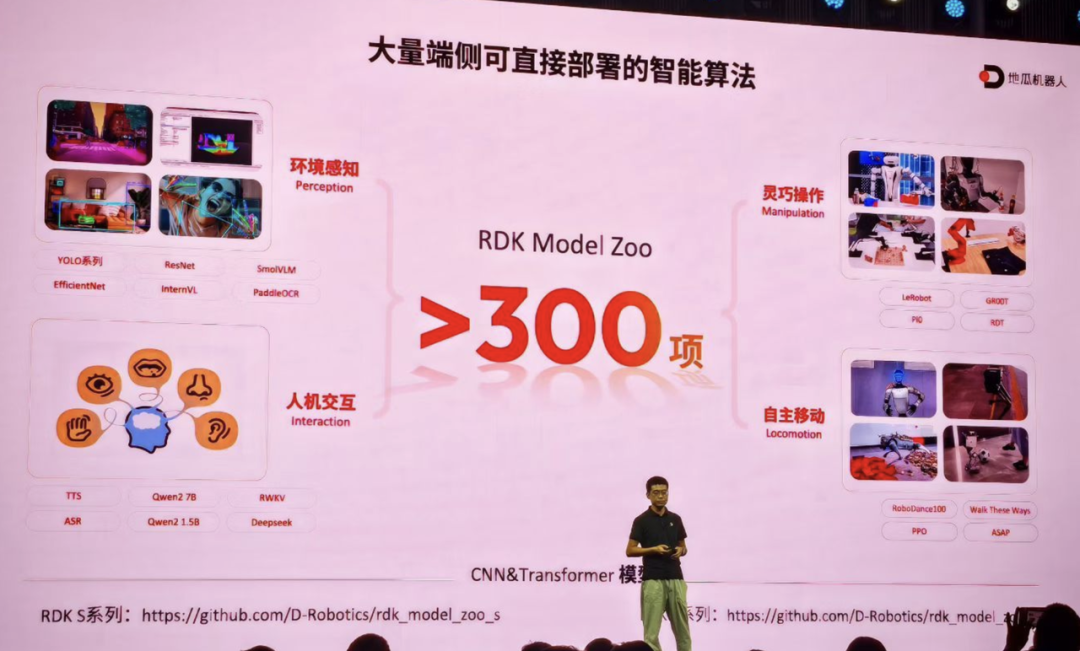
Robots must evolve continuously. On their inaugural day, a robot may function akin to a 3-year-old, progress to resemble a 5-year-old within a week, and attain the capabilities of a 15-year-old within a month.
This evolution stems from three key elements:
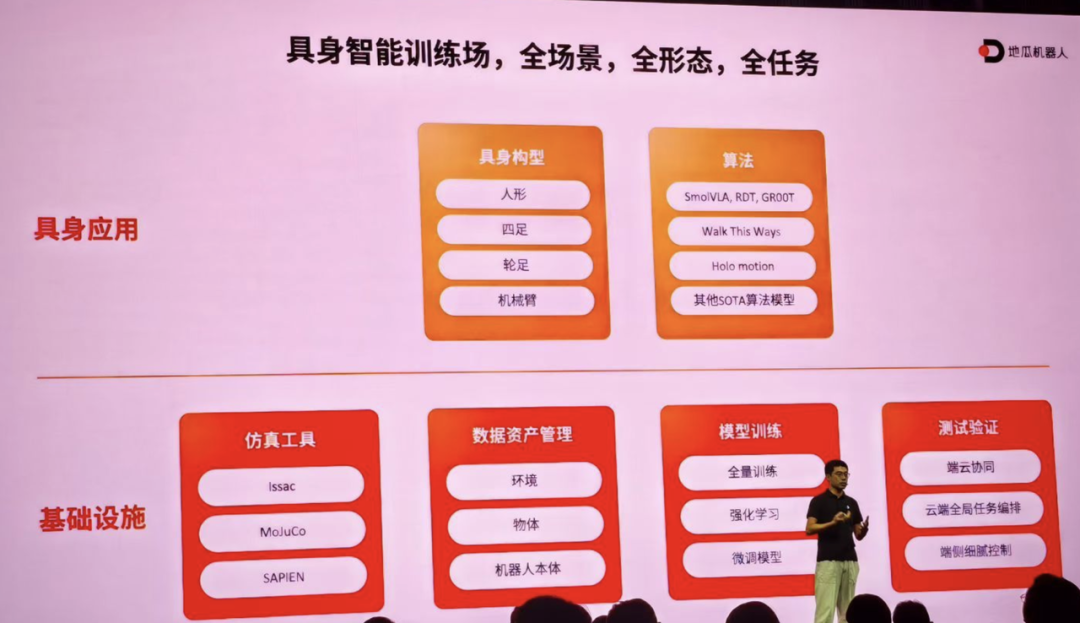
◎ Data closed-loop: Robots continuously upload data → undergo cloud training → quantization → return to the device.
◎ Embodied intelligence training ground: Multi-form robots and algorithms are swiftly validated in the cloud.
◎ Agent service models: Automatically generate task workflows, eliminating the need for engineers to manually code complex logic. Robots do not require "all functions preset" upfront; they become more intelligent through interaction with users—the more they are used, the smarter they become.
Diguang's ecosystem achievements include 100,000 developers, 5,000 open-source projects, 500 partner enterprises, 100 commercial products, and a presence in over 20 countries.
This transformation makes robot-building accessible to all, rather than being a privilege reserved for elite engineers. This shift is pivotal for the industry and renders robots genuinely viable for everyday use.
The core driving force behind the robotic era is whether more individuals, enterprises, and developers can collectively participate in robotic innovation.
The robotics industry has long been perceived as an "engineer's ivory tower," but technologies that genuinely transform the world often emerge from ecosystems rather than isolated breakthroughs (e.g., iPhone, Android, PC, Internet). Robotics is following a similar trajectory. What Diguang Robotics is accomplishing is creating fertile ground for the birth of countless robots.
Summary
The robot revolution will not be sparked by a single "blockbuster product" but by the collaborative efforts of countless developers. The key to robots becoming a part of daily life is not "robots becoming more human-like" but "building robots becoming as straightforward as developing apps." This is precisely what Diguang Robotics is dedicated to achieving.
-
![]()
Alibaba's AI Offensive: Over Half of Investment Allocated, Time to Reap Returns
-
![]()
Alibaba’s AI Push: Over Half of Investments Made, Time to Harvest Returns
-
![]()
Chinese Enterprises Going Global 3.0: From World Factory to AI Infrastructure Builder
-
![]()
Honor RobotPhone Review: Half Movie Camera, Half Robot
-
![]()
AI-Driven Cheating Surges in Universities! Online Exams Reduced to Mere Formalities, Degree Credibility on the Line
-
Insta360’s Decade in Panoramic Imaging: Making Cameras ‘Invisible’ and Returning Creation to the Masses
-
![]()
Foreign Media Claims Apple is Concentrating Resources on AI Development: Vision Pro and Siri Teams Lay Off 200 People
-
Big News! Huaneng and Huawei Hold Talks in Shenzhen with Ren Zhengfei in Attendance; Huawei Emerging as the 'Second Brain' of China's Energy System