Yu Yinan, Vital Power's Founder: Why We Are Confident Robots Will Become a Household Staple
 12/12 2025
 652
652
Presented by Zhineng Technology
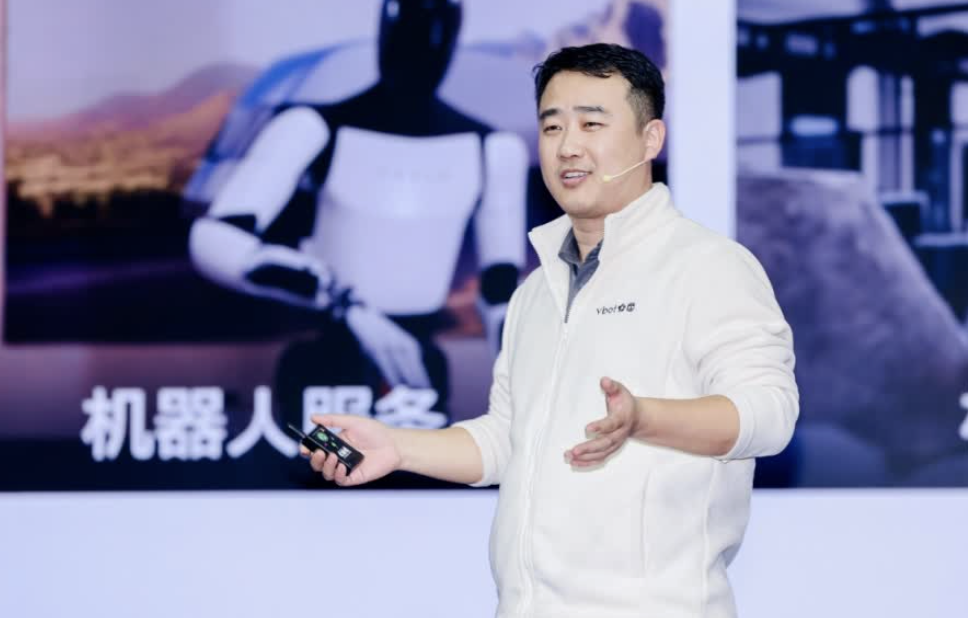
At this year's Horizon Technology Ecosystem Conference, Yu Yinan, the founder and CEO of Vital Power, made a notable return to his former professional sphere, unveiling his latest innovation—Vbot's "Big Head BoBo."
He delved into pivotal inquiries: What opportunities abound in the robotics sector? What technical hurdles must be overcome? And what is the trajectory for consumer-grade robots?
This can be regarded as a public declaration outlining his strategic direction, core beliefs, and anticipated path for the upcoming decade.
01
Yu Yinan's Key Insights:
The robotic age has dawned,
yet truly "everyday-life-integrated robots" are still a rarity
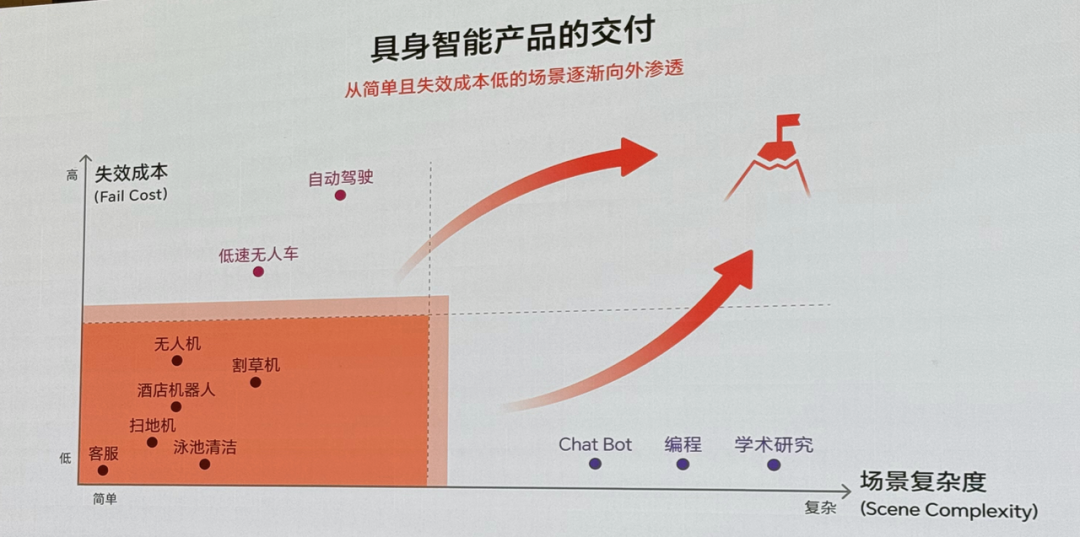
Yu Yinan's profound insights stem from observing the industry's dichotomy: Robots showcased in online videos appear "omnipotent," yet real-world applications are confined to floor-cleaning, lawn-mowing, and food-delivery robots.
The market is vibrant, and investment is flowing, but robots capable of seamlessly integrating into households are exceedingly scarce. The industry's primary challenge lies not in a dearth of technical advancements but in a shortage of "user-centric robots that can operate reliably in everyday settings."
This perspective is deeply rooted in his decade-long experience in autonomous driving—domestic environments are far more intricate than industrial settings, and consumer-grade products are significantly more challenging to develop than research prototypes.
Thus, from the inception of his entrepreneurial journey, he posed a critical question to himself: "What endeavor can I commit to for a decade?" His response was to create robots accessible to every household.
It took automobiles a century to permeate millions of homes; robots may embark on a similar trajectory in the next decade.
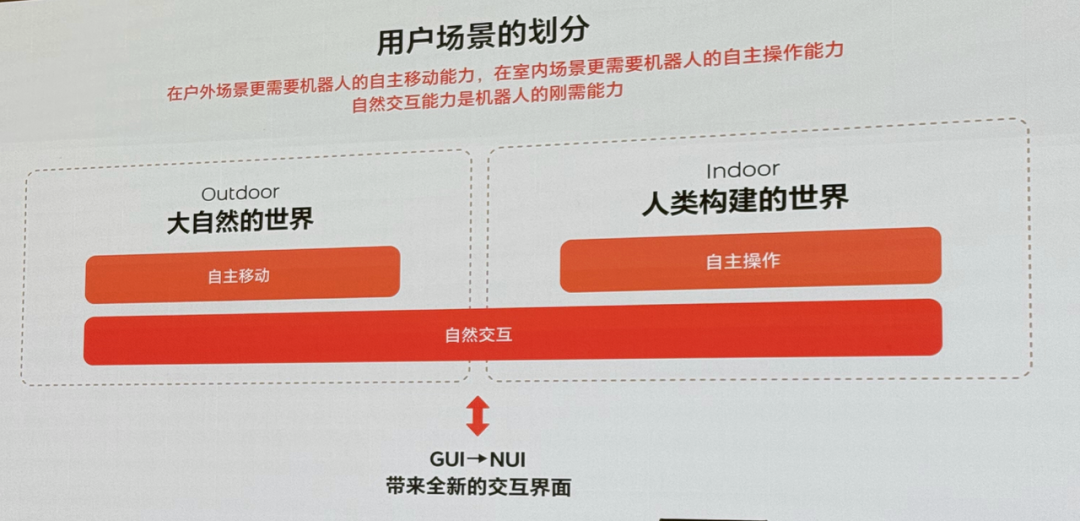
Robots necessitate "triple intelligence"—embodied, spatial, and agentic
Yu Yinan dissected robots into three tiers of "intelligence stacks," the most systematic and pivotal aspect of his discourse:
◎ Embodied intelligence (cerebellum): Determines a robot's ability to move, ascend stairs, walk, and maintain equilibrium.
◎ Spatial intelligence (brain): Empowers robots to comprehend their surroundings, perceive stairs, recognize obstacles, and assess navigable areas.
◎ Agent intelligence (professional skills): Enables robots to "execute tasks" rather than merely "move"—such as guiding, delivering, patrolling, and providing companionship.
Future robots must embody all three capabilities; otherwise, they cannot effectively function in domestic spaces.
Current quadrupedal robots "walk well" but "lack environmental understanding and task execution." Today's service robots "can perform tasks" but "cannot ascend stairs or adapt to complex household settings." Vbot aims to bridge this structural void.
02
What is he constructing?
Developing the inaugural quadrupedal robot truly suited for household living spaces
Yu Yinan's vision is unequivocal:
◎ The product must be consumer-grade, not a mere demonstration or research tool.
◎ It must adapt to household scenarios, not just perform impressive maneuvers on smooth floors.
◎ It must be user-friendly, eliminating the need for remote controls or programming.
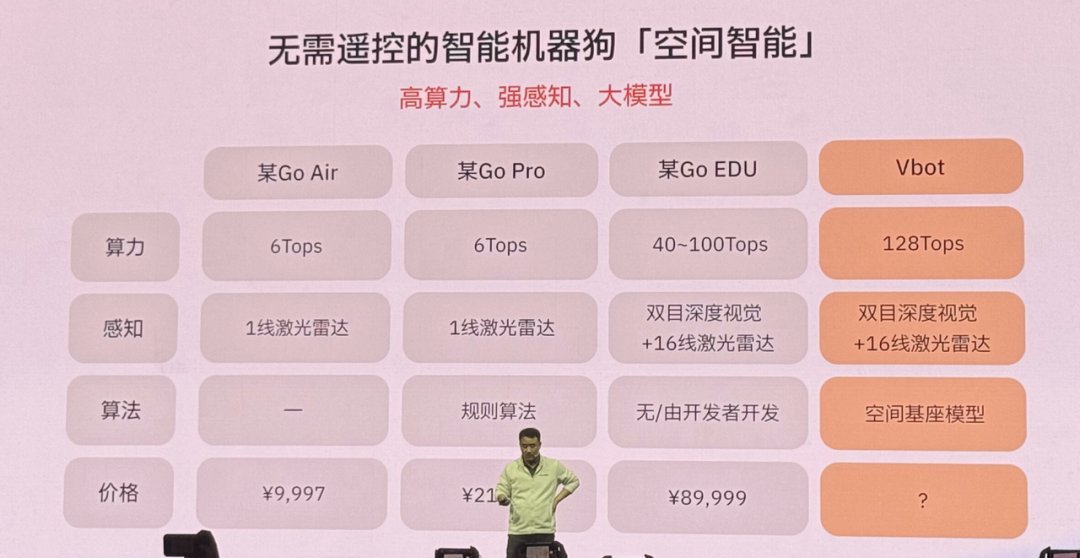
His objective is not to "render robots more captivating" but to "enhance their practicality." The inaugural product, Vbot's "Big Head BoBo," is explicitly positioned as an intelligent robot dog that autonomously operates in living spaces without remote control, comprehends its environment, and navigates independently.
With a decade of experience in autonomous driving, Yu Yinan's robotics approach is infused with "autonomous driving principles": from scenario design and technical reliability to full-stack self-research, he adheres to the industry's highest benchmarks.
Addressing embodied intelligence: All-terrain mobility + extended battery life + safety design. It can ascend 95% of household stairs (22cm leg design), operate for 5 hours on a single charge (nearly 600Wh), and mitigate hand-pinching, sharp edges, and child hazards (human-centric design). Consumer-grade users demand usability, safety, and dependability.
Vbot's sensor array is highly sophisticated:
◎ 360° UWB◎ 360° LiDAR◎ Quad-microphone array
◎ Binocular depth cameras
◎ Horizon S100P with 128TOPS computing power
This is akin to integrating an advanced driver-assistance system into a robot's framework. The robot can "expand its field of view" by turning its head, achieving significantly higher computing utilization than autonomous vehicles. A robot is not a "miniaturized car" but a novel intelligent entity.
Agent intelligence: Empowering robots to "behave like humans" with three core competencies:
◎ Intelligent following and companionship (can navigate and carry items for you)◎ Environmental memory and fixed-route tasks (in homes, hotels, malls)◎ Physical Agent experiments: Autonomous behavior generation
Particularly noteworthy is Physical Agent, where robots exhibit curiosity about their shadows, engage in interactions, dance, and proactively greet humans. The objective is not a "mechanical runner" but a "companion with behavioral logic."
Quadrupedal robot technology has matured sufficiently for household use, yet true consumer-grade products remain elusive. Future robots must adopt autonomous driving architectures to penetrate living spaces.
"Agent + embodied intelligence" will form the bedrock of next-gen human-robot interaction. Robots are not merely the next consumer electronics but the next intelligent terminals.
Summary
Yu Yinan envisions robots becoming as indispensable to daily life as cars are today; household robots must possess "all-terrain + spatial comprehension + agentic skills" triple capabilities; the era of consumer-grade robots has genuinely commenced, and our mission is to introduce them into every home.
-
![]()
Alibaba's AI Offensive: Over Half of Investment Allocated, Time to Reap Returns
-
![]()
Alibaba’s AI Push: Over Half of Investments Made, Time to Harvest Returns
-
![]()
Chinese Enterprises Going Global 3.0: From World Factory to AI Infrastructure Builder
-
![]()
Honor RobotPhone Review: Half Movie Camera, Half Robot
-
![]()
AI-Driven Cheating Surges in Universities! Online Exams Reduced to Mere Formalities, Degree Credibility on the Line
-
Insta360’s Decade in Panoramic Imaging: Making Cameras ‘Invisible’ and Returning Creation to the Masses
-
![]()
Foreign Media Claims Apple is Concentrating Resources on AI Development: Vision Pro and Siri Teams Lay Off 200 People
-
Big News! Huaneng and Huawei Hold Talks in Shenzhen with Ren Zhengfei in Attendance; Huawei Emerging as the 'Second Brain' of China's Energy System