Taking the NIO Phone as a Reference, Could LI Auto's Glasses Lead the Way?
 12/12 2025
 561
561
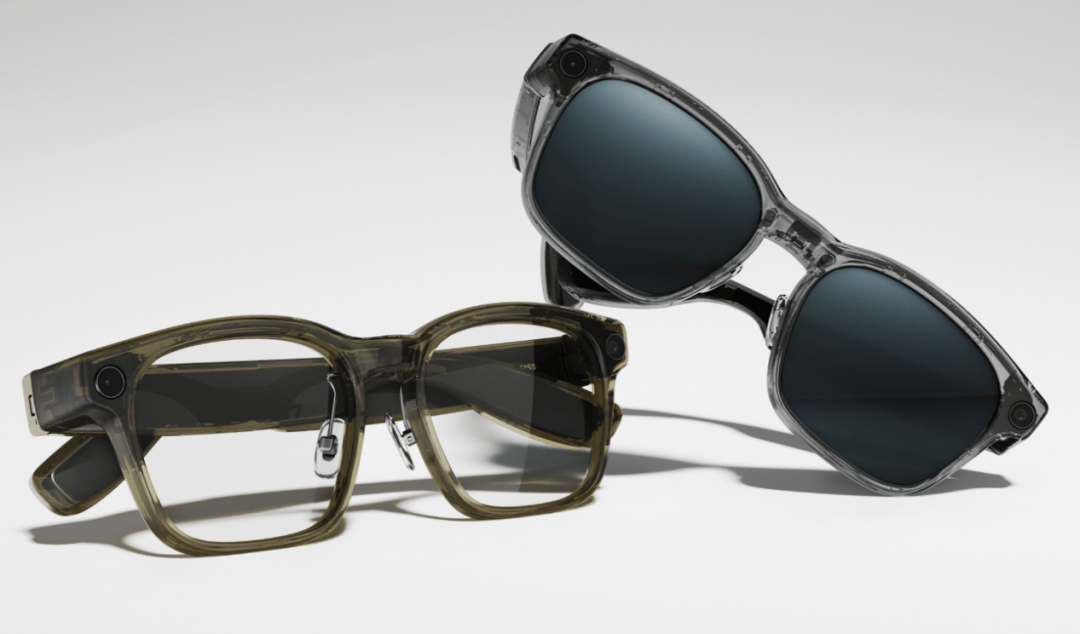
LI Auto Glasses: Aiming Higher Than the NIO Phone
Author | Gu Qian
Editor | Wen Changlong
Among the various side projects of NIO, XPeng, and LI Auto, only XPeng Robotics has managed to gain widespread acclaim and recognition.
The other products from NIO and LI Auto may lack a futuristic, groundbreaking appeal, resulting in similar market evaluations after their launches.
For example, when the NIO Phone was introduced, some media outlets described it as 'the app that turns your phone into a car key, unlocking NIO's logistical universe.' With LI Auto's glasses, this concept evolved to 'the app hosts Li Xiang AI on your phone, while the AI glasses bring Li Xiang AI into the physical realm.'
The sentence structure is similar, and the logic is akin. The only difference is the shift from 'car key' to 'Li Xiang AI'.
Behind this transformation lies the hope embodied in the products: NIO aims for seamless vehicle-phone interconnection, whereas LI Auto focuses on becoming an AI carrier.
Even before the glasses' release, Li Xiang outlined the product direction for the next decade at a quarterly meeting. LI Auto aims to transform 'vehicles' from passive machines to autonomous entities and eventually into 'embodied intelligent robots' capable of proactive service.
He explained this strategic choice by stating:
"Opting for electric vehicles isn't a bad move; it's just not enough. The smart terminal route isn't bad either; it's still insufficient. Only by tackling the most challenging problem of embodied intelligence can we truly revolutionize users' lives. It represents the automotive robot form seen in 'Transformers,' 'Cars,' and 'Knight Rider.'"
According to this vision, LI Auto has a long journey ahead in terms of embodied intelligence. On this point, Li Xiang also acknowledged: 'The automotive-shaped embodied intelligent robot represents both the best opportunity and the most daunting challenge presented by the new era to automotive companies and entrepreneurs.'
By launching AI glasses, LI Auto is taking its first step toward becoming a 'Transformers' enterprise. This suggests that to become an embodied intelligence company, LI Auto must first navigate the challenges encountered by the NIO Phone.
01 Learning from the NIO Phone to Develop Glasses
Regarding NIO's foray into smartphone manufacturing, Li Bin's exact words in a public dialogue were: 'Our goal is to provide NIO owners with a phone that enhances or further improves their driving experience. Simply put, even a superbly functional car key is worth creating; it's not that complicated.'
A simplified interpretation of this statement suggests that Li Bin's motive for making phones was to create a functional car key. This 'car key logic' almost immediately limited the NIO Phone's user base. It's not a smart terminal for all consumers but an enhanced accessory exclusively for NIO owners.
Given its positioning as an accessory, the phone is theoretically an internal product within the NIO ecosystem.
NIO's approach to releasing its first smartphone supports this: it debuted at 'NIO Tech Day,' alongside in-house developed large cylindrical battery cells, LiDAR control chips, and an intelligent driving roadmap, forming part of a series of automotive support capabilities rather than an independent, market-facing product line.
This accessory attribute was further emphasized in its pricing strategy. The inaugural NIO Phone was priced at 6,499 yuan, over 2,000 yuan more than the similarly configured Xiaomi 13 from the same period. NIO justified this with design and in-car control experience, but it also made the phone uncompetitive in the mainstream consumer electronics market.
Having possibly reviewed the NIO Phone's shortcomings, LI Auto approached this cautiously and pragmatically.
Regarding product pricing, LI Auto's inaugural AI glasses, Livis, start at 1,999 yuan, reducing to 1,699 yuan with government subsidies. In terms of overall configuration, balancing battery life, performance, and other experiences, LI Auto achieved a total weight of 36 grams for the glasses. For reference, the highly acclaimed overseas Ray-Ban Meta weighs over 49 grams, while Xiaomi's similar product is around 40 grams.
LI Auto's overall pricing strategy aligns with market peers, adhering to a market-oriented approach targeting LI Auto owners.
Regarding the initial target audience, LI Auto exercised caution. When discussing sales expectations, Fan Haoyu, the head of LI Auto Glasses, stated that the first-generation product's goal is not massive sales but achieving reasonable conversion within the base of 1.5 million LI Auto owners while also appealing to a broader tech enthusiast audience, entering the open market.
When questioned by the media about prioritizing serving LI Auto owners over immediately expanding beyond this group, he promptly denied such a sequential logic, stating: 'We strive to create an excellent product that LI Auto owners can purchase, as can tech enthusiasts outside this group. There's no 'first serving LI Auto owners, then others' sequence.'
Behind this statement lies the product positioning difference that prevents LI Auto Glasses from repeating the NIO Phone's mistakes: not creating an accessory to supplement the automotive experience but developing a self-contained, universally valuable smart hardware.
02 The AI Willpower That Overlooks Market Conditions
Although LI Auto Glasses attempt to break free from the market perception of being automotive accessories, their deep integration with the vehicle system remains the most compelling differentiator for users at this stage.
Users who have tried various smart glasses told 'Shixiang' that whether it's the domestic Thunderbird V3 or the overseas Meta Ray-Ban, the most significant differentiation of LI Auto Glasses lies in their interaction with LI Auto vehicles, such as remotely controlling in-car functions like heating and air conditioning, which is more convenient than using a phone.
Indeed, vehicle interaction is a unique advantage of LI Auto's AI glasses, Livis. According to reports, LI Auto owners wearing the glasses can vocally control windows, sliding doors, air conditioning, refrigerators, etc., with an end-to-end response time of 800 milliseconds, nearly ten times faster than using a phone.
Therefore, for the first-generation product, LI Auto anticipates achieving high conversion within its existing base of 1.5 million owners while striving to appeal to all tech and innovation enthusiasts.
Appealing to a broader audience means facing a market environment of intense competition among numerous smart glasses brands. In response, Fan Haoyu remarked, 'I don't focus on the competition among numerous brands; it's irrelevant. Many will offer numerous niche features, make promises to investors, and end up cluttered with very infrequently used functions.'
In his view, the product philosophy for LI Auto Glasses centers on fundamental features like weight, battery life, response speed, and intelligence, aiming for a simple and elegant product. He believes that excelling in these areas already makes it the industry leader.
Similarly indifferent to market conditions is the Li Xiang AI app, which ventured out of the in-car system during the era of intense competition among numerous AI models to enter the mainstream market independently.
Before the Livis release, LI Auto had already launched the Li Xiang AI app last year, attempting to extend the AI assistant capabilities originally in vehicles to users beyond car owners. Li Xiang's judgment at the time was that Li Xiang AI should serve 3-5 million people, not just car owners.
However, after a year, the app has not seen widespread adoption and remains in a cold start phase.
Upon experience, Li Xiang AI still lags significantly behind professional AI players like Kimi, Doubao, and ChatGPT. The market perceives that Mind GPT primarily focuses on 'task-oriented AI,' where users provide clear instructions, and Li Xiang AI executes them.
Yet, to gain recognition as an AI enterprise, LI Auto may need to accelerate the upgrades of Li Xiang AI to keep pace with mainstream general-purpose AI applications.
Bao Fan, Chairman of China Renaissance, once evaluated Li Xiang: 'He believes that the essence of all corporate competition is efficiency competition. Any innovation you undertake today ultimately boils down to being more efficient than others.'
According to this perspective, given the industry consensus that automakers should focus on car manufacturing, Li Xiang's decision to invest resources in smart glasses seems somewhat out of place. However, before results materialize, the competition often hinges not on market outcomes but on the founder's willpower itself.
At one point, Li Bin placed high hopes on self-developed phones, believing that vehicle-phone interconnection would be the decisive factor in future intelligent ecological experiences.
However, with NIO's cost control efforts, during an internal presentation on the CBU mechanism, Li Bin stated, 'Jobs and projects that don't create user value should be halted. Either someone externally pays for them, or someone internally bears the cost. Don't pursue things that don't make financial sense.' Subsequently, NIO adjusted and downsized its phone business.
Compared to NIO, LI Auto is even more frugal. For instance, on the night of LI Auto's IPO celebration, the original plan was just to go for skewers. Considering potential investor participation, they temporarily added a 30,000 yuan budget, moving the celebration from a roadside stall to a Western restaurant.
This frugality also enabled LI Auto to establish a financially robust structure early on. When LI Auto delivered over 10,000 vehicles, it already achieved a 13% gross margin and positive operating cash flow. In contrast, NIO invested over 30 billion yuan and only achieved an 8.4% comprehensive gross margin for the first time in the second quarter of 2023.
When the frugal Li Xiang embarks on an AI venture that may not be widely understood, perhaps beneath this seemingly reckless decision lies a founder's AI willpower that overlooks market conditions.
-
![]()
Alibaba's AI Offensive: Over Half of Investment Allocated, Time to Reap Returns
-
![]()
Alibaba’s AI Push: Over Half of Investments Made, Time to Harvest Returns
-
![]()
Chinese Enterprises Going Global 3.0: From World Factory to AI Infrastructure Builder
-
![]()
Honor RobotPhone Review: Half Movie Camera, Half Robot
-
![]()
AI-Driven Cheating Surges in Universities! Online Exams Reduced to Mere Formalities, Degree Credibility on the Line
-
Insta360’s Decade in Panoramic Imaging: Making Cameras ‘Invisible’ and Returning Creation to the Masses
-
![]()
Foreign Media Claims Apple is Concentrating Resources on AI Development: Vision Pro and Siri Teams Lay Off 200 People
-
Big News! Huaneng and Huawei Hold Talks in Shenzhen with Ren Zhengfei in Attendance; Huawei Emerging as the 'Second Brain' of China's Energy System