AI's Ultimate Aspiration: Beyond Connecting the World, to Wholly "Revolutionize" Industries
 12/16 2025
 656
656
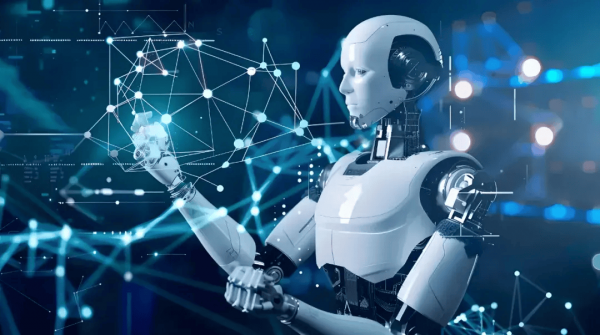
At present, AI is permeating every facet of our lives at an unprecedented rate. From its early applications in text generation to today's sophisticated question-answering systems and autonomous driving technologies, AI's influence is undeniable. It's transforming people's lifestyles and production methods in a thorough and profound manner. As AI matures, its implementation and application will expand across more scenarios and industries, ushering humanity into a true AI era.
For many, AI represents a new avenue to garner traffic and achieve growth in an era of market saturation. However, viewing AI merely as a traffic acquisition tool underestimates its transformative potential. The author posits that AI's impact extends beyond the consumer (C) side to the business (B) side. Only by deeply integrating AI with both the C-side and B-side can its full potential be realized.
As more entities begin to view AI as a new traffic entry point, it's crucial to consider its integration with the B-side and the innovative ideas it brings to industrial evolution. This perspective is essential for AI development to break free from internet conventions and enter a new, self-defined stage of development.
AI's Mechanism of Action: From the Inside Out
Currently, we witness various players launching their unique AI tools, from ERNIE Bot to Tencent Yuanbao and Alibaba's Qianwen. While these AI products are seen as traffic acquisition tools, their underlying mechanism of action is often overlooked. Indeed, these AI products have helped attract significant traffic, but they emerged after the players themselves underwent transformation and upgrading. In essence, these AI products first transformed the upstream players before reaching downstream C-side consumers.
From this vantage point, AI's mechanism of action doesn't directly impact the C-side but first facilitates the upgrading and transformation of the B-side. Only then does it supply to the C-side, altering consumption and production methods. Thus, AI's mechanism of action operates from the inside out.
For any entity aiming to thrive in the AI era, understanding and leveraging this inside-out mechanism is crucial for gaining new traffic increments in a saturated market. Ignoring AI's mechanism and viewing it solely as a direct means to acquire C-side traffic will not only fail to yield results but may also forfeit opportunities for self-iteration and upgrading through AI.
The Underlying Logic of AI: Decentralization
As the wave of the thousand-model battle sweeps across industries, AI large models have become the primary conduit for engaging with C-side consumers, a stark contrast to the internet era. In the internet era, players connected with C-side consumers through various platforms and centers, from e-commerce to short-video and information platforms. Ultimately, C-side consumers faced a massive platform and center to access products, information, and services.
With the AI era's advent, especially the emergence of diverse AI large models, C-side consumers no longer confront a single massive platform but encounter a multitude of large models and intelligent agents. Thus, in the AI era, the provision of products and services to the C-side is decentralized.
For any entity seeking success in the AI era, optimizing how their AI products connect with C-side consumers and achieving seamless integration is key to providing effective and high-quality services. Enriching the capabilities of their AI large models, expanding their boundaries, breaking down barriers between models and consumers, and continuously achieving decentralization are crucial for the sustained implementation of AI products.
AI's Ultimate Goal: Industrial Iteration
In the internet era, although numerous platforms emerged and spawned countless models, the industries themselves remained largely unchanged. Leveraging the internet's disintermediation could establish efficient connections between static industries and downstream consumers when information was asymmetric. However, as the internet became infrastructure and industries migrated online, internet-style disintermediation faced challenges.
To overcome these challenges, industrial iteration is necessary to meet the evolving demands of the consumption side and restore supply-demand balance. Unlike the internet's mechanism, which merely breaks down information asymmetry barriers, AI's ultimate goal is to comprehensively transform industries themselves, achieving their iteration and upgrading.
Why does AI possess such capabilities? The author believes AI's greatest distinction lies in its ability to replace elements within industries, ultimately upgrading and renewing these internal components. The current applications of AI robots, the emergence of large models, and the widespread development of AI intelligent agents are all concrete manifestations of AI's deep transformation of industrial internal elements.
After AI replaces industrial internal elements, it doesn't halt its transformation but also initiates an inside-out deep transformation of the internal operational logic of industries and their business models. In essence, industries themselves form a new set of business models to support their development after undergoing AI's deep transformation.
Therefore, AI's ultimate goal is not merely to upgrade superficial connection methods but to penetrate deep into the core of industries, initiating a comprehensive inside-out transformation and achieving complete industrial iteration. Only by measuring AI's success through industrial iteration can we correctly grasp the new directions for development in the AI era.
Conclusion
Currently, AI is transcending traditional intelligent chat conversations, refining and enriching its capabilities. The true test for players in the future will be how to refine their AI capabilities and comprehensively transform industries themselves. This is inherently linked to AI's unique characteristics. Recognizing these aspects and finding the correct ways to connect AI with industries are key to breaking free from the internet's orbit and maximizing AI's functions and roles.
-
![]()
Chery's 'Audi Suit Gangster' Makes Waves with Unbeatable Pricing. Netizens React: 'Is This the Aorui A6L?'
-
![]()
AITO Takes a Bold Leap, Forms Joint Venture with BMW and Mercedes-Benz
-
![]()
How Does the Cloud Data Engine Transform Physical Labor into Technical Work for Autonomous Driving Annotators?
-
![]()
Historic Strongest Mercedes-Benz GLE L Faces Intense Competition from Domestic 9 Series
-
![]()
Jeff Dean's First Entrepreneurial Venture After Leaving Google: Why Launch an AI Company 'Not Aiming to Make Money' at This Juncture?
-
![]()
Caught in the Traffic 'Web'
-
![]()
Alibaba's AI Offensive: Over Half of Investment Allocated, Time to Reap Returns
-
![]()
Alibaba’s AI Push: Over Half of Investments Made, Time to Harvest Returns