Humanoid Robots: Creating Wealth Before 'Benefiting Humanity'
 03/25 2026
 709
709
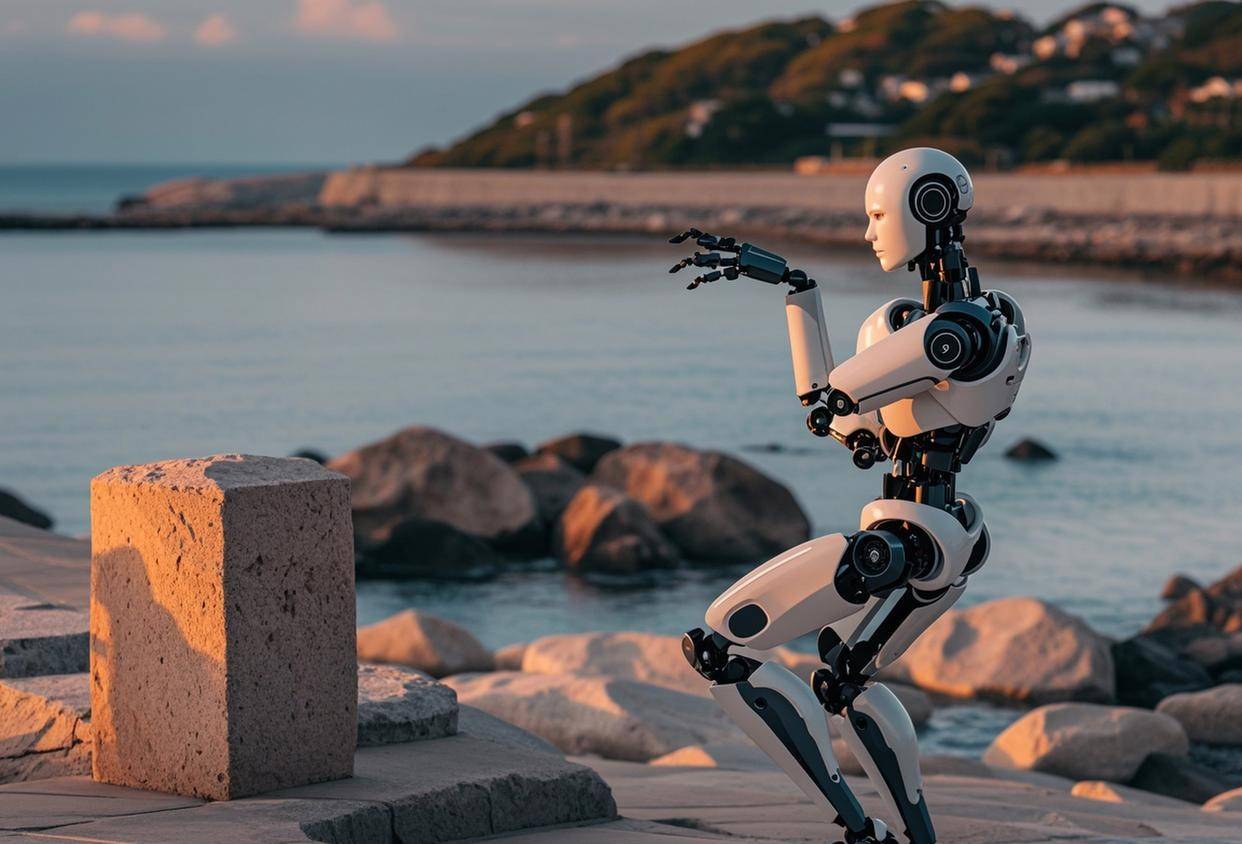
In January this year, news that 'Unitree Technology's IPO green channel had been halted' flooded social media platforms, with reports suggesting regulators wanted to cool down the overheated robotics bubble. Just as the outside world thought Unitree's listing plans for the year would fall through, the situation took a sudden turn. On March 20, Unitree officially disclosed its prospectus for its initial public offering of shares on the STAR Market, and the Shanghai Stock Exchange accepted its IPO application on the same day.
In 2024, Unitree's valuation fluctuated between approximately 3 billion and 4 billion yuan. However, in 2025, leveraging the Spring Festival Gala, Unitree skyrocketed to fame, igniting the humanoid robot sector and propelling its valuation into the tens of billions. This year, judging by sustained market enthusiasm and favorable policies, this 'first humanoid robot stock' could even aim for a market capitalization of 100 billion yuan.
The excitement isn't limited to Wang Xingxing; behind him stands an impressive roster of investors.
A Wealth Feast
According to public information, Unitree Technology plans to raise 4.202 billion yuan in this IPO. Calculating based on issuing 10% of its shares, the company's overall valuation would be approximately 42 billion yuan. However, a common viewpoint in the investment circle is that if Unitree Technology goes public successfully, it will reap the rewards of the trillion-yuan robotics sector as the industry's first listed company, making it at least a 100-billion-yuan enterprise.
As the founder, Wang Xingxing may become one of the youngest billionaires. He directly holds 86.714964 million shares, accounting for 23.8216% of the company's current total share capital, while also indirectly holding 9.54% through an equity incentive platform, totaling a 33.36% stake.
Based on a rough estimate of a 42 billion yuan valuation, Wang Xingxing's personal net worth could exceed 14 billion yuan. If the market cap rises to 100 billion yuan, his assets would double.
Besides Wang Xingxing, Unitree's listing will also enrich a group of key employees. According to the prospectus, three post-90s core leaders at Unitree—Chen Li (head of sales and service), Yang Zhiyu (head of mechanical structure R&D), and Zhang Yangguang (head of algorithms and software)—indirectly hold approximately 0.36%, 0.32%, and 0.32% stakes in Unitree through the Shanghai Yuyi employee shareholding platform, respectively. If Unitree's market cap exceeds 100 billion yuan, all three managers would join the ranks of billionaires.
As Unitree approaches its IPO, its investors are finally poised to reap substantial returns.
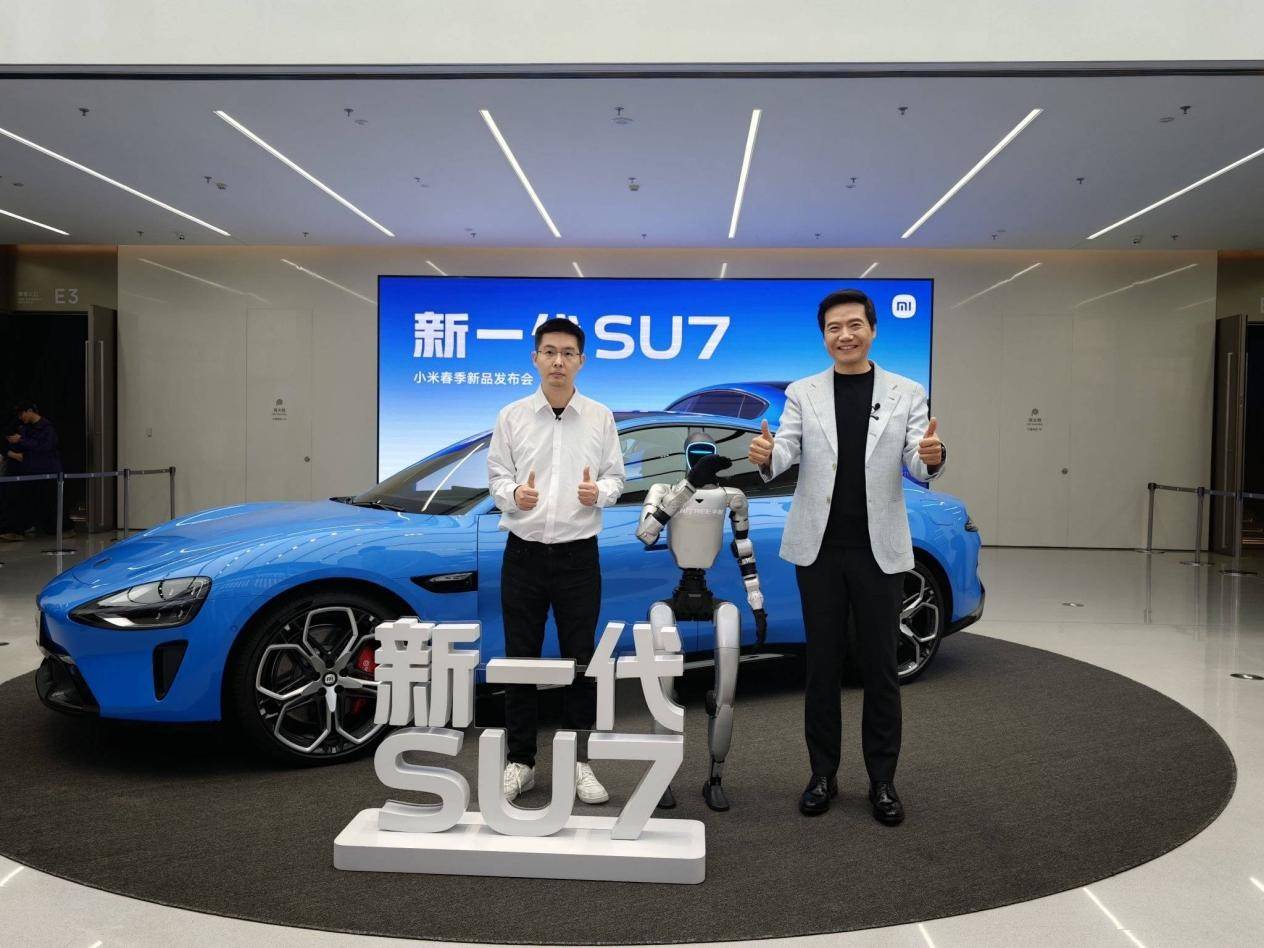
Take Lei Jun, for example. At Xiaomi's product launch on March 19, Lei Jun said to Wang Xingxing, who was standing beside him, in front of the entire audience, 'Thank you for giving us the opportunity to invest in Unitree five years ago.'
In 2021, Shunwei Capital led Unitree Technology's Series A financing round, raising tens of millions of US dollars, and subsequently participated in follow-on rounds, currently holding a 4.42% stake. It is understood that Shunwei Capital has already cashed out 84 million yuan. Additionally, Thunder Capital, founded by Tencent co-founder Zeng Liqing, has also cashed out 30 million yuan.
Higher stakeholders include Meituan, Sequoia China, and Matrix Partners China, which rank as the top three external shareholders with stakes of 9.65%, 7.12%, and 5.45%, respectively. Based on Unitree's last funding round, a Series C valuation of approximately 12.7 billion yuan, these stakes are worth 1.225 billion yuan, 904 million yuan, and 692 million yuan, respectively. If Unitree successfully reaches a 100 billion yuan market cap, Meituan's paper gains would exceed 20 times, nearing 10 billion yuan, while Matrix Partners China's gains would exceed 40 times, exceeding 5 billion yuan.
Among Unitree's over 40 investment institutions, more than 20 hold stakes exceeding or approaching 1%, meaning these two dozen institutions can expect returns of at least 100 million yuan each.
With Unitree's IPO imminent, a visible IPO race has already begun. This year, startups like Starsea Robotics and QK Robotics have completed share reforms, while Magic Atom has announced plans to pursue a listing. Galaxy General and Enlighten Robotics are also poised to follow suit. As these highly anticipated robotics companies go public one by one, new 'wealth creation myths' will continue to unfold.
However, on one side is the frenzy in the capital markets, while on the other, humanoid robots still face persistent doubts about their 'usefulness,' potentially making this wealth 'gamble' risky.
Profitability Remains Unproven
One of Unitree's standout features in its prospectus is its profitability, achieved while other startups universal (universally) struggle with losses. Data shows that in 2025, the company reported revenue of 1.708 billion yuan, up 335.36% year-on-year, with a net profit of 288 million yuan, up 204.29% year-on-year, and a non-GAAP net profit of 600 million yuan, up 674.29% year-on-year.
This is a key reason why the investment community believes its valuation could reach 100 billion yuan. If it achieves such a high valuation on the A-share market, it would undoubtedly expand the imagination space for hard-tech companies in the A-share market and pave the way for the more than 20 robotics companies waiting in line to go public. However, does Unitree's profitability mean humanoid robots will inevitably be profitable—and increasingly so—as they break through mass production challenges?
Take UBTECH as an example. Last year, UBTECH secured multiple billion-yuan orders for its humanoid robots, yet from 2020 to the first half of 2025, the company accumulated losses exceeding 5 billion yuan and has yet to turn a profit.
Even for Unitree, its profitability may not sustain its market cap at such lofty levels post-IPO.
A closer look at the financials reveals that from January to September 2025, scientific research and education accounted for 73.60% of its humanoid robot business revenue, commercial consumption for 17.39%, and industrial applications for just 9.01%. Within that 9% of industrial application revenue, corporate guided tours accounted for 50-70%, while revenue from clear industrial scenarios like smart manufacturing and intelligent inspections amounted to only 15.702 million yuan, or 29.29% of industrial application revenue.
In simple terms, the largest buyer groups for humanoid robots currently are universities, research institutions, and tech companies, which purchase them for algorithm research, model training, and teaching experiments. However, demand in the scientific research and education market is limited and may quickly hit a ceiling.
This exposes the eternal question: When will humanoid robots enter factories or homes to truly benefit humanity?
This year, during Tesla's Q4 2025 earnings call, Elon Musk admitted that no Optimus humanoid robot currently performs 'useful work' at Tesla factories.
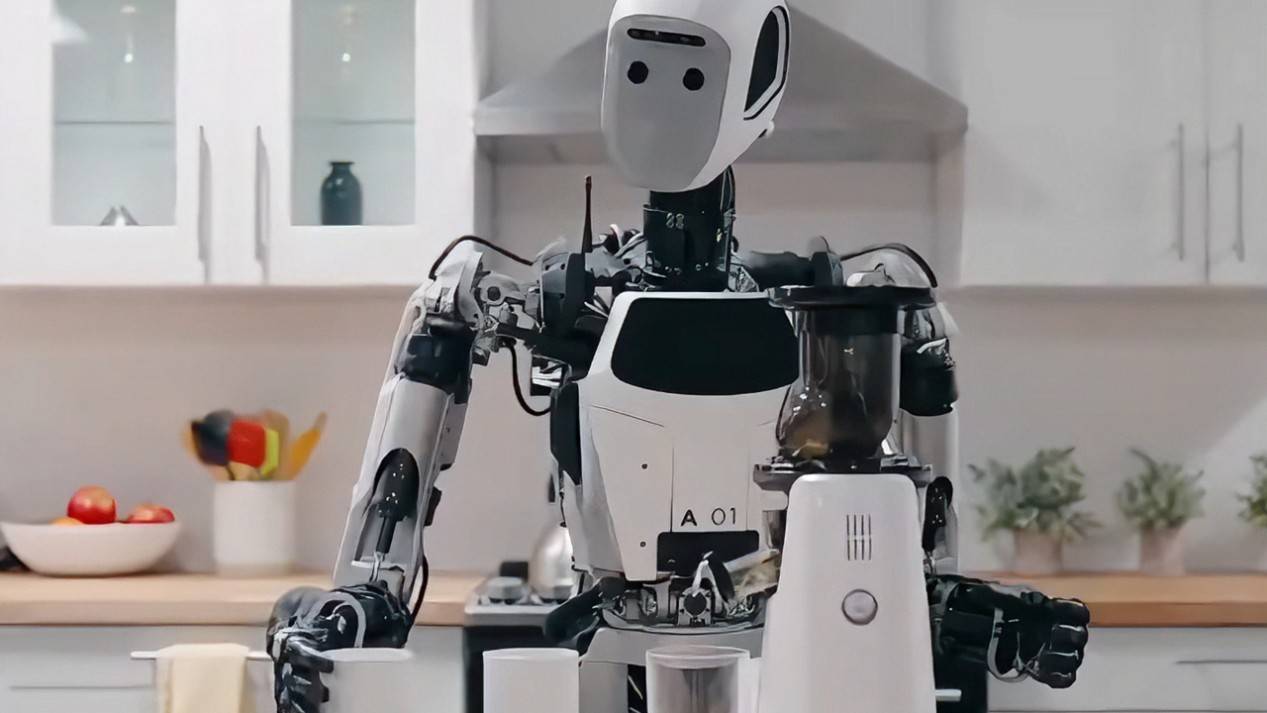
For humanoid robots to enter factories, the challenge isn't just breaking through technical barriers—it's whether their human-like appearance truly offers advantages over robotic arms or collaborative robots in workshop settings. If the answer is no, then the idea of humanoid robots entering factories becomes a false premise, significantly limiting their potential as high-quality productive forces.
In the consumer market, bringing humanoid robots into homes to serve as life assistants is our greatest aspiration. However, compared to factory entry, achieving household adoption seems equally distant.
On social media, netizens shared 'disaster scenes' of Unitree's G1 attempting to stir-fry: the robot tried to mimic human chefs by flipping a wok but failed to precisely perceive the dynamic center of gravity changes in fluids and ingredients, resulting in stiff, delayed movements that ultimately tipped over the wok and splattered food.
The assembly of humanoid robots relies on advancements in industrial manufacturing and cost control, while motion upgrades can be achieved through technologies like deep reinforcement learning to strengthen their 'cerebellum.' However, breakthroughs in their 'brain' remain elusive. The founder of iRobot, a pioneer in robotic vacuums, pessimistically stated, 'Humans won't create general-purpose AI for the next 300 years.'
Lofty Ideals, Excessive Hype
Currently, capital enthusiasm for humanoid robots borders on frenzy. Since March, the embodied AI sector has seen a flurry of financing news: Galaxy General announced a 2.5 billion yuan funding round, while Songyan Power completed a nearly 1 billion yuan Series B round. According to IT Juzi data, as of March 20, 2026, China's robotics sector has seen 207 financing events this year, including 133 for humanoid robots, with 115 companies securing funding.
Capital inflow is indispensable, but such frenzy inevitably breeds bubbles.
Last year, an embodied AI company that officially launched operations in March completed nearly 200 million yuan in financing by July, with investments from well-known institutions.
Not only are startups accelerating their financing, but their IPO timelines are also 'rocketing.' Unitree took just 132 days from signing its tutoring (coaching/tutoring, likely meant as 'listing tutoring ' or 'IPO coaching') agreement on July 7 to completing the process, setting the fastest record for embodied AI companies this year.
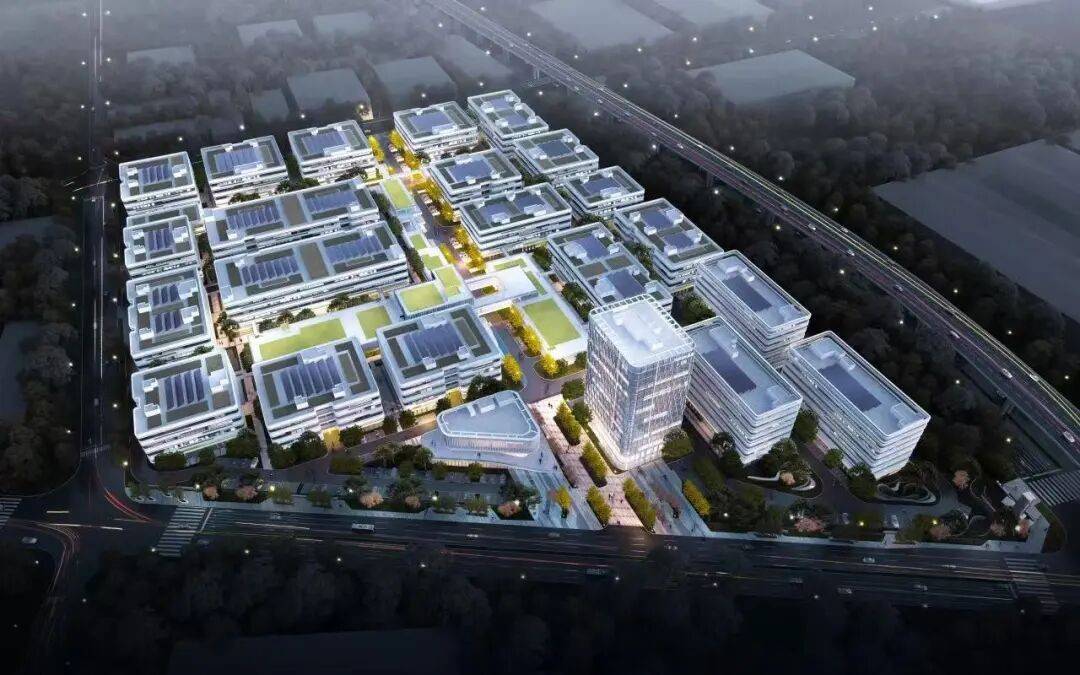
An even larger bubble may exist in the fierce competition among cities to capitalize on the humanoid robot trend. Over the past year, at least a dozen provinces and municipalities have announced plans to build robotics industrial parks or introduced special support policies. For example, Beijing's Yizhuang plans a 250,000-square-meter robotics park, with additional plans in Haidian and Changping districts—a 'triple roll' within one city. Suzhou's Wuzhong District pledged 10 billion yuan in funds to become the 'top district nationwide.' Cities like Chengdu, Xi'an, Wuhan, and Zhengzhou are equally enthusiastic, with this fervor even extending to county-level regions.
This scene feels eerily familiar. During the early stages of new energy vehicle (NEV) development, regions rushed to build industrial parks, vowing to become automotive hubs.
Now, as robotics companies strive for mass production and new delivery records, cities are following suit with bold slogans. Beijing's Yizhuang aims to achieve 'ten-thousand-unit' mass production capacity next year, Shenzhen targets a 100 billion yuan associated industrial scale by 2027, Suzhou aims to support a 200 billion yuan robotics industry citywide, and Chengdu targets a 60 billion yuan full-industry-chain scale next year. However, as production capacity expands, questions arise: Can scientific research and education (scientific research and education) and commercial performances alone absorb this capacity?
Goldman Sachs noted in its *2025 Global Robotics Industry Outlook* that the robotics sector currently exhibits significant overvaluation, with roughly 60% of robotics companies worldwide valued at over 100 times their revenue. Additionally, the global robotics industry may face a 25% overcapacity rate in 2025.
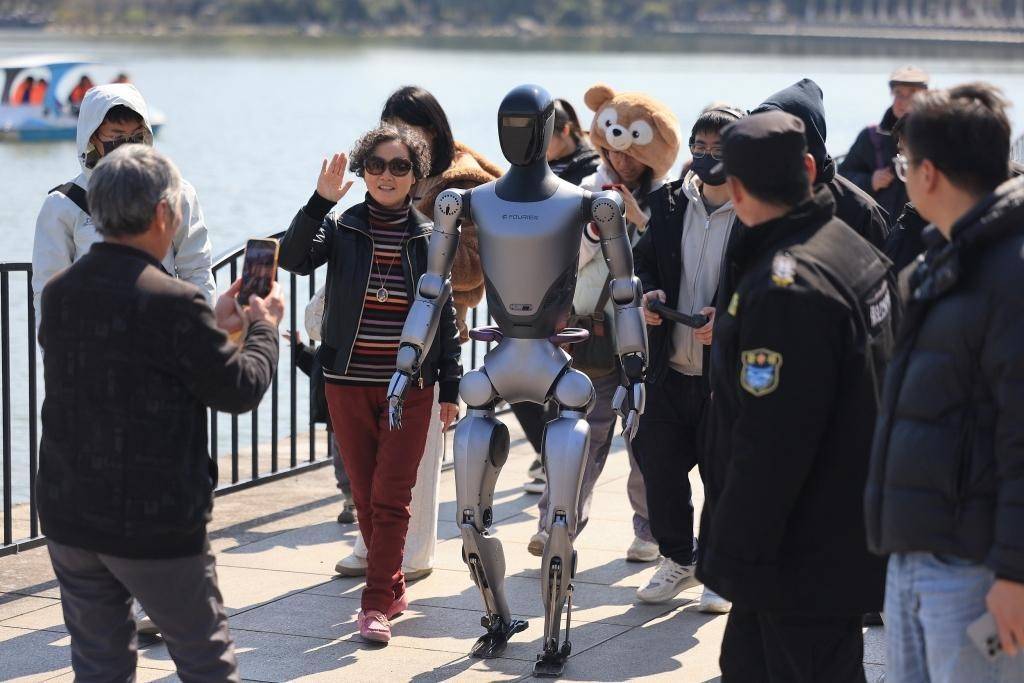
Unlike new energy vehicles, which were immediately usable upon creation—with technological breakthroughs and cost control making them more practical and advantageous—humanoid robots have yet to transition from 'useless' to 'useful.' If 'solving real human needs,' such as entering factories or homes, is the standard, they remain exceedingly far from achieving it.
The development of humanoid robots has been accompanied by doubts and controversies despite their lofty ideals. However, this is not necessarily a bad thing. Amid the listing frenzy that brings immense wealth to founders and investors, becoming obsessed with profits and abandoning skepticism is what we must guard against most.
-
![]()
The Allure of 'Acquisition Spree': Li Shufu's Left Turn, Xu Jiayin's Right
-
![]()
Strategic Transformation Yields Results: Phoenix Optics Reports 10.9% YoY Rise in Core Net Profit for H1 2026
-
![]()
Three Key Growth Trajectories Synergize! Crystal-Optech Reports 3.478 Billion Yuan in Revenue for H1 2026
-
![]()
Semi-Annual Report Sparks XPENG Motors Buzz
-
![]()
1.6 Billion Big Order Secured! SeeYA Technology's Revenue Soars by 287.87% in the First Half of the Year
-
![]()
Baidu's Profits Plunge by 68%: Unraveling the Mystery Behind the Numbers
-
![]()
Baidu’s Profits Tumble by 68%! Where Has All the Money Gone?
-
![]()
Hynix’s Taobao Store Shuts Down Abruptly: What Should Customers Do About Warranty Services for Memory Modules?