68x Oversubscribed! What Makes This In-Vehicle Optics Company a Hot Bet for Xiaomi?
 03/25 2026
 571
571
On March 24, Jiangsu ZeJing Automotive Electronics Co., Ltd. (referred to as "ZeJing Auto") officially listed on the Main Board of the Hong Kong Stock Exchange, becoming China's first listed company in the in-vehicle HUD (Head-Up Display) sector.
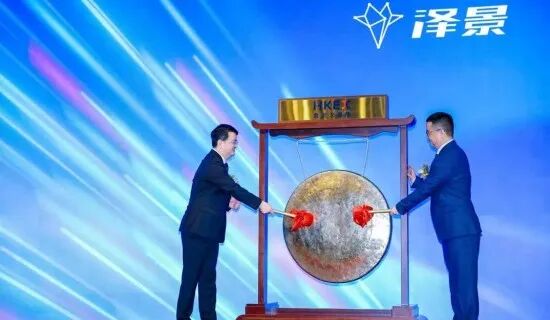
The IPO involved a global offering of 16.2265 million H shares, priced at HK$44.20 per share, raising approximately HK$650 million in net proceeds. The public offering portion was 68.9 times oversubscribed. Amid intensifying competition in the smart cockpit sector, the capital market's enthusiastic response serves as a vote of confidence for this decade-old in-vehicle optics company.
Starting with just RMB 1.58 million in seed funding and breaking foreign monopolies to list on international capital markets within a decade, this optics company's IPO was no accident. What did it do right?
ZeJing's story began in 2015. At the time, the in-vehicle HUD market was dominated by foreign giants like Nippon Seiki, Continental, and Denso, with domestic companies having little chance of entering the original equipment supply chain. ZeJing's founding team of just six members precisely targeted this highly technical field.
They focused on core optical system architecture, overcoming key technologies such as compact optomechanical module design and precision machining of free-form mirrors. Its core AR-HUD product employs a catadioptric optical design, achieving longer optical paths and wider fields of view within limited volumes—this technological edge enabled it to enter the supply chains of mainstream new energy models like Xiaomi SU7.
Unlike pure optical component suppliers, ZeJing built a fully self-developed technical architecture covering optical design, PGU integration, and software algorithms. By Q3 2025, it had delivered over 1.9 million HUD units and secured design wins for 101 vehicle models—numbers indicating its optical solutions have passed rigorous mass production consistency tests, a stronger competitive edge than lab parameters for in-vehicle optics.
Industry capital's deep involvement proved crucial to ZeJing's growth. From 2017 to 2024, the company completed eight funding rounds, raising RMB 675 million in total. Its investor roster reads like a who's who of China's smart car industry: Shunwei Capital, Geely Group, FAW Investment, BAIC Capital, SAIC Motor, and iFLYTEK.
These industry investors served as more than financial backers—they became critical bridges for ZeJing to deeply integrate into vehicle manufacturing systems. In-vehicle HUD optical design must closely align with windshield curvature, cockpit layout, and even ADAS signals. Having automaker shareholders meant ZeJing could engage in foundational data exchanges with carmakers during solution definition—a barrier impossible for pure optical lens manufacturers to overcome.
Financial data reflects this synergy's effectiveness. According to the prospectus, revenue grew from RMB 210 million in 2022 to RMB 580 million in 2024, with 2023 YoY growth reaching 156.6%. Though still unprofitable due to heavy R&D investment and pre-expansion costs, the capital market values its 16.2% market share in China's HUD sector over immediate profitability.
The HK$650 million net proceeds reveal ZeJing's future roadmap: 46.7% for production line expansion and automation upgrades to meet growing orders; 32.4% for R&D, focusing on W-HUD/AR-HUD upgrades and developing innovative visual interaction products based on homologous technologies; notably, 10.9% will fund strategic supply chain partnerships in optical imaging, near-eye displays, and wearables.
The last point deserves special attention—it signals ZeJing's ambitions extend beyond in-vehicle HUDs. Near-eye displays (NED) share strong optical path similarities with HUDs—both require solving core issues like virtual image formation, field-of-view expansion, and eyebox optimization. ZeJing's patents in waveguide and polarization optics lay groundwork for expanding into AR glasses, smart helmets, and other next-gen smart hardware. This marks a clear technological upgrade path from automotive to broader human-machine interaction optics.
ZeJing Auto's decade-long journey to IPO proves that in hard tech fields, sustained investment in foundational optical technologies, deep industry resource integration, and precise capital timing are indispensable. With an HUD specialist going public, the entire in-vehicle optics supply chain's value is being reevaluated.
The next decade will see new technologies like waveguides and holographic displays mature—the optical wars in smart cockpits have just begun, and ZeJing's IPO is merely the starting gun for this long-distance race.
-
![]()
The Unstoppable Rise of 'Optical Progress and Copper Decline': Sunny Optical’s Strategic Vision for the Next Decade
-
![]()
AI + Going Global in the Second Half: No Intermission for Robot Vacuum Cleaners
-
![]()
The Suffering Endured in E-commerce, Walmart Doesn't Want to Repeat in AI
-
![]()
What Does the Doubling of New Energy Vehicle Exports Mean?
-
![]()
Ghosn: 'Only I Can Save Nissan'
-
![]()
Volkswagen Lays Off 100,000 Employees, The Elephant Sits Down
-
![]()
Expanding Production Capacity! Yutong Optics Acquires Approximately 1.5 Hectares of Industrial Land in Chang'an, Dongguan
-
![]()
Why Is Nokia Making a Comeback in the AI Era?