Understanding "Humans" First: The Core Logic Behind Fourier Humanoid Robots
 12/17 2025
 836
836
Produced by Zhineng Technology
When observing today's humanoid robots, two aspects often catch our attention: the resemblance of their movements to those of humans and whether they boast large-scale models with robust computing power. However, Fourier's approach to robotics delves deeper, starting precisely before these two considerations.
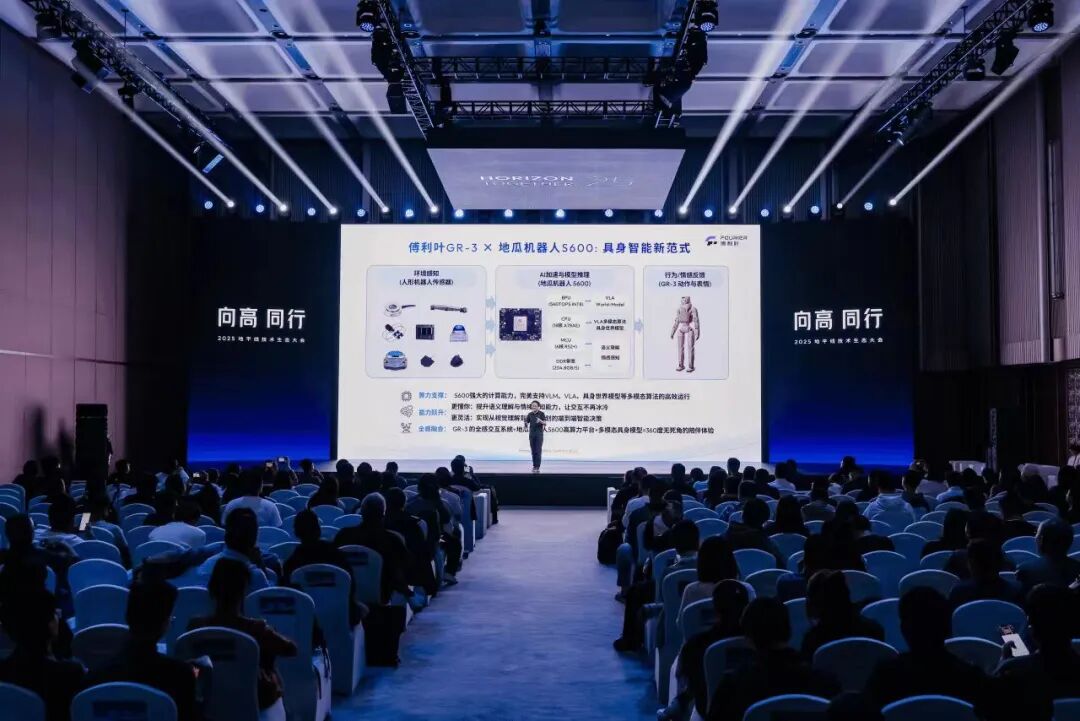
At the Horizon Ecosystem Conference, Gu Jie, the CEO of Fourier, stressed that robots should be designed with a "human-centric" philosophy, ultimately aiming to serve and empower humans. This vision breaks down into a long-term, feasible technological pathway.
01
Why Didn't Fourier Start with Humanoid Robots Directly?
If the ultimate goal is to create general-purpose robots, why did Fourier initially focus on rehabilitation and elderly care?
The rationale is quite pragmatic. A decade ago, the technological landscape in robotics was not mature enough to support the development of truly functional humanoid robots. Computing power, sensors, control algorithms, and actuators were all in their infancy. Pursuing mere "human-like appearance" would have likely resulted in nothing more than a decorative piece.
In contrast, the rehabilitation sector demands robots that can engage in genuine physical interaction with humans, accurately perceive human strength, intentions, and changes, and operate safely and reliably over extended periods. This represents a "most challenging yet most rewarding" training ground.
Fourier's decade-long endeavors in the rehabilitation field have centered on translating "how humans move, exert force, and recover" into control logic that machines can comprehend and execute.
Essentially, humans and robots represent "two solutions to the same set of equations."
◎ Human balance is maintained through the vestibular system;
◎ Robot balance is achieved via IMUs (Inertial Measurement Units).
◎ Human proprioception stems from muscles, bones, and neural feedback;
◎ Robot proprioception is derived from encoders, force sensors, and joint feedback.
◎ Humans execute movements through reflexes, rhythms, and intentions;
◎ Robots require a hierarchical structure encompassing cerebellar-level reflexes, spinal-level rhythms, and brain-level planning.
Under this framework, Fourier places particular emphasis on force control, compliance, and real-time responsiveness. If a robot cannot even manage "whether to retract force upon human contact," then all discussions about intelligence are futile.
02
Robots Should Prioritize "Interaction," Not Just "Conversation"
Many perceive interaction as merely voice conversation. However, Fourier's concept of interaction presents a far more complex and "messier" challenge. True interaction encompasses at least three layers:
◎ Physical interaction: ensuring contact is gentle and stable
◎ Intentional interaction: comprehending glances and gestures
◎ Emotional interaction: infusing movements with emotional nuance
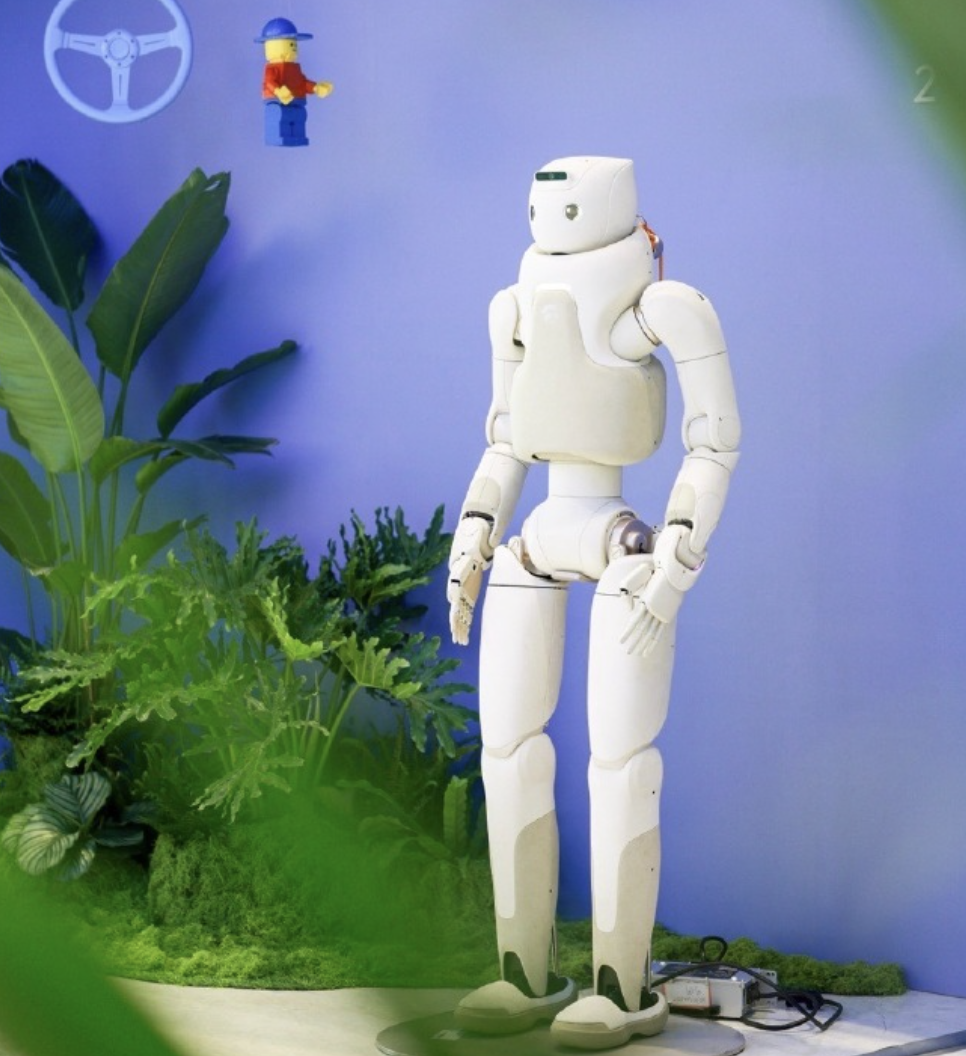
The third-generation humanoid robot is aptly named "Meow Meow Head" to serve as a constant reminder: robots are ultimately meant to accompany humans, not stand on display platforms. Appearance, movements, and reaction speed all influence whether humans are willing to accept them in the long run.
Fourier's technological ecosystem closely resembles that of intelligent vehicles: the foundation consists of core components, the middle layer includes the body and system, and the upper layer encompasses perception, decision-making, and intelligence.
The objective is not to pursue "the strongest individual model" but to emphasize collaboration from body to brain. This is why they introduce high-computing-power platforms while repeatedly emphasizing that it's "not just about hardware stacking." The significance of computing power lies in its ability to support multimodal understanding and end-to-end decision-making.
The true challenge for robots lies in "how to translate understanding into safe, controllable actions." Robots are more akin to walking intelligent platforms. Fourier provides the body, joints, control, and foundational capabilities, while the applications and models that continuously evolve around this body truly enrich the robot.
Summary
In essence, Fourier's perspective on robots is that they should first learn to understand, respect, and protect humans, rather than simply mimicking them. This is the key to Fourier's successful transition from rehabilitation to humanoid robots and from single scenarios to general-purpose platforms.
-
![]()
Can Domestic Autos Still Hold Their Own Against Joint Venture Brands?
-
![]()
Domestic Cars Priced Above 300,000 Yuan Are Gaining Ground in Chengdu
-
![]()
BBA Takes a Leap of Faith: No Sales, No Tomorrow
-
![]()
Chengdu Unfaded: BYD and Geely Vie for Championship While the Weak Exit
-
![]()
3X Salary Poaching, 40 Executives Depart: Autonomous Driving Talent is Batch-Producing Embodied AI Leaders
-
![]()
Apple’s Foldable iPhone and Huawei’s Straightened Pura X: Two Paths, One Vision
-
![]()
Dong Yuhui Departs with Traffic, Yet East Buy Crafts a Profit-Generating Engine
-
![]()
Did Alibaba Say AI Investments Would Pay Off in Three Years, Then Turn Around and Ask Shareholders for HK$80 Billion to 'Tide Over'?