60 Million or 100 Million Yuan? Robot Firms Splurge on Spring Festival Gala: Flexing for Capital
 12/18 2025
 647
647
This is a commentary piece from Pencil News, published at 8 a.m. I'm Wang Fang, the founder of Pencil News. In this era of AI, I make an effort to write more drafts manually. We're actively covering stories about tech companies and welcome any recommendations you may have.
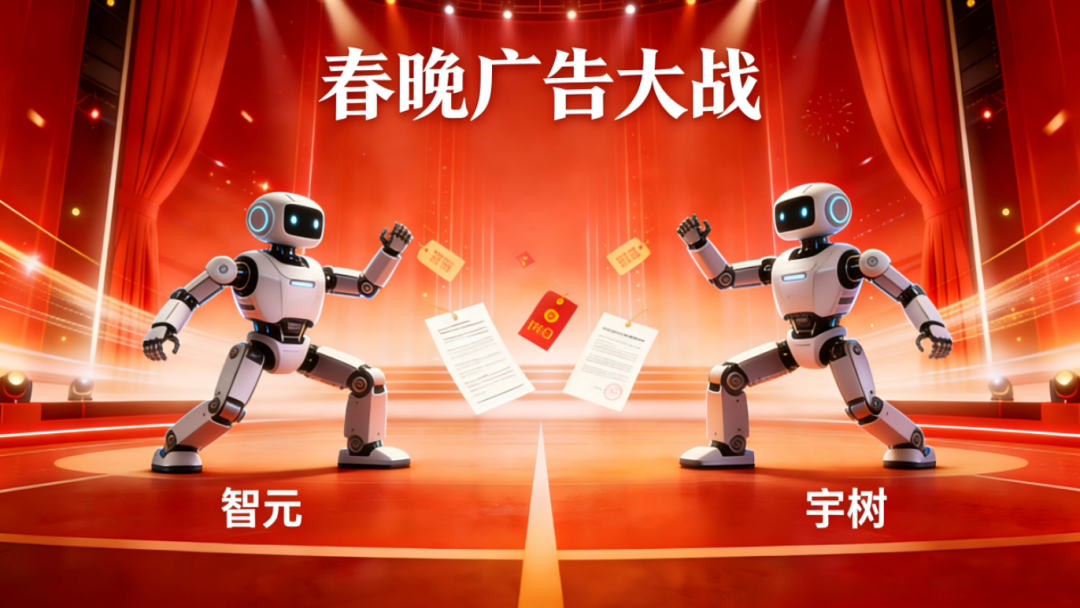
Numerous media outlets have reported that the bidding war for advertising slots during the Spring Festival Gala has kicked off, with many robot companies vying for the opportunity. Among them, Zhiyuan and Unitree are engaged in the most intense competition. Zhiyuan took the lead with a staggering bid of 60 million yuan, only for Unitree to up the ante to 100 million yuan.
But don't get too carried away—these figures haven't been officially verified. Zhiyuan gave a vague response, saying, "It's not true," without clarifying what exactly was false. Unitree, on the other hand, chose not to respond at all.
After reaching out to multiple sources, it appears that the competition for robot advertising slots during the Spring Festival Gala has indeed commenced. However, whether the sums involved are as inflated as reported is still up in the air.
I view this as a positive sign, indicating that the robot industry is flush with capital. According to industry analysis, in the first nine months of 2025, China's robot industry witnessed 610 investment deals, totaling approximately 50 billion yuan, marking a year-on-year increase of over 250%.
Still, I can't help but wonder: Investors in these robot companies, when you see your projects spending millions, tens of millions, or even over 100 million yuan on the Spring Festival Gala, doesn't it give you pause? If it doesn't bother you at all, then no one will have a problem.
The main question I aim to address in this article is: Why are robot companies splurging on the Spring Festival Gala at this particular juncture?
- 01 - Does It Hurt Capital?
First off, who would have an issue with this? The Spring Festival Gala certainly wouldn't mind: More sponsorships translate to more resources, leading to better shows and happier audiences.
Robot companies have even less reason to complain. My intuition tells me that their primary objective isn't to sell products but to signal to capital and the government: "I'm the industry leader. Invest in me if you have the funds, or provide resources. If I plan to go public in the future, give me the green light."
If we liken this sponsorship battle to a horse race, the focus isn't on whose robot walks faster, grips more steadily, or performs better. Instead, it's about who can seize the cognitive high ground first and attract capital attention more swiftly.
Some might inquire, how do you know they're not doing it to sell products?
For B2B scenarios, like industrial robots, their clients can be easily listed in an Excel sheet, eliminating the need for the Spring Festival Gala as a customer acquisition channel.
For household scenarios, there simply aren't enough buyers.
With insufficient intelligence and dexterity, who would buy them? Take dexterous hands as an example—industry insiders tell me it could take 15 years for them to enter ordinary households. They lack the strength to handle tasks like moving parcels and have short lifespans, making frequent repairs unbearable for household users.
Thus, from a product-selling standpoint, splurging on the Spring Festival Gala may not be the most judicious choice for robot companies. The Spring Festival Gala is a perfect channel only if your product is meant for universal use.
Take WeChat as an example. In 2015, WeChat officially became the exclusive new media partner of the Spring Festival Gala, investing around 53 million yuan and distributing 500 million yuan in red envelopes. That year, WeChat red envelope interactions totaled 1.01 billion times. Within days, WeChat Pay users surged from less than 8 million to 200 million.
Therefore, robot companies' heavy investment in the Spring Festival Gala is likely for capital and resources: to establish a national market position, lay the groundwork for financing and going public, and to drive some product orders.
Because of this, I directly asked capital earlier: Does it hurt you? If it doesn't, then no one will have an issue. After all, these companies' subsequent financing and going public will also bring significant returns to capital—we're all in this together.
- 02 - Is It Sustainable?
I'm merely raising a long-term concern: Before products gain a large-scale paying user base, is this capital "hype" game truly sustainable?
What is "hype"? I invest in the angel round, you in Series A, and someone else in Series B—raising rounds one after another until IPO, regardless of product, market, or revenue, and without users voting with their wallets.
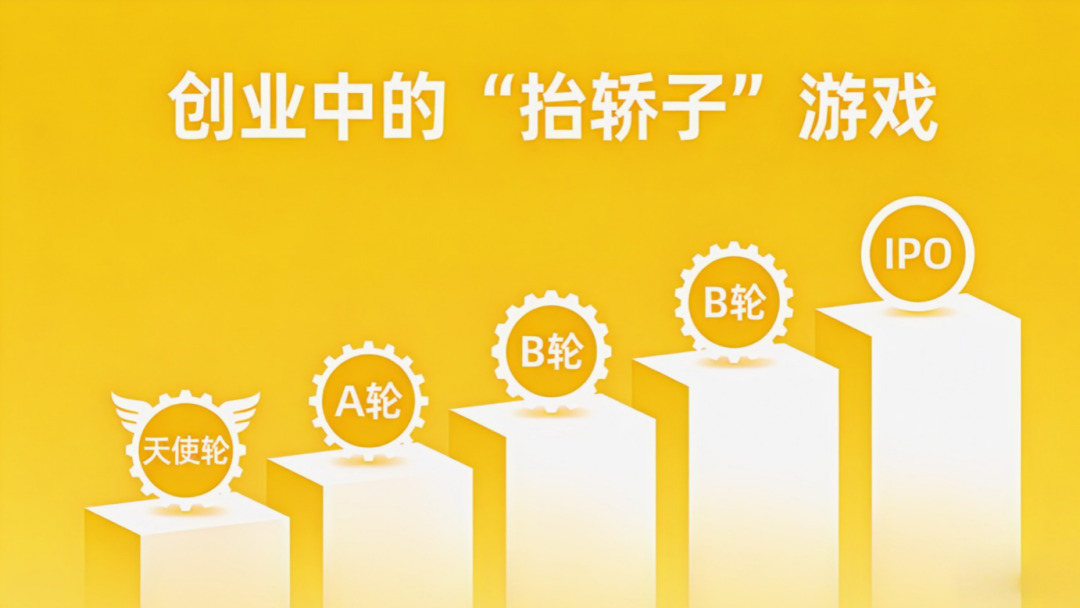
How long can this game last? I'm not just asking rhetorically—I genuinely don't know the answer.
Recently, the head of a VC firm told me that over the past decade, the vast majority of equity investors haven't made money. A key reason is investing in companies with only "hype" value, lacking sufficient market demand for their products.
I won't name specific companies, but look at the autonomous driving sector—does it fit this scenario? Hype has created a bunch of low-differentiation, low-revenue, high-loss unicorns crowded at the IPO gate. It pains me to see this.
Looking back at history, similar situations occurred in the AI, mini-program, and shared economy sectors: investment frenzy with uncertain returns, making later entrants and investors more cautious.
Will the robot sector follow suit? I hope not.
The hype around humanoid robots is backed by factual data—but these numbers don't equate to commercial success, not even close.
On one hand, humanoid robots are indeed starting to secure real orders and contracts:
Zhiyuan and Unitree jointly won a humanoid robot procurement project totaling approximately 124 million yuan, involving full-size robots and accessory services.
Another company, Ubtech, also secured nearly 100 million yuan in industrial humanoid robot orders and entered automotive production line scenarios.
These cases demonstrate that robots are no longer just conceptual products—they have practical applications in vertical scenarios like industry, logistics, and manufacturing.
However, at this stage, it's still "initial deployment," not "household penetration": Many robots still perform limitedly in real-world scenarios, requiring strong technical and scenario adaptation. The "future scenario" of humanoid robots entering every household and replacing human labor remains distant.
Given how far we are from large-scale application, shouldn't money be spent more wisely? Invest in technologies with real utility, products that truly reduce costs and generate revenue, and solutions that quickly enter real-world scenarios rather than flashy marketing.
Capital can temporarily drive hype, but the market and users are the ultimate tests of long-term value.
Let's hope that in the coming years, humanoid robots won't just appear on the Spring Festival Gala but also on production lines, in factories, hospitals, and households. Only then will this investment truly be worth it.
This article does not constitute any investment advice.
-
![]()
Can Domestic Autos Still Hold Their Own Against Joint Venture Brands?
-
![]()
Domestic Cars Priced Above 300,000 Yuan Are Gaining Ground in Chengdu
-
![]()
BBA Takes a Leap of Faith: No Sales, No Tomorrow
-
![]()
Chengdu Unfaded: BYD and Geely Vie for Championship While the Weak Exit
-
![]()
3X Salary Poaching, 40 Executives Depart: Autonomous Driving Talent is Batch-Producing Embodied AI Leaders
-
![]()
Apple’s Foldable iPhone and Huawei’s Straightened Pura X: Two Paths, One Vision
-
![]()
Dong Yuhui Departs with Traffic, Yet East Buy Crafts a Profit-Generating Engine
-
![]()
Did Alibaba Say AI Investments Would Pay Off in Three Years, Then Turn Around and Ask Shareholders for HK$80 Billion to 'Tide Over'?