150 Minutes Unveiled: All About AGI - Insights from XPENG, Moore Threads, and MetaX
 12/19 2025
 654
654
The artificial intelligence landscape in 2025 is teeming with buzzworthy topics.
Throughout the year, significant advancements have emerged on both sides of the globe, with both established and emerging leaders vying for dominance in the AI realm. In January, DeepSeek R1 made a splash, drawing global attention with its efficient reasoning capabilities and open-source approach. During the Spring Festival, Unitree robots made their debut on the CCTV Spring Festival Gala, thrusting embodied intelligence into the public spotlight. Around March, several Chinese companies gained traction in the agent domain: AI agent Manus rose to prominence, while creative agents like Lovart integrated into design workflows, showcasing agents as productive forces capable of delivering tangible results. The pace of innovation accelerated further in the latter half of the year: Claude 4 and Gemini 3 successively pushed the boundaries of AI capabilities, while Nano Banana and Sora 2 went live and rapidly gained popularity, leading to a concentrated surge in the field of generative image and video creation. In mid-December, OpenAI officially unveiled GPT-5.2, propelling the annual model competition to new heights.
Reflecting on the year's pivotal milestones, the evolution of artificial intelligence is no longer confined to the enhancement of a single capability. Instead, it is advancing concurrently in multiple directions, including reasoning efficiency, agent execution, multimodal creation, and embodied intelligence. Each breakthrough brings humanity one step closer to superintelligence and has sparked profound contemplation within the industry regarding the trajectory of technological evolution, pathways for industrial implementation, and governance frameworks.
Against this backdrop, the 2025 Tencent ConTech Conference & Tencent Technology Hi Tech Day, hosted by Tencent News, took place in Beijing on December 18. The conference aimed to address the industry's pressing challenges and, through a clash of perspectives among academicians from the Chinese Academy of Engineering, renowned experts and scholars, founders of leading tech companies, and prominent investors, yielded substantial insights.
When it comes to AGI, physical AI, large model evolution, computing architectures, and embodied intelligence, what are the viewpoints of XPENG Motors, Moore Threads, MetaX, SiliconFlow, ZhiYuan, and StepFun? Below is a curated selection from NoNoise, based on on-site coverage:
TPUs Cannot Replace GPUs
Versatility: The Hallmark of GPUs
At the infrastructure level on the path to AGI, a flurry of significant developments has recently unfolded.
First, Google accelerated the commercialization of its TPU, with Meta considering large-scale adoption of TPUs in its data centers starting from 2027, potentially involving billions of dollars in procurement. This news sent ripples through NVIDIA's stock price. Shortly thereafter, two domestic GPU companies positioned as NVIDIA counterparts, Moore Threads and MetaX, went public with IPOs, triggering a wealth frenzy in the A-share market.
Does the commercialization of Google's TPU signal a paradigm shift in hardware technology towards specialized chips? Are GPUs, TPUs, and NPUs in direct competition, or do they coexist in a competitive-collaborative dynamic?
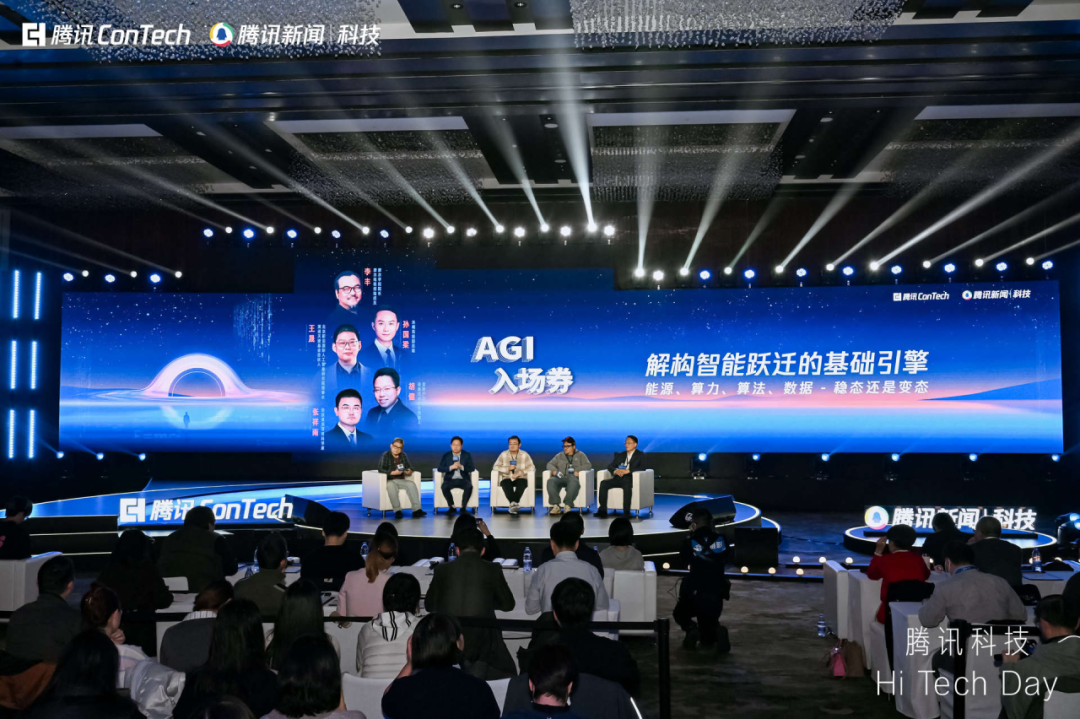
During the conference's roundtable forum, Li Feng, Dean of Moore Threads Institute, and Sun Guoliang, Senior Vice President of MetaX, both contended that GPUs and TPUs represent a market characterized by division of labor and collaboration.
Li Feng elucidated that GPUs have consistently led each computational paradigm shift due to their balanced performance and flexibility. In our rapidly evolving world, sufficient flexibility and experimental space are crucial for technological advancement. Over the long term, GPUs will coexist with other chips, but they will always remain at the forefront of this innovation arena.
In contrast, specialized chips emerge in response to service applications where algorithms have converged and achieved significant scale. TPUs, as a type of ASIC architecture chip, exemplify such specialized chips.
Furthermore, NVIDIA's enduring dominance in the computing world is also attributable to its CUDA ecosystem. Domestic GPU manufacturers are similarly constructing their ecosystems, recognizing that only an ecosystem can unite all developers.
Sun Guoliang emphasized that we are currently in a phase of rapid model iteration, with iteration speeds nearly measured in weeks. During this period, the versatility of GPUs remains their greatest asset. "From our perspective, in any industry or even for any foundational model, we are far from reaching a point where we can discuss 'convergence,'" he remarked.
Of course, customer scenarios are diverse and fragmented. Sun Guoliang believes that GPUs and ASICs will coexist for an extended period.
Additionally, NVIDIA's continued dominance in the computing world is also due to its CUDA ecosystem. In this regard, domestic GPU manufacturers are similarly constructing their ecosystems, acknowledging that only an ecosystem can bring together all developers.
Humanoid Robots: Easier Path to Commercialization
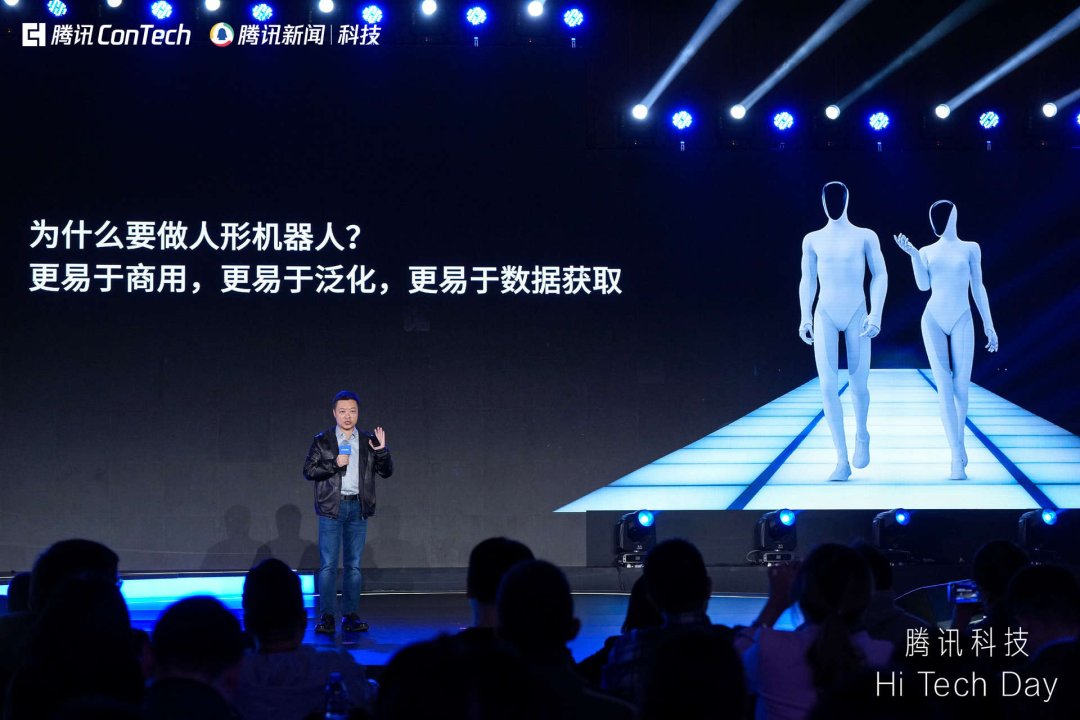
He Xiaopeng, Chairman and CEO of XPENG Motors, shared his profound insights and practices on "physical AI."
He Xiaopeng believes that artificial intelligence is transitioning from the digital realm to the physical world. He proposed that new patterns are emerging in the AI era: On one hand, data, computing power, and models will continuously reinforce each other, creating a "black hole" effect that accelerates intelligence evolution. On the other hand, a multitude of agents can collaborate in a decentralized manner, akin to ants, each thinking and acting independently yet efficiently coordinating.
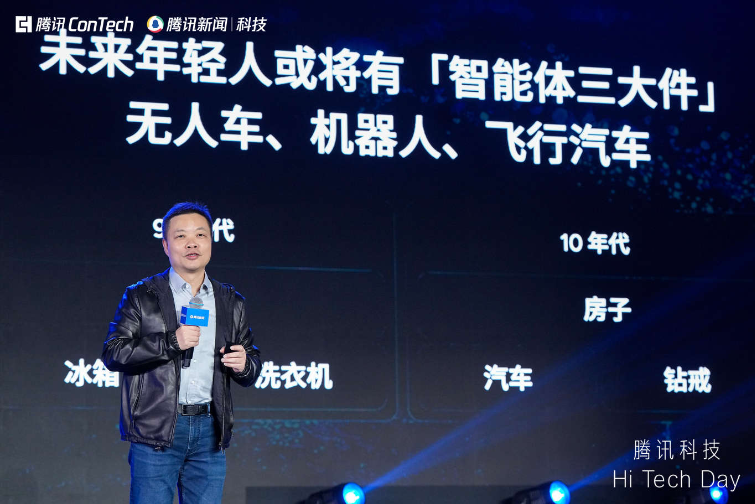
He Xiaopeng predicts that over the next decade, robots, self-driving cars, and low-altitude aircraft could become the new "three essentials" for young people's lives, comparable to the bicycles, watches, and sewing machines of earlier times, or the color TVs, refrigerators, and washing machines that followed.
In his view, cars, robots, and aircraft are essentially homologous physical AI systems, all relying on the integration of perception, decision-making, and execution capabilities at their core.
He also explained why XPENG chose to venture into the field of embodied intelligence through humanoid robots. XPENG is currently developing its eighth-generation humanoid robot, having previously worked on four generations of quadrupedal robots. However, the team swiftly realized that quadrupedal robots faced numerous challenges and were difficult to commercialize. For instance, in a home environment, a quadrupedal robot would struggle to maneuver around a bedside table.
In contrast, humanoid robots can more seamlessly integrate into human-centric real-world environments, offering broader application potential.
Regarding the application scenarios of humanoid robots, He Xiaopeng believes that European and American countries are more conducive to industrial deployment, while China may be better suited for commercial deployment initially, with short-term difficulties in penetrating household settings.
Industrial Intelligence: The Competitive Edge of Future Manufacturing Systems
Academician Chai Tianyou from the Chinese Academy of Engineering systematically expounded on the fundamental reasons for the rise of intelligence from a historical perspective of industrial revolutions. He pointed out that the essence of each industrial revolution has been a collaborative transformation of material flow, energy flow, and information flow: Material transformation relies on energy, and how energy is efficiently utilized ultimately hinges on information flow, namely perception, decision-making, and execution capabilities. For example, the advent of the steam engine, electricity, and digital computers respectively drove the development of proportional control, PID control, and automation and informatization systems—the enhancement of information flow capabilities has consistently been the key to industrial progress.
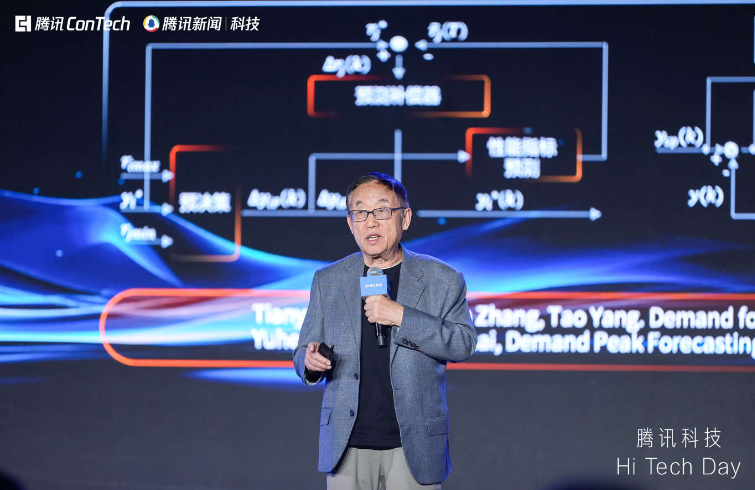
Academician Chai Tianyou believes that a new industrial revolution is underway, with its core lying not just in energy transformations but in another leap in information flow. Technologies such as big data-driven artificial intelligence, industrial internet, digital twins, and the metaverse enable industrial systems to complete perception, decision-making, and optimization in the digital space for the first time, then safely apply the results to real production processes.
He particularly emphasized that industrial AI differs fundamentally from general-purpose large models: Industrial scenarios demand "error-free decision-making, perception, and execution," pursuing verifiable, optimizable, and closed-loop intelligent capabilities.
-
![]()
Which Brands Will Be the First to Skip the Next Chengdu Motor Show?
-
![]()
Walmart: Steady Performance Marred by Overvaluation Concerns
-
![]()
Can Domestic Autos Still Hold Their Own Against Joint Venture Brands?
-
![]()
Domestic Cars Priced Above 300,000 Yuan Are Gaining Ground in Chengdu
-
![]()
Sedans Face an Uphill Battle in Sales
-
![]()
BBA Takes a Leap of Faith: No Sales, No Tomorrow
-
![]()
Chengdu Unfaded: BYD and Geely Vie for Championship While the Weak Exit
-
![]()
3X Salary Poaching, 40 Executives Depart: Autonomous Driving Talent is Batch-Producing Embodied AI Leaders