Robot Steps onto CATL's Production Line: The Battery Giant's AI Waltz
 12/19 2025
 680
680
Produced by Zhineng Technology
If we liken CATL's development trajectory over the past decade to a dance, it would undoubtedly be the "Battery Ballet"—a performance centered on power batteries, energy storage, and electrochemical systems, pushing the boundaries of scale, cost, and safety to their limits.
However, as AI competition intensifies both domestically and globally by the end of 2024, CATL has also begun to grace the stage with its AI-infused dance moves, joining the global industrial ensemble in a faster-paced and more intricate "AI Waltz."
Humanoid robots represent the most tangible and readily perceptible focal point of this transformative dance.
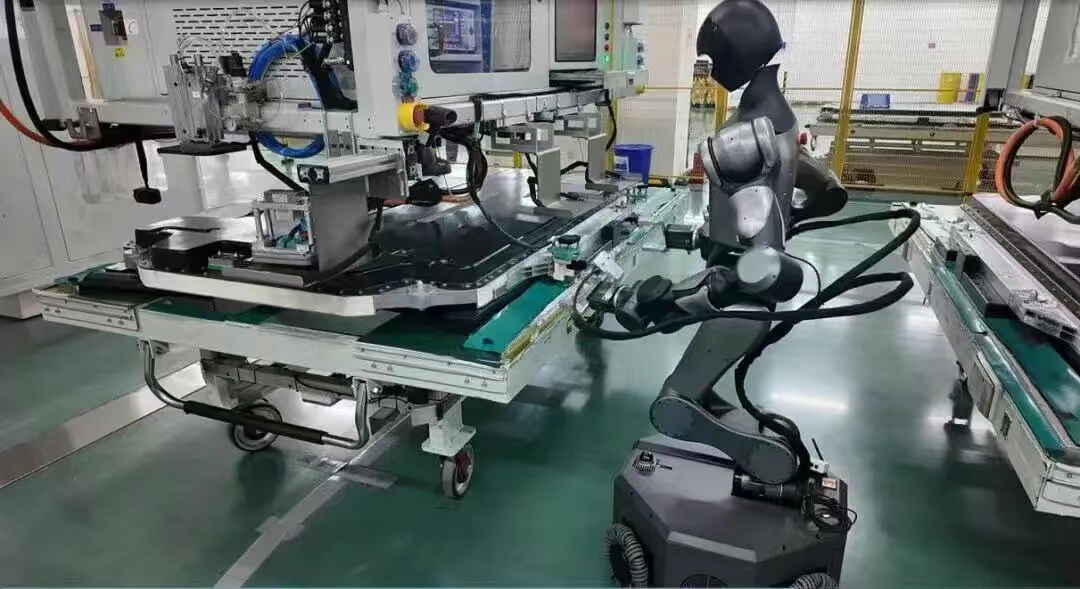
● Why is CATL shifting its focus from batteries to humanoid robots? Is this merely a trend-chasing move, or is there a deeper industrial rationale at play?
From our vantage point, the answer is not overly complex. Humanoid robots present a highly compatible application scenario for CATL's core competencies.
Batteries serve as the primary power source for robots, naturally aligning with the three key directions CATL is pursuing: high energy density, high safety, and system capabilities deeply integrated with AI.
Compared to the new phase of scale competition and price negotiations in the new energy vehicle sector, humanoid robots offer a fresh, "still-being-defined" space that allows for collaborative standard-setting.
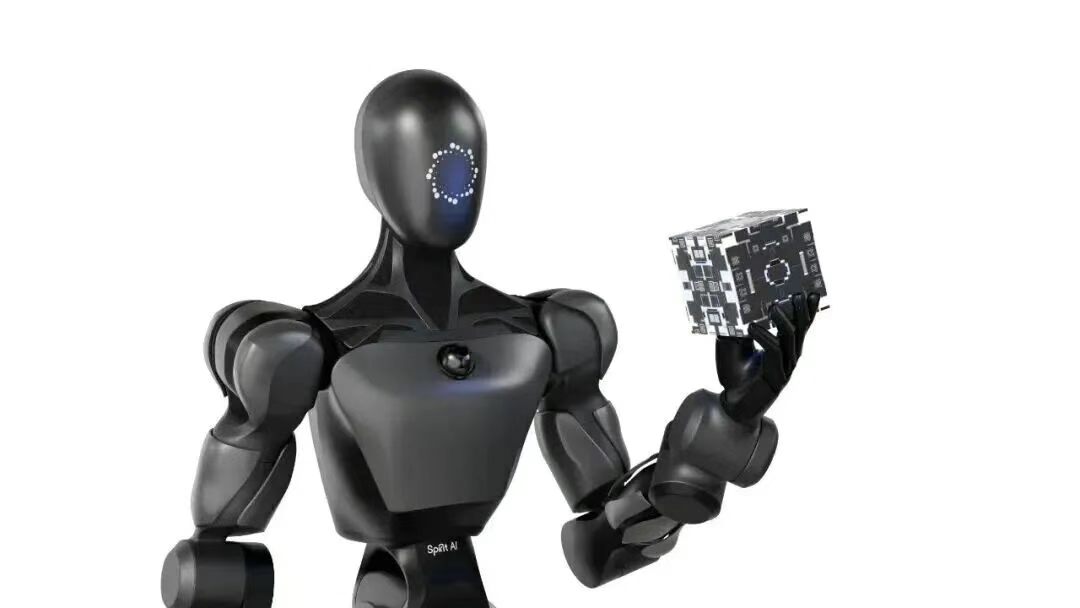
This explains why, at this juncture, robot manufacturers still pay limited attention to batteries, while battery companies like CATL appear exceptionally proactive.
◎ For robot manufacturers, the core challenge lies in validating the scenario and capabilities;
◎ For CATL, robots represent a potential growth area that can be bet on early and nurtured over the long term, while also driving the evolution of battery technology, particularly in areas such as solid-state batteries, high-rate discharge, and system-level battery safety.
● Humanoid Robot "Xiaomo"
What truly convinced the outside world that CATL is not merely "telling tales" but is genuinely engaged in this AI waltz is the deployment of the humanoid robot "Xiaomo" at the Zhongzhou Base.
Unlike many robot applications that remain stuck in the demonstration or conceptual phase, "Xiaomo" directly entered CATL's production environments, specifically the EOL and DCR processes of the power battery PACK production line.
This is a process that has long relied on manual labor, demanding operation under conditions of multiple models, small batches, and high flexibility, while also involving hundreds of volts of high-voltage plugging, inherently posing safety risks and consistency challenges.
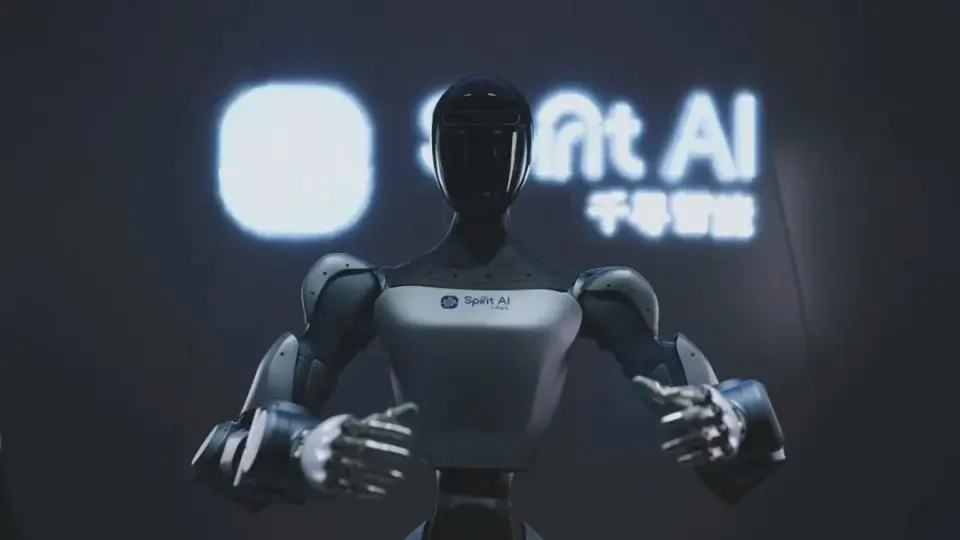
◎ "Xiaomo" commenced its trials in this process, utilizing an end-to-end visual-language-action model to adapt to material deviations, point variations, and autonomously adjust its posture;
◎ Dynamically controlling force during the plugging and unplugging of flexible harnesses to prevent damage;
◎ In terms of rhythm and success rate, it has achieved performance on par with or even surpassing that of skilled workers, with a stable plugging success rate exceeding 99%.
With numerous subsequent Pack production lines at CATL, in scenarios where robots replace human workers, CATL's humanoid robot applications have demonstrated their value in real, high-risk, high-consistency industrial settings.
This step is crucial, as CATL first integrates the technology into its own manufacturing system. By starting with the production line to refine robot capabilities, AI models, and battery systems into an internal closed loop, this approach holds more long-term value than simply making external investments or releasing conceptual products.
Since 2024, CATL has continuously increased its investment in embodied intelligence through its capital platform, investing in Qianxun Intelligence and Vita Power, participating in major financing rounds for Yinhe General, and exploring cooperation opportunities for key robot components and joints with companies like Fulin Precision Works at the industrial chain level.
These actions are not driven by short-term returns but revolve around a core objective: entering the "engineering site" of the humanoid robot industry as early as possible, rather than remaining on the technical periphery.
CATL has consistently maintained its "mainline advantages" in its robotics布局 (layout). Whether it's the self-developed batteries equipped in "Xiaomo" or the future pioneering application of solid-state batteries in humanoid robots, essentially, it is leveraging robots—a highly demanding scenario—to validate and amplify the differentiated value of battery technologies. The robotics sector serves as a "testing ground" and "amplifier" for next-generation battery technologies.
This path may not be the quickest, but it is steady and reliable. Humanoid robots are already making an impact on three levels:
◎ First, driving intelligent manufacturing toward greater flexibility and intelligence;
◎ Second, providing real-world application scenarios for cutting-edge technologies like solid-state batteries;
◎ Third, enabling CATL to occupy a more proactive position in the long-term narrative of AI and energy convergence.
Summary
If the "Battery Ballet" emphasizes scale, efficiency, and cost, then in this "AI Waltz," humanoid robots still have a long journey ahead before achieving true scalability. The approach is to start behind the scenes, enter production lines, delve into engineering details, and then gradually expand.
-
![]()
Which Brands Will Be the First to Skip the Next Chengdu Motor Show?
-
![]()
Walmart: Steady Performance Marred by Overvaluation Concerns
-
![]()
Can Domestic Autos Still Hold Their Own Against Joint Venture Brands?
-
![]()
Domestic Cars Priced Above 300,000 Yuan Are Gaining Ground in Chengdu
-
![]()
Sedans Face an Uphill Battle in Sales
-
![]()
BBA Takes a Leap of Faith: No Sales, No Tomorrow
-
![]()
Chengdu Unfaded: BYD and Geely Vie for Championship While the Weak Exit
-
![]()
3X Salary Poaching, 40 Executives Depart: Autonomous Driving Talent is Batch-Producing Embodied AI Leaders