Doubao: Potentially Reviving Motorola's Glory
 12/22 2025
 619
619
Author/Wang Miao Art Editor/Gu Qingqing
Lately, the buzz surrounding the 'Doubao Mobile Phone' has been reaching a fever pitch.
Recently, it's come to light that ByteDance is forging ahead with AI collaborations with numerous mobile phone manufacturers. Rather than venturing into manufacturing its own phones, it's opting to pre - install AIGC capabilities at the system level, seamlessly integrating them into the mobile phones that users rely on daily.
The clues are pretty straightforward. ByteDance has denied any plans to develop its own mobile phones but hasn't shied away from the concept of 'system - level cooperation'.
The Doubao Mobile Assistant has already made its mark. Engineering prototypes with ZTE have hit the market, and more manufacturers are in the midst of negotiations. Among these potential partners, Lenovo's name keeps popping up.
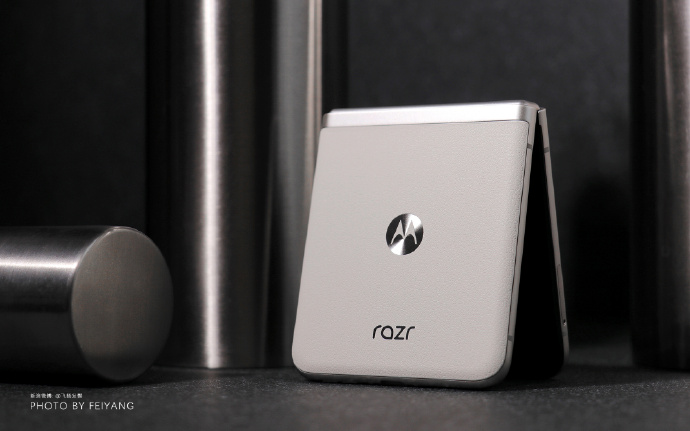
Digging deeper into the brands, this whole situation gets even more fascinating. Lenovo owns the mobile phone brand Motorola. The iconic phrase 'Hello Moto' has been absent from mainstream conversations for quite some time.
Now, the big question looms: If the next AI mobile phone, deeply integrated with Doubao, isn't a small - batch engineering machine from ZTE but a mass - produced model for the global market, could Motorola be the one behind it?
This isn't just wishful thinking; it's a point where ByteDance and Lenovo seem to be converging given their current circumstances.
01. Starting with ZTE, Doubao Tests the Waters of System - Level Integration
Doubao's foray into the mobile phone arena didn't kick off with rumors of a 'self - developed mobile phone'. Instead, it took a rather measured approach.
In early December, the technical preview version of the Doubao Mobile Assistant was rolled out. This isn't your run - of - the - mill app. It's an AI assistant that collaborates with mobile phone manufacturers at the operating system level, with the explicit goal of enabling AI to truly get involved in the execution process.
Shortly after, ZTE took the lead in implementing it. The Nubia M153 engineering prototype went on sale in limited quantities on ZTE's official store. With decent specs and a not - too - steep price, it seemed more like an experimental device aimed at validating model capabilities and system coordination.
This choice speaks volumes. ByteDance didn't go for the hottest brand or chase after high sales volumes. Instead, it selected a partner with a high willingness to cooperate and the ability to quickly navigate system permissions.

In terms of capabilities, the Doubao Mobile Assistant goes far beyond just 'conversation'. It can seamlessly call services across different applications. Users can order food delivery, book flights, compare shopping prices, and even attempt to handle tasks within social apps with a single command. This represents a significant leap for current large models, transitioning from simply 'answering' to actually 'executing'.
However, this step also treads on some real - world boundaries. Multiple super apps are wary or even refuse cross - application calls, which isn't surprising. System - level AI seeking execution rights is bound to redistribute traffic and control.
So, from the get - go, the significance of ZTE's mobile phone wasn't about how many units it could sell. It was about testing how far system - level AI could go in a real mobile phone environment.
For ByteDance, this initial step has been accomplished. Now, it's looking to scale up.
02. Lenovo Mobile's Predicament Drives It to Seek New Opportunities
If we only consider the hype in the mobile phone market, Lenovo doesn't seem to be in the limelight. But when it comes to global shipments, Lenovo is no small fry. Its mobile phone business is mainly concentrated under the Motorola brand, with a strong overseas focus.
According to publicly available market data, Motorola still maintains a significant global shipment volume. However, the problem is glaring. It's not lacking in hardware capabilities or distribution channels. What it has been missing in recent years is a clear and compelling new narrative.
The competition among Android phones has long since moved beyond just stacking up specs. Chips are pretty much uniform across the board, and imaging capabilities are becoming more and more similar. What truly sets them apart is the system experience and ecological capabilities, which happen to be the areas where Lenovo mobile phones have been struggling to strengthen.
Lenovo hasn't been sitting idle, though. On the PC side, it has made significant investments in AI and is well - versed in collaborations with Volcano Engine and Doubao. But on the mobile front, it has been lacking a quick and effective way to enhance user perception.
Developing its own large model would be a time - consuming and costly endeavor for Lenovo, and it might not even be the right fit. Introducing mature large model capabilities needs to be done in a 'deep' enough way; otherwise, it would just be a negligible feature.
Against this backdrop, Doubao's emergence presents a realistic and attractive option for Lenovo mobile phones. It's not just a conceptual collaboration but a product form that has already proven its viability at the system level.
03. Why a Doubao - Lenovo Partnership Could Be a Win - Win
From ByteDance's perspective, the logic is crystal clear. If AI remains confined to apps, it will always be at a disadvantage. The real value lies in system - level access, becoming the user's unconscious first choice.
Doubao is already laying the groundwork. Input methods, earphones, and assistants - these seemingly unrelated products all point towards the same goal: cultivating the habit of 'turning to Doubao for anything'. Once this habit is firmly established, moving to the system level will face much less resistance.
On the other hand, Lenovo can offer a sufficiently large platform. Motorola's user base spans multiple countries, which, for ByteDance, represents not just a domestic market but a global one.

From Lenovo's standpoint, introducing Doubao isn't just about adding an AI feature. If the cooperation is deep enough, it has the potential to create a significantly different path in terms of system experience compared to other Android manufacturers.
It's not about just saying 'we have AI too'. It's about integrating AI into the execution layer, making it truly useful for users.
A more practical aspect is that both parties are on the lookout for new monetization methods. AI assistants require continuous investment, and mobile phone manufacturers' profit margins are under pressure. New cooperation models around traffic distribution, membership subscriptions, and service sharing are being actively discussed.
This doesn't mean the road will be smooth sailing. System - level AI is bound to clash with the existing ecosystem, with permissions, privacy, and commercial boundaries all posing complex challenges.
However, at least at this stage, ByteDance and Lenovo's goals are highly aligned. Both need a new variable to shake up the current situation.
Summary: Doubao Seeks a Gateway, While Lenovo Aims for a Comeback
Going back to the initial question: Will the next 'Doubao Mobile Phone' truly make an appearance? Based on the current information, ByteDance doesn't seem to have plans to launch a mobile phone with its own brand.
But if we look at it from a different angle, the answer might already be in the works. System - level AI doesn't necessarily need a new brand; it needs a carrier that can achieve volume, effective implementation, and user acceptance.
For Lenovo, Motorola is a well - established but somewhat dormant name. For ByteDance, Doubao is looking for a sufficiently large gateway to validate the possibility of AI transitioning from a tool to a system.
These two paths are converging in reality. If one day, 'Hello Moto' starts making frequent appearances again, and behind it stands an AI assistant deeply involved in execution, it wouldn't be all that surprising.
The competition for AI mobile phones might not start with who builds the first phone but with who truly changes user habits first.
-
AI's Moment of Truth: When 'Burning Cash' Starts to 'Pay Back'
-
![]()
Harmony Intelligent Mobility Alliance Advances Further in the Automotive Realm
-
Lianbo Shares: Core Product Quantities Up, Prices Down; Capacity Utilization Dips Yearly, R&D Investment Lags Behind Peers
-
![]()
The Vala Pro, Based on the Pure Electric Ruisheng Ace M7 and Priced at 268,000 Yuan—Is It a Worthwhile Purchase?
-
![]()
Which Brands Will Be the First to Skip the Next Chengdu Motor Show?
-
![]()
Walmart: Steady Performance Marred by Overvaluation Concerns
-
![]()
Can Domestic Autos Still Hold Their Own Against Joint Venture Brands?
-
![]()
Domestic Cars Priced Above 300,000 Yuan Are Gaining Ground in Chengdu