Doubao Mobile Phone: Rebuilding the Gateway to the AI Era
 12/22 2025
 721
721

Author: Lin Feixue
Editor: Hu Zhanjia
Operations: Chen Jiahui
Produced by: LingTai LT (ID: LingTai_LT)
Header Image: Publicly available online
On December 19, according to reports from multiple media outlets including Jiemian, ByteDance is advancing collaborations with hardware manufacturers such as Vivo, Lenovo, and Transsion to develop AI-enabled mobile phones. These devices will come pre-installed with AIGC plugins, allowing ByteDance to gain user entry points and reverse its current passive stance in AI execution.
Relevant media outlets reached out to ByteDance, Vivo, Lenovo, Transsion, and other manufacturers for confirmation. As of press time, none of the manufacturers had responded to the news.
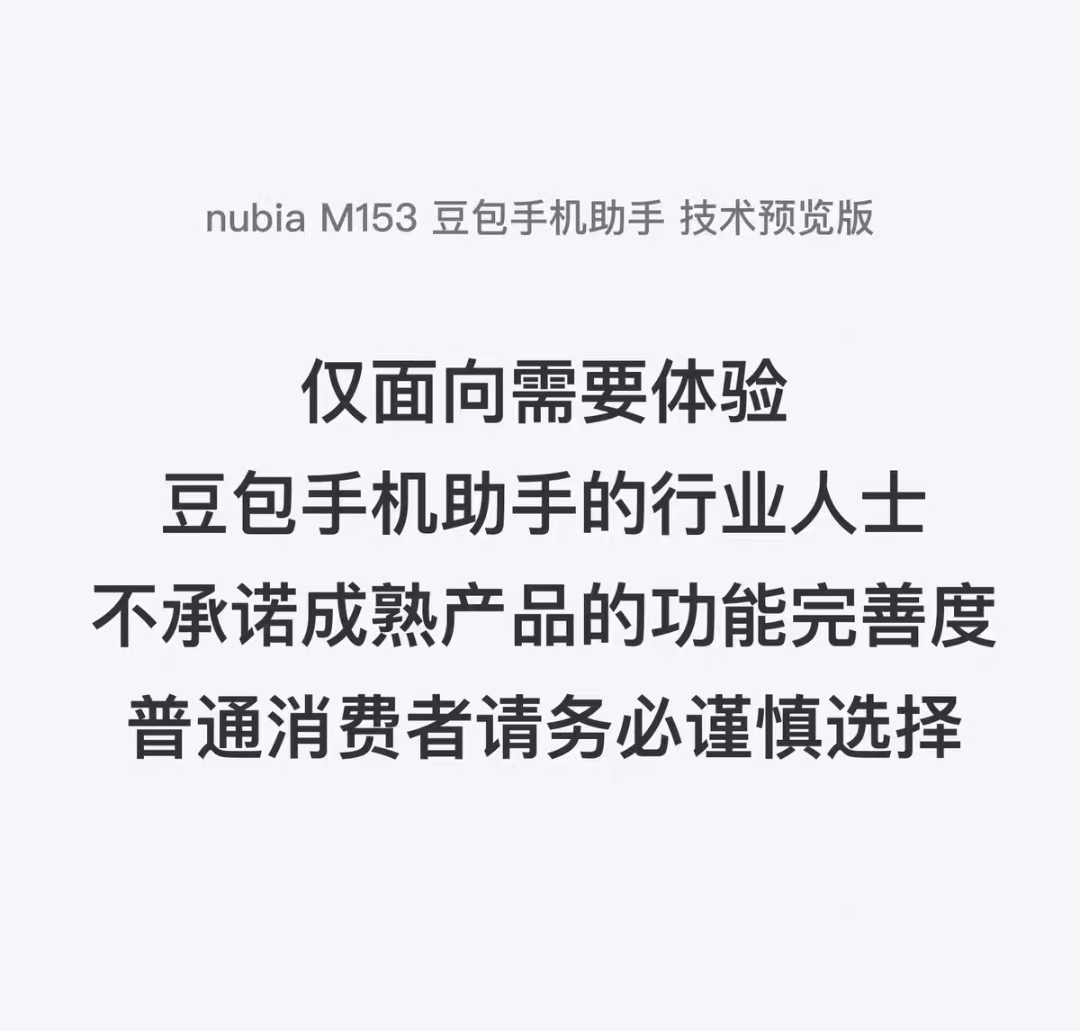
Just recently, on December 1, Doubao partnered with ZTE to launch its first system-level AI mobile phone, featuring a preview version of the Doubao Mobile Assistant technology. Priced at 3,499 yuan, the phone sold out immediately upon its December 1 release, with prices surging on secondhand platforms due to automation restrictions imposed by multiple apps. The price quickly corrected, and official sales resumed cautiously. Over a span of just over 20 days, the Doubao AI mobile phone went through a relatively complete market testing cycle. On December 16, 2025, sales of the Doubao AI mobile phone resumed, but this time it was limited to a small number of users, with officials stating that production would not be expanded.
Previously, the engineering prototype equipped with the Doubao AI assistant was once hyped up due to its scarcity, with transaction prices even reaching 6,529 yuan. However, it quickly dropped to just over 4,000 yuan within a few days, a decline of over 25%.
Behind the excitement lies a deeper struggle over 'who controls user entry points.' The ripple effects are spreading from the application interface to the system's core, disrupting the established mobile internet interaction models, permission frameworks, and traffic distribution systems.

Big Tech Firms Draw Red Lines Against Automatic Execution
According to comprehensive information from Tianeyecha Media, the day after the Doubao AI mobile phone was released, users reported encountering 'abnormal login environment' warnings and forced logouts or functional restrictions across multiple big tech apps. Subsequently, more platforms restricted access or functionality for users of this phone. Particularly in apps with account systems and payment capabilities, the system directly blocked simulated operations by the Doubao AI assistant. Numerous users reported issues such as blocked page redirects, failed transfers, and restricted automation in community feedback.
Chronologically, these restrictions were almost uniformly implemented within 24 hours of the Doubao AI phone's release, all targeting the same issue: AI's proactive cross-application task execution. Platforms drew red lines under the guise of 'abnormal login environments' and 'security protection mechanisms,' explicitly rejecting external programs' access to platform services through 'non-human' means.
On the surface, this is a battle over system permissions and risk control strategies, with platforms aiming to protect user funds and information security. However, the deeper reality is that AI-driven system behaviors directly challenge how apps are used, how information is distributed, and how user engagement is maintained.
Traditional app operations rely on users actively entering the platform. Whether searching, browsing, clicking, or adding items to a cart, each step is integrated into the platform's risk control, recommendation, and advertising systems. Take local service platforms as an example; their business depends on user engagement within the app, from displaying stores, collecting coupons, evaluating services, to completing payments—each step drives conversions. Similarly, other big tech apps guide user choices through pages and content, recording behaviors to form data that optimizes subsequent distribution.
However, the Doubao AI mobile phone offers a pathless experience. Users no longer rely on homepage recommendations or engage in searching, browsing, or favoriting. Instead, they articulate a 'need' in a single sentence, which the AI automatically parses and triggers actions. The AI is unconcerned with platform structure, focusing solely on the shortest path to task completion.

In this process, platforms lose page exposure, depriving advertisers of conversion opportunities. Without behavioral paths, user labels cannot be generated. Without engagement and interaction, membership tiers, content recommendations, and task operations become unsustainable. Platform revenue models, growth strategies, and operational tactics all face challenges under this new 'AI-driven' mechanism.
Platforms are not primarily concerned with the potential user loss from 30,000 phones; rather, they fear the possibility of a new order. When AI can automatically send red envelopes, snatch limited-edition products, book movie tickets, browse product reviews, and complete check-in tasks, who can determine whether user actions are driven by 'humans' or 'AI'? When users no longer 'browse,' 'swipe,' or 'click,' platforms risk losing control over entry points.
This is not a product-versus-product competition but a battle over entry points.
The Doubao AI mobile phone is merely the first 'variable' to enter the fray. Its initial impact reveals at least one thing: platforms will not sit idly by as they lose initiative. Big tech firms' collective strategies are defensive measures against path control and content distribution.
Behind this lies the reality that application entry points are no longer impregnable in the AI era.

System-Level Dominance: The Critical Battleground
As application-level restrictions quickly spread, the Doubao AI mobile phone's 'intrusion' did not stop at app login capabilities. Instead, the competition soon shifted from the application layer to the deeper system layer. Ultimately, the boundaries of AI mobile phones are not determined by whether individual apps are open but by who holds system-level control.
From a technical standpoint, the Doubao phone's cross-application automation capability stems not from a specific feature but from its access to near-system-level operational permissions. Through visual recognition, the AI can simulate user behavior at the operating system level, effectively using the phone 'like a human.'
This approach contrasts sharply with the AI strategies of mainstream mobile phone manufacturers. Domestic manufacturers, for example, typically integrate AI assistants within their proprietary system frameworks, emphasizing assistance rather than replacement. These capabilities are often confined to manufacturer-controlled scenarios, such as schedule management, system settings, and operations within select partner apps. High-sensitivity areas like payments, social interactions, and account systems generally require manual user intervention and rely on platform interfaces or explicit authorization.
This divergence is not coincidental but reflects a consensus among manufacturers on system dominance. In the Android ecosystem, operating systems have long been heavily customized by manufacturers, making system permissions not just a technical resource but a hub connecting users, applications, and data. Once the system's core is deeply penetrated by external AI, manufacturers' control over user behavior and data flow diminishes.
Consequently, when the Doubao AI mobile phone demonstrated system-level automated operations, manufacturer vigilance quickly surfaced. Tianeyecha Media's comprehensive information reveals that mainstream manufacturers have not granted third-party AI full system control permissions. Instead, they are accelerating the development of their proprietary AI systems, emphasizing either 'on-device agent' closed-loop operations or continuously deepening AI assistant integration.
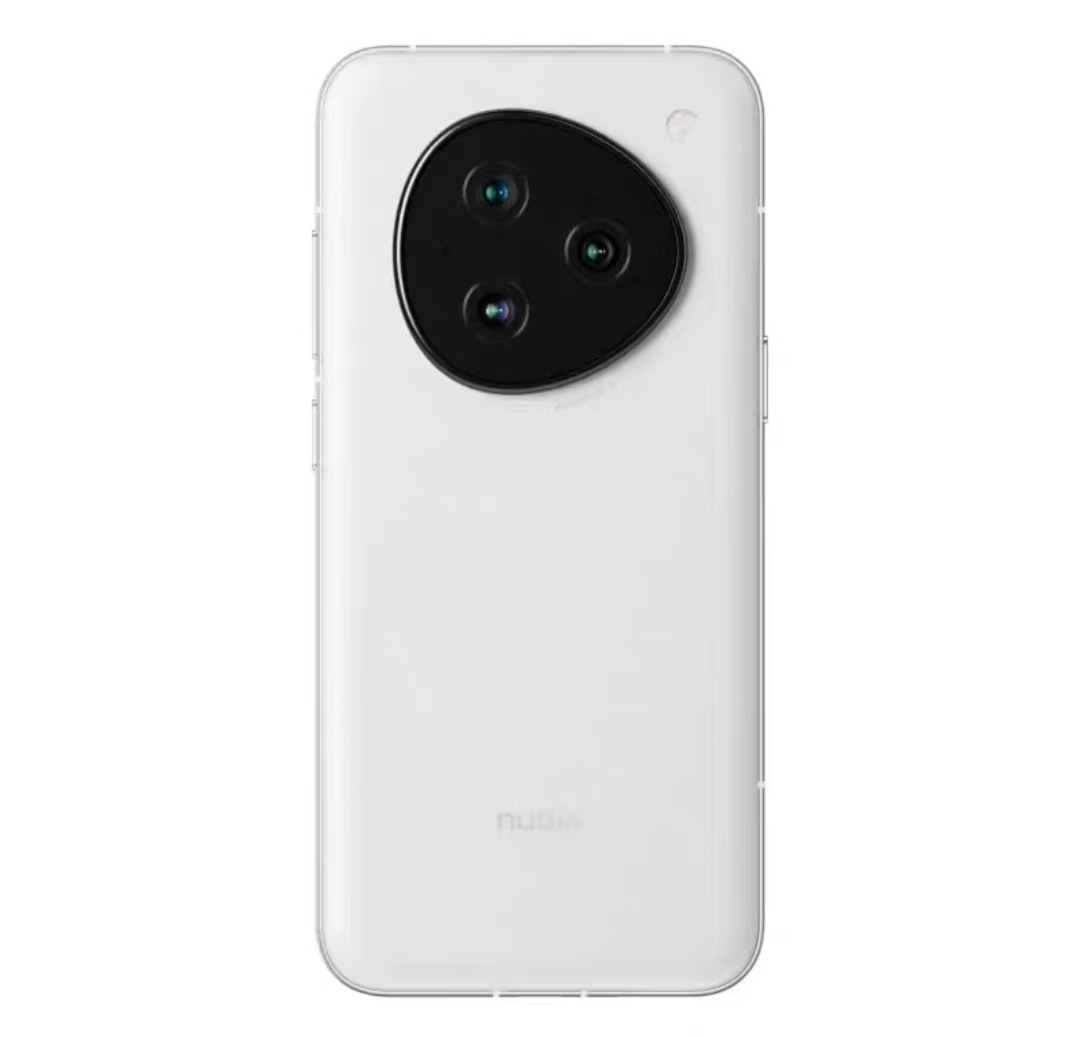
From manufacturers' perspectives, this is not a targeted move against any single company but a defense against software-defined hardware. The Doubao AI mobile phone represents a collaboration model where the model provider dictates the experience, and the hardware provider supplies the carrier (carrier). In this model, AI becomes the system's primary entry point, while hardware and systems serve as execution environments.
Thus, application-level restrictions form the first line of defense, but system-level permission tightening is the true key. This explains why, even if the Doubao AI phone regains some app login capabilities, its automatic execution scope remains significantly constrained. High-sensitivity areas like payments, finance, and social interactions are explicitly excluded, with AI limited to low-risk tasks such as queries, reminders, and organization. This shift is not a unilateral platform decision but a collective restriction imposed by both systems and applications.
In this process, the importance of system dominance is further amplified. Whoever controls the system determines the extent of AI capabilities; whoever controls permissions defines interaction boundaries. For manufacturers, the system is not just a product component but a core asset accumulated over the long term.
Therefore, the competition surrounding the Doubao AI mobile phone extends beyond product-level friction; it is a probing of system control rights. Application-level responses reveal platforms' fears of being bypassed, while system-level caution exposes hardware manufacturers' defensive stance against losing dominance.
When AI ceases to be merely a tool and begins to position itself at the system's core, conflict becomes inevitable. This tug-of-war at the system's foundation sets the stage for deeper transformations ahead.

Redefining User Entry Points: Shaking the Foundations of Business Logic
The launch of the Doubao AI mobile phone challenges not just existing boundaries but also the potential reshaping of user behavior. When AI assistants become proactive operators rather than passive tools, interaction habits between users and applications may rapidly evolve.
Over the past decade, mobile internet business models have heavily relied on path design. Users open apps, browse content, click recommendations, and conduct searches—each step forming the basis for platform algorithms to understand users. Platforms then push content and products, extend engagement times, boost conversion rates, and complete closed loops from content distribution to commercial transactions. Represented by big tech apps, this path has established a mature business logic: the longer users stay, the more accurate the information push (push), and the higher the advertising conversion.
AI mobile phones' cross-application automation disrupts this path dependency. In Practical operation demonstration (operational demonstrations) of the Doubao AI phone, users simply articulate a command, such as 'Order the cheapest spicy chicken leg burger takeout nearby.' The AI assistant automatically opens multiple takeout apps, compares prices, filters reviews, selects a merchant, enters the address, and prepares to place the order—all without manual clicks or browsing platform recommendation pages.
This 'compressed' interaction directly undermines platforms' path-based operational capabilities. On one hand, the AI assistant bypasses designed behavioral nodes like browsing, recommendations, and cart additions, depriving platforms of complete user behavioral data. This erodes the foundation for recommendation algorithms, reduces advertising precision, and complicates user persona updates. On the other hand, the AI's cross-platform price comparisons and optimal selections weaken platforms' ability to sustain user loyalty.
When AI assistants act as 'intermediaries,' automatically operating and skipping recommendation pages, merchant advertising exposure opportunities shrink, platform distribution capabilities diminish, and advertising value declines. Further impacts include potential shifts in user consumption habits. Traditionally, platforms stimulate 'latent needs' through content operations, product bundling, and user reviews. A user initially intending to buy tissue paper might, upon seeing a discounted bundle, add laundry detergent and wet wipes to their cart. However, the AI assistant's approach is goal-oriented and route-optimized; it is not swayed by page content, red envelopes, flash sales, or livestreams into making additional purchases.
From users' perspectives, the Doubao phone's operational experience garners emotional approval. Automatic price comparisons, cross-platform operations, and reduced intervention make some users feel a 'return to efficiency.' Compared to past convoluted clicks and redirects, AI phones appear more direct and convenient. Although current functionalities are immature, once habits are established, regaining users' motivation to 'open apps' will become increasingly difficult. These changes are not yet fully realized but are already underway.
The Doubao phone incident is not fundamentally about blocking a single AI but represents a control struggle centered on system permissions and user entry points. When AI no longer waits for user commands but acts proactively, when system permissions are no longer exclusively held by manufacturers but utilized by AI, and when users no longer browse platforms but rely on AI to complete tasks, the entire traditional internet business edifice may begin to crumble.
The Doubao phone serves as a wedge, prying open the cracks of this transformation. Future AI smart terminal competition will not hinge on hardware specifications or AI model capabilities but on who truly controls user entry points.
This battle for entry points has just begun.
End
-
AI's Moment of Truth: When 'Burning Cash' Starts to 'Pay Back'
-
![]()
Harmony Intelligent Mobility Alliance Advances Further in the Automotive Realm
-
Lianbo Shares: Core Product Quantities Up, Prices Down; Capacity Utilization Dips Yearly, R&D Investment Lags Behind Peers
-
![]()
The Vala Pro, Based on the Pure Electric Ruisheng Ace M7 and Priced at 268,000 Yuan—Is It a Worthwhile Purchase?
-
![]()
Which Brands Will Be the First to Skip the Next Chengdu Motor Show?
-
![]()
Walmart: Steady Performance Marred by Overvaluation Concerns
-
![]()
Can Domestic Autos Still Hold Their Own Against Joint Venture Brands?
-
![]()
Domestic Cars Priced Above 300,000 Yuan Are Gaining Ground in Chengdu