Three-and-a-Half-Year Losses Reach 6.2 Billion Yuan: Tsinghua-Backed Unicorn Zhipu AI Goes Public Amid Financial Strain
 12/24 2025
 690
690
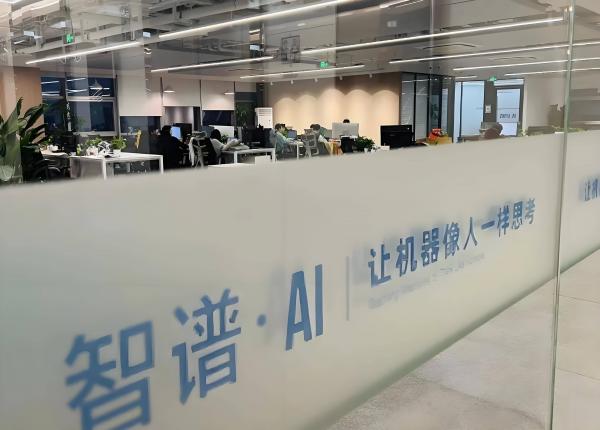
For every yuan of revenue generated, Zhipu AI faces a staggering loss of 30 yuan. From 2021 to June 2024, the company's cumulative revenue amounted to approximately 685 million yuan, while its cumulative net loss ballooned to 6.2 billion yuan during the same timeframe.
By Wan Fu
In December 2025, China's large language model (LLM) sector reached a critical juncture in the capital markets.
Just two days prior to MiniMax (Xiyu Technology) filing its prospectus, Zhipu AI (Beijing Zhipu Huazhang Technology Co., Ltd.), often dubbed the "Chinese OpenAI," took the initiative by submitting its prospectus to the Hong Kong Stock Exchange.
As a prominent startup affiliated with Tsinghua University, Zhipu AI has been enveloped in a prestigious aura since its inception. Originating from Tsinghua's KEG Lab, the creator of the trillion-parameter GLM model, and boasting a valuation of 24.4 billion yuan, it stands as a super unicorn in the AI landscape.
However, the prospectus also unveils alarming cumulative losses of 6.2 billion yuan over the past three and a half years, with revenue reaching just 191 million yuan in the first half of 2025. To sustain its technological edge, the company has nearly staked everything on R&D, expending 4.4 billion yuan in the same period.
With commercialization still in its infancy, Zhipu AI's hasty IPO amid substantial losses raises questions: Is this a desperate bid to "replenish funds" under financial duress? Surrounded by tech behemoths and vying with peers like MiniMax and Yuezhi Anmian, can this "academic" contender craft a compelling narrative about China's AGI journey for the capital markets?
Technological Prowess Amidst the 'Tsinghua' Aura, Yet Monetization Lags
Zhipu AI's journey exemplifies the classic "industry-university-research" collaboration and mirrors China's hard-tech entrepreneurial spirit.
Established in 2019, Zhipu AI's core team stems from Tsinghua University's Computer Science Knowledge Engineering Lab (KEG). Under the leadership of Professor Tang Jie, a global AI luminary, the company's strong academic heritage has propelled it to the forefront of technological innovation.
From its early GLM pre-training architecture to the trillion-parameter GLM-130B and subsequently the GPT-4 rival GLM-4, Zhipu AI has maintained full-stack independent R&D. This "hardcore" technical approach lured top investors, including Meituan, Alibaba, Tencent, and Hillhouse Capital. Following multiple funding rounds, its valuation soared to 24.4 billion yuan, positioning it among China's leading LLM providers.
Unlike MiniMax, which focuses on consumer-end products (e.g., Talkie), Zhipu AI has opted for a more stable yet challenging enterprise (B2B) route. Its revenue primarily stems from Model-as-a-Service (MaaS), offering API access and private deployments to corporate clients. In the first half of 2025, MaaS contributed 85% of its revenue.
While this model fosters high customer loyalty and average revenue per user (ARPU), its drawbacks are evident: lengthy sales cycles, high customization demands, and sluggish explosive growth. With revenue of just 191 million yuan in the first half of 2025—a notable year-over-year increase but still insufficient for a company valued at 24.4 billion yuan—its profitability remains a pressing concern.
Unraveling the 6.2 Billion Yuan Loss
For every yuan of revenue, Zhipu AI incurs a loss of 30 yuan. From 2021 to June 2024, cumulative revenue reached approximately 685 million yuan, while cumulative net losses surged to 6.2 billion yuan.
Although this figure encompasses non-operating factors like fair value changes in preferred shares, adjusted net losses still stood at 4.9 billion yuan. This implies that Zhipu AI has been spending multiples of its revenue to generate income in recent years.
Unsurprisingly, the bulk of the expenditure went into R&D and computational power. Over the reporting period, R&D expenses totaled 4.4 billion yuan, with 2023 alone witnessing 1.99 billion yuan in spending—surpassing annual revenue and even eclipsing cumulative revenue from previous years.
In the LLM race, computational power is the lifeblood—and the biggest "money pit." As model parameters expand exponentially, training and inference costs soar. To keep pace with GPT-4, Zhipu AI had to continually invest in computational infrastructure, stockpiling expensive NVIDIA GPUs and leasing costly cloud resources.
Meanwhile, talent competition intensified. As a Tsinghua-backed firm, Zhipu AI attracted top AI talent, whose salaries added another substantial cost.
Further stifling Zhipu AI was the deteriorating external environment. In 2025, internet giants like ByteDance (Doubao), Baidu (Wenxin Yiyan), and Alibaba (Tongyi Qianwen) unleashed a brutal "price war." Leveraging their cloud services and financial clout, they slashed API prices to rock-bottom levels—or even offered them for free.
For independent players like Zhipu AI, this was a "dimensionality reduction" attack. Lowering prices meant deeper losses; holding firm risked losing clients. Zhipu AI's fluctuating gross margins in its prospectus reflect this fierce competition.
Cash Flow Crisis: A Race Against the Clock
Why the urgency to go public now? A glance at the cash flow statement provides the answer.
As of June 30, 2025, Zhipu AI held approximately 2 billion yuan in cash and equivalents. While seemingly substantial, this pales in comparison to its annual burn rate (nearly 2 billion yuan in R&D alone in 2023). Without IPO financing or drastic cost-cutting (which would be suicidal in the AI race), its cash reserves could deplete within a year.
Worse still, the primary market has shifted. Over the past two years, VCs freely wrote checks for "AGI dreams." But after the hype of the "hundred-model war," investors turned pragmatic—even harsh. They now demand revenue, profits, and repurchase rates. With a valuation already at 24.4 billion yuan, securing large-scale funding in the primary market is nearly impossible. No one wants to invest in a project losing billions annually with an unproven business model.
Thus, a Hong Kong IPO emerged as Zhipu AI's only—and necessary—option. It's not just about providing an exit for early investors like Alibaba, Tencent, and Meituan but also about unlocking secondary market financing to stockpile "ammunition" for a protracted battle.
Only by going public can it access cheaper capital, attract more enterprise clients through brand recognition, and survive this elimination round.
As a representative of "academic excellence," Zhipu AI has demonstrated China's prowess in foundational technologies. But in the commercialization exam, technology is merely an entry ticket. The ultimate challenges for Tang Jie and his team lie in transforming sophisticated models into sustainable profits and balancing soaring R&D investments with fragile cash flows.
-
![]()
CHN Energy Teams Up with Chery, Further Strengthening Green Power Alliance Between Power Generation and Auto Companies
-
![]()
Insights from the Chengdu Motor Show: Overseas Brands Step Up Their Game
-
![]()
Chengdu Auto Show: Some Brands Opt Out, While Others Go All-In with 'Pavilion Dominance'
-
![]()
8.2 Billion Yuan Invested to Launch a New Entity: Dongfeng Peugeot Citroen Automobile Reboots After Years of Inactivity
-
![]()
Why Are Once-Prominent 'Honored Guests' Now Mostly Missing from the Chengdu Motor Show?
-
Kuaigo’s ‘Inverted’ Valuation vs. Kling: Who Has Misjudged the Pricing?
-
![]()
Harbor Weekly Review | Dreame's 200,000-Yuan Smartphone: A Symbolic Gesture with Limited Impact
-
![]()
Harbor Weekly Review | Dreame’s 200,000-Yuan Smartphone: A Symbolic Gesture Lacking Substance