openGauss Sets Sail Anew, Constructing the Database Bedrock for the Intelligent Era
 12/29 2025
 737
737
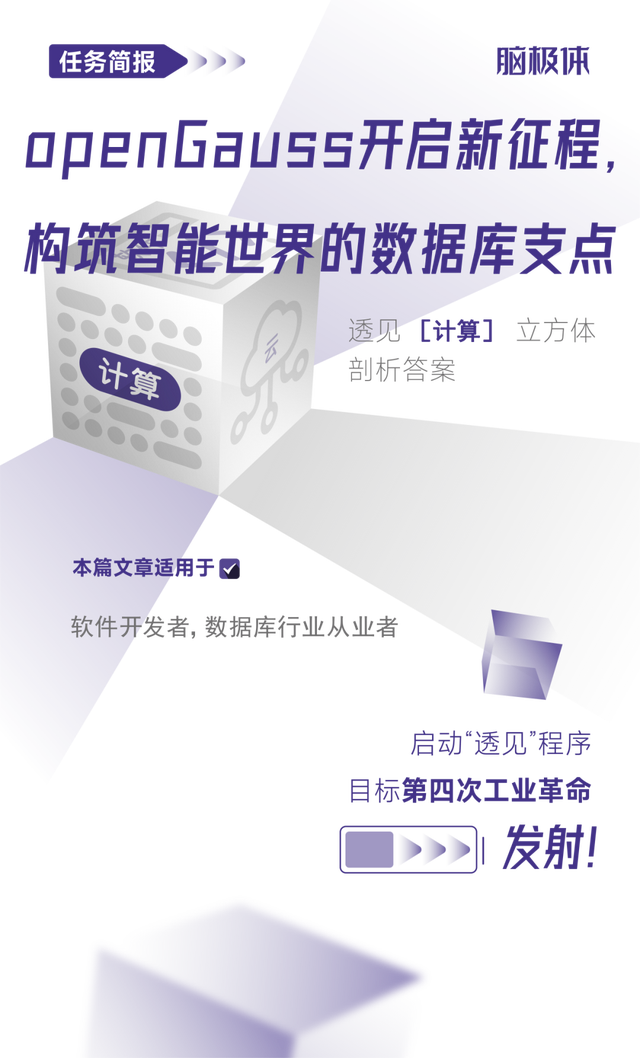
In recent times, the imminent arrival of an intelligent world has become palpable to individuals and enterprises alike. The pervasive presence of AI applications and the all-encompassing digitalization and intelligent transformation of industries have instilled a profound sense of optimism about the future of intelligence. However, the realization of this intelligent vision hinges on databases that are not only faster and more robust but also smarter.
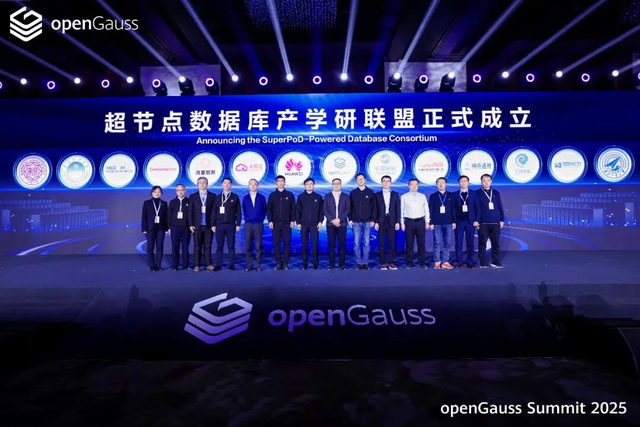
Over the years, the development of a domestic open-source database ecosystem has garnered significant attention. Among the most prominent forces driving this transformation is openGauss. Since its official launch as an open-source project in June 2020, openGauss has embarked on a five-year journey of rapid development. During this period, it has demonstrated remarkable efficiency across multiple dimensions, including commercial growth, technological innovation, and ecosystem expansion, achieving a series of impressive milestones. On December 26, 2025, the openGauss Summit 2025, with the theme "Gathering Innovative Forces in Databases and Unleashing the Intelligent Potential of Data Elements," convened in Beijing. At the summit, the openGauss community, in collaboration with 13 industry-university-research-application entities, including operators, database vendors, the Chinese Academy of Sciences, and leading universities, jointly established the "Super Node Database Industry-University-Research Alliance."
Against this backdrop, it is pertinent to reflect on openGauss's developmental trajectory and analyze how it aligns with emerging trends, such as super nodes, to become the cornerstone of databases in the intelligent world. Leveraging openGauss as a pivotal force, a vast array of intelligent values continues to be unlocked, effectively accelerating the pace of intelligence.

Since its open-source debut in 2020, openGauss has experienced efficient and sustained growth, garnering positive feedback in both the commercial market and ecosystem development.
In 2021, the openGauss 2.0.0 version enhanced the ecological toolchain, facilitating developers and partners in accelerating the migration and deployment process. In 2023, the openGauss 5.0.0 version integrated AI-native capabilities, laying a solid data foundation for the AI era. In 2025, the openGauss 6.0.0 LTS version was introduced, featuring the vector database plugin DataVec for the first time. This plugin supports semantic understanding of unstructured data, enabling openGauss to surpass MySQL and PostgreSQL as a mainstream open-source database technology route.
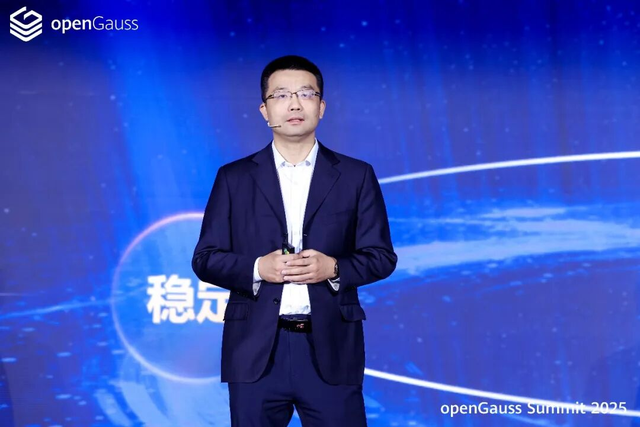
(Xiong Wei, Chairman of the openGauss Community, delivers a keynote speech)
Xiong Wei, Chairman of the openGauss Community, stated that openGauss has collaborated with numerous partners to achieve large-scale commercialization in key industries such as finance, government affairs, and telecommunications. It has secured a 35.02% market share in China's offline centralized relational database market, with 29.4% based on commercial versions of openGauss, surpassing other open-source database versions and ranking first once again.
Donghua Medical has leveraged openGauss as its foundation to support the core system of intelligent healthcare, ensuring the reliability of "lifeline" data. Sichuan Changhong has utilized openGauss as a springboard to effectively implement digital transformation in the manufacturing industry. Tuosdada has employed openGauss and the Guochuang Database to create the foundational base for the Industrial Embodied Intelligence Platform. Bohai Securities has successfully implemented openGauss in the transformation of critical securities business systems. These cases comprehensively demonstrate openGauss's robust support capabilities and exceptional reliability in core industries such as the Internet, healthcare, manufacturing, and finance.
Facing the surging wave of AI technology, openGauss is also well-prepared for new technological upgrades.

At this summit, the newly released openGauss once again achieved a comprehensive technological capability leap. According to Xiong Wei, openGauss will continue to evolve according to the "1+2" strategy.
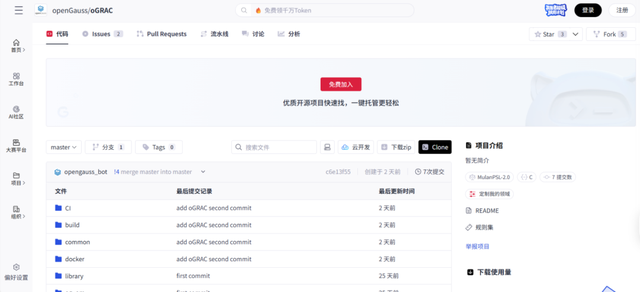
"1" signifies the continuous refinement of the existing delivery system, encompassing offline centralized and standalone versions. "2" denotes the ongoing development of oGRAC in future strategic directions, combined with hardware advancements, such as super nodes, to enhance performance, reliability, and scalability, elevating openGauss's database technology capabilities to new heights. It will also continue to invest in AI, transforming openGauss into an AI-native multimodal database.
Specifically, openGauss integrates a vector database kernel and a multi-write database oGRAC, enabling millisecond-level retrieval of billions of vectors and supporting key capabilities such as simultaneous multi-node read and write, enhancing high availability and elastic scalability. At the summit, openGauss open-sourced the industry's first oGRAC database capability supporting multi-read and multi-write, significantly improving performance compared to the primary-backup mode.
Super nodes have emerged as the most talked-about innovation in digital and intelligent infrastructure in 2025. In March of this year, Huawei officially launched the Atlas 900 A3 super node, achieving a breakthrough in computational power with a maximum of 300 PFLOPS. Since then, super nodes have rapidly become an industry hotspot. The essence of super nodes lies in the comprehensive sharing of resources such as computation, storage, and networking, thereby forming a unified super node architecture from multiple physically separate computational modules. The super node architecture addresses the objective challenge of the exponential increase in the scale of AI large models, comprehensively enhancing the supply scale of AI computational power. On the other hand, it effectively circumvents the limitation of single-chip process technology in China's semiconductor industry, enabling the intensive use of precious computational resources and holding significant technological and strategic importance.
Super nodes represent a highly disruptive and imaginative hardware architecture innovation. Hardware innovation inevitably necessitates the advancement of software capabilities such as operating systems and databases. Taking databases as an example, as high-performance computing units, super nodes require databases to support large-scale data storage and complex queries to handle high-concurrency processing capabilities in industries such as finance and telecommunications. Simultaneously, the development of super nodes must be based on database capabilities that meet their needs in terms of high availability guarantees, load balancing and scalability support, and security and compliance protection. From this perspective, adapting to and keeping pace with the development of super nodes has become openGauss's responsibility and mission. At the same time, the database transformation needs brought about by super nodes have also become an opportunity for openGauss's development.
To adapt to the evolution of AI computational power infrastructure, openGauss must evolve towards the trend of super nodes. The multi-read and multi-write architecture of oGRAC is inherently aligned with the design philosophy of super nodes. According to preliminary tests, simple adaptation can achieve a performance of approximately 540tpmC. Therefore, to meet the super node usage needs of developers and users, openGauss will deeply integrate oGRAC and super nodes to achieve the development goal of a native super node database.

To explore more value possibilities from the combination of openGauss and super nodes and actively attract partners to participate in the joint construction of this endeavor, the openGauss community, in collaboration with major operators, database vendors, the Chinese Academy of Sciences, and leading universities, established the Super Node Database Industry-University-Research Alliance. The alliance is committed to meeting the critical database needs of the new era of AI computational power with openGauss as its foundation. Subsequently, the alliance will operate around three core objectives: In terms of technology co-construction, it will collaborate on the fusion and innovation of databases in cutting-edge technological fields such as AI and super nodes, jointly building core competitiveness for the future. In terms of ecosystem co-construction, it will promote the deep integration and prosperous development of the database and super node ecosystems, driving the co-construction of relevant technological standards and resource sharing, and building an open, collaborative, and win-win industrial ecosystem. In terms of business co-win, it will create joint solutions for core application scenarios such as operators, finance, and the Internet through collaborative innovation and market expansion among members, assisting partners in comprehensive business development and sharing the dividends of market growth.
To meet the comprehensive development needs of AI applications and build an AI-native multimodal database foundation, the openGauss community will continuously enhance capabilities such as the vector data engine DataVec and explore built-in large models in databases, integrated AI pipelines for data processing, keeping data within the database, and an extremely elastic serverless resource architecture to achieve a comprehensive intelligence upgrade. openGauss has also introduced the first multi-database unified kernel engine DataVec, supporting precise and rapid retrieval on intelligent platforms with its multimodal retrieval and multi-path recall capabilities, addressing the issue of large model hallucinations. Simultaneously, the community actively collaborates with downstream RAG communities, fully integrating with commonly used RAG components such as Dify and RAGFlow 100%, enabling out-of-the-box usage and assisting developers in quickly utilizing openGauss's vector database capabilities.
It can be said that openGauss 7.0.0 Innovation Edition RC3 has achieved a comprehensive technological leap towards greater efficiency, security, and reliability. Thus, instilling firm confidence in customers, partners, and developers to participate in the openGauss endeavor.

Like all foundational software open-source processes, openGauss has garnered the most attention for the prosperity of its open-source ecosystem and the progress of its community construction.
Since its open-source debut, openGauss has now attracted over 880 industry chain partners and more than 8,400 global developers. The community version has been downloaded over 5.5 million times worldwide, continuously emerging with commercial distributions of openGauss in industries such as finance, communications, government affairs, energy, and manufacturing.

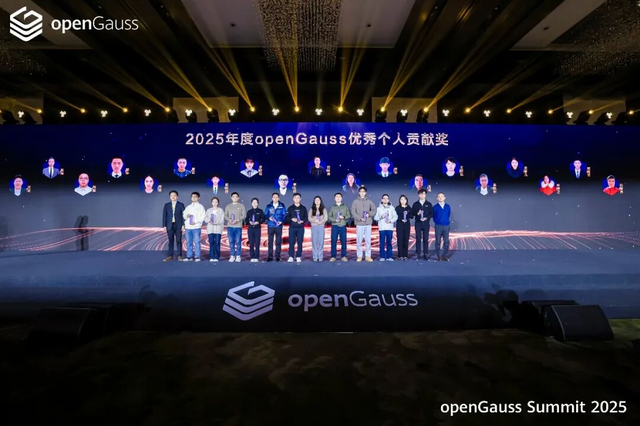
In terms of community activities, the openGauss community has organized numerous Meetup conferences, online technical live streams, and technical decision-making events, becoming a truly benchmark open-source community.
In terms of talent cultivation, the openGauss community has established a comprehensive database talent cultivation model, providing all-around support for industry talent development.
Xiong Wei believes that the openGauss community needs to advocate for a community culture characterized by rigor, progressiveness, and inclusiveness. Databases must be rigorous in terms of product quality; they should be progressive in terms of innovation; and in terms of community operation, inclusiveness is required to actively absorb research and development forces from various parties, as well as software and hardware vendors and ecosystem upstream and downstream enterprises, into the community.
Decades ago, global software developers harnessed the wisdom of open-source and community-based operation paths to solve the historical challenges of redundant software development and ecosystem incompatibility. By constructing open-source communities as "melting pots of collective wisdom," the global software industry has forged a historic achievement in the information revolution. As the AI era arrives, we are undergoing a deterministic evolution towards the intelligent revolution. openGauss is similarly constructing a new hub of collective wisdom through open-source community building, providing a continuous stream of innovative impetus for the new intelligent revolution.
In five years, openGauss has fulfilled its promise to provide an open-source database foundation for the intelligent world. With the unity of partners and developers, open-source databases are presenting an unprecedentedly bright future.

-
![]()
Autohome Faces a Shrinking Window of Opportunity
-
![]()
Even a Titan Like Musk Has Faced Setbacks in Fulfilling Promises
-
![]()
AI Office: The End of the Racing Era, Context Becomes the Key to Success
-
![]()
Domestic Vehicle Chassis Revolution ②: The Steering Wheel Remains, But Mechanical Connections in the Steering System Are Decreasing
-
![]()
Exploring MiniMax Design: Can Video Editing Be as Simple as Speaking?
-
![]()
Why Can SenseTime Achieve Profitability While CloudWalk Still Faces Challenges, Despite Both Adopting Large Models?
-
![]()
Domestic Car Chassis Revolution Part 3: Suspension Systems Transform Vehicle Posture, from Vibration Absorption to Active Force
-
![]()
Hainan is Going on a Crazy Satellite-Building Spree