NVIDIA's Ambition: From Chip Giant to Infrastructure Platform in the Era of Physical AI
 01/14 2026
 524
524

"The 'ChatGPT Moment' for Physical AI has arrived."
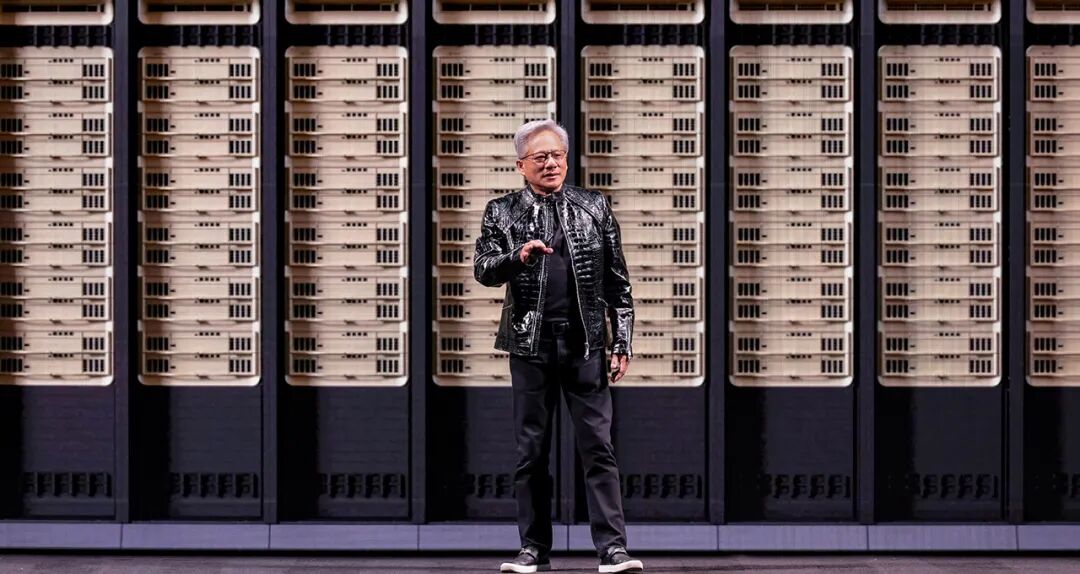
At the start of 2026, NVIDIA founder Jensen Huang, in his CES keynote speech, opened a new chapter for the global tech industry with this iconic declaration.
Huang believes that breakthroughs have been made in the field of physical AI, with physical AI models gaining the ability to understand the real world, reason, and plan actions, continuously giving rise to entirely new application scenarios.
If ChatGPT three years ago enabled machines to begin understanding human intentions, then today's 'ChatGPT Moment' for physical AI signifies AI's comprehensive evolution from an 'informative thinker' in the digital world to an 'actor' in the physical realm.

From Bits to Atoms: The Inevitable Evolution and Challenges of AI
Reviewing the development of AI, we can clearly see an evolutionary path: from Perception, to Generative, then to Agentic, and finally arriving at the Physical AI (Physic) stage.
In the first three stages, AI's capabilities primarily operated in the digital bit world, while the core mission of physical AI is to enable AI to understand, predict, and participate in the physical atomic world.
According to the '2026 Top Ten AI Technology Trends' report released by the Beijing Academy of Artificial Intelligence (BAAI), the core focus of AI evolution is undergoing a critical shift: from pursuing parameter-scale language learning to a profound understanding and modeling of the underlying order of the physical world. The report suggests that 2026 will be a critical watershed for AI's transition from the digital world to the physical world, moving from technical demonstrations to scalable value.
Morgan Stanley believes that the development of physical AI is constrained by numerous challenges, including the collection of high-quality real-world data, large-scale hardware manufacturing, and integration with existing workflows. One of the biggest obstacles is the 'long-tail problem'—those rare, extreme, yet system-safety-defining complex scenarios. Training and testing in the real world are extremely costly, inefficient, and risky.
Past robotic or autonomous driving systems were essentially slaves to 'deterministic code.' They relied on engineers exhaustively listing all possible scenarios and writing vast amounts of 'if-else' rules to cope. Once encountering an unforeseen situation, such as an oil spill on the ground, the system could instantly fail. They did not 'understand' physical laws like gravity, friction, object deformation, or light and shadow changes.
The breakthrough of physical AI lies in the transfer of its underlying control from 'human-written deterministic code' to 'neural networks with generalization capabilities that understand physical laws.'

Full-Stack Offensive: Building the 'Android' Ecosystem for Physical AI
NVIDIA's ambition extends far beyond providing the world's fastest chips. Observers generally believe that its core strategy is to build an open ecosystem akin to 'Android' for smartphones, aiming to become the default development platform in the robotics and autonomous driving sectors.
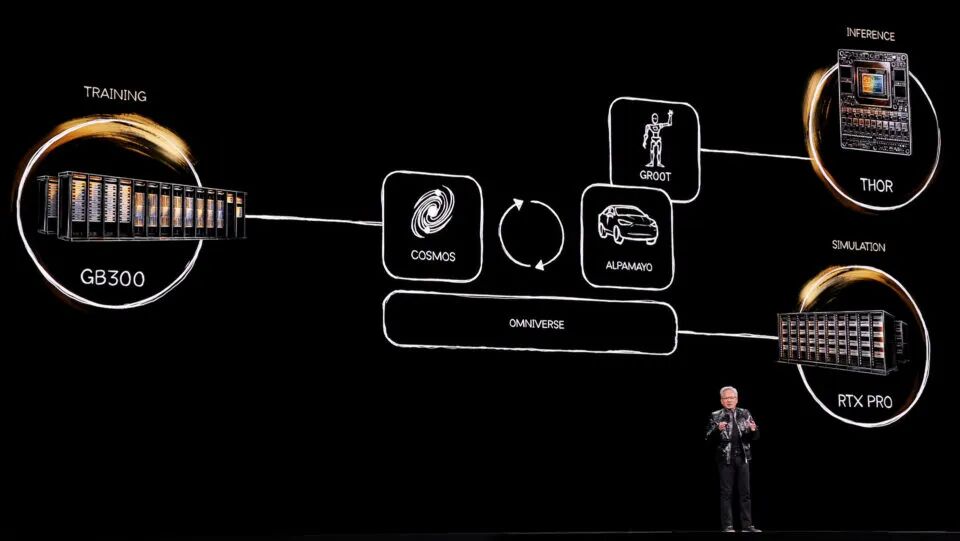
Currently, NVIDIA's physical AI layout (layout) covers core technologies across multiple layers, including hardware, software, models, and simulations, such as the Jetson robot development processor, CUDA, Omniverse, and open-source physical AI models.
These moves indicate that NVIDIA is no longer just a chip company; its goal may be to become the infrastructure platform and ecological chain leader in the era of physical AI.
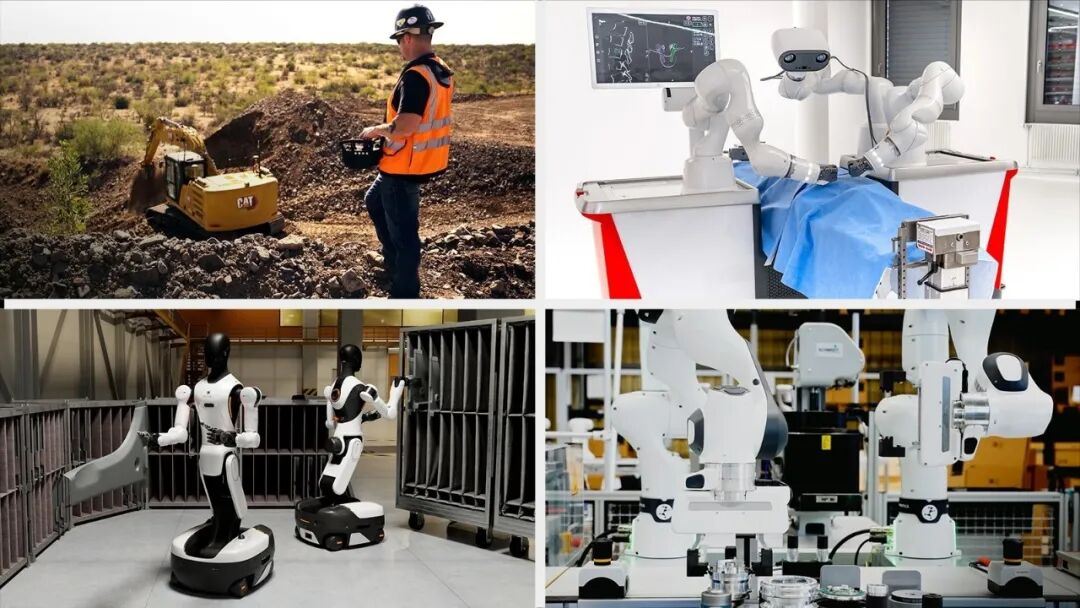
Currently, mainstream robotics companies Boston Dynamics, Caterpillar, Franka Robotics, Humanoid, LG Electronics, and NEURA Robotics have all launched new robots and autonomous machines built on NVIDIA technology.
1. Open-Sourcing Core Models and Tools to Lower Industry Barriers
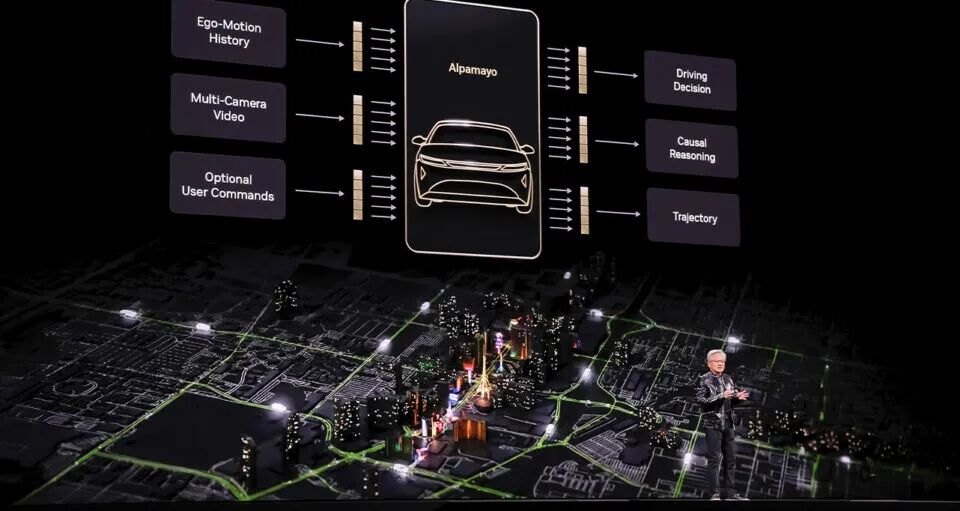
At CES 2026, NVIDIA unprecedentedly open-sourced its core assets in physical AI. This includes the world model platform Cosmos series, the autonomous driving reasoning model Alpamayo, and the open-source reasoning visual-language-action (VLA) model Isaac GR00T designed specifically for humanoid robots.
By providing top-tier 'teacher models' and tools to global developers and researchers, NVIDIA aims to rapidly mature the entire physical AI industry. When the entire industry innovates on its open-source framework, NVIDIA's position as the underlying computing power and platform provider becomes irreplaceable.
2. Building a Simulation-Reality Closed Loop to Overcome the 'Long-Tail' Challenge
Addressing the industry pain points of data scarcity and dangerous testing, NVIDIA's simulation tools form a critical solution. The Cosmos platform, as a 'learnable physical simulator,' can generate nearly unlimited synthetic data and high-fidelity virtual environments.
In this environment, AI can conduct countless attempts and learnings with zero risk before deployment in the real world. The revolutionary aspect of this approach lies in its solution to a key bottleneck in physical AI development: the scarcity of real-world data and the high cost of trial and error.
For example, in the task of a robotic arm pouring water, traditional methods require real-time solving of complex fluid dynamics equations, while Cosmos Predict 2.5 can instantly predict the trajectory of the water flow and whether it will splash, providing the controller with near-human 'physical intuition.' The more advanced Cosmos Reason 2 model can even perform counterfactual reasoning, previewing the consequences of different decisions before acting to proactively avoid risks.
In the autonomous driving sector, Alpamayo 1 is the industry's first chain-of-thought VLA reasoning model designed for the assisted driving research community. Based on a 10-billion-parameter architecture, the model generates driving trajectories from video input while providing reasoning paths, clearly demonstrating the logic behind each decision. The new Mercedes-Benz CLA will be the first to feature this system, with AI-defined driving functions set to launch in the U.S. this year.
3. Deepening Community Ties to Strengthen Ecological Barriers
NVIDIA understands the power of ecosystems. Its layout (layout) in physical AI extends far beyond releasing a few chips or models; its deeper strategy lies in establishing dominance at the ecological level by building industry infrastructure through open-source initiatives.
Its deep collaboration with AI community giant Hugging Face integrates Isaac and GR00T technologies into the open-source robotics framework LeRobot, connecting NVIDIA's 2 million robotics developers with Hugging Face's 13 million global AI developer community. This extensive developer engagement mirrors its past strategy of binding AI developers through CUDA, aiming to establish high ecological migration costs and ensure long-term dominance.
Conclusion
The wave of physical AI has arrived. It will bring not only smarter robots and more reliable autonomous vehicles but also a profound productivity revolution touching every physical corner of manufacturing, logistics, energy, and even household services.
Whether NVIDIA can become the 'Android' of the physical AI era faces not only direct competition from other tech giants in hardware, algorithms, and closed-loop data ecosystems but also the fundamental gap between simulation and reality.
Ultimately, the true form of the physical AI era will not be determined by any single company. It will be shaped by the innovative vitality of the global developer community, open competition among different technological routes, and, most critically, the ability to land in countless real-world, complex scenarios.
END
This article is an original work by 'Intelligent Evolution Theory.' Welcome to follow us.
-
![]()
Registered Capital Slashed to 372 Million Yuan! Yutong Optical Finalizes Industrial and Commercial Change Registration
-
![]()
Zhuque-3 Successfully Lands, and 'Time Traveler' Secures Another ¥100 Million in Funding: China's Commercial Space Industry Experiences a 'Dynamic August'
-
![]()
Autohome Faces a Shrinking Window of Opportunity
-
![]()
Even a Titan Like Musk Has Faced Setbacks in Fulfilling Promises
-
![]()
AI Office: The End of the Racing Era, Context Becomes the Key to Success
-
![]()
Domestic Vehicle Chassis Revolution ②: The Steering Wheel Remains, But Mechanical Connections in the Steering System Are Decreasing
-
![]()
Exploring MiniMax Design: Can Video Editing Be as Simple as Speaking?
-
![]()
Why Can SenseTime Achieve Profitability While CloudWalk Still Faces Challenges, Despite Both Adopting Large Models?