One-person company, doubts arise everywhere
 01/16 2026
 649
649

Imagine setting up a company on your own with minimal costs and without the need to engage in office politics with colleagues. Buying a villa on a picturesque island and commanding a team of AI to generate vast wealth. At this point in life, what more could one ask for?
This magnificent vision likely resonates with most people's ideal of life and entrepreneurship. Starting from the second half of 2025, this idea has rapidly become a reality, sparking a wave of enthusiasm in the venture capital and training circles. This relatively new concept is known as the 'one-person company.'
The origin of the term 'one-person company' is generally traced back to 2024. At that time, Sam Altman, the founder of OpenAI, predicted that in the AI era, an individual could potentially start a unicorn company valued at $1 billion.
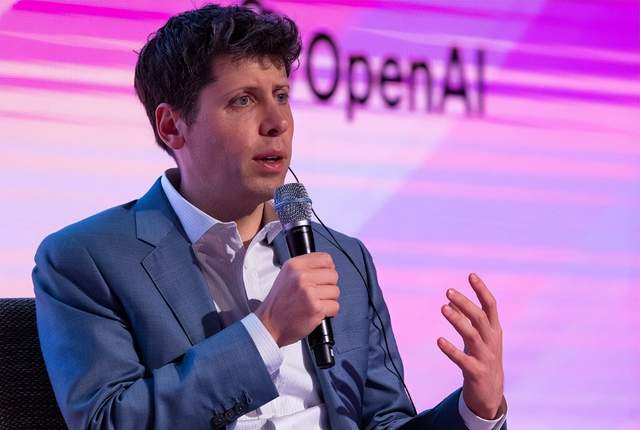
At that time, domestic investment in AI applications was not yet booming, and the industry was primarily focused on the 'hundred-model battle' centered around foundational models. His statement was probably taken with a grain of salt. However, as application-oriented enterprises such as intelligent agents and AIGC video companies matured, venture capital interest in AI commercial companies surged. This is when the concept of one-person companies gained traction, with parks actively cultivating one-person AI companies; investment institutions began to value low-cost, small-team, high-return AI projects; and training institutions aggressively promoted teaching young people how to become bosses of AI.
But is the one-person company really as wonderful as they claim?
Many aspects of this phenomenon remain shrouded in ambiguous language and numerical games, warranting careful scrutiny.

From a common-sense perspective, one-person companies are not new. Industries like e-commerce, online celebrities, self-media, and design have numerous one-person companies or individual studios.
However, the recently popularized concept of a one-person company is not as broadly defined. It specifically refers to the scenario where, against the backdrop of mature AI technology, an individual can leverage a vast array of AI tools and capabilities to complete the entire process of creativity, research and development, marketing, and after-sales service that traditionally requires a larger-scale enterprise, thereby compressing a company of dozens or hundreds of people into a one-person operation.
This idea has a strong sci-fi flavor, reminiscent of unmanned companies in movies, and it has long had the endorsement of influential figures. The most widely circulated claim is that Altman believes one-person companies valued at $1 billion will soon emerge.
The AI field has a characteristic that, when described elegantly, means that when a big shot speaks, everyone listens intently. In reality, upon closer inspection, you'll find that influential figures make sensational statements daily, but most of them never materialize. However, it doesn't matter because the next time, everyone will still believe it, or at least tacitly [tacitly] publicity stunt [hype up] a new investment trend.

The 'heavy AI, light labor' business model of one-person companies implies that investors and entrepreneurs can achieve extremely high returns with very lightweight investments. This way, the AI pie won't be solely divided among large infrastructure companies; small and medium investors and solo entrepreneurs will also have ample opportunities.
Of course, similar ideas are not entirely unfounded. For instance, after the rise of intelligent agents, survey data from many commercial institutions show that typical intelligent agent development teams consist of only four people, usually roommates from the same dormitory or a group of like-minded friends. This team size is far smaller than the standard configuration of around 15 people for startup mobile app development teams in the past. If four people can do it, can one person?
Another layer of evidence comes from successful cases. For example, Peter Levers, an independent developer from the Netherlands, single-handedly created successful AI products like Nomad List and Photo AI, becoming a representative figure and spiritual leader for independent development and digital nomads in the AI era.

The endorsement from influential figures, validation from commercial data, and successful cases have intertwined to make investors and entrepreneurs see the potential of one-person companies, leading to increased activity in this sector.
Coinciding with the growing domestic investment in the overall AI-related market, the industry needed to present investors with new concepts. The possibility of leveraging minimal investment for huge returns with one-person companies is clearly an appealing story. On the other hand, AI is currently the hottest direction for employment and entrepreneurship. Many entrepreneurs, especially young people eager to enter the AI industry but lacking the means, desperately need an entry permit. The sexy story of a one-person company traveling the world and earning millions annually is simply too perfect.
With a perfect match, investment institutions, incubators, and training institutions have begun to vigorously promote the concept of one-person companies. On one hand, they tap into investors' desire for AI; on the other hand, they capitalize on aspiring entrepreneurs' greed for opportunities.
This is how the one-person company craze took off.
But whenever such stories emerge, we should ask: Is everything really that smooth?

Many promotional claims about one-person companies mention the rapid growth in the number of global one-person and employee-less companies. However, such data often confuses one fact: the growth in the number of one-person companies does not necessarily mean a significant increase in the number of one-person AI companies with real business operations.
On the contrary, the growth of employee-less companies is often closely positively correlated with the reduction of job opportunities during economic downturns and the lowering of business registration thresholds. There is no reason to equate the birth of a large number of non-operational, shell companies with the rise of AI-driven one-person companies.
So, can AI really drive the development of one-person companies?
From a fundamental logical standpoint, the answer is undoubtedly yes. Traditional companies require multiple people to collaborate largely because they involve supportive roles such as financial accounting, tax filing, and basic material production. While these roles require professionalism, they are difficult to combine. When AI tools can effectively fulfill these supportive functions, the possibility of one-person companies significantly increases.

We have reason to believe that in the future, a large number of basic executive roles will be taken over by AI. The model of core processes dominated by humans + execution and support handled by AI + extensive outsourcing of upstream and downstream work will become the norm for companies in the AI era. This model will not only drive the development of one-person companies but also inevitably lead to a reduction in workforce size for many companies.
However, the question remains: Are AI-driven one-person companies already mature enough to warrant the rush of capital and entrepreneurs to join?
Colleagues in internet companies and tech media often say, 'As long as the direction is right, don't fear the long journey.' But in my opinion, this is like a beggar playing the erhu—pure nonsense. Your destination is the South Pole, and you're given a compass to find the direction. Alright, start walking! Aren't you not afraid of the long journey?
The issue with one-person companies lies in the fact that theoretical and directional correctness does not equate to maturity in the real industrial environment. Let's not even mention that many AI tools are far from as mature as we imagine; even the ideal of one person driving a large group of AI is difficult to realize in business operations.
To investigate this, we contacted Xiao Zhang, a designer who is being promoted as a one-person company model at a Beijing startup incubator. He registered his own studio a few years ago. Although the incubator promotes him as having fulfilled numerous graphic and product design needs with the help of AI, he himself believes that AI does not play a very important role in his work.

'Almost every peer uses AI tools; it's just that the incubator emphasized AI during the interview,' Xiao Zhang said. He believes that AI has made his work more convenient, such as using AIGC to generate drafts more easily. However, he was an independent designer before and remains so now, with stable client relationships and self-media for promotion that were established long ago. His reason for joining the incubator was simply to have a more professional workspace and explore potential opportunities.
Many one-person companies being promoted at this stage have similar situations. They are already individual developers or designers. AI brings convenience but does not fundamentally change their business model. The work remains the same, and the scenario of one person sipping coffee while commanding a large group of cyber employees to earn money has not materialized.
Even in the case of Levers, who is featured in every sexy story about one-person companies, we must recognize that his foundation is being a highly successful tech influencer. The high traffic from his constant live streams supports the large fan base willing to pay for and try his various products. Aspiring entrepreneurs who want to emulate him might first need to learn how to become influencers. However, once you become an influencer, the channels for monetization naturally diversify, and perhaps selling products would be even easier and more enjoyable than developing AI products. Moreover, note that Levers has been an individual developer for over a decade, and this path is far more arduous and lengthy than what many investment institutions and training organizations claim.
From a fundamental logical standpoint, competition is inevitable in the commercial market. Generating competitiveness is key to a company's survival. However, the numerous AI tools that one-person companies rely on are inherently universal and open. They can fill shortcomings but do not create strengths. This means that the competitiveness of a one-person company ultimately hinges on the uniqueness of 'that one person.' But imagining oneself as highly unique is often the first step toward entrepreneurial failure.
In summary, the path for one-person companies is still long, and this is important.

Looking further ahead, there are still many 'unsolved mysteries' surrounding one-person companies.
For instance, when discussing the success of many ultra-small AI teams, we often overlook that a significant portion of their success comes from a novelty-seeking mindset. As mentioned earlier with Levers, many one-person or few-person AI teams in Europe and America are essentially highly successful live streamers. Their identity as AI developers gains them traffic attention, which in turn becomes a traffic entrance [entry point] for their products.
However, the issue is that this paid traffic generally relies on users' curiosity about AI and their cultural identification with AI geeks and one-person teams. The products they create are generally low-threshold and simple in functionality. While they have an attractiveness bonus when AI is just starting to heat up, user enthusiasm wanes rapidly once they become more familiar with AI. In such cases, these one-person companies can only quickly iterate and develop the next product, repeating the cycle.
After users become more familiar with AI and lose their novelty for simple AI applications, and after more large and medium-sized enterprises enter the same track [track], and considering that domestic software payment habits are not similar to those in Europe and America, can similar companies survive? This is a significant question mark.
Another mystery surrounding one-person companies lies in the hidden narrative thread in this story, which suggests that a large portion of traditional companies' labor costs are unnecessary. We have noticed that many small and medium-sized enterprise owners, after seeing numerous promotions of one-person companies, are not interested in investing in similar companies but rather in figuring out how to transform their own enterprises into one-person operations.

If AI tools are truly as useful as promotional claims suggest, such behavior is undoubtedly cruel and unethical, but it is also part of natural selection and technological revolution. However, the issue is that AI's work capabilities are far from being that powerful, and these bosses' impulsive actions often lead to the recurring plot of 'company layoffs cutting into the main artery.'
A reader told us that their boss, after reading numerous articles and videos about one-person companies, firmly believes that many departments can be significantly downsized. During every meeting, the boss claims that employees are inferior to AI and that the company will soon rely solely on AI, causing widespread anxiety among the staff who cannot prove their worth as humans.
If the role of one-person companies becomes a smoke screen thrown at a wide range of bosses, it clearly deviates from the original intent of technological development.
More importantly, the story of one-person companies may become a precise trap for young people and aspiring entrepreneurs just starting their careers. The one-person company is promoted as being too wonderful. Who wouldn't want to blow sea breezes and type away in a café while AI earns money for them? Combined with the prevalent employment and entrepreneurial pressures, such idealized imaginations can lead many to make irrational decisions.

Generally, such decisions involve two parts. One is paying to join certain venture capital or incubator institutions, where the person in charge [person in charge] will say that one-person companies are now encouraged, there is a special talent plan, and investment opportunities can be connected with a small joining fee to realize your dream. The other is AI courses offered by training institutions, which claim that not knowing programming or AI is fine; with short-term learning, you can easily become a one-person company boss, and paying for the course will realize your dream.
However, the outcome is often that your payment realizes someone else's dream.
Never start your AI journey by being 'reaped like leeks'. There are countless free tutorials available for learning minimalist AI development and the use of AI tools. Since we're starting a one-person company to save money on entrepreneurship, we should carry through with saving money to the end.

To be realistic, the AI era has indeed made individual entrepreneurship easier, significantly reducing the demand for human resources in enterprises.
However, it's important to understand that AI cannot be a shortcut to entrepreneurship. If many people know about a path, then it cannot be a shortcut. Over the years, we have interviewed numerous highly successful individual AI developers or those who have successfully used AI tools to start their businesses. The common impression they gave me is that one must possess extremely strong personal capabilities, handling technology, business, sales, and promotion all by oneself, to potentially carve out a small niche in the end.
The advantage of a one-person company lies in its low cost and freedom, but the downside is that it can fall prey to the obvious 'bucket effect', where often a single weakness can lead to business failure.

These AI developers generally tell me that it's really not easy, it's really tiring, and there's so much to learn that one could never have imagined at the beginning. Therefore, don't place your hopes for easy entrepreneurship on AI; view AI as a tool that everyone, including your numerous competitors, can use, and see AI as the beginning of fierce competition.
The path of AI is heavy industry for an individual. With this psychological expectation and capability preparation, one is qualified to become a competent boss and employee of a one-person company.

-
![]()
Registered Capital Slashed to 372 Million Yuan! Yutong Optical Finalizes Industrial and Commercial Change Registration
-
![]()
Zhuque-3 Successfully Lands, and 'Time Traveler' Secures Another ¥100 Million in Funding: China's Commercial Space Industry Experiences a 'Dynamic August'
-
![]()
Autohome Faces a Shrinking Window of Opportunity
-
![]()
Even a Titan Like Musk Has Faced Setbacks in Fulfilling Promises
-
![]()
AI Office: The End of the Racing Era, Context Becomes the Key to Success
-
![]()
Domestic Vehicle Chassis Revolution ②: The Steering Wheel Remains, But Mechanical Connections in the Steering System Are Decreasing
-
![]()
Exploring MiniMax Design: Can Video Editing Be as Simple as Speaking?
-
![]()
Why Can SenseTime Achieve Profitability While CloudWalk Still Faces Challenges, Despite Both Adopting Large Models?