AI Titans Clash: Google Closes in on $4 Trillion, Can It Overtake NVIDIA?
 01/16 2026
 607
607
By Yang Jianyong
Google has hit another record high, boasting a market valuation of $3.97 trillion, ranking it second globally, just a notch below NVIDIA.
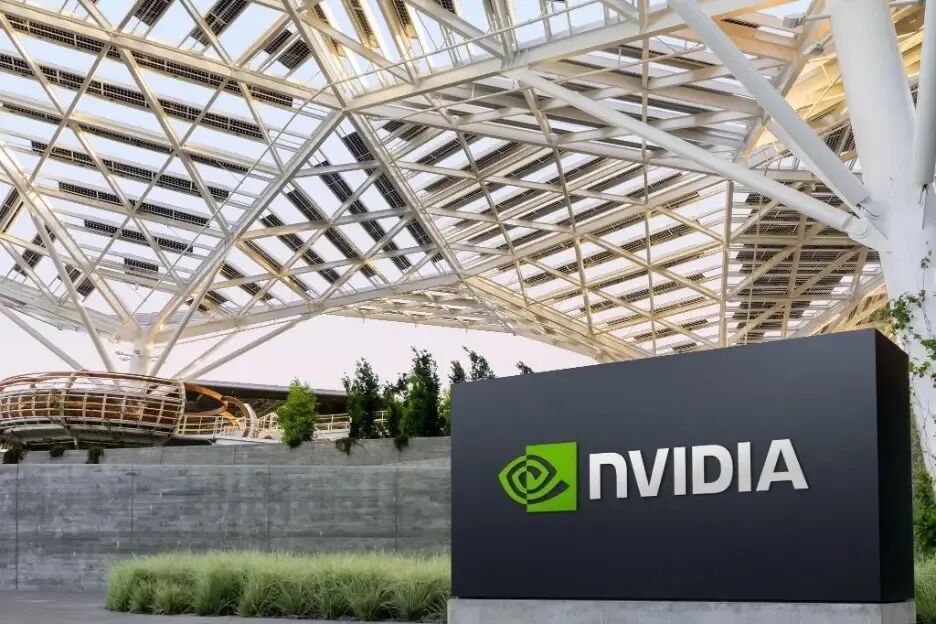
Notably, while NVIDIA grapples with the AI bubble controversy, Google is on a meteoric rise. The market is now abuzz with speculation on whether Google's market value can eclipse that of NVIDIA. From the groundbreaking Gemini model to its cutting-edge TPU chips and cloud services, Google has been making waves in the capital market, with its valuation inching closer to the $4 trillion mark.
So, can Google surpass NVIDIA and claim the throne of the global market cap?
Let's first delve into NVIDIA's situation.
In recent months, NVIDIA's CEO, Jensen Huang, has been frequently addressing the controversies surrounding the AI bubble in public. He laments that when NVIDIA performs excellently, it's accused of inflating the AI bubble, whereas poor performance would be seen as evidence of its bursting. The debate over NVIDIA's AI bubble triggered a market correction after its valuation soared past the $5 trillion mark. Currently valued at $4.49 trillion, NVIDIA has seen a $660 billion drop from its peak.
The driving force behind NVIDIA's sustained surge in the capital market is its reliance on high-performance chips for training models across various industries. Dominating the global AI computing power market, NVIDIA's high-end chips have become both scarce and pricey due to soaring demand, fueling its rapid growth.
However, faced with NVIDIA's dominance in the global AI chip market, tech giants are opting for a more diversified chip supply rather than vying to purchase NVIDIA's chips. They are adopting two main strategies: developing in-house chips and opting for customized solutions. This approach not only better caters to their specific needs but also reduces their dependence on NVIDIA.
Among these players, Broadcom stands out in the customized chip sector, boasting strong competitive advantages in the AI ASIC/XPU market. It is poised to challenge NVIDIA's stronghold in AI chip computing power. Broadcom's customized chip clients include tech behemoths such as Google, Apple, and Meta.
Overall, NVIDIA remains the undisputed leader in the AI infrastructure market's chip segment, holding a commanding 98% market share in the data center AI market, according to statistics. However, due to its near-monopoly status and supply shortages, tech giants are actively seeking to reduce their reliance on NVIDIA through in-house chip development and customized solutions via Broadcom. In the long run, this trend is bound to impact NVIDIA's market position.
Now, let's turn our attention to Google.
For a considerable time, Google has been an underappreciated AI giant. However, it has been demonstrating robust growth momentum in niche segments (here referring to areas like AI large models, cloud computing, mobile operating systems, and smart hardware).
Firstly, in the AI large model arena. To counter ChatGPT's challenge, Google merged its DeepMind team and launched the Gemini large model service, continuously iterating it to the Gemini 3. Notably, the Gemini 3 Pro model has taken multimodal understanding and reasoning to new heights, integrating it seamlessly into Google's full-stack products.
The reasoning capabilities of Gemini 3 Pro exhibit unprecedented depth and insight, posing multifaceted challenges to OpenAI since its inception, whether in technical comparisons or business strategies. With a robust product ecosystem fully integrated into Google's offerings, OpenAI is facing unprecedented pressure.
Secondly, as the world's third-largest cloud services provider, Google continues to expand its market share, showcasing strong competitiveness.

Benefiting from AI-driven demand, global spending on cloud infrastructure services reached a staggering $107 billion in the third quarter of 2025. Among the top players, Amazon, Microsoft, and Google accounted for a combined 63% market share, with global shares of 29%, 20%, and 13%, respectively.
Now, let's consider AI chips. Google's in-house and customized TPU chips, designed specifically for AI applications, pose a significant challenge to NVIDIA's GPUs.
Google now plans to sell these chips externally, with companies like Anthropic and Meta expressing interest in purchasing TPU chips to bolster their computing infrastructure for training AI models, sending ripples through the semiconductor industry.
Data indicates that the total production capacity of TPUs will reach 4.3 million units in 2026. If these million-level TPU orders are fulfilled, it will deal a substantial blow to NVIDIA.
It's crucial to note that the competition among tech giants in AI large model capabilities is intrinsically linked to the computing power of AI infrastructure. Previously highly reliant on NVIDIA, the ongoing progress in in-house and customized chip development is expected to break NVIDIA's monopoly in AI chips, offering a more diversified chip supply.
Finally, Google has long been a technology-driven innovative company, particularly aggressive in its strategies around artificial intelligence. This positions it at the forefront in AI, autonomous driving, cloud computing, and smart hardware sectors.
Especially in the global cloud services market competition, although Google trails behind Amazon and Microsoft in cloud services share, its continuous technological investment, particularly in large models, has enhanced its competitiveness, providing opportunities to capture more market share. With the application of large models, Google Cloud's global market share continues to rise, indicating that AI large models are reshaping this search giant.
Conclusion
As Google's market value continues to soar, nearing the $4 trillion mark, with its Gemini series models, external sales of customized TPUs, rising cloud services market share, and ongoing commercialization of autonomous driving, it has the potential to vie for the global market cap crown amidst the AI wave.
Meanwhile, NVIDIA faces increasing skepticism over the AI bubble, with tech giants reducing their reliance through in-house chips (like Google's TPU) and customized solutions. This trend towards diversified supply will also weaken NVIDIA's bargaining power, with its market value correcting by nearly $700 billion from its peak, reflecting market concerns over NVIDIA's technological moat.
Yang Jianyong, a Forbes China contributor, expresses views solely on behalf of himself. He is dedicated to providing in-depth interpretations of cutting-edge technologies such as AI large models, artificial intelligence, IoT, cloud computing, and smart hardware.
-
![]()
Registered Capital Slashed to 372 Million Yuan! Yutong Optical Finalizes Industrial and Commercial Change Registration
-
![]()
Zhuque-3 Successfully Lands, and 'Time Traveler' Secures Another ¥100 Million in Funding: China's Commercial Space Industry Experiences a 'Dynamic August'
-
![]()
Autohome Faces a Shrinking Window of Opportunity
-
![]()
Even a Titan Like Musk Has Faced Setbacks in Fulfilling Promises
-
![]()
AI Office: The End of the Racing Era, Context Becomes the Key to Success
-
![]()
Domestic Vehicle Chassis Revolution ②: The Steering Wheel Remains, But Mechanical Connections in the Steering System Are Decreasing
-
![]()
Exploring MiniMax Design: Can Video Editing Be as Simple as Speaking?
-
![]()
Why Can SenseTime Achieve Profitability While CloudWalk Still Faces Challenges, Despite Both Adopting Large Models?