OpenAI's Humanoid Robot Lab: A Stealthy Leap Forward
 01/23 2026
 642
642
Produced by Zhineng Technology
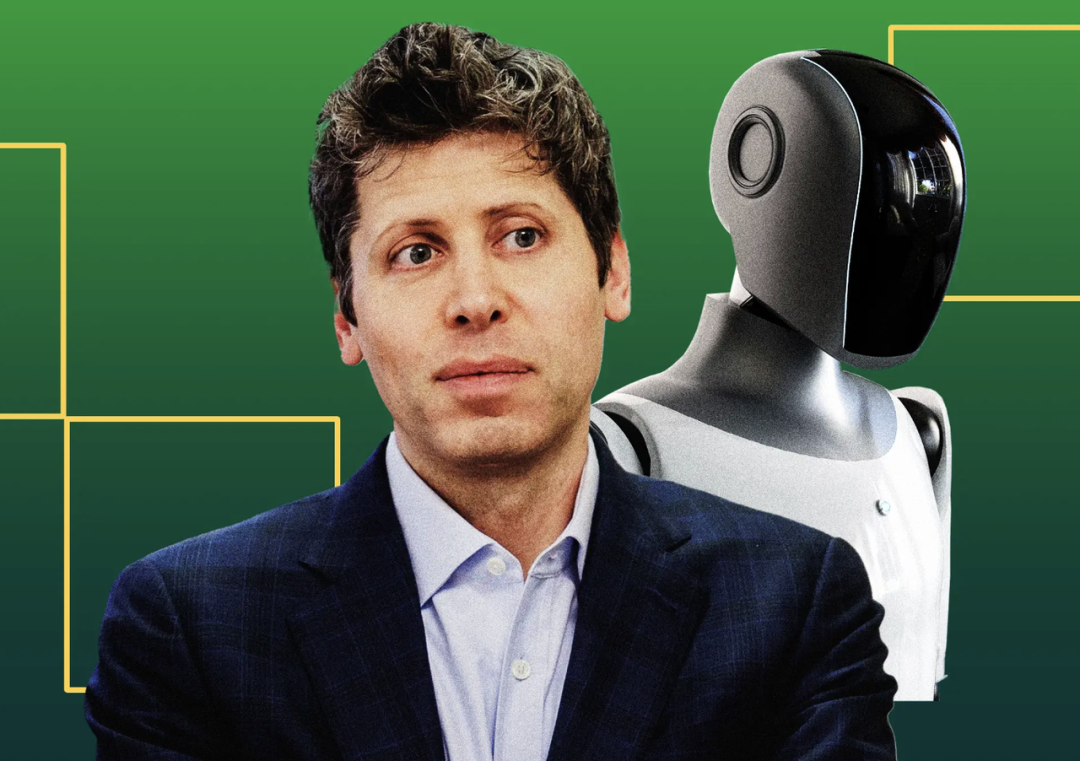
In 2025, OpenAI has found itself under immense pressure. According to Business Insider, the company is quietly rebooting and accelerating its roadmap for humanoid robot development.
Over the past year, OpenAI has discreetly established a humanoid robot lab in San Francisco, which has swiftly expanded its operations. Presently, nearly a hundred contract workers are working around the clock in shifts, meticulously collecting data for the most mundane and routine household tasks.
Of course, in contrast to the high-profile demonstrations of complete humanoid robots by companies like Tesla and Figure, OpenAI's strategy is centered on foundational technologies. It's investing significant manpower and time to amass data and lay a solid foundation.
At the heart of this system lies a robotic arm sourced from the German company Franka.
Data collectors remotely manipulate this robotic arm using a 3D-printed controller dubbed GELLO, enabling it to perform operations that appear simple but are incredibly challenging to standardize. These include placing a rubber duck into a cup, inserting bread into a toaster, and folding clothes.
Cameras simultaneously capture the movements of both the operator and the robotic arm. The system then sifts through the footage to identify 'effective working hours' for model training. This approach mirrors OpenAI's early strategy in the large model era, where it scaled up data through extensive manual labeling. However, the focus has now shifted from language to physical-world actions.
Compared to the route of relying on motion capture suits and VR to control entire humanoid robots, OpenAI's 'robotic arm + low-cost controller' solution proves to be more cost-effective, easier to replicate, and better suited for establishing a direct correlation between human movements and robot execution.
OpenAI's perspective on the core challenges of robotics is evolving.
Early robot projects heavily relied on reinforcement learning, where robots learned actions through trial and error with a reward system. Yet, the real world's complexity rendered this method both costly and inefficient.
Today, OpenAI is more inclined to have models first 'comprehend' and 'emulate' human behavior through large-scale, structured data collection, before delving into generalization capabilities.
This also clarifies why the lab's primary focus is on robotic arms rather than complete humanoid robots: the true bottleneck lies not in appearance but in enabling the system to reliably and repeatedly accomplish real-world tasks.
As numerous scholars have noted, the scarcity isn't in algorithms but in high-quality data. OpenAI is addressing this deficit with a near 'data factory' approach.
From an organizational standpoint, this robot development path is still in its infancy.
Insiders disclose that related hardware projects haven't yet been integrated into the company's core strategy. Nevertheless, the lab's scale has multiplied several times in under a year. It plans to set up a second base in Richmond, California, and has commenced seeking U.S. manufacturing partners across consumer devices, robots, and data centers.
These moves send a clear message: even if no products are launched in the near term, OpenAI is laying the groundwork for the long-term potential of 'embodied intelligence.'
Combined with its advancements in language and multimodal understanding, once robots achieve sufficiently reliable execution capabilities, ChatGPT-style cognitive systems could become the 'brains' of robots, enabling machines not just to move but to genuinely comprehend and engage in the human physical world.
Summary
OpenAI's humanoid robot endeavor represents a patient technological comeback, marked by a growing number of data workstations, increasingly stringent data collection efficiency demands, and continual refinement of foundational capabilities.
-
![]()
Registered Capital Slashed to 372 Million Yuan! Yutong Optical Finalizes Industrial and Commercial Change Registration
-
![]()
Zhuque-3 Successfully Lands, and 'Time Traveler' Secures Another ¥100 Million in Funding: China's Commercial Space Industry Experiences a 'Dynamic August'
-
![]()
Autohome Faces a Shrinking Window of Opportunity
-
![]()
Even a Titan Like Musk Has Faced Setbacks in Fulfilling Promises
-
![]()
AI Office: The End of the Racing Era, Context Becomes the Key to Success
-
![]()
Domestic Vehicle Chassis Revolution ②: The Steering Wheel Remains, But Mechanical Connections in the Steering System Are Decreasing
-
![]()
Exploring MiniMax Design: Can Video Editing Be as Simple as Speaking?
-
![]()
Why Can SenseTime Achieve Profitability While CloudWalk Still Faces Challenges, Despite Both Adopting Large Models?