Baidu Has "Changed"
 01/26 2026
 664
664
Author | Lu Han
Disclaimer | The featured image is sourced from the internet. This is an original article by Jingzhe Research Institute. If you need to reprint it, please leave a message to apply for permission.
For a long time, the technology and internet industry has been driven by narratives of "short-term explosive growth," with most companies focusing on immediate monetization amid the wave of traffic dividends. However, one company stands out as an exception.
Baidu, a tech giant straddling both the internet and AI eras, has consistently adhered to a strong technological foundation, carving out a path of long-term development.
Since quietly laying out its AI core technologies in 2012, Baidu has been deep cultivation (deeply engaged in this field) for fourteen years.
During this period, Baidu established the Institute of Deep Learning in 2013, becoming the first Chinese internet company to elevate deep learning to a core technological innovation. In 2016, it launched PaddlePaddle, China's first deep learning platform. In 2017, it opened the world's first autonomous driving open platform. In 2018, it announced the development of China's first cloud-based full-function AI chip, "Kunlun." In 2019, it released the world's first knowledge-enhanced hundred-billion-parameter large model, leaving behind numerous technological highlights.
However, the gap between ultra-long-term technological investment and the pace of commercialization led to Baidu being misunderstood by the public for a long time, with questions raised about whether it had "woken up early but missed the bus."
At the recent Baidu Wenxin Moment Conference, besides the heavyweight launch of the Wenxin Large Model 5.0, a media personality was invited on stage to engage in a live interactive session with Luo Yonghao's digital avatar. The media sought a debate on a hotly discussed topic—whether Baidu had indeed "woken up early but missed the bus." 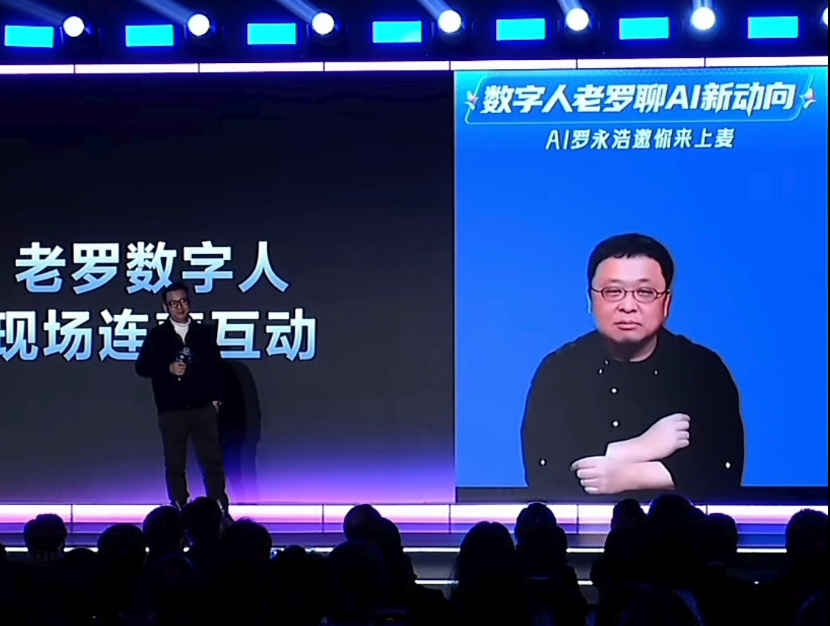
*Live Connection Session at Baidu Wenxin Moment Conference (Shanghai)
During the debate, "Digital Luo" mimicked the original's catchphrase "Okay" while presenting arguments based on public data and objective facts. He showcased Baidu's layout and achievements in chips, large models, autonomous driving, and other fields, concluding with his viewpoint: "Just because they woke up early doesn't mean they missed the bus."
Baidu's live debate was not just a showcase of its mature technology in the digital human field but also seemed like an unofficial response to years of external skepticism about Baidu's AI. This move also signals a change: Baidu, which has been relatively low-key in recent years, is undergoing a transformation.
AI's Evolution Begins with Accumulation
Today, people are accustomed to seeking answers through natural conversations with chatbots and can commute using autonomous vehicles. Intelligent driving has become a core competitive edge for automakers.
However, as people marvel at AI's rapid rise and its integration into every aspect of daily life, few realize that this seismic shift is the culmination of numerous small changes accumulated over time.
From technological infancy to widespread adoption, a "valley of death" often needs to be traversed. In the field of technology transfer, there is an industry term known as the "valley of death effect," which refers to the vast chasm between laboratory prototypes (technological validation stage) and commercialization (market application stage). A significant number of innovative technologies fail after leaving the lab due to factors such as funding shortages, inadequate technological adaptability, and mismatched market demand. Only a handful manage to cross this chasm and achieve scalable profitability.
The AI field also has its own "valley of death effect." Gartner, a commercial and technological insight company, mentioned in multiple reports from 2019 to 2023 that "85% of AI and data science projects fail to progress beyond the PoC (Proof of Concept) stage." The underlying reasons, besides subjective missteps like misaligned investments and blind pursuit of new trends, include objective infrastructure deficiencies such as GPU computing power and cloud resources, which have become significant bottlenecks restricting the development of most AI projects. 
However, when we focus on Baidu's AI layout (strategic layout ) over the past few years, we find that Baidu has not rushed to chase short-term trends. Instead, it has consistently focused on "laying the groundwork," using long-term investments to build a solid foundation for crossing the "valley of death."
In 2011, Kunlun Core was officially established. In 2013, it initiated its autonomous driving R&D project. In 2016, it open-sourced the PaddlePaddle deep learning platform... Baidu chose to start from the basics, building its own intelligent cloud platform, developing its own chips, training large models, exploring autonomous driving, and AI applications, followed by continuous testing and iteration.
More than a decade later, Baidu now possesses Kunlun Core, whose performance ranks among the top tier in the industry. It boasts a robust computing power with a 30,000-card AI cluster, along with Baidu Intelligent Cloud, Apollo Go, and an intelligent agent matrix covering various application scenarios such as search, digital humans, no-code development, and algorithm evolution. 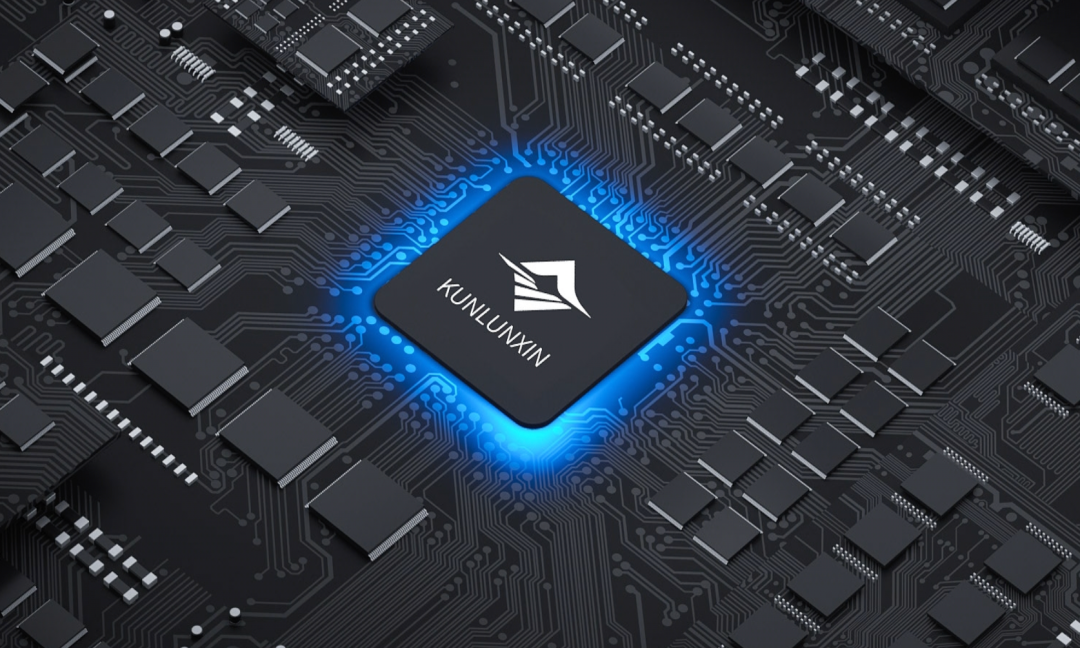
*Image Source: Kunlun Core Official Website
As Baidu's founder, Robin Li, said, "When the success of a project almost entirely depends on its technological advancement, our chances of success increase significantly, especially if the technology requires many years of investment and iteration. Then, our chances of success become even greater."
Only by looking back at Baidu's journey can we understand why this tech giant chose to embark on the AI path and selectively ignored external skepticism. Because technological development is never linear; major breakthroughs often result from qualitative changes triggered by key innovations and technological turning points. Before these qualitative changes occur, adhering to a direction and accumulating strength remain prerequisites for success.
The Confidence Behind Baidu AI
Numerous star companies have emerged in various AI sub-sectors, such as large models, intelligent agents, and autonomous driving. AI startups in these niches are also keen on showcasing their latest technological capabilities on social media to gain more attention.
However, in technological development, there is no permanent first place. A visible piece of evidence is that in 2025, the AI landscape has completely bid farewell to a "single dominant player" scenario.
In the international market, OpenAI, which once rapidly gained fame with its GPT series models and long held the top spot in the industry, faced strong competition from Google in 2025. Google leveraged the dense (intensive) iteration of its Gemini model to transition from a "follower" to a "challenger," bringing international AI competition into a "duopoly" era.
However, Google's brilliance lies not only in enhancing model capabilities but also in its ecological commercialization strategy. Gemini is deeply integrated into Google Search, Gmail, Workspace, and other core products. Simultaneously, Google forged a deep partnership with Apple, constructing a comprehensive ecosystem covering personal consumption and enterprise services. As a technological empowerment tool, AI not only found a vast stage within Google's proprietary ecosystem but also enhanced productivity in collaboration with other businesses. 
*Image Source: Google
In the domestic market, after a group of "open-source pioneers" like DeepSeek and Kimi successfully brought domestic AI into the public eye, they attracted rapid entry from major tech conglomerates, launching assaults from multiple dimensions such as computing power, ecosystems, and applications, leading to all-out competition.
In reality, the core of domestic AI competition has shifted from "stacking computing power" to "engineering optimization + ecological synergy": Major tech companies leverage their computing power and financial advantages to fill technological gaps, while open-source players expand their ecological influence through community collaboration. The domestic AI market is forming a new landscape of "diverse coexistence and intense competition," which precisely aligns with Baidu AI's "home turf."
For Baidu, which has established a "chip-cloud-model-application" full-stack synergistic system, the foundational technological base composed of Kunlun Core, Baidu Intelligent Cloud, and the Wenxin Large Model, along with the ecological synergy of specific applications like Apollo Go and the intelligent agent matrix, has become self-sufficient. The maturity of its products is evident—the impressive debate by Luo Yonghao's digital avatar at the Moment Conference was a testament to the capabilities of the Wenxin Large Model.
Previously, on the LMArena large model leaderboard, Baidu's Wenxin Large Model 5.0 also scored 1460 points, ranking first domestically and eighth globally on the text benchmark. It ranked second globally in mathematical ability, being the only Chinese large model to enter the global top ten.
Additionally, Baidu's intelligent agent matrix, including search agents (Baidu Search), digital human agents (Huiboxing), code agents (Miaoda), and algorithm evolution agents (Famou), all based on the Wenxin Large Model as the algorithmic foundation, as well as Apollo Go, which has propelled domestic Robotaxi services onto the international stage as the largest autonomous driving ride-hailing platform, all genuinely reflect Baidu AI's strength in transitioning from technology to large-scale commercialization. Besides enhancing system synergies, Baidu AI's full-stack layout (strategic layout ) also significantly optimizes overall costs while saving on computing power expenses. 
*Image Source: Apollo Go Official Website
At this juncture, Baidu AI has simultaneously reached critical points in technological maturity, cost curves, and application paradigms. People are gradually realizing that Baidu aims not for individual championships but for systemic comprehensive advantages.
Notably, the value of Baidu's AI system has been recognized by the keenly perceptive capital markets. Looking back at the 2025 stock performance of US-listed tech stocks, Baidu ranked among the top with a 57.9% increase. In January 2026, Kunlun Core's spin-off and listing, along with Apollo Go's commercial operations in Abu Dhabi and obtaining a fully autonomous testing permit in Dubai, among other project advancements, continued to drive Baidu's stock price soaring. Since the beginning of the year, Baidu's US-listed stock has surged by over 24%, leading Chinese internet tech stocks. 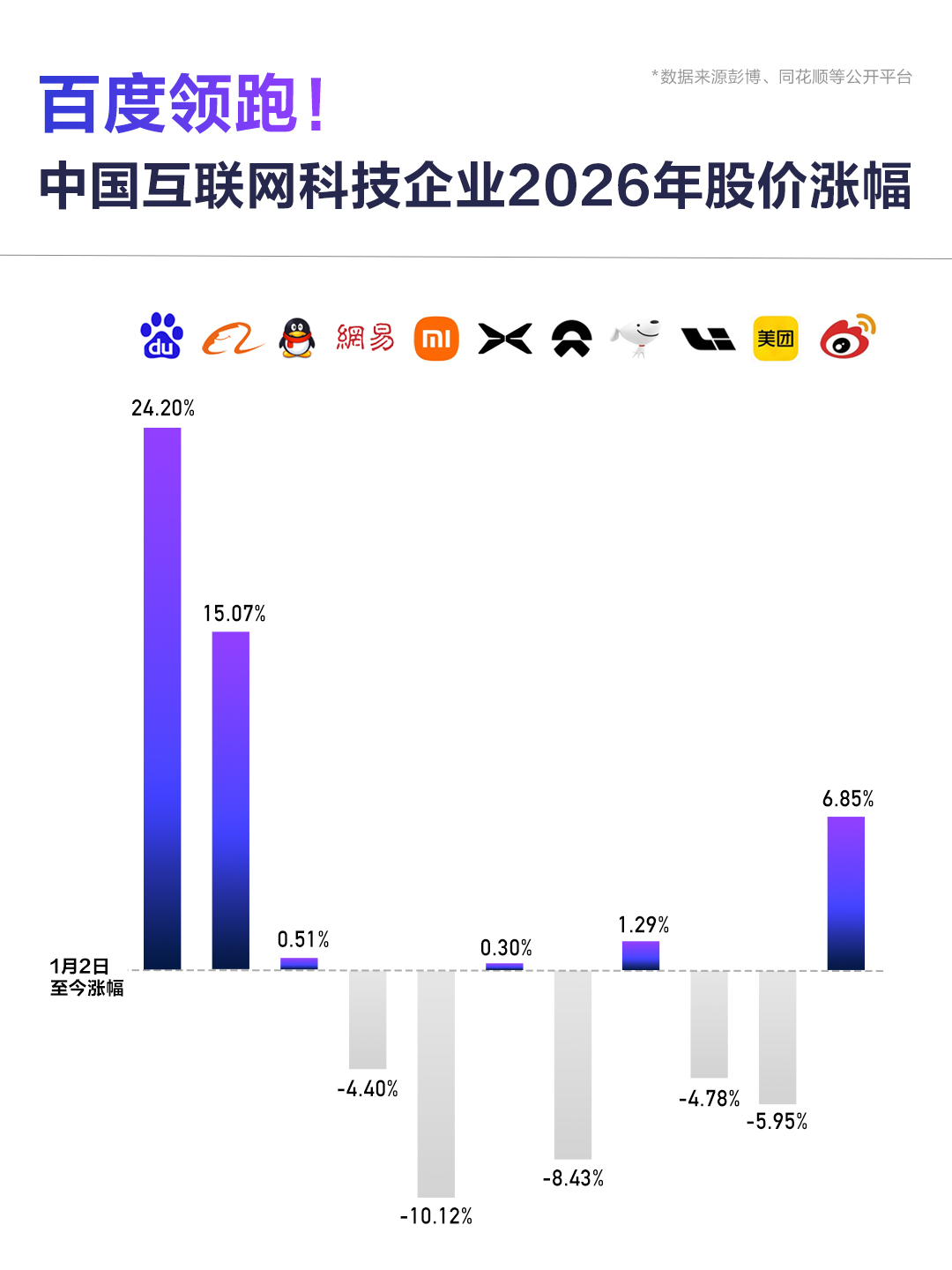
Winning the Grand Chess Game of AI
Looking at the current AI industry, there is a sense of an AI entrepreneurial boom: From small teams empowering content creation to AI service providers deep cultivation (deeply engaged) in vertical fields, countless individuals and startups are using AI as an anchor point to seek new value growth in sectors like education, healthcare, and manufacturing, attempting to capitalize on this era's dividends.
However, few realize that behind this entrepreneurial frenzy lies the support of mature AI "infrastructure"—just as skyscrapers require a solid foundation, core infrastructure such as computing power chips, underlying algorithms, and data systems are the prerequisites for all AI innovations to land.
In this infrastructure race, Baidu has delivered an answer sheet belonging to long-termism through more than a decade of quiet cultivation.
This reflects not just the far-sightedness of a tech company but also its unwavering belief in and adherence to long-termism.
In fact, the development of AI always seems to test people's ability to endure long-term challenges. Geoffrey Hinton, known as the "Godfather of AI," once faced academic lows due to his ideas being 30 years ahead of their time, enduring external skepticism and personal hardships. It wasn't until computing power, data, and algorithms synergistically matured that he achieved a breakthrough, earning the Turing Award and Nobel Prize in Physics.
Geoffrey Hinton's experience has also shaped a classic narrative in AI history: True breakthroughs often emerge from "unwavering persistence amidst misunderstanding." This resilience of "remaining steadfast despite not being understood" is precisely the rarest quality in the AI field—after all, the curve of technological iteration always follows non-linear growth, often requiring endurance through long periods of silence and uncertainty. 
As Robin Li said, Baidu is a tech company that wants to use technology to change the world. It explores various directions of technological innovation and is willing to give them a try. Even if it hasn't succeeded after ten years, if it's meaningful, it will continue trying. Baidu is such a company. With this resilience, Baidu has now emerged from the longest wait.
The era is beginning to recognize those long-termists who dare to wake up early. After a long period of accumulation, Baidu is becoming more relaxed and composed. Currently, the competitive logic in the AI sector is shifting towards industrial value reconstruction, and the systemic advantages accumulated through long-termism are leading Baidu onto the fast track of value realization.
-
![]()
Registered Capital Slashed to 372 Million Yuan! Yutong Optical Finalizes Industrial and Commercial Change Registration
-
![]()
Zhuque-3 Successfully Lands, and 'Time Traveler' Secures Another ¥100 Million in Funding: China's Commercial Space Industry Experiences a 'Dynamic August'
-
![]()
Autohome Faces a Shrinking Window of Opportunity
-
![]()
Even a Titan Like Musk Has Faced Setbacks in Fulfilling Promises
-
![]()
AI Office: The End of the Racing Era, Context Becomes the Key to Success
-
![]()
Domestic Vehicle Chassis Revolution ②: The Steering Wheel Remains, But Mechanical Connections in the Steering System Are Decreasing
-
![]()
Exploring MiniMax Design: Can Video Editing Be as Simple as Speaking?
-
![]()
Why Can SenseTime Achieve Profitability While CloudWalk Still Faces Challenges, Despite Both Adopting Large Models?