Tencent Is in Dire Need of the Next 'WeChat,' Yet Yuanbao Pai May Not Be the One
 02/02 2026
 458
458
Tencent is desperately seeking the next 'WeChat.'
The AI landscape in 2026 was abuzz with excitement around the Laba Festival, largely thanks to Tencent and Baidu. Both tech giants unveiled cash red packet promotions for the Spring Festival, with Tencent distributing a staggering 1 billion yuan and Baidu following suit with 500 million yuan. Subsequently, they launched beta tests for AI-driven social products.
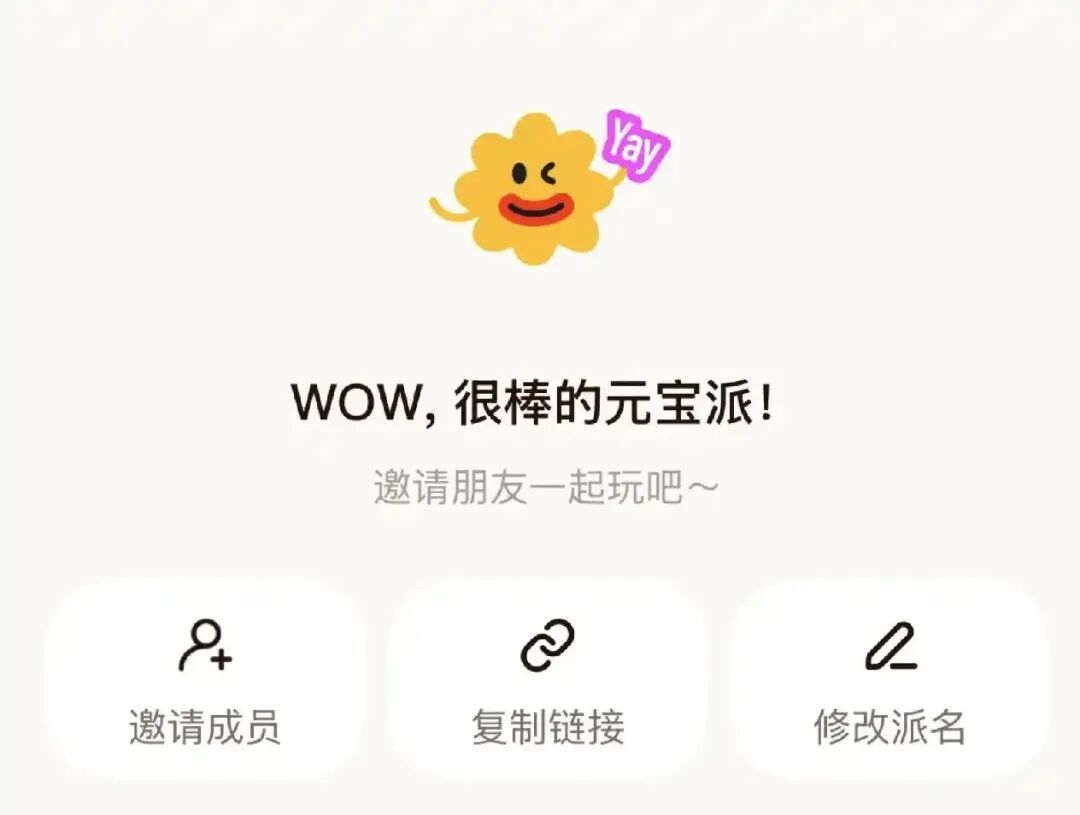
On January 26, Tencent's AI application, Yuanbao App, kicked off the beta test of 'Yuanbao Pai.' Ma Huateng revealed that this project was initially shrouded in secrecy. Just a day later, on January 27, Baidu's Wenxin App also commenced a new round of beta testing for its 'multi-person, multi-Agent' group chat feature. From what I gather, Baidu had already initiated beta testing for this group chat feature on January 16.
The 'coincidental' moves by both companies hint at a broader trend: AI social networking is poised to become the focal point in the competition for AI Agents.
While ByteDance's Doubao and Alibaba's Qianwen have not explicitly announced similar social features, the potential of AI social networking makes it unlikely for them to stay on the sidelines. They are expected to join the fray in various ways soon.
These AI behemoths now have a chance to level the playing field with Tencent, leveraging 'AI to revolutionize social networking.'
Yuanbao Pai: The Prototype of 'WeChat' in the AI Era
For Tencent, Yuanbao Pai may not be a groundbreaking AI social product, but it carries significant symbolic weight. It is seen by outsiders as Tencent's native AI 'WeChat,' tasked with finding a core social platform in the AI age.
Tencent's distribution of 1 billion yuan in cash red packets is essentially an attempt to swiftly reshape user habits through highly incentivized and socially engaging 'behavioral interventions.' Yuanbao Pai is the linchpin in this strategy. Beyond increasing its chances of winning the AI race among major companies, Tencent needs to find the next 'WeChat' to solidify its dominance in the social ecosystem.
In my opinion, Yuanbao Pai represents the prototype of Tencent's 'WeChat' in the AI era. Its significance to Tencent is akin to that of WeChat's red packet feature over a decade ago. During the 2015 Spring Festival Gala, Tencent distributed 500 million yuan in cash red packets through WeChat's 'Shake' feature, achieving a 'Normandy-like landing' for WeChat Pay and cracking open the mobile payment market.
Now, Ma Huateng hopes that Yuanbao Pai can act as a 'cavalry,' helping Yuanbao to seamlessly integrate various businesses, catching up on the 'lost two or three years' in the AI field, and laying the groundwork for truly AI-driven social interactions.
'Prototype' suggests immaturity. From a product design and user experience standpoint, Yuanbao Pai resembles an AI-enhanced community product. Its social scenario shaping is still rudimentary: it detaches from WeChat but imports WeChat's relationship chains, replicating its social logic.
It retains traditional social features like group chats and private chats, allowing users to create or join a 'Pai' (group) for daily interactions. Future updates will include 'watch together' and 'listen together' features, integrating Tencent Meeting's audio and video capabilities. Ma Huateng also hinted at the introduction of additional communication features in the future.
In reality, this design is not groundbreaking. QQ chatbots and Microsoft Xiaoice already offer similar services.
On February 1, Yuanbao's 1 billion yuan red packet campaign officially commenced, and WeChat groups and Moments were instantly inundated with links to Yuanbao red packets.
However, Allen Zhang (affectionately known as 'Long Ge') advocates for restraint and non-intrusiveness. Yuanbao's red packet gameplay seems to breach WeChat's restrictions, mirroring Pinduoduo's 'invite friends to cut prices' strategy. Many users have complained, saying things like, 'questioning Pinduoduo, becoming Pinduoduo,' and 'only officials are allowed to set fires, not commoners to light lamps.'
If WeChat or Yuanbao fails to devise better operational strategies, this crude user experience will bring not celebration but annoyance. The most apparent consequence is that many group admins or friends in Moments will manually block such content.
At this juncture, more users are preoccupied with claiming red packets and saving money than with the AI product Yuanbao itself. It's crucial to note that the user experience of AI products is the deciding factor in whether users will stay for the long haul.
WeChat seems to have recognized this. Currently, the direct sharing channel to Moments appears to have been disabled, replaced by red packet codes. Users cannot click directly but must copy and enter the Yuanbao APP.
This time, Baidu's Wenxin was able to swiftly launch the beta test for its group chat feature, indicating that the technical barrier for this model is not high. The key distinction is that Yuanbao Pai and Wenxin's group chat are native AI product capabilities, rather than AI features grafted onto traditional applications.
What is evident is that Yuanbao Pai and Wenxin's group chat represent effective, lightweight forms of AI social interaction for now. They serve as a 'testing ground' for AI giants in native AI social interaction, but neither represents the entirety of AI social interaction. Tencent also lacks the confidence to claim absolute dominance in AI social interaction.
Tencent Is in Dire Need of the Next 'WeChat'
Over the past two to three years, as large language models have swept across the industry, outside evaluations of Tencent's native AI efforts have often been 'slow' and 'laid-back,' with its actual posture also appearing 'unhurried.'
As I analyzed in my article 'AI Race Among Tech Giants: ByteDance, Alibaba, and Tencent Compete During the Spring Festival Season,' this 'unhurried' attitude stems from Tencent's core DNA: 'social' and 'connection.' It has built the underlying 'relationship chain' of China's internet and become the largest repository of scenarios and entry points on China's internet.
Just WeChat and QQ alone roughly cover over 1.9 billion monthly active users. The ecosystem above them is even more vast and intricate. Any subtle functional change can trigger widespread attention and discussion, even reshaping entire industries or sectors.
This determines that Tencent differs from ByteDance and Alibaba. Its primary challenge is not to 'seek' or 'seize' new entry points and scenarios externally but to address AI anxiety internally: transforming and upgrading various products into AI-driven ones without compromising user experience and reconstructing its vast and complex business ecosystem.
This also means that Tencent's AI strategy is a systematic endeavor that tests its patience and internal coordination capabilities. For instance, Yuanbao's feature is its integration into Tencent's product ecosystem. It appears as a Yuanbao contact in WeChat, a Yuanbao avatar in Tencent Meeting, and a Yuanbao plugin in QQ Browser. Yuanbao is also active in the comment sections of various Tencent products, where users can chat and interact with it simply by mentioning @Yuanbao.
These attempts aim to transform Yuanbao into atomic AI capabilities, a foundational module that can be 'seamlessly embedded' into various Tencent products. Yuanbao Pai is precisely the concrete realization of this 'atomic AI capability' in social scenarios.
 Figure caption: Online reference image
In a sense, Yuanbao Pai is Tencent's inaugural move in creating a native AI 'WeChat.' It can also be viewed as the beta version of a native AI 'WeChat,' representing a transitional exploration in AI social interaction by this social giant. In the short term, its core value lies in three aspects:
First, it secures a foothold in the AI battle and maintains its influence in the track. The current AI social track is fiercely competitive. Baidu's Wenxin has already taken the lead in launching the beta test for its 'multi-person, multi-Agent' group chat feature. ByteDance's Doubao and Alibaba's Qianwen have also been rumored to follow suit. Against this backdrop of competitors quickly staking their claims, Tencent urgently needs a native AI social application to maintain its voice in the track, avoid being left behind by competitors, and secure enough iteration time and market space for the birth of the next 'WeChat.'
Second, it responds to external doubts and shatters the 'slow' label. Tencent's performance in the native AI field has often been criticized as 'all talk and little action,' lacking blockbuster products to back it up. Compared to directly transforming WeChat and QQ, given the current unclear prospects of AI social interaction, Yuanbao Pai's lightweight trial is more practically significant. It can convey Tencent's substantive actions to the industry, alleviate external anxiety about its lagging AI strategy, and accumulate user data through rapid iterations to pave the way for subsequent core products.
Third, it lays the groundwork for WeChat's AI Agent and provides practical insights. From Tencent's long-term strategy, the WeChat Agent is its ultimate move in the AI field. Tencent President Liu Chiping has explicitly stated that WeChat will launch an AI Agent to serve as a personalized private assistant for every WeChat user. This AI Agent, similar to MetaAI and Gemini, will be introduced as an internal feature of WeChat rather than as a standalone app. Ma Huateng and other Tencent executives have high expectations for it.
At Tencent's 2025 annual meeting, Ma Huateng expressed the hope of recreating the success of WeChat's red packet feature through the red packet campaign and explicitly stated that Yuanbao Pai might add communication features in the future. 'We will first leverage our strengths in social communication and relationship chains to create a favorable atmosphere,' he said.
However, Yuanbao Pai's current positioning resembles a hybrid of 'traditional mobile applications + AI social features,' still trapped within the framework of 'WeChat-style social interaction.' Its 'conversation as a service' model and red packet fission gameplay essentially aim to open a native AI entry point outside of WeChat and QQ, similar to Doubao.
Yuanbao Pai has the potential to become the 'WeChat' of the AI era, but it may not necessarily emerge victorious. It could be supplanted by other native AI products.
Tencent has a tradition of 'horse racing,' and the growth potential of Yuanbao Pai depends not only on its own iteration capabilities and ability to address challenges such as privacy and security, ethics, and commercial closed loops but also on whether competitors like ByteDance's Doubao, Alibaba's Qianwen, and Baidu's Wenxin give it enough time to grow.
It's worth mentioning that Ma Huateng recently publicly criticized the privacy and security issues of Doubao's AI phone. In response, Doubao positively stated that its feature calls are strictly based on user authorization and drew clear bottom lines regarding the core points of contention.
The rivalry between Tencent and ByteDance is not new, which also reflects from the side that privacy and security are core pain points in AI social interaction. Yuanbao Pai will also face similar challenges.
From Yuanbao Pai, we can still discern that Tencent's 'WeChat' in the AI era must possess three qualities: the ability to inherit its social ecosystem advantages, adapt to the demands of the AI era, and resist 'different disruptors.'
These are also Tencent's core criteria for defining the next generation of 'WeChat.' The beta test of Yuanbao Pai is the first step in Tencent's transformation, but it is by no means the ultimate answer for Tencent or the direction of AI social interaction.
-
![]()
DJI Osmo 360 II In-Depth Review: How Does It Achieve Significant Image Quality Enhancements Without Sensor Changes or Excessive Spec Stacking?
-
![]()
Samsung’s Latest Foldable Phone Skips S Pen Again! Is AI Ushering in the End of Styluses?
-
![]()
Registered Capital Slashed to 372 Million Yuan! Yutong Optical Finalizes Industrial and Commercial Change Registration
-
![]()
Zhuque-3 Successfully Lands, and 'Time Traveler' Secures Another ¥100 Million in Funding: China's Commercial Space Industry Experiences a 'Dynamic August'
-
![]()
Autohome Faces a Shrinking Window of Opportunity
-
![]()
Even a Titan Like Musk Has Faced Setbacks in Fulfilling Promises
-
![]()
AI Office: The End of the Racing Era, Context Becomes the Key to Success
-
![]()
Domestic Vehicle Chassis Revolution ②: The Steering Wheel Remains, But Mechanical Connections in the Steering System Are Decreasing