Intensifying Struggle for AI Accessibility: Ant Group's Unique Strategy to Tackle Two Major Concerns of the Masses
 02/03 2026
 579
579

Produced by | Bullet Finance
Art Editor | Qianqian
Reviewed by | Songwen
On the cusp of the 2026 Spring Festival, Han Xinyi, the CEO of Ant Group, penned a heartfelt letter. Combined with his recent series of media interviews where he answered all questions, there are mounting signs that Ant Group, once a leader in the entrepreneurial wave, is making a comeback at the forefront of the AI era, stepping onto the competitive stage of technological advancement.
However, this "family letter" goes beyond the realm of professional strategy and technical jargon, weaving together the narratives of three ordinary individuals: a young man from Henan who utilized Lingguang AI to craft a "microphone" for his speechless father; the mother of an Ant Group employee who dodged a false medical scare with the help of Ant Afu; and a primary school student, self-dubbed the "Touch Ambassador," who stumbled upon a novel payment scenario.
These specific, nuanced anecdotes may initially seem disconnected from the grand narrative of AI. Yet, they unveil a profound transformation in progress: in 2026, AI is transitioning from the cutting-edge explorations of laboratories and industrial model parameter battles to the everyday realms of life.
This Spring Festival, the battle for AI accessibility has reached a fever pitch. For China's tech giants, this marks a crucial juncture of collective mindset shift. These stories of ordinary people, to some extent, serve as a footnote to the AI industry in China—by 2026, AI has stepped out of the ivory tower of laboratories, deeply embedding itself into the fabric of everyday life, influencing work, family, and daily existence.
Compared to the more aggressive displays by other major firms, Ant Group's approach is more grounded in daily life and warmth. Behind this lies Ant Group's redefined positioning: it aims to connect with genuine individual needs through AI. At this industry turning point, this focus on the health and wealth management needs of ordinary people not only responds to societal sentiments during an economic downturn but also represents Ant Group's quest for a more stable footing in the AI era.
1. Shift in Public Mindset: Technology as the 'Backbone' for Ordinary People's Happiness
Standing at the dawn of 2026, we observe a profound shift in the underlying concerns of daily life.
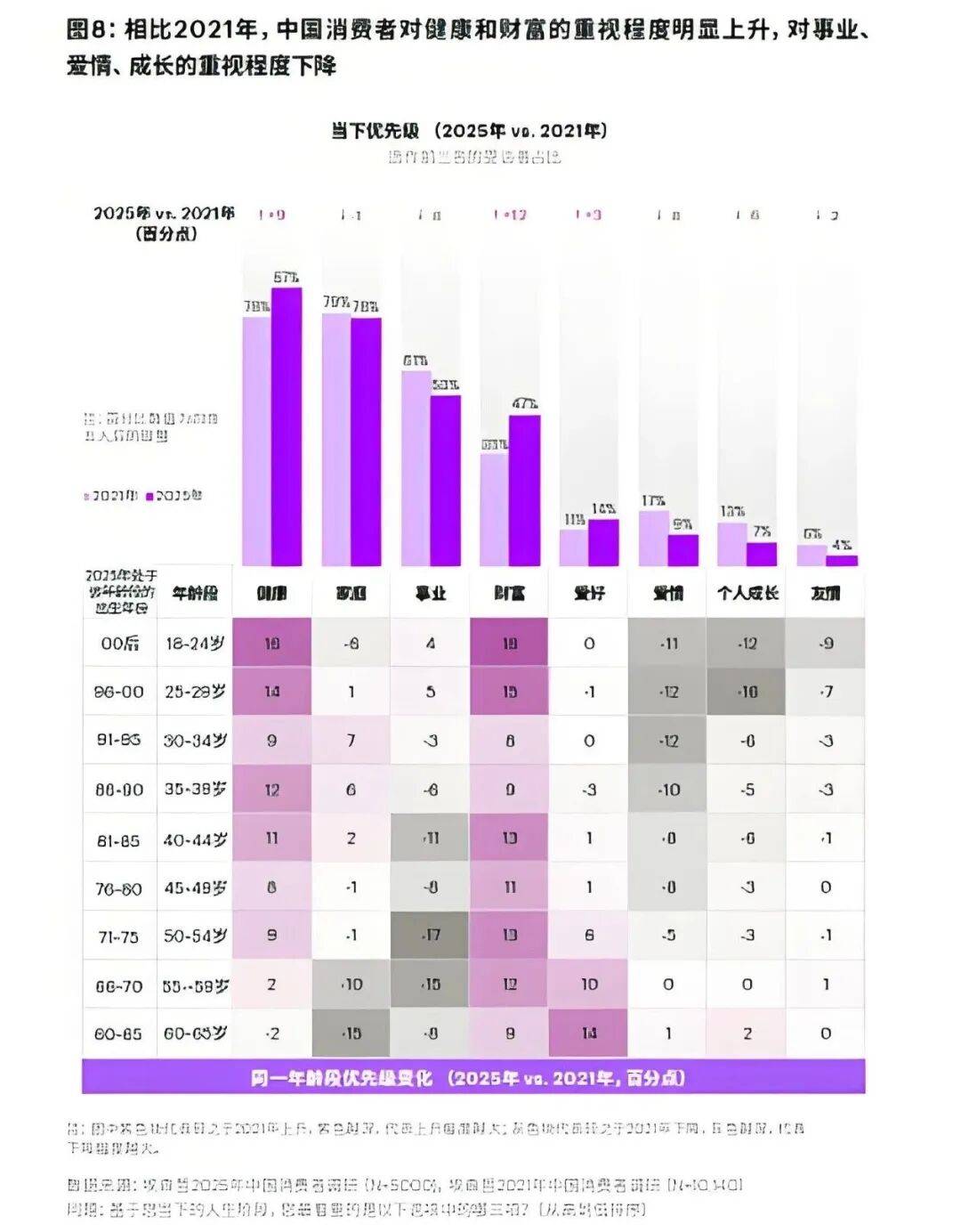
An Accenture survey reveals that compared to 2021, Chinese consumers are increasingly prioritizing health and wealth. Virtually every demographic has shifted its focus, placing "wealth" and "health" at the forefront. In 2025, 87% of consumers prioritized health (up 9 percentage points from 2021), and 47% prioritized wealth (up 12 percentage points).
Simultaneously, Chinese consumers' focus on metaphysical pursuits like "career" and "love" has diminished. Against the backdrop of low growth and an aging society, consumer sentiment has shifted from "offensive growth" to "defensive security," with a greater emphasis on preserving existing happiness.
Han Xinyi previously disclosed in interviews that Jack Ma has long been concerned about health, proposing the "Double H Strategy" (Happiness and Health) a decade ago. In Han's view, health represents Ant Group's most promising field, extending its inclusive business into the AI era. He even believes that applications like "Afu" should go global to assist regions with poor medical infrastructure, such as Africa and Southeast Asia.
This vision deeply resonates with the societal structural changes following economic transformation. This insight is materialized in the "Two Flowers" strategy—"Flowers of Wealth" and "Flowers of Health."
"Flowers of Wealth" symbolize financial resilience. Amidst declining investment returns, ordinary people desperately seek professional wealth management. Previously, less than 10% of China's 720 million investment users had access to professional advisors.
This structural service gap is being bridged by AI. Ant Group's AI investment assistants, like "Ma Xiaocai," democratize access to professional guidance, enabling third-tier city users to enjoy services previously exclusive to private banking clients.
"Flowers of Health" address the essential need for healthcare. With the "15th Five-Year Plan" elevating "investment in people" to unprecedented heights, health has become a core indicator of personal well-being. Currently, China's 2.6% of top-tier hospitals handle 43% of outpatient visits, creating a resource mismatch that fuels collective anxiety over healthcare accessibility.

Ant Group has elevated its health business into an independent division. Its AI health application, "Afu," surpassed 30 million monthly active users within half a year, driven by millions of families' desire for reliable healthcare.
The 2026 consumption theme is highly condensed: the public is shifting from "looking upward" to "looking inward." Amidst external uncertainties, physical health and financial stability have become the most tangible sources of security.
And technology's mission is to provide the backbone for these two pillars.
2. Moving Beyond the 'Arms Race': Letting Technology Solve Specific Problems
Indeed, reviewing technological history, any disruptive innovation transitions from a "geek toy" to "infrastructure." The AI revolution is no exception.
In 2026, AI officially enters the "technology diffusion" phase, marked by a shift in technological dominance from supply to demand.
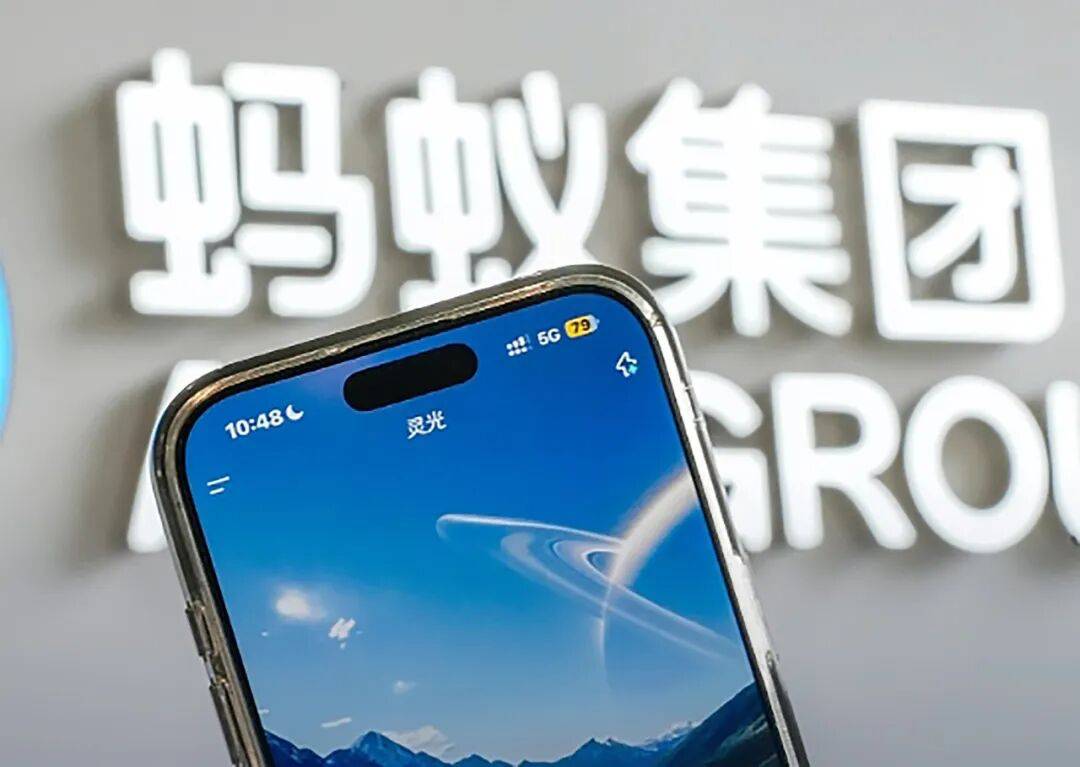
The "Lingguang" product mentioned in Han Xinyi's letter exemplifies this shift: ordinary people have created 1.2 million mini-applications using it. This means the "last mile" of technology is no longer written by programmers but defined by everyday users' intuition. For instance, the "microphone" app created for a speechless father, though simplistic from an engineering perspective and lacking commercial scalability, was life-changing for that specific family.
This is the essence of technology: abandoning the obsession with solving problems for 100 million people with one solution and instead empowering 100 million people to solve their unique problems individually, lowering barriers to entry.
Reduced barriers enable primary school students to pioneer new payment scenarios; lowered professional knowledge thresholds allow 55% of "Afu's" users from third-tier and below cities to access AI doctors.
This diffusion exerts a subtle yet profound influence. When AI penetrates specialized fields like payment, finance, and healthcare, it transcends being a chatty, poetic dialogue box on a screen, becoming a "digital avatar" capable of registration (registering appointments), interpreting financial reports, and providing medical advice at critical moments.
In this process, Ant Group demonstrates its "return to the battlefield" stance—eschewing the blind arms race for general-purpose large models and focusing on specialized AI applications.
Indeed, today, AI's true commercial potential lies precisely in traditional domains with barriers and resource imbalances. Bridging this gap requires not only technological investment but also commercial innovation.
3. From 'Grand Narratives' to 'Upholding Dignity'
Today, when discussing "what AI has changed," the focus has shifted from industrial revolution-scale grand narratives to the tangible hope technology brings to individuals.
Technological transformations often hide in the minutest details of daily life. For instance, "Touch," which fundamentally enhances human interaction with the physical world. When phones, glasses, and watches can complete payments and verifications through simple collisions, the boundaries between the digital and physical worlds gradually blur.
This convenience saves not only time but also instills a sense of control over one's life.
More profound changes manifest in safeguarding "human dignity." Amidst severe healthcare resource constraints, ordinary patients often feel helpless before renowned doctors. The emergence of AI medical assistants and avatars creates a buffer zone of humanistic care within the healthcare system's cracks.

The family mentioned in the letter who avoided a false scare thanks to "Afu's advice" felt not only the algorithm's precision but also the warmth of being supported by professional knowledge during anxious moments.
From this perspective, Jack Ma's "Double H Strategy" finds its most concrete expression this year. In Ant Group's context, health has evolved from an ancillary service to the "third pillar" supporting the company's next decade. While payments and finance address societal efficiency, health pertains to societal quality.
In 2026, AI is making life more convenient, finances more stable, and health more robust. The accumulation of countless "little improvements" ultimately fosters ordinary people's confidence in the future.
Ant Group's letter phrase, "The era stirs waves; we shall respond with grandeur," perhaps best captures the essence of this AI era. Technology must descend from its pedestal, transitioning from dazzling algorithms to addressing every specific, minute aspect of people's livelihoods.
In 2026, AI is no longer a laboratory marvel; it is life itself. Only when it becomes as indispensable and imperceptible as tap water and electricity does this technological revolution achieve true closure.
The future of intelligent business experiences hinges on how they benefit "people." Ant Group's Year of the Horse begins with a proactive stance, anchored in the most fundamental, certain aspirations of every ordinary individual.
-
![]()
Tough Times Are Here: The Auto Industry Is Mired in Immense Pain
-
![]()
Honda Finds Itself 'With No Alternative' but to Battle On for Another Ten Years
-
![]()
Is the 'Chili Fish Head' Car, Once a Hit Among Noble Ladies, on Its Way Out?
-
![]()
DJI Osmo 360 II Review: Impeccable Hardware, Yet Software Still Lags Behind
-
![]()
The 'Dichotomy' in Alibaba's AI Ledger
-
Reinventing the 'Old Guard' with AI: A $12 Billion Venture in Just a Year
-
![]()
Alibaba's Q2 Profit Plummets by 32.6 Billion Yuan, with 67.7 Billion Yuan Earmarked for Capital Expenditures
-
![]()
DJI Osmo 360 II In-Depth Review: How Does It Achieve Significant Image Quality Enhancements Without Sensor Changes or Excessive Spec Stacking?