Uber Bids Farewell to Car Manufacturing, Transforms into a 'Data Provider for Autonomous Driving'! Fueling AI Drivers with a Fleet Spanning 600 Cities—Is This the Genius Move of the Ride-Hailing Titan
 02/03 2026
 555
555
Introduction
Recently, Uber made headlines by announcing the creation of its 'AV Labs' division, marking its official re-entry into the autonomous driving sphere—but this time, it's taking a revolutionary approach:
Ditching the costly path of full-stack self-development, Uber is pivoting to become a pure data service provider for autonomous driving.
Leveraging its sensor-equipped fleet, Uber plans to supply real-world road test data to rivals like Waymo and Waabi.
This signifies a paradigm shift in the industry, where the core competition transitions from an 'algorithm arms race' to a battle for 'data sovereignty.'
Let's delve deeper into this with Driverless Car Insights (WeChat Public Account: Driverless Car Insights)!
(For further reading, click: 'Uber Emerges as the Largest Platform for Autonomous Driving? Securing Big Wins with Waymo, Mobility, Volkswagen, Momenta, Pony.ai, WeRide, Tesla')
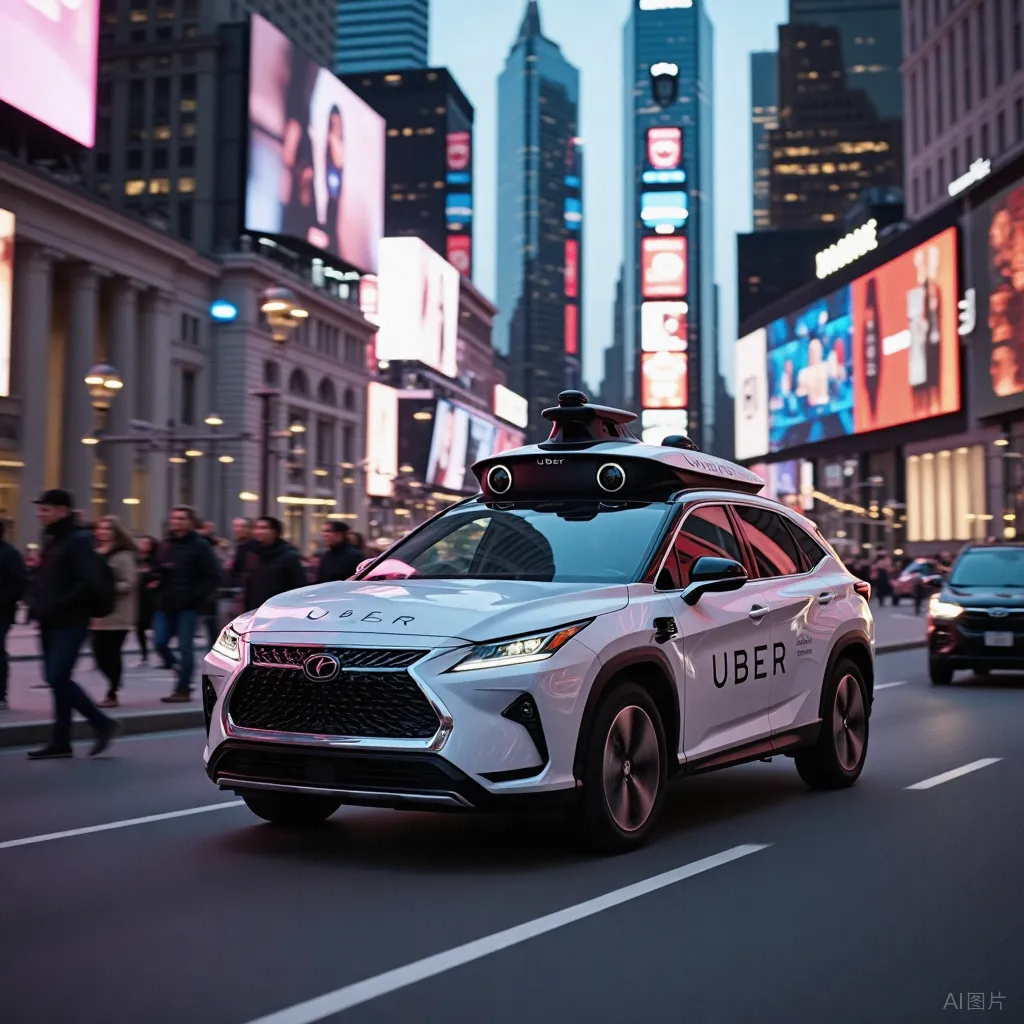
I. Strategic Pivot: A 'Dimensional Leap' from 'Player' to 'Venue Provider'
Uber's transformation is a calculated strategic retreat, born out of hard-earned lessons and a clear-eyed vision.
From 2016 to 2020, Uber invested heavily in autonomous driving, even enduring a significant setback due to a fatal accident.
This time around, Uber has completely abandoned its ambition to become 'another Waymo.' Its Chief Technology Officer has explicitly stated that profitability is 'not a core goal' in the project's early stages.
This isn't a sign of generosity but a shrewder business strategy: by providing indispensable public services (data infrastructure) for the industry, Uber aims to cement its irreplaceable 'positioning advantage' within the ecosystem.
(For further reading, click: 'Wall Street Investment Firms Start Covering Uber in Bullish Research Reports, Giving It a 'Buy' Rating in Their First Coverage—Expected to Be a Long-Term Winner in Autonomous Driving with Huge Potential in Food Delivery')
This move is akin to abandoning the high-risk gold mining in the autonomous driving 'gold rush' and instead selling shovels, maps, and mining intelligence to all prospectors.
Regardless of who strikes gold, the tool seller is guaranteed to profit.
Uber has identified the industry's most universal pain point: no matter how robust a company's algorithms are, the scale of its self-owned test fleet will always hit a bottleneck, unable to cover the endless 'long-tail scenarios' in the real world.
II. Core Asset: Global Network and 'Shadow Mode' Construct a Data Moat
Uber's confidence stems from two unique assets that no pure technology company can replicate.
Firstly, its operational network spans 600 cities worldwide.
This offers unparalleled scene coverage capabilities.
Uber's Vice President of Engineering revealed that they can flexibly deploy vehicles to specific cities, weather conditions, or road scenarios based on partner needs.
For instance, if Waymo requires more snowy data, Uber can dispatch its Chicago fleet;
if Waabi needs complex human-vehicle mixed scenarios in Asia, Uber can mobilize resources in Bangkok.
(For further reading, click: '$1 Billion 'Flash Marriage' with Uber: Can Waabi's Driverless Taxi Dream Succeed with 'Simulation Hacks?')
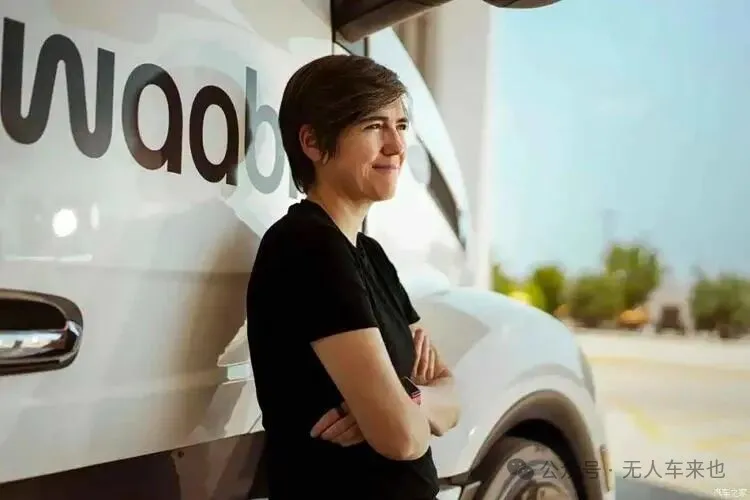
This 'on-demand data collection' capability transforms data acquisition from 'passive waiting' to 'precision hunting.'
Secondly, Uber adopts Tesla's 'Shadow Mode' data collection method.
Uber's vehicles are still driven by humans, but the partner's autonomous driving algorithm runs simultaneously in the background.
When the human driver's decision diverges from the AI algorithm's judgment, the system automatically flags it.
This not only efficiently captures AI flaws but also enables the AI to learn from human drivers' 'intuition' and 'experience' in complex situations—a key to conquering cognitive intelligence.
Uber pledges to deliver high-quality, cleaned, and labeled data, directly reducing partners' preprocessing costs.
III. Industry Transformation: Data-Sharing Ecosystem and Shift in Industry Dynamics
Uber's entry could fundamentally reshape the R&D paradigm and power dynamics of the autonomous driving industry.
It is pushing the industry from 'closed data silos' toward 'limited open data pools.'
While data details may remain confidential, sharing anonymized data on common long-tail challenges (e.g., recognizing special vehicles, handling extreme weather) can accelerate safety standard improvements across the industry.
This resembles collaborative foundational research on rare diseases in the pharmaceutical industry.
More importantly, whoever controls the largest and highest-quality real-world data gains the authority to define 'safety' and 'compliance' standards.
In the future, when Uber's dataset can demonstrate how 99.99% of human drivers would react in a given scenario, it will become the benchmark for measuring whether an autonomous system is 'human-like' and 'safe.'
This definitional power may hold far greater commercial and political value than operating a Robotaxi fleet.
This move also complements and counterbalances the 'simulation-first' approach represented by Waabi.
While simulation is efficient, it ultimately requires real-world data as seeds and validation.
Uber's vast real-world discrepancy data is precisely the most valuable nourishment for training and refining simulation models. Uber could become the critical pipeline connecting the 'simulated world' and the 'real world.'
IV. Potential Hurdles: The Complexity of the 'Data Utilities' Dream
However, Uber's path to 'data infrastructure' is not without obstacles.
Firstly, the complexity of data ownership and security is extremely high.
This data comes from public roads, involving passenger privacy and urban geographic information, with ownership remaining legally ambiguous.
When sharing data with multiple competitors, how can Uber ensure that Company A's core algorithm features won't leak to Company B through the data?
This requires highly complex technical and institutional designs.
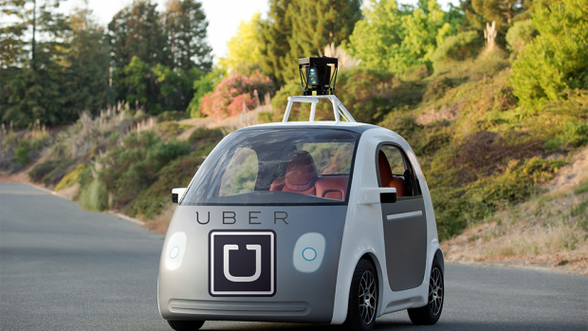
Secondly, the sustainability of the business model is questionable.
The current 'non-profit-oriented' stance will eventually face Wall Street's profitability demands.
Should future pricing be based on data volume or performance-based revenue sharing from algorithm improvements?
Can its pricing power withstand countermeasures from major clients forming their own data collection alliances?
Finally, Uber's public trust remains its Achilles' heel.
The shadow of past major safety incidents still looms large.
Will the public and regulators trust a ride-hailing platform with a history of fatal accidents to 'safeguard' autonomous driving?
Rebuilding trust will require Uber to demonstrate extreme transparency and safety records.
V. Data Infrastructure: The 'Invisible Moat' of Autonomous Driving
Uber's transformation has opened up a new track in the autonomous driving industry: instead of fighting in the technology red ocean, step back to build infrastructure.
While Waymo and others fret over testing licenses and road test mileage, Uber has secured its upstream position in the industrial chain through data services, transforming from a 'technology follower' to an 'ecosystem enabler.'
This quiet revolution may foreshadow the next phase of autonomous driving competition—where data determines dominance.
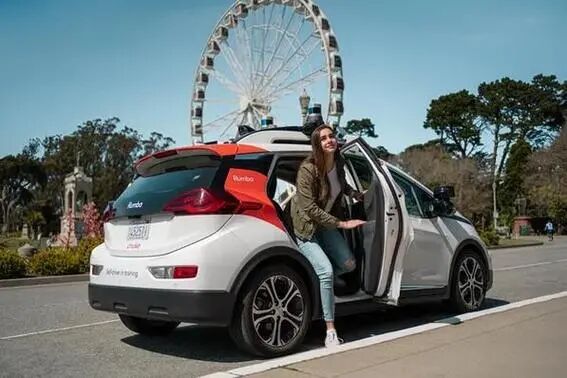
Uber's pivot marks a key consensus in the industry:
The final battle in autonomous driving will be won not by a single algorithm or vehicle but by the 'data depth' and 'scenario breadth' of real-world understanding.
It is no longer competing with Waymo on the same dimension but attempting to build a new one for the entire industry—the data dimension.
If successful, Uber will cease to be just a mobility or tech company but become the 'infrastructure operator' of the future intelligent transportation era.
In conclusion, Driverless Car Insights (WeChat Public Account: Driverless Car Insights) believes:
While Waymo, Waabi, Lucid, and others grapple with the '1% long-tail scenarios,' Uber has already laid its 'data infrastructure' at their doorstep using wheels from 600 cities. Future competition will no longer be about 'whose cars are smarter' but 'whose data is richer.' What do you think, dear readers?
#DriverlessCarInsights #Driverless #AutonomousDriving #DriverlessVehicles
-
![]()
Enflame Tech's IPO Journey: Navigating Over 5.9 Billion Yuan in Losses and Soaring Debt in Q1 This Year
-
![]()
Trillion-Yuan Giant Li Shufu 'Streamlines': Could Levc Be the Casualty?
-
![]()
AI Competes for Electricity and Generates Power in the Gobi Desert
-
![]()
The First Batch of Victims of the AI Bubble: Programmers
-
![]()
ByteDance, DJI, and Xiaohongshu Secure Top Three Positions Among China’s Fastest-Growing Unicorns
-
Tesla's in-car voice system in China is finally learning to 'understand human language'
-
![]()
Foreigners Are Amazed: Chinese Electric Vehicle Drive Systems Unveil Innovative 'Poses'
-
![]()
700,000 Brothers and the Future of Robots: Behind JD.com's 'Nirvana Plan'