2026 Money-Making Map of Autonomous Driving: 3 Keywords | Perspective
 02/05 2026
 613
613
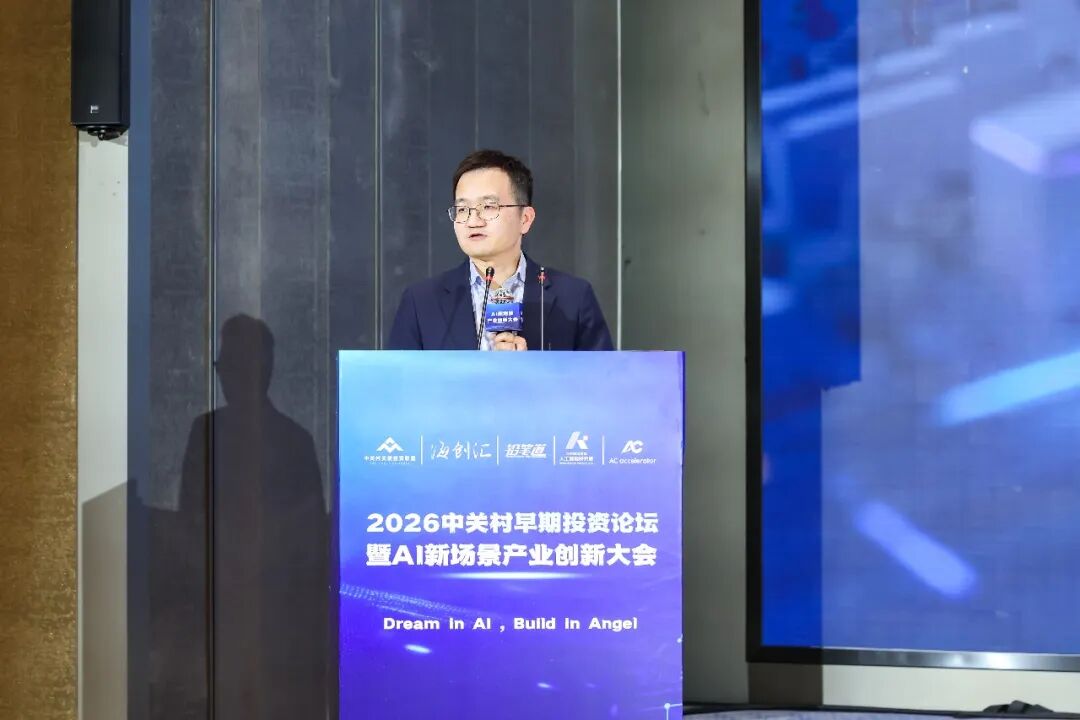
On January 28, the Zhongguancun Early-Stage Investment Forum & 2026 New Scenarios Conference, co-hosted by Pencil News, was held, reaching No. 1 on the Huodongxing Beijing overall leaderboard. This article features a speech by Zhang Dezhao, Chairman of IDRIVERPLUS.
In 2025, the most talked-about topic in autonomous driving is undoubtedly 'how to make money.' The focus has shifted from competing over vehicle speed and intervention rates per 100 kilometers to examining which scenarios have already seen implementation.
This article deciphers the latest implementation scenarios for autonomous driving, as shared by Zhang Dezhao, Chairman of IDRIVERPLUS.
- 01 - A New Phase in Autonomous Driving: From Showmanship to Implementation
Two or three years ago, AI discussions at industry forums almost always revolved around autonomous and self-driving vehicles.
Recently, the focus at such forums has shifted, indicating that these once-hot new sectors have entered a relatively mature 'mid-stage' of development.
The autonomous driving sector has been evolving for over a decade. In its early stages, it was largely about showcasing technological prowess: five or six years ago, industry competition centered on technical parameters—who could achieve high-speed driving first, increasing vehicle speed from 80 km/h to 120 km/h. Later, as vehicles began operating on urban roads, the competition shifted to intervention rates per 100 kilometers, with little attention paid to commercialization or specific application scenarios.
Starting about three or four years ago, the industry's primary discussions have shifted from 'how advanced the technology is' to 'where this technology can be applied': which scenarios have been successfully implemented? Today, I want to share insights on this very topic.
- 02 - Technological Pathways of Autonomous Driving: Three Key Levels
When discussing autonomous driving, technology is the core pillar. What are its key levels?
First is perception technology.
The development of hardware such as sensors, cameras, and LiDAR influences the industry's trajectory. In the past, discussions around autonomous driving focused on pure vision solutions and multi-sensor fusion, overlooking a critical point—these are merely perception tools; the underlying models are what truly matter.
In 2015, a single LiDAR unit cost $100,000, far exceeding the price of a Tesla. Over the past decade, its cost has plummeted to below 3,000 RMB, offering more options for breakthroughs in perception technology.
Second is decision intelligence.
Looking back at the past decade of autonomous driving development, it's evident that approaches have continuously evolved: algorithms have been updated generation after generation, with new architectures emerging roughly every two to three years.
To be honest, even those of us in the industry find it exhausting to keep up. Just as we adapt to one algorithm, it's soon replaced, requiring another round of updates and iterations.
A guest earlier mentioned whether 'end-to-end' solutions could be the ultimate destination for autonomous driving. From a practitioner's perspective, we certainly hope so.
Because it would comprehensively resolve algorithmic challenges in autonomous driving, eliminating the need for ongoing new investments—otherwise, R&D costs become prohibitively high.
Third is collaborative control.
Currently, the industry favors vehicle-road-cloud collaboration to elevate single-vehicle intelligence into a holistic system intelligence.
Previously, the focus was on whether a vehicle could travel from point A to point B. However, in real-world traffic conditions, achieving true autonomous driving implementation requires all vehicles and machines on the road to possess collaborative capabilities.
Simultaneously, platform-based design is also indispensable.
In the past, autonomous driving systems were highly scenario-specific, failing to function effectively in different environments due to low versatility. Therefore, increasing investment in modularity and generalization to enhance platform-level adaptability has become crucial for widespread autonomous driving adoption.
- 03 - Commercial Pathways of Autonomous Driving: Two Approaches
The commercialization pathways for autonomous driving mainly fall into two categories: leapfrog and incremental.
Google and Waymo have adopted the leapfrog approach, aiming to directly create the ultimate autonomous driving product by defining and developing the final product in one go.
The incremental approach, exemplified by Tesla, has two variants:
1. Incremental application scope: Progressing from low-speed to high-speed environments, and from closed or semi-closed scenarios to open scenarios.
2. Incremental functionality: Gradually advancing from L2 to L3 and L4 autonomy.
Personally, I favor the incremental approach. The reason is simple: Autonomous driving, or the broader AI sector, is essentially a marathon, not a sprint. Each step must be grounded in reality, with product implementations generating data to iteratively refine algorithms, ultimately approaching the ultimate product form.
- 04 - Three Key Scenarios
We've always believed that scenario applications must be customer-centric. Instead of starting with what technology can do, the first question should be: What do customers truly need?
First and foremost, humanity's most fundamental and critical need is life safety. Ensuring life safety often justifies any cost—because life itself is priceless.
During the recent fire in Hong Kong, I pondered: How crucial would it have been if robots could have entered the fire scene immediately to conduct firefighting and rescue operations?
Thus, in our view, the top priority for robots is to safeguard life safety by liberating humans from high-risk and harsh environments, assigning robots to undertake the most dangerous tasks.
With this in mind, IDRIVERPLUS has already made strides in specific areas, such as emergency response and firefighting scenarios.
The second tier: Once safety is ensured, people seek more effortless labor, such as autonomous cleaning and sanitation, helping workers escape arduous and repetitive tasks.
In this direction, our exploration focuses on three main scenarios:
1. Industrial settings.
In smart factories and workshops, our shipments currently lead globally, with a top market share.
2. Transportation hubs.
Our products have been deployed in large airports, high-speed rail stations, highway service areas, and subway stations. Many people traveling worldwide have spotted our robots at airports and even sent me photos. In this scenario, we also rank among the top in market share.
3. Squares and large public spaces.
At Tiananmen Square, our cleaning robots are the sole robotic products in use; key venues like the Bird's Nest and Water Cube also utilize IDRIVERPLUS products.
The third tier: As labor intensity decreases, people pursue better living experiences, such as travel, entertainment, and consumption.
This direction is more future-oriented, exemplified by unmanned travel modes like 'Apollo Go,' while also considering current legal and regulatory constraints.
IDRIVERPLUS's current strategy is to start with controllable scenarios—scenic areas and campuses—promoting applications like unmanned sightseeing and shuttles to secure a foothold. When regulations eventually permit operations on public roads, we can seamlessly expand our services from 'behind the walls' to urban roadways.
In summary, my advice to entrepreneurs is:
Abandon showmanship and focus on real-world implementation, adhering to incremental development principles;
Ensure every technological and product implementation translates into measurable economic and social benefits;
Maintain a value-driven mission to make life better.
-
Several Judgments on the Development Trends of AI Data Centers
-
![]()
Tough Times Are Here: The Auto Industry Is Mired in Immense Pain
-
![]()
Honda Finds Itself 'With No Alternative' but to Battle On for Another Ten Years
-
![]()
Is the 'Chili Fish Head' Car, Once a Hit Among Noble Ladies, on Its Way Out?
-
![]()
DJI Osmo 360 II Review: Impeccable Hardware, Yet Software Still Lags Behind
-
![]()
The 'Dichotomy' in Alibaba's AI Ledger
-
Reinventing the 'Old Guard' with AI: A $12 Billion Venture in Just a Year
-
![]()
Alibaba's Q2 Profit Plummets by 32.6 Billion Yuan, with 67.7 Billion Yuan Earmarked for Capital Expenditures