Cambrian King: Performance Skyrockets by 410%! The Cambrian Explosion Unfolds
 02/06 2026
 695
695
Text/Yang Jianyong
In 2025, Cambrian King presented a stellar performance report. According to the performance forecast, the anticipated full-year revenue for 2025 is projected to range from RMB 6 billion to RMB 7 billion. This represents a significant increase of RMB 4.825 billion to RMB 5.825 billion compared to the previous year, marking a substantial year-on-year growth of 410% to 496%. The net profit is expected to be between RMB 1.85 billion and RMB 2.15 billion, successfully reversing the previous year's loss of RMB 452 million.
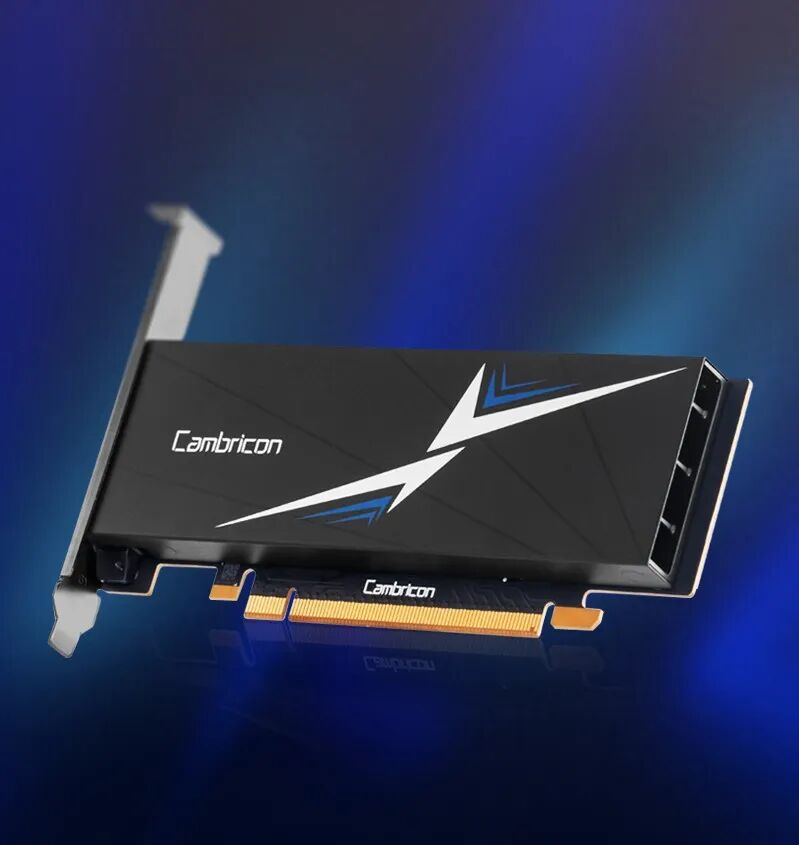
From Losses to the "Cambrian King": The AI Chip Champion Riding the Wave of Substitution
Cambrian's remarkable transformation from losses to profits is largely attributed to the burgeoning demand for AI chips in the era of generative AI, coupled with the trend of domestic substitution. This has propelled the AI chip manufacturer, which had long grappled with financial losses, into its most prosperous era yet, earning it the moniker "Cambrian King" in the capital markets.
The generative AI era has ignited a fresh wave of competition in AI large models, leading to increased capital investments in constructing extensive AI infrastructures. By 2026, the capital expenditures of major global cloud providers alone are expected to surge to over USD 600 billion.
This, in turn, is propelling the global semiconductor industry towards a trillion-dollar scale. According to Omdia, global semiconductor revenue is projected to exceed the USD 1 trillion mark in 2026. While showcasing robust growth, the global semiconductor market landscape is undergoing a transformation, shifting from general-purpose GPU computing to GPU-accelerated computing.
NVIDIA commands the GPU market with a market share exceeding 90%, nearly monopolizing the sector. This dominance is primarily due to its CUDA ecosystem, which has established a comprehensive suite of development toolchains, making it the foremost beneficiary of the AI boom, with rapid growth in both revenue and profits.
Notably, NVIDIA became the first company globally to surpass a market capitalization of USD 5 trillion, creating an unprecedented feat in the capital markets. Its current market cap still stands at an impressive USD 4.64 trillion (approximately RMB 32 trillion).
The Wave of Substitution: Domestic AI Chip Companies Like Cambrian and Moore Threads Seize Development Opportunities
Overall, since the dawn of the AI large model era, the market demand for AI chips has soared. However, ongoing efforts to restrict domestic companies from purchasing NVIDIA's high-performance chips aim to hinder China's AI industry development.
This external pressure has, paradoxically, accelerated the substitution process, presenting historical development opportunities for local chip manufacturers. Companies such as Cambrian, Moore Threads, MetaX, and Biren Technology have witnessed rapid growth, achieving significant breakthroughs in performance.
Among them, Cambrian emerges as the most prominent example, showcasing the strongest operational performance by transitioning from losses to profits after a prolonged period of financial struggles. Simultaneously, its proactive role in facilitating AI application deployment, growing at four times the industry average speed, has made it a highly coveted AI chip manufacturer.
Benefiting from China's accelerated chip substitution efforts aimed at reducing reliance on high-end chips, Cambrian and other local chip manufacturers are making significant strides. However, they still face certain competitive disadvantages compared to chip giants like NVIDIA and AMD.
To bolster their competitiveness in the chip market, four local AI chip companies—Cambrian, Moore Threads, MetaX, and Biren Technology—have collectively secured over RMB 20 billion in funding.
Among them, Cambrian recently raised RMB 3.985 billion through a private placement to finance chip platform projects for large models, software platform projects for large models, and to supplement working capital. This will further enhance its chip R&D and design capabilities, technical reserves, and product offerings, giving it a competitive edge in the smart chip market.
Of course, the market harbors high expectations for domestic chips. Against the backdrop of the rising popularity of domestic AI chips, the substantial newly raised funds will enable continuous R&D investment, leading to advancements in chip technology and the refinement of software and hardware ecosystems. This, in turn, will drive the increasing adoption of local AI chips, reducing reliance on NVIDIA.
In Conclusion
Against the backdrop of the sustained popularity of AI chips, the long-term trend of substitution is inevitable. This is expected to aid China in building its own AI ecosystem, fostering the development of a domestic AI chip software and hardware ecosystem, and further diminishing dependence on high-end chips like those from NVIDIA.
Crucially, the widespread adoption of DeepSeek enables more companies to deploy AI applications cost-effectively, driving AI commercialization and sustaining growth in computing power demand. Consequently, the demand for computing capabilities in large model underlying chips is further unleashed. Cambrian, benefiting from the rising computing power demand in the AI industry, has witnessed an overall improvement in its business performance, turning net profit losses into gains.
While the market holds high expectations for technological breakthroughs and commercialization of local chips, it is essential to reiterate that domestic AI chip manufacturers still confront multiple challenges, including technological iteration, software and hardware ecosystems, profitability, and international competition. While enjoying the benefits of substitution, it is crucial to maintain a rational perspective on their long-term development potential.
Yang Jianyong, a contributor to Forbes China, expresses views that are solely his own. He is committed to providing in-depth interpretations of cutting-edge technologies such as AI large models, artificial intelligence, the Internet of Things, cloud computing, and smart hardware.
-
![]()
DPCA Technology Launched, Pioneering a New Era for Joint Ventures: Taking 'Chinese Heritage' Global
-
![]()
Spring in the Rack: UCloud Rides High, Yet Fundamentals Impose Limits
-
![]()
Why Has the 'Urban Bulk Commodity Boom' Intensified Over the Past Two Years?
-
Is Another Joint Venture Brand on Its Way Out?
-
![]()
Doing the Math for Kuaishou and Kling
-
![]()
From Elusive to Aggressively Priced: Lexus Sheds Its 'Standoffish' Image
-
![]()
China Initiates Satellite IoT Operations, with Geely Satellite Networks Poised for 6G
-
![]()
Is China's Auto Industry Heading into the 'Fiercest Final Showdown'? Li Bin Says It's Not a Simple Elimination, But the Grand Finale