Don't Be Fooled by the 'Hundred-Model War'
 02/28 2026
 546
546

Text by Liang Tian
Source / Node AI
During the Spring Festival, Chinese AI companies made a series of major moves, sparking jokes about a 'Hundred-Model War.'
However, interpreting this wave of dense (intensive) releases as a mere arms race in model capabilities would likely miss the mark.
Last year, ChatGPT remained the reference point for Chinese model developers. As long as a model was sufficiently ChatGPT-like, it earned a seat at the table. But by 2026, China's AI competition narrative was undergoing structural differentiation.
On one side, startups began collectively 'abandoning entry points,' betting resources on Coding and Agent scenarios, aligning with Anthropic. On the other, major firms systematically spun a different story—no longer just vying for a single chatbot, but for AI-era entry points and infrastructure.
Chinese Majors Embrace the Google Narrative
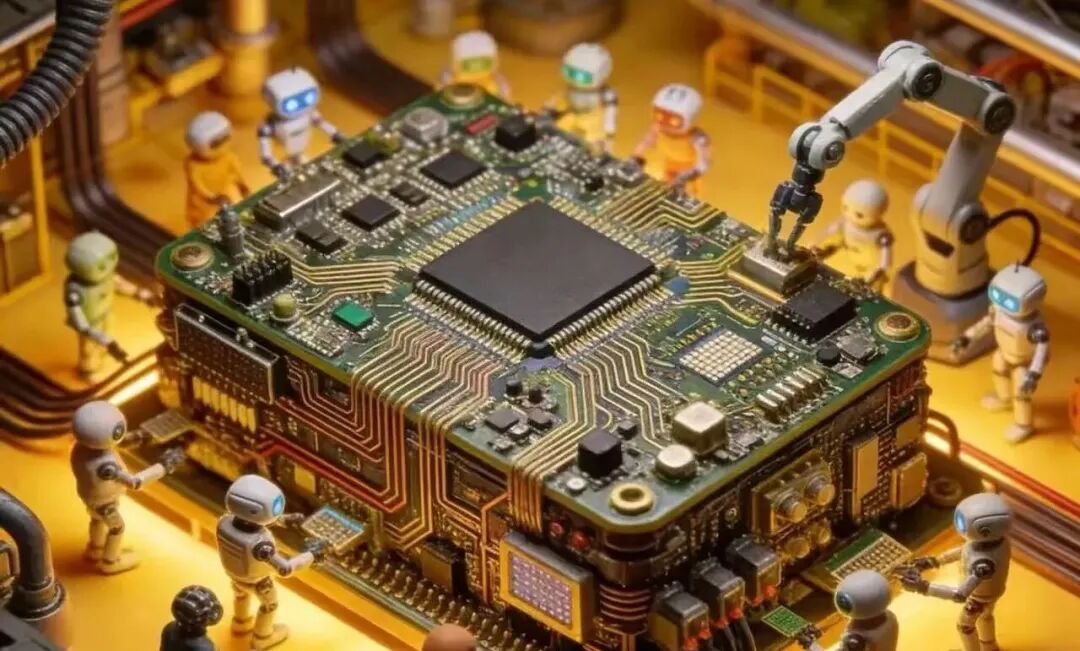
Starting with the majors' approach, 'becoming Google' has nearly become the new goal for Chinese tech giants. Emulating Google is also a key part of many Chinese firms' publicity.
This trend became clearer over the past year:
Baidu's Robin Li emphasized 'AI first' at every opportunity; Alibaba proposed the 'Tongyunge' concept—a trinity of AI, cloud computing, and chips; ByteDance brought in Wu Yonghui to shore up infrastructure, large model R&D, and hardware-software products, with Bloomberg reporting on February 10 that ByteDance was developing its own chips.
In short, this is a full-stack route of products + models + cloud + chips—Google's narrative of the past 20 years.
So, why are firms flocking to emulate Google?
Is it merely for stable profitability? Not quite. In our view, Google's true strength lies in its quiet transition from a search entry point to global AI infrastructure—the only strategic narrative Chinese majors can pursue.
From the models themselves, among overseas large models, Google's Gemini stands out not for 'chat capabilities' but for its multimodal abilities—a key differentiator from ChatGPT and Claude.
In 2026, Chinese firms achieved global-level impact in this dimension for the first time.
ByteDance's video generation model, Seedance 2.0, created waves globally: Elon Musk remarked on X that model development was 'happening fast.' Cheetah Mobile CEO Fu Sheng called it potentially the first time a Chinese large model led the world. It was another moment when DeepSeek R1 shocked the globe a year after its launch.
The 'Google narrative' among Chinese majors isn't just crude replication but validation of this full-stack route's feasibility.
First, unlike LLMs relying primarily on text data, video model development isn't constrained just by compute power but also by image content. Google and ByteDance own the world's largest video platforms—YouTube and Douyin + TikTok—giving them access to vast real-world video data from the start.
This data isn't static but carries clear timelines and user feedback, allowing them to continuously align multimodal models with the world in a naturally multimodal environment.
Of course, for business-diverse giants, developing multimodal models isn't just about reusing image resources but creating value.
Advertising is the cash cow for internet majors. Compared to pure text dialogues, images and videos better feed the giants' own ad and content ecosystems, making them the most efficient commercialization vehicles.
Huachuang Securities summarized ByteDance's model route as low-threshold, low-cost tooling with strong generalization, akin to an advanced form of 'CapCut,' reducing content production costs across the web and feeding the ecosystem. Alibaba's Qianwen leans more toward vertical scenarios (e-commerce) in high-fidelity image model updates, strengthening digital commerce capabilities.
This points to different business models: one pursuing scaling (scaled) throughput, the other 'usability as production' in vertical industries.
Though models differ, goals converge—higher ad monetization efficiency.
Industry data shows the AI marketing market grew from RMB 20.9 billion in 2020 to RMB 53 billion in 2024, with a CAGR of 26.2%.
Multimodal tools' boost to ad businesses cannot be overlooked.
Take Meta: its generative AI video tools achieved a $10 billion annualized revenue run-rate in Q4 2025, growing three times faster than Meta's overall ad revenue.
Digging deeper, the Sino-U.S. large model competition appears technical but is closer to a contest over compute supply, scheduling, and cost structures.
To many, multimodal functions make content more realistic. But digging deeper, image and video model advancements resemble a 'supply-side revolution,' driving content production's marginal costs toward compute costs.
As content output expands, inference compute demand grows exponentially. Without controlling compute structures, large model firms' business models will inevitably be devoured by inference costs.
This explains why firms 'only doing models' or 'only doing apps' hit ceilings at scale.
Google's story is essentially model × cloud × chips synergy.
Thanks to TPU success, Google slashed compute costs. Public data shows Google's TPUs cost one-fifth of NVIDIA GPUs relied on by OpenAI.
Only by controlling the full stack can firms constrain model costs, compute structures, and product forms. This is the only sustainable choice for majors in the AI era.
Chinese internet giants have begun telling their own Google narrative for this era. In this route, AGI still exists but is more a byproduct of organizational synergy and infrastructure evolution.
Startups Become Anthropic Disciples
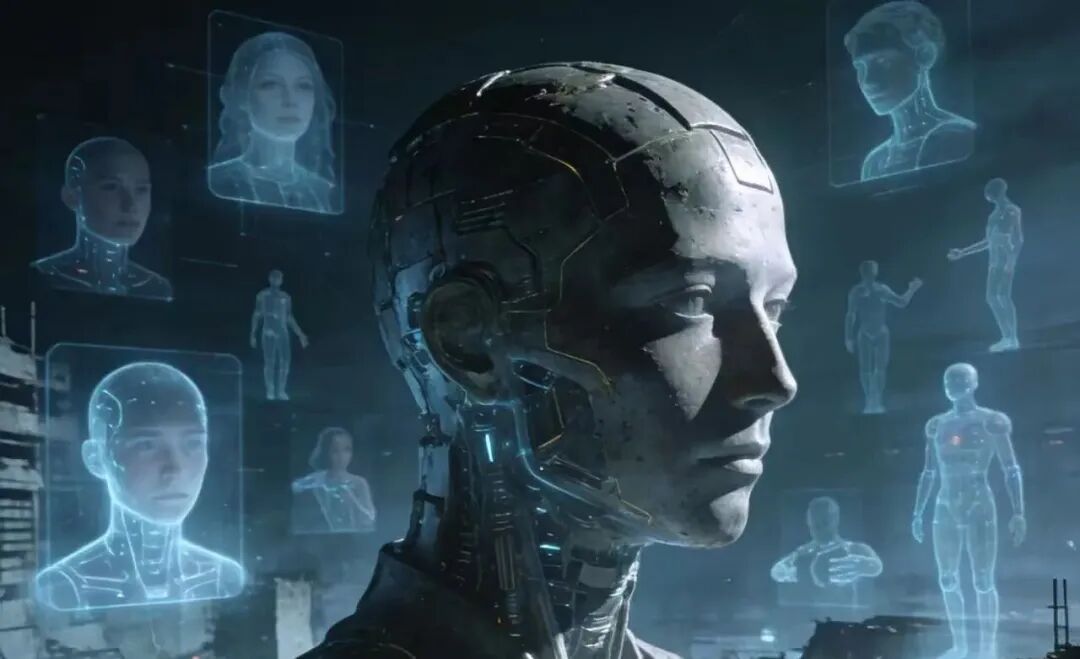
If Chinese majors are pursuing the Google route in this AI competition round, startups' reference points have also quietly shifted.
The shift is palpable: after DeepSeek's debut, C-end-focused Kimi halted meaningless user acquisition wars, shifting focus to high-net-worth scenarios. On the last day of 2025, Yang Zhilin publicly stated the next phase would 'surpass frontier firms like Anthropic to become a world-leading AGI company.' Zhipu was openly called a firm 'taking the Anthropic route.'
Why the skepticism toward OpenAI?
Over the past two years, chatbots were seen as the 'default gateway' to AGI. But for startups, this path's practical constraints are becoming clearer. First, large models lack internet-style network effects. Each dialogue incurs real inference costs; chatbot business models inherently mean high subsidies, low retention, and slow monetization. For cash- and time-constrained startups, this is a path they can't afford to wait on.
In contrast, scenarios like Coding, APIs, and Agents, while 'narrower,' have far clearer commercial logic:
Model capabilities directly tie to customer payments, inference costs are absorbed by workflows, and value chains are shorter. This is why Chinese AI startups have unanimously begun betting resources on Coding and Agent directions over the past year.
This has been Anthropic's route all along:
Within AI, Anthropic is perceived more as a top-tier rule-setter.
It boasts world-class programming models like the Opus series and programming agents like Claude Code—yes, the now-popular OpenClaw draws its name inspiration from Claude models.
It also breakthrough launched Skill, MCP, and Cowork, forming a solid ecological moat that Chinese players struggle to replicate short-term.
Results show this path translates into real commercial feedback.
Public market data shows Anthropic's revenue was just $1 billion in 2024; from March to May 2025 alone, its revenue surged from $2 billion to $3 billion. Meritech analyst Alex Clayton noted, 'We've studied 200+ IPOs of listed software firms—this growth rate has never happened before.'
In H1 2025, Anthropic's R&D-to-revenue ratio was roughly 1.04:1, nearly breaking even—enviable in the AI industry still in an arms race. This is far healthier than OpenAI's 1.56:1 ratio.
Anthropic is currently the only AI firm to achieve high-intensity R&D + sustainable commercialization.
With Anthropic leading, the 'Chinese OpenAI' narrative has become a liability, not an asset, for startups.
We must note: majors betting on coding differ from startups. Majors aim to feed cloud ecosystems; startups aim to validate business models. Here, AI deeply embeds as a tool in enterprise operations, hard to replace simply.
Undeniably, after betting on the Anthropic route, startups like Zhipu and MiniMax have seen positive feedback.
On February 12, within half a day of Zhipu announcing its open-source GLM-5, MiniMax immediately launched its M2.5 programming model.
Both models, as stated in their official accounts, approach the real-world programming capabilities of Anthropic's Opus series. The goal to become 'China's Anthropic' is no secret.
On the model launch day, Zhipu's stock opened sharply higher, surging over 25% at one point, with weekly gains exceeding 77% and a market cap topping HK$170 billion. MiniMax rose over 20% the same day, with a total market cap exceeding HK$180 billion—far outperforming the broader market.
Looking back at this 'Hundred-Model War,' the true watershed isn't model release density but path choice differences: who still vies for entry points versus who shifts to workflows; who can bear full-stack costs versus who must quickly validate business models.
China's AI competition is evolving from a single coordinate system into two parallel paths. The outcome remains uncertain, but the direction is clear.
*Featured image generated by AI
-
![]()
Doubao Work Unveiled! Domestic AI Leaders Fully Commit to the 'Work' Sector
-
![]()
Who’s Sounding the Alarm on ‘Rushed Vehicles’?
-
![]()
Over 5.3 Billion Yuan in Losses Over Three and a Half Years! Can Yonyou Reverse Its Fortunes Through Streamlining and AI Transformation?
-
![]()
Baidu AI Adopts Free Model: A Strategic Maneuver in Traffic and Monetization
-
![]()
Silicon-Based OLED Pioneer Unveils Financial Results: H1 Shipments Outpace Entire 2025 Volume
-
![]()
AI's First "Lost Summer"
-
![]()
Zeiss Makes Another €2.2 Million Bet: Will Eye Tracking Be the Next Big Thing in the Smart Glasses Industry?
-
![]()
RUNTO Ranking | Global Top TV ODM Factories' Shipment Figures for July 2026