Unitree Leads the Way, ZhiYuan Takes a Unique Path: Behind the Competition, Humanoid Robots Also Face the Challenge of Commercialization
 02/28 2026
 650
650
 This article is the 1010th original work by Deep Dive Atom.
"
Chinese Robots Are Rewriting Industry Rules
"
Lutein | Author
Deep Dive Atom Studio | Editor
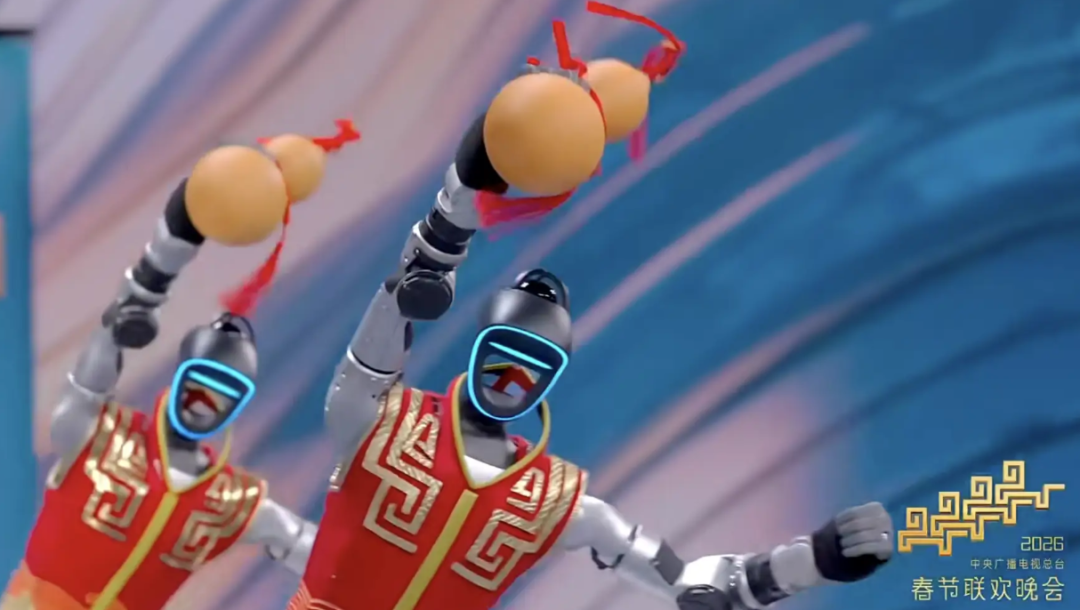
At the 2026 CCTV Spring Festival Gala, Chinese robotics companies made a collective impact with remarkable highlights. Unitree Technology's G1 and H2 humanoid robots performed alongside students from the Shaolin Tagou Martial Arts School in the program 'Wu BOT,' achieving global firsts such as high-altitude ejection flips, staff combat techniques, and drunken fist interactions. This once again demonstrated China's leading position in humanoid robot technology to countless compatriots.
In fact, the Chinese robotics industry has completed a critical leap from 'following' to 'leading,' with core competitiveness spanning market shipments, technological patents, corporate revenue, and other dimensions. It not only maintains its position as the world's largest robot market but also showcases strong momentum in technological innovation and commercialization.
From precise operations in industrial settings to diverse penetration in consumer markets, from high-profile appearances on the Spring Festival Gala stage to breakthrough innovations in research frontlines, Chinese robots are redefining the global industrial development landscape with diverse postures. Besides Unitree Technology, companies like ZhiYuan Robot, UBTECH, Estun, and SIASUN have also risen, forming a multi-pronged industrial landscape that collectively supports China's global leadership in the robotics industry.
Industry Boom: Unitree Leads, Multiple Companies Make Strides
According to the latest data disclosed by Unitree Technology's founder, Wang Xingxing, in public appearances, Unitree's 2024 annual revenue exceeded 1 billion RMB, an anomaly in the typically 'money-burning' robotics startup landscape, confirming the maturity of Chinese robotics companies' commercialization capabilities. As a benchmark enterprise in China's humanoid and quadruped robot sectors, Unitree's revenue performance serves as a 'barometer' for industry development.
According to the 'General-Purpose Embodied Robot Market Radar' report released by market research firm Omdia, the total global shipments of humanoid robots are expected to reach 13,000 units in 2025. Among them, ZhiYuan Robot leads with 5,168 units, followed by Unitree Technology with 4,200 units. However, Unitree Technology issued a clarification statement on the evening of January 22, 2026, via its official WeChat account, revealing actual shipments exceeded 5,500 units, approximately 31% higher than Omdia's estimate and surpassing ZhiYuan Robot's disclosed 5,100 units.
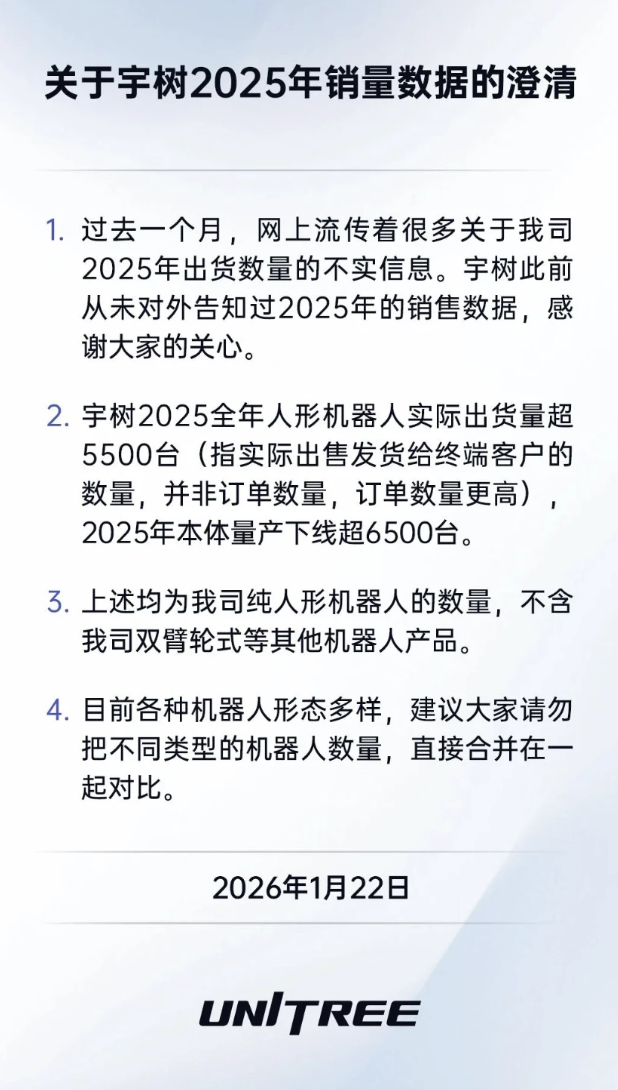
Behind Unitree Technology's remarkable achievements lies a comprehensive product lineup, continuous technological breakthroughs, and rising market recognition. Especially during the CCTV Spring Festival Gala, Unitree's high-difficulty performances further boosted product exposure and order growth, driving its 2025 shipments to 5,500 units and positioning it among the world's leading humanoid robot shippers.
Besides Unitree, other leading companies also boast impressive commercialization cases. UBTECH's Walker X humanoid robot has been deployed in scenarios such as Shenzhen Airport and large shopping malls; Estun's industrial robots are mass-applied in automotive manufacturing and 3C electronics, providing automated production line solutions for companies like Huawei and BYD.
Compared to their 2024 revenue scales, Unitree, UBTECH, and Estun have all achieved substantial growth, reflecting not only their own technological iterations and capacity enhancements but also the immense potential and vitality of the Chinese robotics market. The entire industry has also demonstrated a favorable trend of differentiated competition and collective breakthroughs—in the first half of 2025, UBTECH's total revenue reached 621 million RMB, a 27.55% year-over-year increase; in the first three quarters of 2025, Estun's revenue hit 3.804 billion RMB, a 12.97% year-over-year increase.
Spring Festival Gala 'Grinder': Traffic Competition and Practical Limitations for Robot Companies
In the past two years, the CCTV Spring Festival Gala has become a 'must-compete' stage for Chinese robotics companies, dubbed the 'grinder' of the robotics industry. Behind this seemingly glamorous tech show lies massive corporate investments, scenario limitations, and an urgent need for market breakthroughs, as well as the underlying benign (benign) development logic of 'the top players lift the sedan chair (sedan chair), ensuring everyone gets a share.'
The cost of appearing on the Spring Festival Gala stage far exceeds expectations. According to *Caijing* magazine, the cost range for robotics companies to secure a cooperation spot at the 2026 Spring Festival Gala was between 60 million and 100 million RMB, with some exclusive rights even higher. For robotics startups still in their early development stages, this is undoubtedly an astronomical figure.
Take UBTECH, the only A-share listed company solely focused on humanoid robots, as an example. Its R&D investment in the first half of 2025 was 218 million RMB, accounting for 35.1% of its same period ( same period , same-period) revenue. This means a single Spring Festival Gala sponsorship fee is equivalent to a quarter's R&D expenditure for the company. Despite such high costs, leading companies like Unitree Technology, Songyan Power, and Yinhe General still vied to participate, primarily because the Spring Festival Gala, as a national-level platform, can achieve 'national-level exposure' for corporate brands—an exposure level unattainable through ordinary marketing activities.
The 'Spring Festival Gala offensive and defensive battle' between Unitree Technology and ZhiYuan Robot became the most representative case in the 2026 traffic competition, accurately reflecting the starkly different strategic choices of industry leaders. According to sources close to ZhiYuan, due to the exorbitant billion-RMB appearance fee, ZhiYuan Robot decided to prioritize this budget for R&D investment. However, ZhiYuan did not abandon the traffic dividends of the Spring Festival season; instead, it independently hosted the world's first robot-exclusive gala, *The Wonderful Night of Robots*, on February 8, even inviting Huang Xiaoming to perform magic tricks on stage.
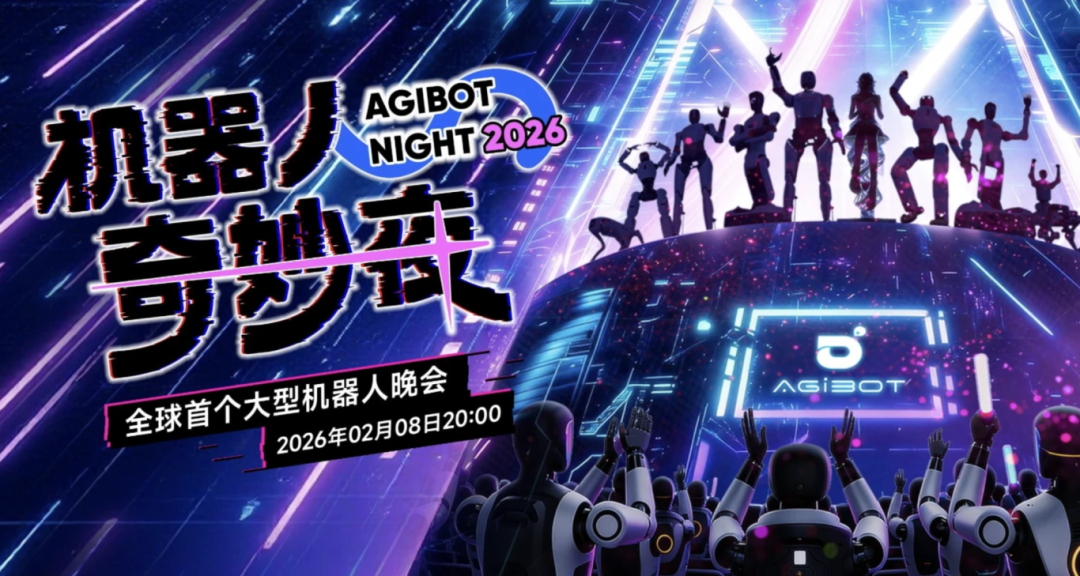
To compensate for not appearing on the Spring Festival Gala, Qingtianzu, which co-hosted *The Wonderful Night of Robots* with ZhiYuan Robot, swiftly launched the '999 RMB Universal Robot Experience Plan,' pushing the same robot models into consumer scenarios such as birthdays, corporate annual events, and marriage proposals through a leasing platform, attempting to achieve a closed loop of brand communication and commercial conversion with a 'gala-driven traffic + scenario-based implementation' combination.
The massive Spring Festival Gala investments are ultimately passed on to product costs, directly determining the current high-end pricing of robot products and thus restricting the popularization of their application scenarios. Currently, mainstream domestic humanoid robots are generally priced in the tens or even hundreds of thousands of RMB; even consumer-grade quadruped robots are mostly priced in the ten-thousand-RMB range. Songyan Power's 'Xiaobumi' Lite version, with a pre-sale price of just 9,998 RMB, is already considered an 'affordable' option within the industry.
Whether it's Unitree's 'stage acrobatics' or ZhiYuan's 'scenario rehearsal,' neither can avoid the core pain point of the current robotics industry: a vast gap between stage performances and civilian adoption. This means that the exposure companies gain through the Spring Festival Gala is difficult to convert into large-scale civilian orders in the short term, with scenario limitations becoming a significant bottleneck for industry development.
Despite these limitations, the Spring Festival Gala remains a crucial breakthrough for robotics companies to penetrate the event market. For robotics companies, the core value of the Spring Festival Gala is not just brand exposure but also a 'public verification' of technological prowess—being able to complete complex performances on the 'zero-tolerance' stage of the Spring Festival Gala itself proves the company's cutting-edge capabilities in precision servo motors, joint control, multi-machine synchronization, and other fields. This credibility helps companies quickly open up high-end event markets.
Data shows that within two hours of the 2026 Spring Festival Gala broadcast, robot search volume on a certain e-commerce platform surged by over 300% month-over-month. Not only did headline companies like Unitree see a spike in orders, but 'off-stage players' like ZhiYuan Robot also benefited from industry enthusiasm, receiving more leasing and cooperation requests.
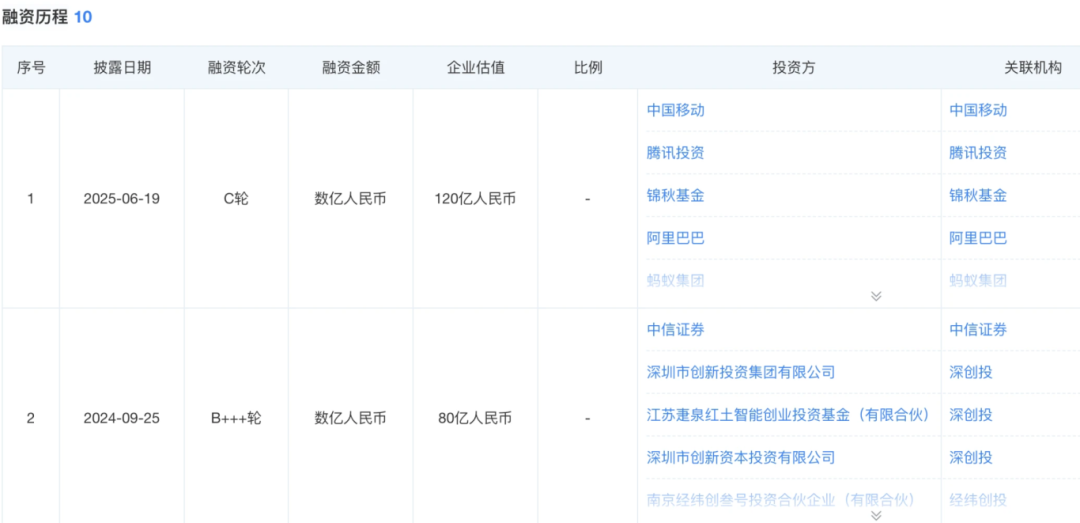
The Spring Festival Gala can also significantly boost a company's performance in the capital market. During the 2025 Spring Festival Gala, Unitree's robots went 'viral' with performances of Yangge Dance (Yangko dance) and handkerchief-throwing, directly driving a surge in corporate orders. According to Tianyancha data, after completing its Series C funding in the first half of 2025, Unitree's valuation soared to 12 billion RMB, underscoring the immense pulling effect of Spring Festival Gala traffic on corporate development.
For the entire Chinese robotics industry, this seemingly fierce Spring Festival Gala competition is ultimately a 'win-win' scenario. Headline companies' massive investments in the Spring Festival Gala not only enhance their own brand influence but also drive attention to the entire Chinese robotics industry, showcasing China's robotics technological prowess to the world and fostering a benign (benign) development pattern where 'the top players lift the sedan chair (sedan chair), ensuring everyone gets a share.'
Challenges in the Consumer Market: The Reality Test Behind the Hype
While robots on the Spring Festival Gala stage appear flawless, they frequently 'malfunction' in real-world applications. On short-video platforms like Douyin, videos of such mishaps are common, sparking netizen doubts about the practicality of robotics technology. Unlike industrial robots, which have mature application scenarios and profit models, consumer-grade robots are still in the exploratory phase. Balancing technical performance, product pricing, and user needs has become a puzzle all companies must solve.
These malfunction cases span humanoid robots, quadruped robots, and other types, exposing core technical shortcomings in current robotics—strong mechanical structures but AI algorithms and autonomous decision-making capabilities still requiring upgrades. While they perform flawlessly in preset programs, they fall short in complex, dynamic real-life scenarios, with significant gaps in autonomous decision-making, environmental understanding, and flexible adaptation.
Some netizens posted videos showing a humanoid robot from a certain brand losing balance during a dance and kicking the operator's head; another video showed a robot in a simulated home scenario repeatedly dropping a water cup and even tipping over; a quadruped robot struggled to navigate minor obstacles during outdoor inspections, requiring manual intervention. Even headline companies like Unitree and UBTECH have not completely avoided such mishaps.

Even the internationally renowned Stanford Mobile ALOHA robot has numerous malfunction scenarios, such as spilling wine while wiping a table, failing to place a pot in a cabinet after cooking, and even causing injuries to researchers during rescue attempts. This underscores that the practicality of robotics technology still requires continuous refinement.
Besides technical shortcomings, consumer-grade robots also face severe 'homogenization.' Most companies' products offer similar functions, focusing on superficial needs like companionship and entertainment, lacking precise adaptation to core needs such as elderly care, children's education, and household cleaning. This results in widespread phenomena like 'affordable but unused' and 'idleness after novelty wears off.'
The stark contrast between the Spring Festival Gala's glamour and real-world 'malfunctions,' the contradiction between high costs and the demand for civilian adoption, and technical shortcomings and homogeneous competition all restrict the maturity of the consumer market. To sustain its global leadership, the Chinese robotics industry must not only maintain the innovative vitality of headline companies, drawing on the differentiated development experiences of Unitree and ZhiYuan Robot to continuously breakthrough core technological bottlenecks like AI algorithms and autonomous decision-making but also address pain points in civilian adoption, balance technical performance and product pricing, explore diversified rigid-demand scenarios, and improve after-sales service systems.
Only by driving Chinese robots from 'stage acrobatics' to 'widespread application' and from 'industrial leadership' to 'ecosystem leadership' can China better secure a core voice in the future development of the global robotics industry.
-
![]()
Doubao Work Unveiled! Domestic AI Leaders Fully Commit to the 'Work' Sector
-
![]()
Who’s Sounding the Alarm on ‘Rushed Vehicles’?
-
![]()
Over 5.3 Billion Yuan in Losses Over Three and a Half Years! Can Yonyou Reverse Its Fortunes Through Streamlining and AI Transformation?
-
![]()
Baidu AI Adopts Free Model: A Strategic Maneuver in Traffic and Monetization
-
![]()
Silicon-Based OLED Pioneer Unveils Financial Results: H1 Shipments Outpace Entire 2025 Volume
-
![]()
AI's First "Lost Summer"
-
![]()
Zeiss Makes Another €2.2 Million Bet: Will Eye Tracking Be the Next Big Thing in the Smart Glasses Industry?
-
![]()
RUNTO Ranking | Global Top TV ODM Factories' Shipment Figures for July 2026