Musk Really Took the Steering Wheel Off
 02/28 2026
 500
500
The Era of Autonomous Vehicles is Approaching
Author|Wang Lei
Editor|Qin Zhangyong
While many were enjoying the Spring Festival holiday, Tesla marked a historic moment:
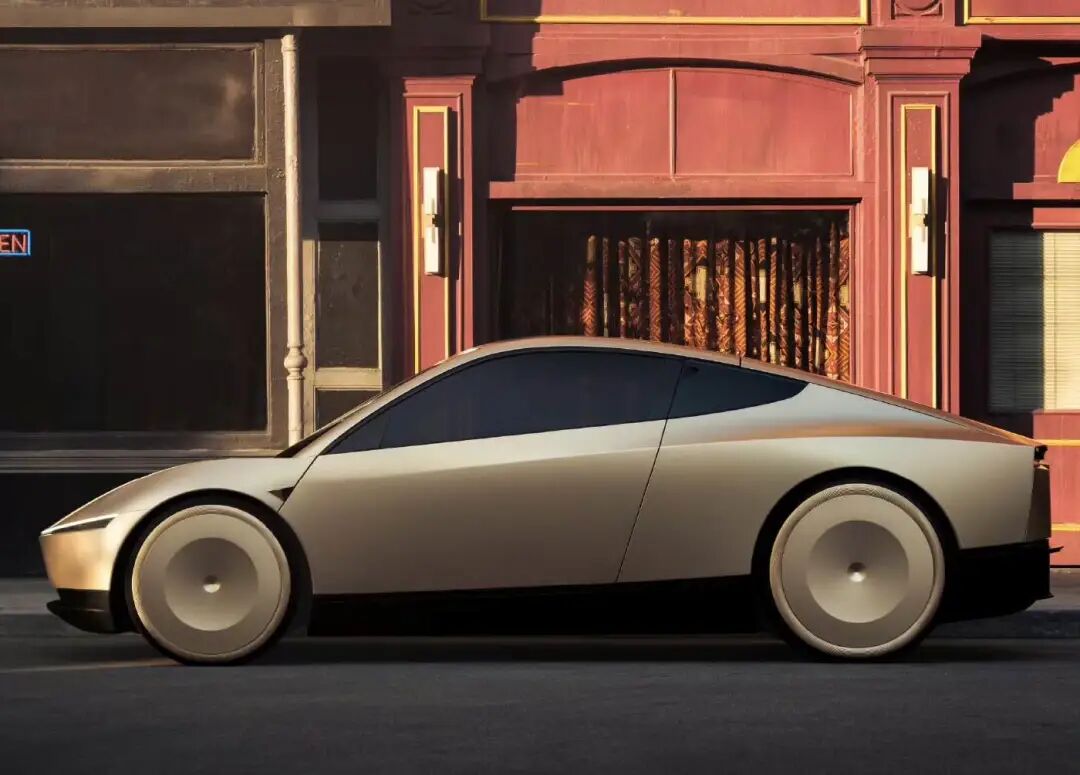
The first mass-produced self-driving car without a steering wheel, accelerator pedal, or brake—the Cybercab—officially rolled off the production line at the Giga Texas factory in the United States.
Tesla also shared a group photo showing employees at the Texas Gigafactory gathered around a gleaming two-door vehicle, celebrating this historic milestone.
The news was promptly reposted and congratulated by Elon Musk, who stated, "Congratulations to the Tesla team for building the first Cybercab."
Although the Cybercab is not yet available for purchase, Musk revealed in response to a net friend (netizen's) comment that the vehicle's price would not exceed $30,000, roughly equivalent to 200,000 yuan—lower than the current price of the Model 3 in North America.
Perhaps the disruptive moment in human transportation history is truly on the horizon.
01
One and a Half Months Ahead of Schedule
A month ago, Musk stated during an earnings call that the Cybercab would enter mass production in April of this year. Now, it has rolled off the production line about six weeks ahead of the original trial production schedule, indicating that Tesla's production line debug (commissioning) speed has exceeded market expectations.
According to Musk's estimates, due to the use of nearly 100% new components and an entirely new production process, initial production will be "extremely slow."
The ramp-up in mass production is expected to follow an S-curve, similar to that of robots—starting slowly. However, Musk believes that Cybercab production will far exceed the combined output of all other Tesla models.
Shortly after the vehicle rolled off the line, overseas netizens captured real-life images of the Cybercab parked inside the factory, showing a high degree of consistency with the previous prototype.
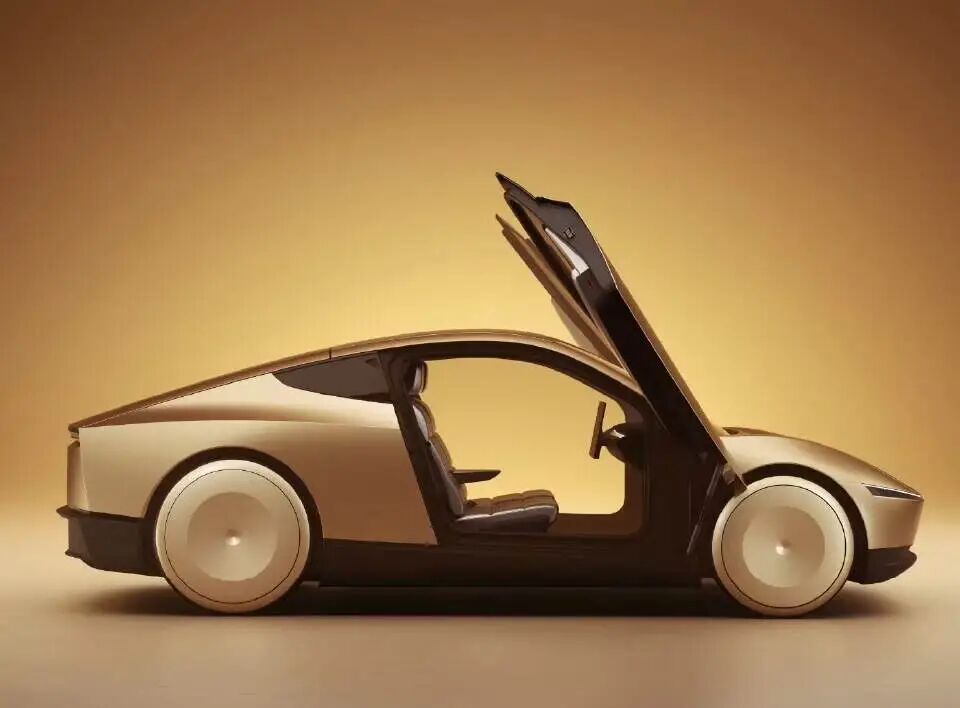
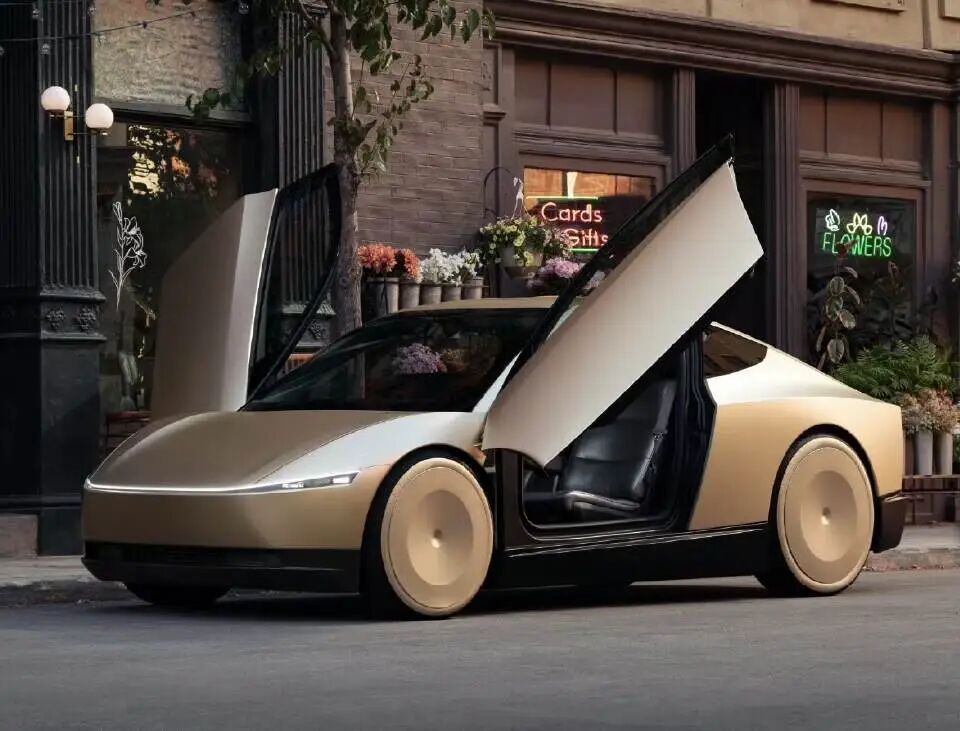
Featuring a stainless steel style similar to the Cybertruck, the two-door, two-seat design incorporates a Penetrating lamp group (full-width light bar) reminiscent of the refreshed Model Y. The vehicle lacks exterior mirrors and door handles, with enclosed wheel designs, "Cybercab" branding, and Scissor type car door (scissor doors) akin to those of a supercar.
Upon entering the vehicle, the interior is even more minimalist. The steering wheel, accelerator, and brake pedals are entirely absent, replaced by a single 21-inch central control screen responsible for navigation, entertainment, and information interaction, along with two leather-fabric seats. Storage space is limited, featuring only a central armrest between the seats and two cup holders beneath it.
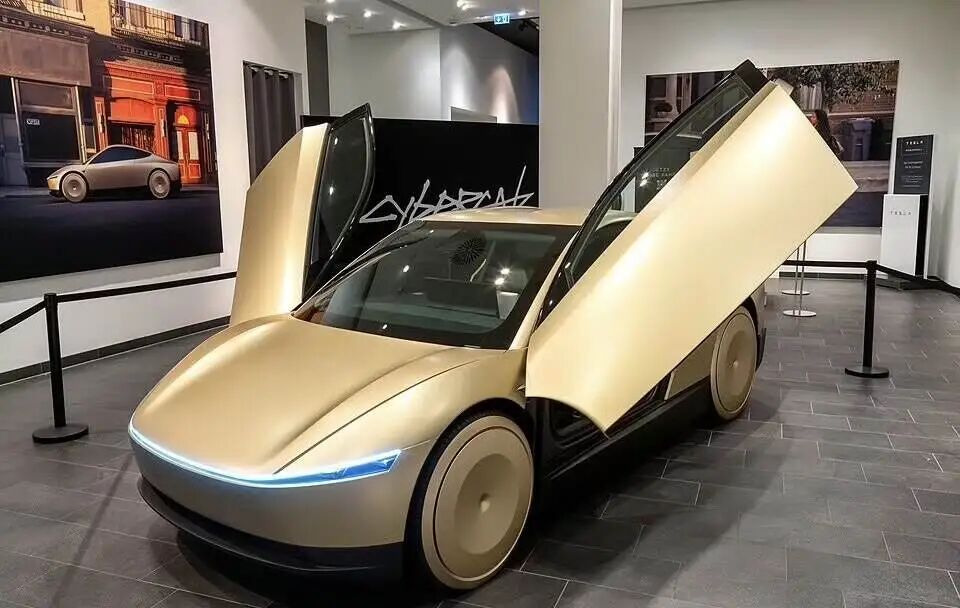
This means that the only action passengers likely need to take after boarding is selecting a destination on the central control screen, leaving the rest to FSD.
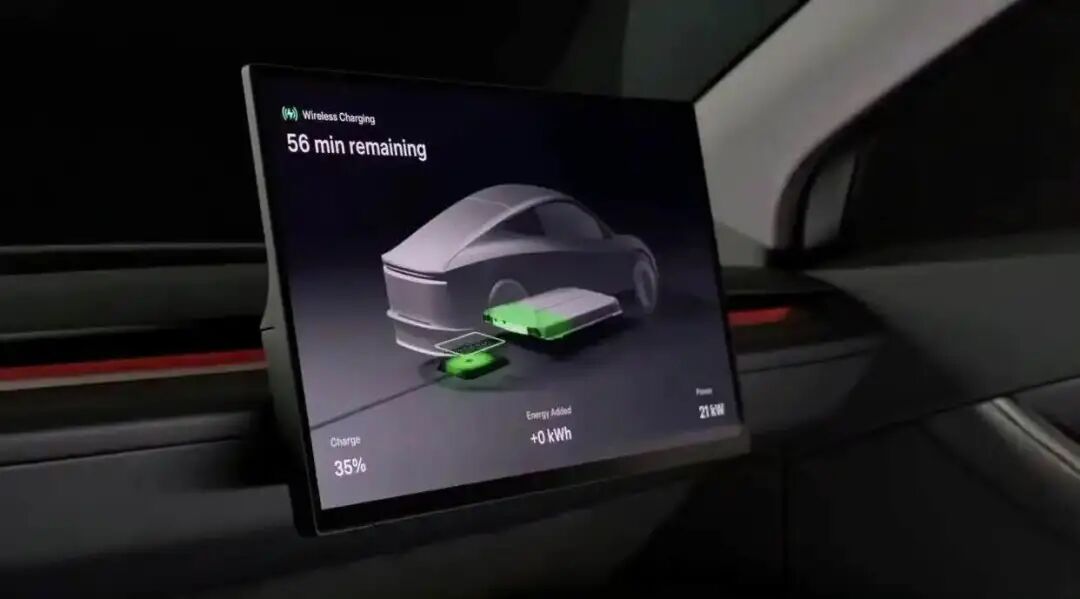
Notably, the vehicle lacks the mandatory charging port found on new energy vehicles, as it employs wireless inductive charging technology. The sole method of recharging is via a dedicated wireless charging pad, enabling a fully autonomous chain from driving to energy replenishment.
It is worth mentioning that just a week ago, an overseas blogger revealed that the U.S. Federal Communications Commission (FCC) had officially granted Tesla an exemption to use Ultra-Wideband (UWB) radio technology in its wireless electric vehicle charging system, which will be used to wirelessly charge the Cybercab.
In terms of sensors and computing power, the Cybercab will be equipped with the same computing platform and sensors as the Model 3 and Model Y, namely the Hardware 4.0 (AI4) chip. Although Musk has previously mentioned the more powerful AI5, its widespread commercial use is not expected until 2027 due to supply chain and computing power constraints.
Moreover, this autonomous vehicle still does not incorporate LiDAR, relying entirely on eight high-definition cameras and neural networks for spatial reconstruction.
Despite the absence of physical controls, the vehicle features multiple power and signal redundancies in its underlying electronic architecture, such as braking and steering actuators.
In manufacturing, Tesla plans to adopt a brand-new production process called "Unboxed" for the Cybercab. This non-traditional assembly line method allows different vehicle components to be assembled separately before final integration, which is the source of Musk's confidence in commitment (promising) a price point as low as $30,000.
The vehicle is divided into approximately six prefabricated modules—front body, rear body, chassis battery pack, left side, right side, and roof. Each module is manufactured and tested individually before being assembled like building blocks on the final assembly line.
This "building block" approach to vehicle manufacturing offers several advantages: Each module can be produced simultaneously on different production lines, significantly reducing final assembly time and improving production efficiency by about 35%. Additionally, quality inspections can be conducted on modules before assembly, eliminating the need to troubleshoot issues after full vehicle assembly.
02
Rolling Off the Line is Just the Beginning
As a crucial component of Musk's grand vision and a key pillar supporting Tesla's market value of trillions of dollars, the Cybercab's rollout is undoubtedly a milestone moment for Tesla, as well as for the automotive industry and users.
Because the significance of the Cybercab extends beyond convenient ride-hailing—it represents a highly profitable business opportunity.
According to Musk's plan, he hopes to establish a vast autonomous driving network that blurs the lines between private vehicles and ride-hailing services, allowing owners to use their vehicles personally while also enabling them to automatically accept fares and earn money when idle.
Musk describes it as a combination of "Airbnb + Uber." This suggests that future vehicles will transform from pure consumer goods into productive tools capable of self-appreciation, with Musk previously stating that the vehicle could recoup its purchase cost—$30,000—within a year.
The key lies in its extremely low operating costs.
For reference, the average cost per mile for an Uber or Lyft ride in the United States is approximately $2 to $3. Converted to kilometers, this is about $1.2 to $1.9 per kilometer. Musk has set a target operating cost for the Cybercab of around $0.20 per mile, or roughly a little over one yuan per kilometer in Chinese currency.
If this figure can be achieved, the underlying economic model of the taxi and ride-hailing industry will be completely rewritten.
However, a significant gap remains between Musk's vision and its practical realization, with the grand vision still dependent on approval from U.S. regulatory agencies.
Coincidentally, around the same time as the Cybercab's "rollout showcase," the U.S. District Court for the Southern District of Florida rejected Tesla's request to overturn a jury verdict.
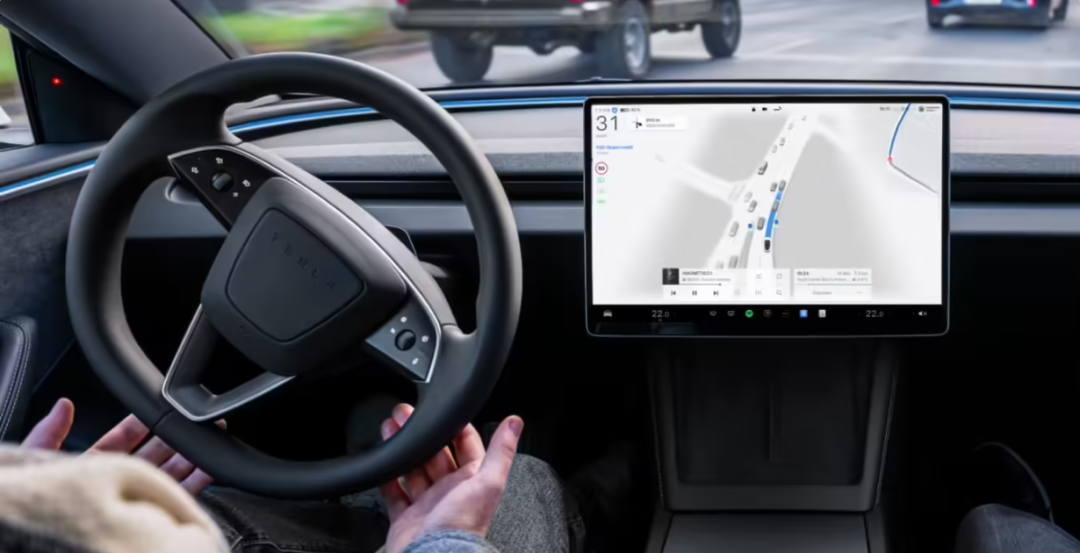
The case stemmed from a fatal traffic accident in Key Largo, Florida, in 2019 involving a Tesla Model S with Autopilot engaged. While driving, the owner bent down to retrieve a dropped phone, causing the vehicle to run through a stop sign and a flashing red light intersection, colliding with a parked car and resulting in one fatality and one serious injury.
In August 2025, a U.S. federal jury ruled that Tesla was liable for the accident, assigning 33% fault to the company and ordering it to pay $43 million in compensatory damages and $200 million in punitive damages. Tesla subsequently appealed, but the ruling was recently upheld.
On one hand, the Cybercab represents a sci-fi dream becoming reality; on the other, it faces costly legal battles over fatal accidents. Clearly, Tesla's "self-driving pie" is still a bit hard to swallow.
Additionally, the U.S. Federal Motor Vehicle Safety Standards (FMVSS) currently stipulate that each automaker can only obtain an exemption for 2,500 steering wheel-free vehicles per year—a drop in the bucket compared to Tesla's annual production target of millions.
Although the first mass-produced Robotaxi in human transportation history designed exclusively for autonomous driving has officially rolled off the line, industrial maturity cannot be accelerated by vision alone. For the Cybercab to truly become a part of everyday life for millions, it is destined to be a long and complex marathon.
-
![]()
Car Manufacturing Paused, Yet Dreame’s Automotive Dream Marches On
-
![]()
Can the Brand-New Hongqi H7 Forge Its Own Identity in the Hybrid Vehicle Market?
-
![]()
Challenges in Redeeming Certificates for New Cars: Mercedes-Benz Dealership Group Grapples with Operational Hurdles Once Again
-
![]()
Porsche Returns to Volkswagen, Ending the 'Electric Ferrari' Story
-
![]()
"Chinese Version of Mythos": Can It Rise to the Challenge and Keep Pace?
-
![]()
Equity Changes Hands Three Times in Seven Years: JMCG Leans on Contract Manufacturing for Survival Amid Brand Deficits
-
![]()
Automotive Market News: Nine Departments Jointly Roll Out Aftermarket Consumption Initiatives
-
How Electronic Fabric Became the Critical Chokepoint for AI’s Trillion-Dollar Computing Infrastructure